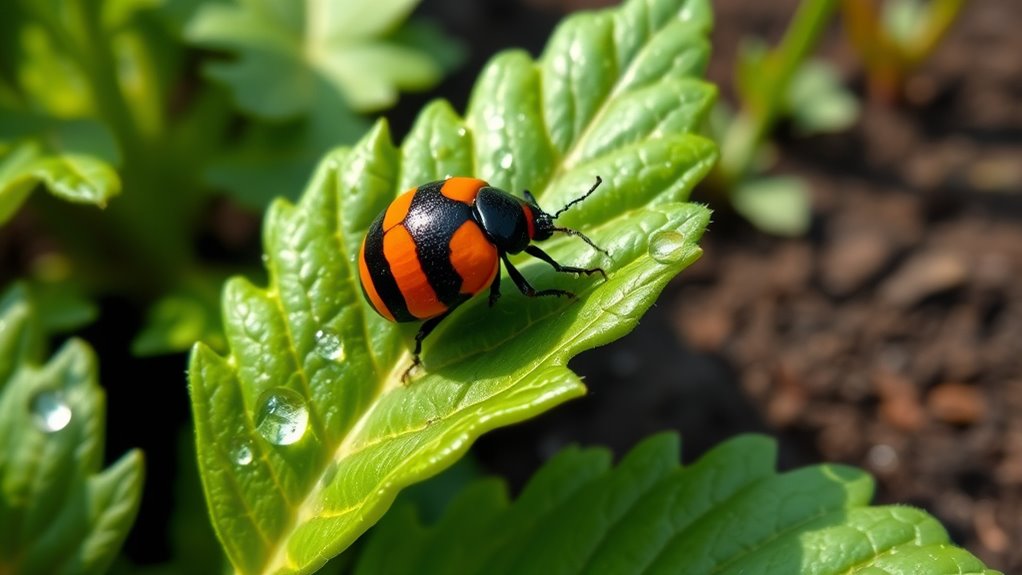

To manage Colorado potato beetles in your backyard, identify and monitor your potato plants regularly for eggs, larvae, and adult beetles, especially during warm months. Encourage natural predators like ladybugs and lacewing larvae by planting marigolds, dill, or calendula, and avoid broad-spectrum insecticides. Handpick pests and use organic treatments like neem oil or insecticidal soap early on. Incorporate crop rotation and mulching to disrupt their life cycle. Keep your garden balanced—if you want to discover more about effective strategies, continue exploring these tips.
Key Takeaways
- Regularly inspect potato plants for beetles, eggs, and larvae to enable early detection and control.
- Encourage natural predators like ladybugs and lacewings by planting flowers such as marigolds and dill.
- Handpick and remove beetles, eggs, and larvae during early morning or late evening for organic control.
- Implement crop rotation and mulching to disrupt the beetle’s life cycle and prevent infestations.
- Avoid chemical insecticides to preserve beneficial insects and maintain a healthy, balanced backyard garden ecosystem.

The Colorado potato beetle is a notorious pest that can quickly destroy potato crops if left unchecked. If you’re growing potatoes in your backyard, you need to be vigilant, especially during the warm months when these beetles are most active. Fortunately, there are effective ways to manage their populations without resorting to harsh chemicals. Utilizing natural predators and organic controls can help you keep these pests at bay while maintaining a healthy, chemical-free garden.
One of the most effective strategies involves encouraging natural predators in your backyard. Beneficial insects like ladybugs, lacewing larvae, and predatory beetles feed on Colorado potato beetle eggs and larvae, considerably reducing their numbers. You can attract these helpful insects by planting a diverse array of flowers such as marigolds, calendula, or dill near your potato plants, providing nectar and habitat for them. Avoiding broad-spectrum insecticides is essential because they can kill these natural enemies along with the pests, disrupting the balance in your garden ecosystem. Instead, focus on practices that support these predators, creating a natural line of defense against the beetles.
Organic controls also play a crucial role in managing Colorado potato beetles. Handpicking beetles, eggs, and larvae from your plants is an immediate and chemical-free way to reduce their numbers. Be sure to check your plants regularly, especially in the early morning or late evening when beetles are most active. For a more targeted approach, you can apply organic insecticides like neem oil or insecticidal soap, which are effective against beetle eggs and larvae but tend to be less harmful to beneficial insects if used carefully. Applying these treatments during the early stages of infestation guarantees you keep the population under control without disrupting your garden’s ecological balance.
Crop rotation is another organic control method that helps prevent beetle populations from becoming established. Moving your potatoes to different parts of your yard each year breaks the beetles’ life cycle, making it harder for them to find suitable places to lay eggs. Additionally, mulching around your plants can prevent beetles from reaching the soil where they lay eggs, further reducing their numbers.
Frequently Asked Questions
How Can I Prevent Colorado Potato Beetles Naturally?
To prevent Colorado potato beetles naturally, start with crop rotation by avoiding planting potatoes in the same spot each year. Use natural repellents like neem oil or diatomaceous earth to deter them. Encourage beneficial insects such as ladybugs and predatory beetles that feed on these pests. Regularly inspect your plants for early signs, and remove beetles or larvae by hand to keep populations under control without chemicals.
Are There Effective Organic Pesticides for This Beetle?
Yes, organic sprays like neem oil are effective against Colorado Potato Beetles. You should apply neem oil directly to the beetles and your plants, covering both the tops and undersides of leaves. Repeat applications every week or so, especially after rain. Neem oil disrupts the beetles’ feeding and breeding, providing natural control without harmful chemicals. It’s a safe, eco-friendly option to keep your garden healthy.
Do They Affect Plants Other Than Potatoes?
Organic pesticides like neem oil or Bacillus thuringiensis target Colorado Potato Beetle, and research shows they mainly affect beetle larvae and adults without harming your plants. While beetle behavior suggests they prefer potatoes, these pesticides can also impact tomato pests if applied properly. They generally don’t harm other plants, but always follow label instructions to prevent unintended effects on nearby crops, ensuring your garden stays healthy.
What Is the Life Cycle Duration of the Beetle?
You’ll find that the Colorado Potato Beetle’s life cycle lasts about 2 to 3 weeks. After beetle emergence in spring, females lay eggs that hatch into larvae. During larval development, they feed heavily on plants, causing damage. The larvae then pupate, turning into new beetles, completing the cycle. This rapid process allows multiple generations each season, so regular monitoring and control are essential to manage infestations effectively.
Can Companion Planting Repel Colorado Potato Beetles?
Yes, companion planting can help repel Colorado Potato Beetles. By planting herbs like dill, marigolds, or nasturtiums near your potatoes, you can naturally deter these pests. These plants act as natural repellents and confuse the beetles, making it harder for them to find your crops. Incorporating companion planting into your garden is an effective, eco-friendly way to reduce beetle infestations without chemical pesticides.
Conclusion
While the Colorado potato beetle may seem tiny and harmless, it can quickly turn your backyard garden into a battleground. Don’t underestimate this pest’s resilience, even amidst lush foliage and vibrant blooms. With vigilance and swift action, you can keep it at bay. Remember, in your peaceful oasis, a single overlooked egg can become a swarm. Stay alert, act early, and protect your crops before these tiny invaders turn your garden into a battlefield.