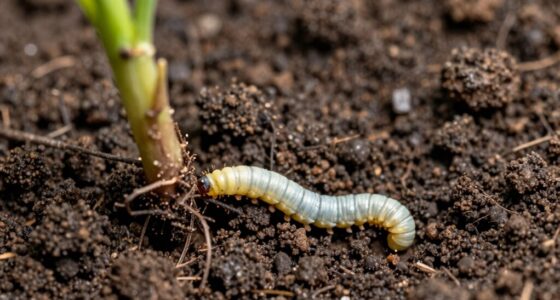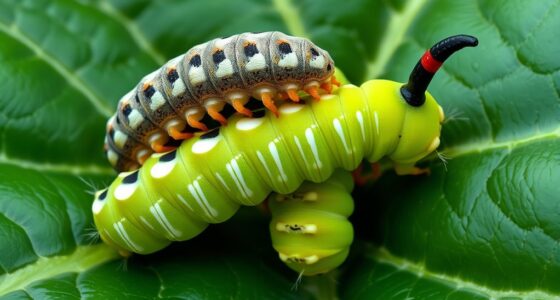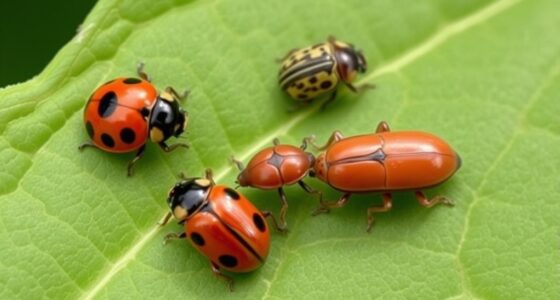

Before cucumber wilt shows up, you can spot early signs by inspecting your plants for distinctive feeding patterns and markings on leaves and stems. These patterns often appear as small, irregular holes or a banded look around the areas being chewed. Recognizing these signs early can help you take quick action to control the beetles. Keep paying close attention, and you’ll discover more ways to protect your plants before damage becomes severe.

Get garden gear delivered free with Prime
- Fast, free delivery on millions of items
- Prime Video, Amazon Music and more included
- Member-only deals all year
Key Takeaways
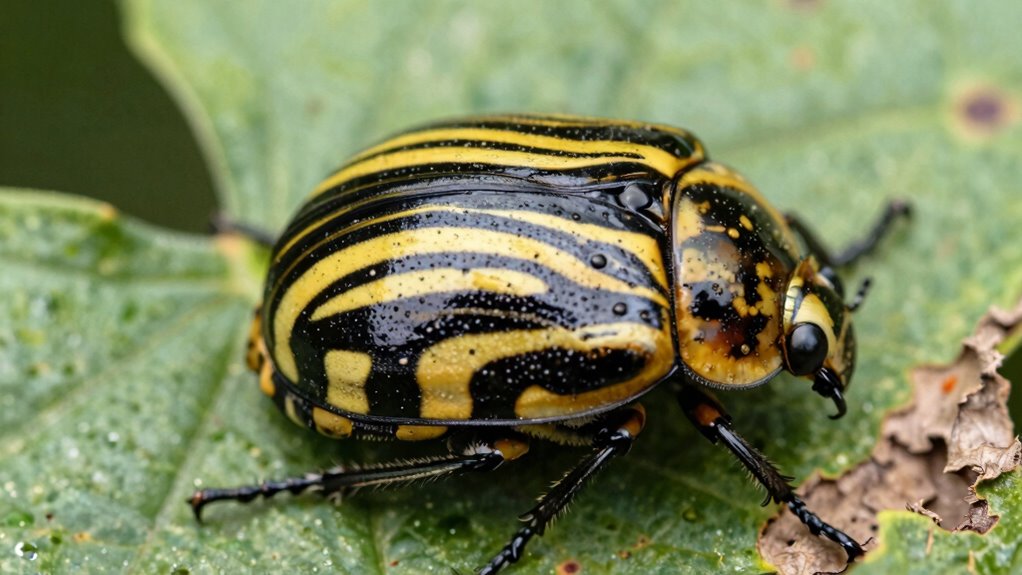
- The beetle displays a distinctive, warning pattern on its back that signals early infestation.
- Recognizing the pattern allows for prompt intervention before plant wilt symptoms appear.
- Early detection of the pattern helps prevent the spread of bacterial wilt transmitted by beetles.
- The pattern often appears on adult beetles before they cause visible plant damage.
- Identifying the pattern enables timely pest control measures to protect plant health.

When you see the cucumber beetle pattern, it’s a clear warning that you need to pay close attention to your plants. These beetles are notorious for their rapid reproduction, and their feeding habits cause direct damage by gnawing on leaves, stems,, and roots. This feeding weakens the plant and can stunt growth, leading to reduced yields. Furthermore, their ability to transmit bacterial wilt accelerates plant decline, often before you even notice the first signs of illness. As a gardener, your goal is to interrupt this cycle before the damage becomes irreversible.
Effective pest control begins with identifying the presence of these beetles early. Once you see the characteristic pattern, you should inspect your plants thoroughly, especially the undersides of leaves and around the stems. Physical removal can help reduce their numbers temporarily, but it’s usually not enough on its own. Implementing integrated pest management strategies, such as crop rotation, using row covers, or applying targeted insecticides, can considerably limit their impact. Biological controls, like introducing beneficial nematodes or predatory insects, also play an essential role in keeping the beetle population in check without harming your garden ecosystem. Recognizing the cucumber beetle pattern early is crucial for effective control.
Understanding the life cycle of cucumber beetles can help you time your interventions more effectively and prevent infestations from becoming overwhelming. Knowing their feeding habits allows you to anticipate the damage and respond proactively. Timely response is key to preventing crop damage caused by cucumber beetles. Ignoring their presence might lead to severe wilt outbreaks that can wipe out entire sections of your garden. The more proactive you are, the better your chances of protecting your plants. Remember, catching the pattern early allows you to act swiftly—whether through manual removal, adjusting your pest control tactics, or enhancing your crop’s defenses. The goal is to keep these pests at bay before they cause irreversible harm, ensuring a healthy, productive garden.
In essence, recognizing the cucumber beetle pattern before wilt shows up is essential. It’s your first line of defense against potential crop damage, and timely action can save your plants and your harvest. Stay vigilant and keep an eye out for the distinctive pattern, so you can respond quickly and effectively, maintaining healthy crops throughout the season.
As an affiliate, we earn on qualifying purchases.
Frequently Asked Questions
How Can I Differentiate Cucumber Beetle Damage From Other Pests?
You can differentiate cucumber beetle damage by observing specific signs like yellowing or wilting leaves, which indicate pest activity. Cucumber beetles often leave distinctive feeding holes and black fecal spots on plants. To accurately identify pests, consider plant resilience—some pests cause more damage than others. Pest identification is key; look for the beetles’ characteristic stripes or spots, which set them apart from other pests like aphids or squash bugs.
Are There Natural Predators That Control Cucumber Beetle Populations?
Imagine ladybugs and lacewing larvae patrolling your garden like tiny guardians, naturally hunting cucumber beetles. These natural predators are essential for biological control, keeping beetle populations in check without chemicals. Introducing or encouraging beneficial insects creates a balanced ecosystem, reducing pest damage. You can attract them by planting flowering plants like dill or fennel nearby, turning your garden into a safe haven where these predators thrive and help control cucumber beetles effectively.
What Time of Year Are Cucumber Beetles Most Active?
You’ll find cucumber beetles most active in late spring through early summer when their seasonal emergence peaks. During this time, beetle identification becomes essential to monitor their activity and prevent damage. Keep an eye out for the distinctive striped or spotted patterns on their bodies, which help you identify these pests early. Regular inspections during these months enable you to implement control measures before they cause significant harm to your crops.
Can Cucumber Beetles Affect Plants Other Than Cucumbers?
Yes, cucumber beetles can affect plants beyond cucumbers, surprisingly threatening your entire garden. Ironically, their appetite isn’t just limited to cucumbers; they also target crops like melons, pumpkins, and squash. To combat this, you can practice crop rotation to disrupt their life cycle and use trap cropping to lure beetles away from your main plants. These strategies help protect your garden from unexpected beetle damage.
What Are the Long-Term Effects of Cucumber Beetle Infestations?
Long-term cucumber beetle infestations can severely damage your crops, leading to reduced yields and increased vulnerability to diseases like bacterial wilt. To manage this, you should practice crop rotation to disrupt beetle life cycles and consider biological control methods, such as introducing natural predators. These strategies help minimize chemical use, protect your soil health, and guarantee sustainable pest management, keeping your plants healthier over multiple growing seasons.
As an affiliate, we earn on qualifying purchases.
Conclusion
Keep a close eye on that distinctive striped pattern on your cucumber beetles—it’s your first warning sign before wilt hits. Studies show that fields with early beetle detection see a 30% reduction in crop loss, proving how vital timely action is. By catching these patterns early, you can protect your plants more effectively and save your harvest. Stay vigilant and act quickly—your cucumbers will thank you for it!
beneficial nematodes for pest control
As an affiliate, we earn on qualifying purchases.
As an affiliate, we earn on qualifying purchases.
insecticide for cucumber beetles
As an affiliate, we earn on qualifying purchases.
As an affiliate, we earn on qualifying purchases.
Halloween Picks
halloween
As an affiliate, we earn on qualifying purchases.