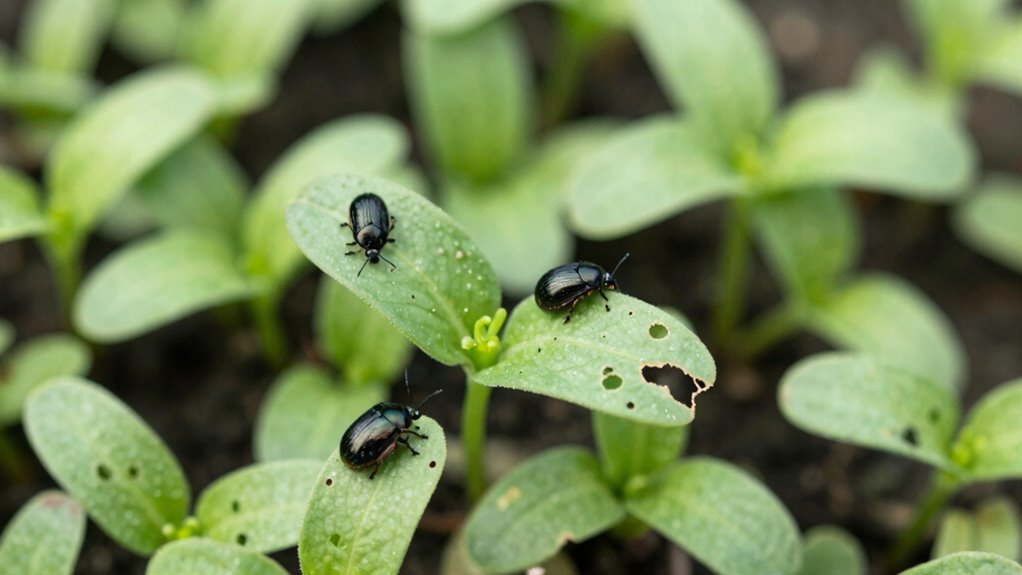

Flea beetle damage feels worse on tiny plants because each bite removes essential nutrients and weakens their delicate tissues, which are more vulnerable at this stage. Small plants have less foliage to hide behind and fewer reserves to recover, making the damage appear more severe. Every chew feels overwhelming and can stunt growth considerably. If you want to understand how small plants bounce back faster with the right care, keep exploring these helpful tips.

Get garden gear delivered free with Prime
- Fast, free delivery on millions of items
- Prime Video, Amazon Music and more included
- Member-only deals all year
Key Takeaways
- Tiny plants have less foliage, making each bite appear more damaging visually.
- Damage on small plants significantly hampers growth due to their delicate tissues.
- Even minimal feeding can cause substantial setbacks in tiny plants’ development.
- Small plants have fewer leaves to compensate for lost tissue, intensifying the perceived damage.
- Rapid feeding on fragile young plants leads to quicker and more noticeable deterioration.

Flea beetles can quickly become a serious problem for your tiny plants, especially when they first emerge. These tiny pests seem harmless at first, but their rapid feeding can cause significant damage, especially to young seedlings with delicate tissues. Because small plants have less foliage and weaker structures, the tiny holes they develop from flea beetle bites can look overwhelming and cause you to worry more than you might for mature plants. The damage feels worse because each bite takes away essential nutrients and can stunt growth, making your efforts to nurture tiny plants feel futile. When your plants are just starting out, every leaf and root counts, so losing even small portions can set back their development substantially.
Tiny plants are especially vulnerable to flea beetles, and early damage can significantly hinder their growth and development.
You might notice that flea beetles tend to attack your tiny plants more aggressively than their larger counterparts. This is partly because young plants haven’t yet developed the natural defenses that more mature plants can deploy. Their softer tissues are easier targets, and a small swarm can devastate a seedling overnight. The visual impact is stark: tiny plants look chewed up, with ragged leaves and compromised stems, which amplifies your concern about their survival. The damage on small plants also feels more personal because you see every bite and every lost leaf, making it seem like your efforts are wasted. This emotional response is natural, but understanding that flea beetles prefer tender, young plants helps you tailor your pest control strategies. Recognizing that plant vulnerability plays a key role can help you better protect your seedlings.
Implementing natural pest control methods can make a big difference, especially early in the season. Introducing beneficial insects like ladybugs or using organic sprays can help keep flea beetle populations in check without harming your soil health. Maintaining healthy soil is essential because strong, vibrant soil supports resilient plants that can better withstand pest attacks. When your soil is rich in organic matter and essential nutrients, your tiny plants grow stronger and more capable of fighting off pests naturally. Good soil health fosters a balanced ecosystem, encouraging beneficial insects that naturally help keep pest populations in balance. Enhancing soil fertility is also crucial, as nutrient-rich soil promotes the development of stronger plant tissues that are less attractive to pests.
Furthermore, practices such as crop rotation and avoiding overuse of chemical pesticides can help maintain soil resilience, making your plants less attractive to pests in the long run. In the end, the key to minimizing flea beetle damage on your tiny plants hinges on early intervention and promoting soil health. The damage feels worse because your plants are so vulnerable, but with patience and the right natural pest control tactics, you can protect your seedlings and give them a fighting chance to grow into healthy, robust plants. Remember, the tiniest plants can bounce back quickly if you act swiftly and focus on building a healthy garden environment that discourages pests naturally.
Products Worth Considering

Greenworks 40V 16-inch Cordless Push Lawn Mower with 4.0 Ah Battery and Charger

HOOYEAH 6 x 6 ft Walk-In Polycarbonate Greenhouse

Orbit B-hyve XR 8-Zone Indoor/Outdoor Smart Sprinkler Controller
As an affiliate, we earn on qualifying purchases.
Frequently Asked Questions
Do Flea Beetles Prefer Specific Plant Varieties Over Others?
Flea beetles do prefer specific plant varieties over others, often targeting those with less pest resistance traits. You’ll notice they favor plants with tender, young leaves, especially if the variety lacks pest resistance traits. To protect your garden, choose plant varieties known for their pest resistance traits. Additionally, consider companion planting and natural deterrents to make your plants less attractive to flea beetles and reduce damage.
How Quickly Can Flea Beetles Reproduce on Tiny Plants?
Flea beetles reproduce rapidly, especially on tiny plants, thanks to their short lifecycle and high reproduction rate. They can lay eggs within days, and larvae develop quickly, causing damage in just a few weeks. This swift flea beetle lifecycle means infestations can escalate rapidly if you don’t act fast. Tiny plants are especially vulnerable because their small size makes it easier for beetles to feed and reproduce, accelerating the problem.
Are There Natural Predators That Target Flea Beetles Effectively?
Yes, natural predators effectively target flea beetles, offering a sustainable pest control method. Predator species like ladybugs, lacewing larvae, and parasitic wasps hunt flea beetles and their eggs, reducing infestations. These natural pest control options can help protect your tiny plants without chemicals. Introducing or encouraging these beneficial insects creates a balanced ecosystem, making it easier to manage flea beetles naturally and keep your plants healthy and thriving.
Can Environmental Factors Influence Flea Beetle Activity?
Yes, environmental factors influence flea beetle activity. Warmer temperatures and soil moisture levels can increase their activity, making them more aggressive in feeding and damaging your plants. Temperature fluctuations, especially sudden changes, can also stress plants, making them more vulnerable. You should monitor soil moisture closely and consider mulching to regulate soil temperature, helping reduce flea beetle activity and protecting your tiny plants from severe damage.
What Are Signs of Flea Beetle Infestation Beyond Leaf Damage?
You might notice tiny, shimmering holes on your plants or tiny black specks, which are flea beetle droppings. Beneficial insects like ladybugs and parasitic wasps can help control these pests naturally, so avoid using harsh chemicals. Organic controls, such as neem oil or insecticidal soap, are effective too. Keep an eye out for this sign of infestation, especially on young plants, to prevent further damage.
Conclusion
As your tiny plants face flea beetle damage, remember you’re guiding a delicate ship through stormy waters. Their small size makes them more vulnerable, like a fragile glass shattering easily. But with patience and care, you can steer your garden back to calm. Keep an eye out, act quickly, and your plants will regain strength. Just like steering through rough seas, your attentive efforts can turn the tide and restore your garden’s beauty.