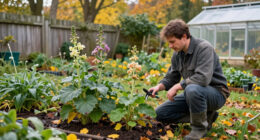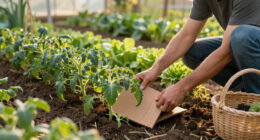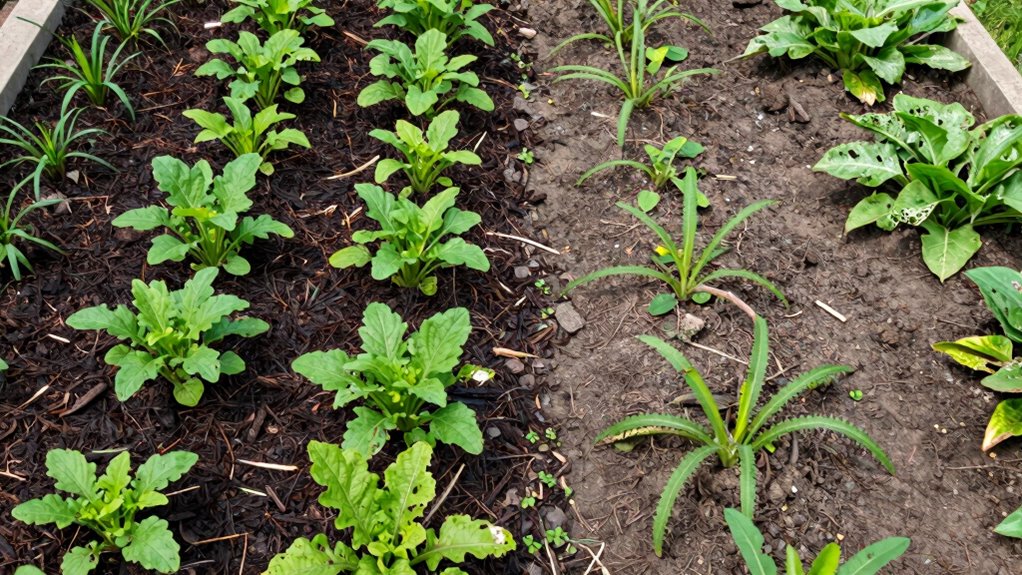
Using mulch on your soil usually lowers pest pressure compared to bare beds. Mulch helps regulate soil moisture, making it less attractive to soil-borne insects and fungi, while also suppressing weeds that shelter pests like aphids and beetles. However, damp mulch can attract slugs and snails, so careful management is key. For tips on balancing mulch and pest control effectively, keep exploring how different strategies can benefit your garden.

Get garden gear delivered free with Prime
- Fast, free delivery on millions of items
- Prime Video, Amazon Music and more included
- Member-only deals all year
Key Takeaways
- Mulched beds generally have lower pest populations due to weed suppression and fewer hiding spots.
- Bare soil beds attract more pests like aphids and beetles due to increased weed growth and shelter.
- Moisture retention under mulch can either discourage or encourage pests depending on the species.
- Damp conditions under mulch may increase fungal pests such as soil-borne fungi.
- Proper mulch management helps balance pest pressure by controlling habitat and moisture levels.
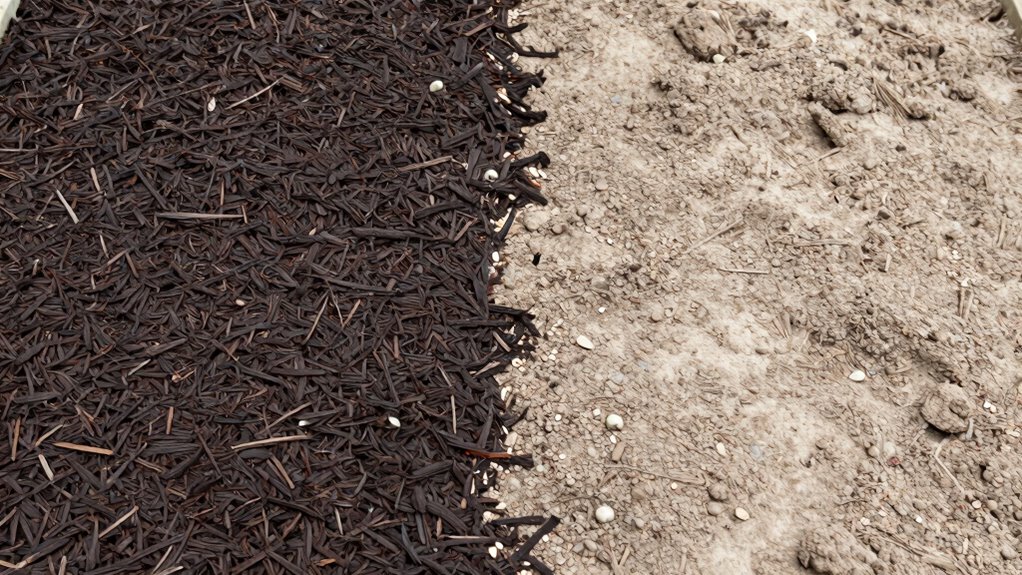
Mulched soil beds often experience different pest pressures compared to bare soil beds, and understanding these differences can help you manage your garden more effectively. When you apply mulch, it influences soil moisture levels, which in turn affects pest populations. Mulch helps retain soil moisture by reducing evaporation, creating a more stable environment for plant roots. This consistent moisture can discourage certain pests like soil-borne insects and fungi that thrive in dry or overly moist conditions. Conversely, it might attract others, such as slugs and snails, which prefer damp environments. Recognizing these shifts allows you to tailor your pest management strategies accordingly.
Mulch alters soil moisture, reducing some pests while attracting others like slugs and snails.
Additionally, mulch plays a vital role in weed suppression, which indirectly impacts pest pressure. By covering the soil surface, mulch prevents sunlight from reaching weed seeds, reducing their germination. Less weed growth means fewer hiding spots and food sources for pests like aphids and beetles that often congregate on weeds before moving to your crops. This reduction in weeds can lead to a decrease in pest populations, simplifying control efforts and promoting healthier plant growth. On the other hand, bare soil beds are more prone to weed invasion, providing pests with abundant shelter and resources. The increased weed presence can serve as a breeding ground for pests, making infestations more frequent and harder to manage.
While mulch can suppress some pests by limiting their habitat and food sources, it can also create favorable conditions for others. For instance, the moist environment under mulch may encourage fungal diseases or attract pests that thrive in such settings. This means you need to be vigilant and regularly inspect your plants and soil. Properly chosen mulch, like inorganic options or organic mulches that break down quickly, can help balance pest pressures while maintaining soil health. Additionally, understanding how mulch impacts soil moisture and weed suppression helps you develop more effective pest management strategies.
Ultimately, your goal should be to understand how mulch impacts soil moisture and weed suppression, and how these factors influence pest activity. By observing pest behavior and adjusting your mulch type and application depth, you can strike a balance that minimizes pest problems while promoting healthy plant growth. Keeping a close eye on moisture levels and weed presence will help you intervene early and prevent pest issues from escalating. With informed management, you can leverage mulch to create a garden environment that’s less hospitable to pests, making your gardening efforts more successful and sustainable.
As an affiliate, we earn on qualifying purchases.
Frequently Asked Questions
How Does Soil Moisture Impact Pest Attraction in Mulch Versus Bare Soil?
Soil moisture considerably influences pest attraction in both mulch and bare soil beds. When soil stays moist, pests like slugs and beetles are more drawn to the environment, especially under mulch, which retains moisture. In contrast, drier bare soil tends to deter pests. You should monitor soil moisture levels closely to manage pest pressure effectively, ensuring the environment isn’t overly moist where pests thrive or too dry to attract them.
Are Specific Pests More Prevalent in Mulched Beds Compared to Bare Soil?
You’ll find certain pests, like slugs and beetles, thrive way more in mulched beds, turning your garden into pest habitat hotspots. Mulch barriers provide hiding spots and retain moisture, creating perfect conditions for these critters to flourish. Bare soil, on the other hand, exposes pests to predators and harsh elements. So, if you notice more pests in mulch, it’s because they love the safe, moist environment it offers.
How Do Mulch Types Influence Pest Populations Differently Than Bare Soil?
Different mulch types influence pest populations by affecting mulch decomposition and pest habitat. Organic mulches decompose faster, providing shelter and food for pests, which can increase pest pressure. In contrast, inorganic mulches don’t decompose, reducing pest habitat and limiting pest attraction. You should choose your mulch carefully, considering how its decomposition rate and ability to create pest habitats might impact pest populations in your garden.
What Role Does Plant Health Play in Pest Pressure in Both Soil Types?
Think of your plants as soldiers in a battle, where healthy plants stand strong against pests. When plants are weakened by plant disease or nutrient competition, pests see an opportunity to attack, increasing pest pressure. Whether in mulched or bare soil beds, healthier plants resist pests better. Ensuring proper nutrition and disease management keeps your plants resilient, reducing pest issues and maintaining a thriving garden.
Can Pest Management Strategies Vary Significantly Between Mulched and Bare Beds?
Yes, pest management strategies can vary considerably between mulched and bare beds. Mulched beds often attract beneficial insects that help control pests naturally, reducing the need for chemicals. They also influence soil nutrient dynamics, promoting healthy plant growth that resists pests. In contrast, bare beds might require more active intervention, such as targeted pesticide use, since they lack the habitat for beneficial insects and may have less effective nutrient cycling.
As an affiliate, we earn on qualifying purchases.
Conclusion
As you compare mulched and bare soil beds, you might notice how nature’s subtle shifts often mirror your own efforts. Mulching appears to quietly reduce pest pressure, almost like a hidden shield, while bare soil invites more trouble. It’s a reminder that small choices in your garden can unexpectedly align with larger cycles of balance and resilience. Sometimes, the quietest actions lead to the most profound results—just like the gentle rhythm of nature’s unseen hand.
As an affiliate, we earn on qualifying purchases.
As an affiliate, we earn on qualifying purchases.
Fall yard work Picks
leaf blowers
As an affiliate, we earn on qualifying purchases.