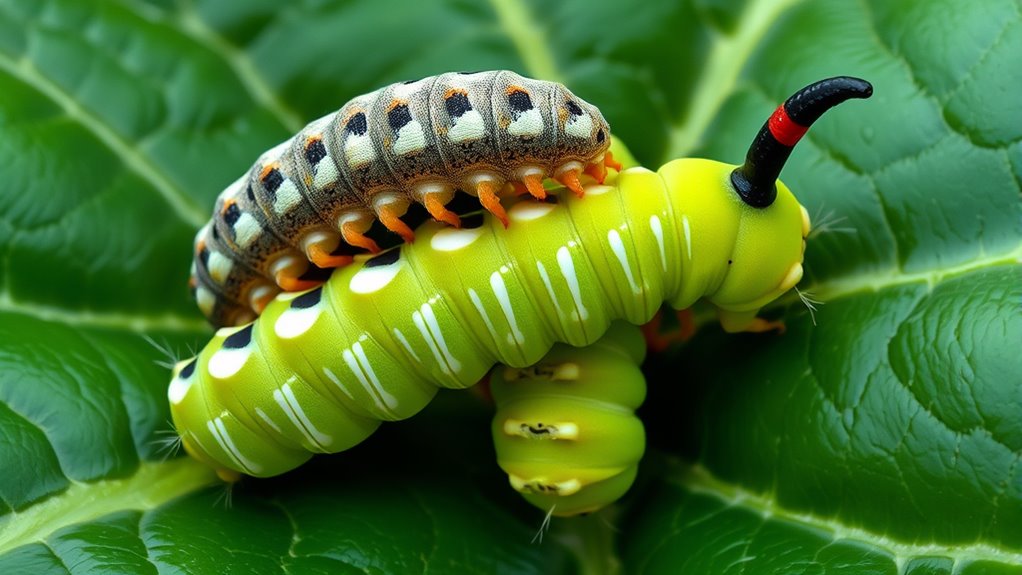

Tomato hornworms and tobacco hornworms look very similar, but you can tell them apart by their eggs, adult moths, and preferred plants. Tomato hornworm eggs are laid singly on tomato leaves, while tobacco hornworms lay clustered eggs on tobacco plants. Their adult moths also differ slightly in appearance, with tomato moths being smaller and darker. Pay attention to these signs, and you’ll gain a clearer picture of which pest you’re dealing with. There’s more to discover if you keep exploring.
Key Takeaways
- Tomato hornworms (*Manduca quinquemaculata*) have a gray body with white spots, while tobacco hornworms (*Manduca sexta*) are darker with more prominent patterns.
- Tomato hornworms tend to lay eggs singly on tomato plants, whereas tobacco hornworms deposit eggs in clusters on tobacco and related plants.
- Adult tomato hornworm moths are slightly smaller with a lighter appearance compared to the larger, darker tobacco hornworm moths.
- Egg-laying behaviors differ: tomato hornworms prefer tomato foliage, while tobacco hornworms target tobacco and related plants.
- Moth activity is nocturnal; observing adult moths helps distinguish between the species and predict larval development.

If you’re dealing with large, green caterpillars munching on your plants, you might be facing either a tomato hornworm or a tobacco hornworm. One of the key ways to tell them apart early on is understanding their egg-laying habits and the differences in their moth species. Both pests are the larval stages of moths from the Sphingidae family, but their reproductive behaviors help distinguish them. Tomato hornworms lay eggs singly on the undersides of leaves, often on tomato plants, while tobacco hornworms tend to lay their eggs in clusters on tobacco and related plants. The egg-laying habits are tied to their preferred host plants, but both species prefer to deposit their eggs on the foliage of plants in the night, which makes it tricky to spot their eggs until the larvae hatch. Additionally, their life cycles and timing of egg-laying can vary depending on environmental conditions, influencing when you might encounter them.
The moth species differences are subtle but significant. The adult tomato hornworm moth, *Manduca quinquemaculata*, has a distinctive gray body with white spots running along its back, and it tends to have a slightly smaller wingspan compared to the tobacco hornworm moth. The tobacco hornworm moth, *Manduca sexta*, has a more robust body with a darker, more patterned appearance, and its wings are often more elongated. Recognizing these adult moths can help you trace back to the caterpillars’ origins, especially if you’re trying to manage infestations proactively. The moths are nocturnal and are attracted to lights at night, making it easier for you to observe their activity if you keep an eye out after sunset.
Understanding the differences in egg-laying habits and moth species can help you develop targeted control strategies. For example, if you notice clusters of eggs on tobacco plants, you’re likely dealing with tobacco hornworms, and your focus should be on removing the egg clusters or early instar larvae before they grow large. Conversely, if you see eggs on tomato plants, the culprit is probably a tomato hornworm. Since these species lay eggs at different times and in different ways, observing these habits can help you act quickly before the larvae cause significant damage. Knowing the reproductive behaviors of each species can also assist in timing your interventions more effectively.
Frequently Asked Questions
How Do I Prevent Both Hornworms From Appearing in My Garden?
To prevent hornworms from appearing, start by practicing companion planting with herbs like basil and marigolds, which deter these pests. Consider planting pest-resistant varieties of your tomatoes and tobacco plants. Regularly inspect your garden for eggs and caterpillars, removing them promptly. Keep your garden healthy with proper watering and fertilizing, as strong plants resist pests better. These steps help reduce hornworm infestations and protect your plants naturally.
Are There Natural Predators That Control Hornworm Populations?
In the age of the internet, you can harness nature’s pest control. Beneficial insects like parasitic wasps and predator species such as ladybugs help keep hornworm populations in check. These insects naturally prey on the caterpillars, reducing their numbers without chemicals. You can attract them by planting nectar-rich flowers and avoiding broad-spectrum pesticides. Embracing these natural predators creates a healthier, more balanced garden ecosystem, effectively controlling hornworms.
Can Hornworms Damage Plants Beyond Tomatoes and Tobacco?
Yes, hornworms can cause plant damage beyond tomatoes and tobacco. They feed on various plants like peppers, eggplants, and potatoes, leaving behind significant pest damage. Proper pest identification helps you recognize these caterpillars early, allowing you to manage them effectively. If you see large green larvae with a horn, act quickly to prevent extensive plant damage and protect your garden’s health.
What Are the Best Organic Methods to Eliminate Hornworms?
Think of your garden as a fortress, and hornworms as invaders. To keep them out, try companion planting with marigolds or basil, which naturally repel pests. You can also handpick the worms and remove them from plants. Organic sprays like Bacillus thuringiensis or neem oil are effective, eco-friendly defenses. These methods strengthen your garden’s defenses without harming beneficial insects, ensuring healthy, pest-free plants.
How Long Do Hornworms Typically Stay in Their Larval Stage?
You’ll find that hornworms typically stay in their larval stage for about 3 to 4 weeks, depending on environmental conditions. During this larval duration, their growth period is quite rapid as they feed heavily on plants like tomatoes or tobacco. Keep an eye on your plants during this time, as the larvae can cause significant damage quickly. Proper monitoring helps you catch them early and manage their growth effectively.
Conclusion
Now that you know the differences between the tomato and tobacco hornworms, you might think you’re safe from their damage. But remember, these pests can surprise you when you least expect it. Will you spot the signs early enough to protect your plants? Or will one slip past your defenses and cause unexpected chaos? Stay vigilant—because in the battle between gardener and pest, the outcome can change in an instant. Are you ready for what’s next?