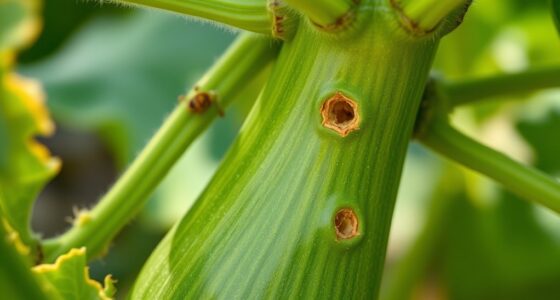
If you notice winding trails or discolored patches on your beet or spinach leaves, leafminers might be the culprit. These tiny larvae tunnel between leaf surfaces, causing visible damage that can weaken your plants. To manage them organically, remove affected leaves, use floating row covers, and encourage natural predators like parasitic wasps. Maintaining healthy plants and applying organic insecticides can also help. Keep exploring to discover effective strategies to protect your crops from these pests.

Get garden gear delivered free with Prime
- Fast, free delivery on millions of items
- Prime Video, Amazon Music and more included
- Member-only deals all year
Key Takeaways
- Leafminers create winding tunnels on beet and spinach leaves, causing discoloration and reduced plant health.
- Early detection involves inspecting leaves for serpentine mines and discolored spots.
- Remove and destroy affected leaves to eliminate larvae and prevent further infestation.
- Use floating row covers and crop rotation to physically block adult leafminer access.
- Promote plant vigor with proper organic fertilization to enhance resistance against leafminer damage.

If you grow beets or spinach, you might notice tiny, winding trails on your leaves—indications that leafminers have taken up residence. These tiny pests are the larvae of various insects, such as leafminer flies or moths, that tunnel between the upper and lower surfaces of your plant’s foliage. Recognizing pest identification is essential because it helps you determine the best course of action. Leafminer damage often appears as serpentine mines or blotchy patches, which can weaken your plants and reduce yields over time. The first step is to inspect your plants regularly, looking for these distinctive trails and any small, discolored spots that suggest larvae are feeding inside the leaves.
Once you confirm the presence of leafminers, you’ll want to focus on organic control methods to manage the infestation without resorting to chemical pesticides. One effective approach is to remove and destroy affected leaves—collect and discard them to eliminate larvae before they mature and spread further. Covering your crops with floating row covers can also serve as a physical barrier, preventing adult leafminers from laying eggs on your plants. This method is especially useful during peak adult activity periods and is a non-chemical way to protect your crops organically.
Remove affected leaves and use floating row covers to prevent leafminer damage organically.
Introducing natural predators can further help control leafminers. Beneficial insects like parasitic wasps, specifically Diglyphus species, prey on leafminer larvae and can considerably reduce their numbers. You can purchase these predators from garden centers or online suppliers and release them onto your plants early in the season. Additionally, applying organic insecticides such as neem oil or insecticidal soap can disrupt leafminer development. These solutions are safe for most beneficial insects and won’t harm your plants when used as directed.
Another organic control method involves maintaining healthy plant vigor. Strong, healthy plants are less susceptible to pest damage, so ensure proper watering, fertilizing, and weed management. Avoid excessive nitrogen, which can promote lush growth that attracts pests, and instead use balanced organic fertilizers to keep your plants resilient. Rotation of crops and planting resistant varieties can also help prevent future infestations.
organic leafminer insecticide for vegetables
As an affiliate, we earn on qualifying purchases.
As an affiliate, we earn on qualifying purchases.
Frequently Asked Questions
How Can I Distinguish Leafminer Damage From Other Pests?
To distinguish leafminer damage from other pests, look for winding, serpentine trails on your leaves, which are clear signs of leafminer activity. You’ll notice small, dark frass patterns within the tunnels, indicating larval presence. Unlike chewing pests, leafminer damage is characterized by these distinctive mines and frass patterns, making it easier to identify. Keep an eye out for these visual clues to effectively spot and manage the infestation.
Are Leafminers Harmful to Human Health or Only to Plants?
Coincidence often surprises you—leafminers are harmful only to plant health, not human health. You don’t need to worry about them affecting your safety when you harvest or eat beets and spinach. These pests tunnel inside leaves, damaging plant tissues but pose no direct risk to humans. Focus on managing plant health by controlling leafminers, but rest assured, your health remains unaffected by their presence.
What Natural Predators Help Control Leafminers in Beets and Spinach?
You can control leafminers in beets and spinach naturally by encouraging their predators. Parasitic wasps attack leafminer larvae, reducing their numbers effectively. Predatory beetles also feed on adult leafminers and larvae, helping keep infestations in check. To attract these beneficial insects, plant diverse flowers nearby and avoid broad-spectrum pesticides. This integrated approach supports a healthy garden ecosystem and minimizes the need for chemical controls.
Can Leafminers Affect the Taste or Nutritional Value of Beets and Spinach?
Leafminers can cause subtle taste alterations and minor nutritional impacts in beets and spinach. As they tunnel through leaves, they create unsightly streaks and weaken plant tissues, which might slightly change flavor. While the nutritional value remains largely intact, extensive damage can reduce vitamin content. You’ll notice the effects more visually than in taste or nutrition, but managing infestations guarantees your crops stay fresh, flavorful, and nutrient-rich.
How Long Is the Leafminer Life Cycle in Different Climates?
The leafminer lifecycle duration varies with climate influence. In warmer climates, it typically lasts 2 to 4 weeks, allowing multiple generations per season. In cooler environments, the lifecycle can extend up to 6 weeks or more. You’ll notice faster development in heat, which means you may need to monitor your plants more frequently. Understanding these climate effects helps you better manage infestations and protect your beets and spinach effectively.
beneficial parasitic wasps for pest control
As an affiliate, we earn on qualifying purchases.
As an affiliate, we earn on qualifying purchases.
Conclusion
If you ignore leafminers in your beets and spinach, you risk losing your entire crop overnight! These tiny pests can destroy your precious greens faster than you can say “harvest,” turning lush leaves into a mangled mess in no time. Don’t let these minuscule invaders steal your hard work and dreams. Act now—protect your garden fiercely, because one overlooked leafminer infestation could wipe out your entire harvest in the blink of an eye!
floating row covers for vegetable protection
As an affiliate, we earn on qualifying purchases.
As an affiliate, we earn on qualifying purchases.
organic fertilizers for beets and spinach
As an affiliate, we earn on qualifying purchases.
As an affiliate, we earn on qualifying purchases.
Fall yard work Picks
leaf blowers
As an affiliate, we earn on qualifying purchases.