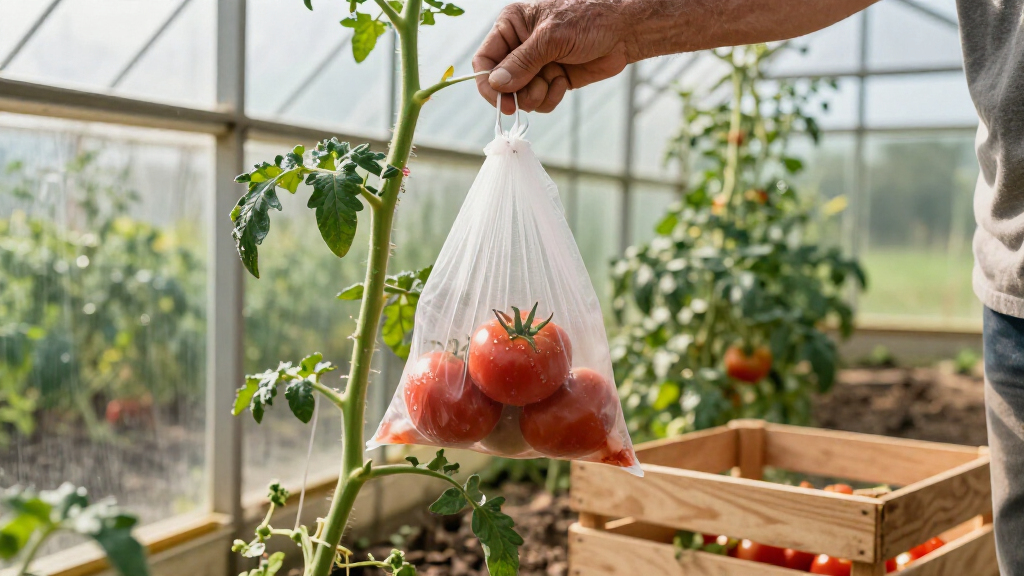

If you are searching for the best tomato ripening bags, the goal is simple: keep birds, squirrels, and insects off your fruit while letting sunlight and airflow ripen tomatoes naturally on the vine. My top pick is the Belit Reusable Garden Netting Bags, which stand out for their oversized 23.6 x 15.7 inch design that can wrap entire trusses of large heirloom tomatoes rather than individual fruits. For value hunters, the Shintop 100-Count bags and HRX 100-Count bags deliver the lowest cost per bag in this lineup, while the QenFree bags win on drawstring durability for season after season reuse. The main tradeoff in this category is size versus coverage: small 6 x 9 inch bags protect individual tomatoes but run out fast on a loaded plant, while larger bags cover more fruit per purchase but can be clumsy on compact varieties. Keep reading for the full breakdown of all ten options.

Get garden gear delivered free with Prime
- Fast, free delivery on millions of items
- Prime Video, Amazon Music and more included
- Member-only deals all year
Complete the kit


Key Takeaways
- Bag size is the single biggest differentiator: seven of the ten products sit at roughly 6 x 9 inches for individual-fruit protection, while the Belit (23.6 x 15.7 in) and Sukh (8 x 12 in) bags can cover whole trusses or large heirloom tomatoes.
- Cost per bag matters more than pack price: 100-count packs like the Shintop, QenFree, and HRX dramatically lower per-unit cost compared with 10- and 30-pack options, but only if you actually have that many tomatoes to bag.
- Drawstring quality varied widely and is the most common failure point: cheap cords fray or lose their cinch after a few weeks of weather exposure, which is why the QenFree and YunKo entries ranked higher for multi-season reuse.
- Fine mesh density affects ripening: tighter weaves block smaller insects like stink bugs and fruit flies but can slightly slow color development, while looser organza-style mesh ripens faster but lets smaller pests through.
- Green mesh blends into the foliage far better than white or bright colors, reducing the chance birds learn to associate bags with food — every product in this lineup uses green for that reason.


| tomato ripening bag | Material | Quantity | Closure | Brand |
|---|---|---|---|---|
| EWPJDK Reusable Fruit Protecti | Polyester | 70 bags | Double drawstring | EWPJDK |
| Shintop Fruit Protection Bags | Organza mesh | 100 bags | Double drawstring | Shintop |
| 50 Reusable Drawstring Fruit P | Nylon mesh | 50 bags | Double drawstring | Vindafjord |
| Belit Reusable Garden Netting | Nylon mesh | 10 bags | Drawstring | Belit |
| QenFree Reusable Fruit Protect | Polyester mesh | 100 bags | Double drawstring | QenFree |
| YunKo Fruit Protection Bags | Organza mesh | 50 bags | Drawstring | — |
| 30 Reusable Drawstring Fruit P | Mesh | 30 bags | Drawstring | — |
| NIUBIER Fruit Protection Bags | Polyester organza and nylon | 50 bags | Double drawstring | NIUBIER |
| HRX Reusable Mesh Fruit Protec | Polyester | 100 bags | Double drawstring | — |
| Sukh Reusable Fruit Protection | Organza | 50 bags | Drawstring | Sukh |
More Details on Our Top Picks
EWPJDK Reusable Fruit Protection Mesh Bags, 6 x 8 Inch, 70 Count
The 70-bag count gives this set a useful middle ground between Shintop’s 100 smaller-fruit covers and Belit’s 10 much larger bags. Its 6 x 8-inch polyester mesh is intended for individual produce, so it can shield developing tomatoes while letting air, water, and light reach them. The double drawstring should make routine placement and removal straightforward, and washable construction supports reuse across harvests. The tradeoff is the shorter length: compared with Shintop’s 6 x 9-inch bags, this leaves less room for longer fruit or clusters. Covering each tomato also takes more time than enclosing several together. I’d choose it for gardeners protecting a varied number of individual fruits who want a practical count without committing to a bulk pack.
Pros:- 70 bags provide more coverage than Belit’s 10-pack without requiring a 100-count set.
- Polyester mesh passes air, water, and light to covered produce.
- Double drawstrings help secure each bag and simplify removal.
- Washable, reusable construction supports use across growing seasons.
Cons:- The 6 x 8-inch size may be too short for larger or elongated tomatoes.
- Individual bags require repeated installation when protecting many fruits.
Best for: Home gardeners who want to cover several dozen individual tomatoes and other small produce items.
Not ideal for: Growers protecting long tomatoes or whole clusters, since the 6 x 8-inch bags offer less coverage than the 6 x 9-inch alternatives.
- Brand:EWPJDK
- Material:Polyester
- Bag size:6 x 8 inches
- Quantity:70 bags
- Color:Green
- Closure:Double drawstring
- Model:FRUIT BAG-1
Our verdict“Choose EWPJDK for a mid-sized supply of reusable covers for individual small-to-medium tomatoes and mixed garden produce.”
Shintop Fruit Protection Bags, 6 × 9 Inches, 100 Count
Shintop suits gardeners who want to cover many individual tomatoes: its 100-bag pack supplies more covers than EWPJDK’s 70-count set or Vindafjord’s 50. Each 6 × 9-inch organza mesh bag allows airflow, light, and moisture through, while its double drawstring helps keep the cover in place around a fruit. That breathable design is a better fit for ripening produce than an opaque wrap, though the listing describes pest protection rather than a sealed barrier. Persistent or larger pests may still get through, and the stated size can be restrictive for large tomatoes or clusters. Compared with Belit’s oversized bags, Shintop focuses on one piece of produce at a time, which gives a closer fit but means more individual placement. It makes the most sense when quantity matters and fruit is modest in size.
Pros:- 100 bags provide the largest individual-cover count among the first five listed products.
- Organza mesh allows airflow, light, and moisture through.
- Double drawstrings help secure bags around produce.
- Designed for a range of small fruits and vegetables, including tomatoes and berries.
Cons:- The 6 × 9-inch size may not fit larger fruit or clusters.
- Lightweight mesh may not stop larger or persistent pests.
- Covering each item individually takes time across a large garden.
Best for: Gardeners with many small-to-medium tomatoes who want a separate breathable cover for each fruit.
Not ideal for: Growers with large tomatoes, clusters, or persistent larger pests that lightweight mesh may not deter.
- Brand:Shintop
- Material:Organza mesh
- Bag size:6 × 9 inches
- Quantity:100 bags
- Color:Green
- Closure:Double drawstring
- Model number:SDSGBHD-17X23CM-100
Our verdict“Pick Shintop when you need many breathable covers for individual small-to-medium tomatoes and can accept the limits of lightweight mesh.”
50 Reusable Drawstring Fruit Protection Mesh Bags, 6 × 9 Inches
Vindafjord’s set is a straightforward choice for protecting a moderate number of individual tomatoes: it pairs 50 reusable nylon mesh bags with the same 6 × 9-inch format as Shintop’s larger pack. Nylon mesh passes sunlight and water through, so the covers can stay on as fruit develops; the double drawstring supports placement and removal. Its smaller count is the clear distinction. Compared with Shintop’s 100 organza bags, this set means fewer covers to store and handle, but it will run short sooner if you are protecting a large crop. The listing says the mesh can protect against insects, birds, and small animals, though it does not establish a barrier against determined pests. I’d favor it for a smaller planting where reusable individual covers matter more than maximizing quantity.
Pros:- Reusable nylon mesh allows sunlight and water through.
- Double drawstrings help secure bags around individual produce.
- 50-count pack is suited to a moderate rather than extensive crop.
- Green mesh is designed for use across different fruits and vegetables.
Cons:- The 50-bag count is lower than Shintop’s 100-count pack.
- The 6 × 9-inch size may not fit larger tomatoes or clusters.
- Mesh may not deter persistent animals or pests.
Best for: Small-space gardeners who want reusable individual covers for a modest number of tomatoes.
Not ideal for: Gardeners covering a large crop or larger fruit, since the set has 50 bags and each measures 6 × 9 inches.
- Brand:Vindafjord
- Material:Nylon mesh
- Bag size:6 × 9 inches
- Quantity:50 bags
- Color:Green
- Closure:Double drawstring
- Reusable:Yes
Our verdict“Choose Vindafjord for a modest tomato planting that needs reusable nylon covers without a high bag count.”
Belit Reusable Garden Netting Bags, 10 Pack, 23.6 x 15.7 in
Belit takes a different approach from the individual-fruit covers in the rest of this group. Each 23.6 x 15.7-inch bag is far larger than Shintop’s 6 × 9-inch model, giving gardeners more room to enclose a larger tomato or a small cluster. The soft, stretchy nylon mesh allows light and ventilation through, and a drawstring provides a way to open and secure the bag. That extra coverage comes with a major count tradeoff: there are only 10 bags, compared with 50 in Vindafjord’s pack and 100 in Shintop’s. The listing also cautions that the dimensions may not suit every crop, and it does not specify a fine mesh rating. I’d select Belit when small bags are plainly too restrictive and the number of protected fruits is limited.
Pros:- Large dimensions provide substantially more room than the individual-fruit bags.
- Soft, stretchy nylon mesh allows light and ventilation.
- Drawstring closure helps secure and reopen the bag.
- Reusable design is listed for indoor and outdoor gardening.
Cons:- 10 bags cover far fewer individual fruits than Shintop or Vindafjord.
- Large dimensions may be awkward for small tomatoes or compact plants.
- The listing does not specify a fine mesh rating for smaller insects.
Best for: Gardeners with a few large tomatoes or small fruit clusters that do not fit standard 6 × 9-inch bags.
Not ideal for: Anyone covering dozens of individual fruits, because the pack contains only 10 bags and each is oversized for small produce.
- Brand:Belit
- Material:Nylon mesh
- Bag size:23.6 x 15.7 inches
- Quantity:10 bags
- Closure:Drawstring
- UPC:779584463579
Our verdict“Belit is the better fit when a few large tomatoes or clusters need more room than standard individual-fruit bags allow.”
QenFree Reusable Fruit Protection Bags, 6 × 9 Inches, 100 Count
QenFree combines a 100-bag count with washable, reusable polyester mesh, making it a practical bulk option for gardeners who cover many individual tomatoes. Its double drawstrings are designed for repeated placement and removal, while the breathable mesh passes sunlight, air, and water through. Compared with Vindafjord’s 50-bag nylon set, QenFree supplies twice as many covers; compared with Shintop’s 100-count organza set, it offers polyester and explicitly washable reuse. There is one detail to resolve before choosing it: the title says 6 × 9 inches, while the description says 6 × 8 inches. That discrepancy affects fit, especially for longer fruit. I’d consider this set when quantity and washable construction are priorities, but the uncertain size makes it less predictable than a listing with consistent dimensions.
Pros:- 100 bags provide a large supply for many individual fruits.
- Polyester mesh allows sunlight, air, and water through.
- Washable and reusable construction supports repeated seasonal use.
- Double drawstrings make placement and removal easier.
Cons:- The title lists 6 × 9 inches while the description lists 6 × 8 inches.
- Individual covers take time to install across a large crop.
- The stated dimensions may not fit larger tomatoes or clusters.
Best for: Gardeners who need a large supply of washable covers for individual small tomatoes and other produce.
Not ideal for: Buyers who need a confirmed bag size for larger or elongated tomatoes, because the listing gives conflicting dimensions.
- Brand:QenFree
- Material:Polyester mesh
- Bag size:6 × 9 inches in title; 6 × 8 inches in description
- Quantity:100 bags
- Closure:Double drawstring
- Reusable:Yes; washable
- Suitable for:Fruit and vegetables, including apples, peaches, tomatoes, and blueberries
Our verdict“Choose QenFree for a high-count washable set if the seller confirms which listed bag size applies.”
YunKo Fruit Protection Bags, 50-Pack, 6.5 x 9 Inches, Green Organza Drawstring Mesh
This option stands out for growers who only need to cover a handful of plants at a time. The organza mesh is fine enough to keep insects off ripening tomatoes while letting sunlight and rain pass through, which matters if you want fruit to finish coloring on the vine rather than on a windowsill. Compared with the HRX 100-count pack, the smaller quantity here makes sense for someone bagging a dozen tomatoes rather than an entire row. The near-transparent weave is a genuine advantage over denser netting like the Sukh bags, since you can monitor color change without untying anything. The tradeoff is capacity: larger beefsteak varieties will strain the 6.5 x 9 inch dimensions, and organza is a delicate fabric that snags on branches more readily than sturdier polyester mesh.
Pros:- Fine organza mesh keeps insects off while admitting sunlight and rain
- Nearly transparent fabric makes it easy to check ripeness without removing the bag
- Drawstring secures cleanly around stems and branches
- Doubles as gift or favor packaging in the off-season
Cons:- 6.5 x 9 inch size is too small for larger fruit varieties
- Organza is a delicate weave that snags more easily than polyester mesh
Best for: Home growers ripening a small number of standard-size tomatoes who want to visually track color development
Not ideal for: Gardeners with large heirloom or beefsteak tomatoes, which will outgrow the bag before full ripeness
- Quantity:50 bags
- Size:6.5 x 9 inches
- Material:Organza mesh
- Color:Green
- Closure:Drawstring
- Intended use:Fruit protection and small gift packaging
Our verdict“A sensible pick for small-scale growers who value visibility over raw quantity.”
30 Reusable Drawstring Fruit Protection Netting Bags, 5.9 × 7.8 Inches
For anyone new to bagging tomatoes, starting with 30 bags instead of 50 or 100 is a lower-commitment way to learn the technique. This set is the most approachable entry point in the lineup: fewer bags means less upfront outlay while you figure out sizing, timing, and how tightly to cinch the drawstring. The bags are lightweight and breathable, and the design emphasizes gentle removal so you’re not tearing fruit skin when harvesting. Against the NIUBIER 50-pack, you give up quantity but gain flexibility — if the method doesn’t suit your garden, you haven’t committed to a bulk supply. The honest drawback is that the 5.9 × 7.8 inch footprint is the smallest in this batch, so medium tomatoes will fill it quickly, and the listing is thin on material specifics, which makes long-term durability a genuine unknown compared with brands that name their fabric.
Pros:- Small 30-bag count lowers the barrier to trying fruit bagging for the first time
- Designed specifically for removal without damaging produce
- Breathable mesh keeps sunlight and air reaching the fruit
- Drawstring closure is simple to secure one-handed on the vine
Cons:- Smallest dimensions in this batch — medium produce fills the bag fast
- No specific material or durability details provided by the seller
Best for: First-time fruit baggers who want to test the method on a few plants before buying in bulk
Not ideal for: Growers protecting a full tomato row or large fruit varieties — the count and dimensions both fall short
- Quantity:30 bags
- Dimensions:5.9 × 7.8 inches
- Material:Mesh
- Closure:Drawstring
- Suitable for:Medium fruits, vegetables, and flowers
- Reusability:Reusable
Our verdict“A low-risk starter set for experimenting with ripening bags before committing to a larger pack.”
NIUBIER Fruit Protection Bags, 50-Pack, 6 × 9 in, Green Mesh with Drawstrings
This 50-pack hits a practical middle ground in the lineup: more coverage than the 30-bag starter set, less excess than the HRX 100-count bulk pack. What separates it from similarly sized competitors is the double drawstring closure, which cinches from both sides and holds its grip through wind and stem growth better than a single-cord design like the YunKo bags use. The polyester-organza and nylon construction is also washable, so a single season’s purchase can carry into the next year with a rinse and air-dry — a real cost-per-use advantage over treating bags as disposable. The see-through weave lets you watch tomatoes turn without unbagging them. The limitation is the familiar one: 6 x 9 inches works well for standard slicers and romas, but big heirlooms will stretch the seam and can pop the drawstring loose late in the season.
Pros:- Double drawstring closure grips more securely than single-cord designs
- Washable and reusable across multiple growing seasons
- See-through mesh allows ripeness checks without removal
- 50-bag count fits a mid-sized garden without excess inventory
Cons:- 6 x 9 inch size won’t accommodate larger produce
- Double drawstrings take slightly longer to cinch than single-cord alternatives
Best for: Gardeners with multiple standard-size tomato plants who want reusable bags at a mid-range quantity
Not ideal for: Growers of large heirloom or beefsteak varieties that outgrow the 6 x 9 inch footprint
- Brand:NIUBIER
- Quantity:50 bags
- Size:6 × 9 in
- Material:Polyester organza and nylon
- Color:Green
- Closure:Double drawstring
- Use:Fruit and vegetable protection, indoor or outdoor gardens
Our verdict“The most sensible all-around pick for a typical home tomato patch that needs durable, reusable bags in moderate quantity.”
HRX Reusable Mesh Fruit Protection Bags, 6 × 9 in, 100 Count, Green
When every tomato on every plant needs a bag, quantity is the deciding factor, and this is where the HRX 100-count pack earns its place. Doubling the count of the NIUBIER 50-pack at a similar per-bag footprint makes this the natural choice for anyone running a serious patch or protecting a mixed garden of tomatoes, peppers, and squash. The polyester mesh allows air, water, and light through so fruit ripens naturally rather than in the dark, and the double drawstring matches the NIUBIER’s secure closure. Like other polyester options here, the bags wash clean for reuse, stretching value across seasons. The honest tradeoffs: the 6 x 9 inch size is the same constraint every standard bag in this roundup carries, and the seller provides no durability claims for the mesh itself, so expectations for multi-season lifespan should stay modest compared with brands that specify fabric details.
Pros:- 100-bag count covers large gardens in a single purchase
- Double drawstrings hold securely in wind and during fruit growth
- Allows air, water, and light through so fruit ripens naturally on the vine
- Washable and reusable to offset the bulk quantity over multiple seasons
Cons:- 6 x 9 inch size excludes larger fruit varieties
- No manufacturer information on long-term mesh durability
Best for: Gardeners with a large tomato patch or mixed produce garden who need to bag dozens of fruits at once
Not ideal for: Small-space growers with a few container tomatoes — a 100-count box will mostly sit unused
- Material:Polyester
- Size:6 × 9 in
- Quantity:100 bags
- Color:Green
- Closure:Double drawstring
- Reusable:Yes, washable
- Suitable for:Fruits, vegetables, and flowers
Our verdict“The volume pick — best when you need to bag an entire garden rather than a few plants.”
Sukh Reusable Fruit Protection Mesh Bags, 8 x 12 Inches, 50 Pack
This is the pick that solves the problem every other bag in this batch creates: running out of room. At 8 x 12 inches, the Sukh bags offer roughly double the area of the standard 6 x 9 inch options from NIUBIER or HRX, which is the difference between a bag that fits a plum tomato and one that accommodates a fully grown beefsteak or a small cluster. The breathable organza lets sunlight and rain reach the fruit, supporting natural on-vine ripening rather than slowing it down, and the drawstring secures without pinching the stem. Because the bags are roomier, they also need fewer mid-season re-baggings as fruit swells. The flip side of that size is material cost per bag and a looser fit on small tomatoes, where excess fabric can flap in wind or catch on nearby branches. And like the rest of the lineup, these cover individual fruits, not whole plants.
Pros:- 8 x 12 inch size comfortably fits large and clustered fruit that standard bags can’t hold
- Breathable organza allows sunlight and rain to pass through for natural ripening
- Drawstrings make securing and removal straightforward
- Reusable, and roomy enough to double as small-item storage bags
Cons:- Loose, baggy fit on small fruit varieties
- Covers individual fruits only — not a solution for whole-plant protection
Best for: Growers of large heirloom, beefsteak, or clustered tomatoes that outgrow standard 6 x 9 inch bags
Not ideal for: Gardeners with cherry or small roma tomatoes — the extra fabric is wasted and can snag or flap loose
- Brand:Sukh
- Material:Organza
- Dimensions:8 x 12 inches
- Quantity:50 bags
- Color:Green
- Closure:Drawstring
- Reusable:Yes
- Use:Ripening fruit and vegetable protection; small-item storage
Our verdict“The size solution for big tomatoes — choose it when standard 6 x 9 inch bags keep bursting at the seams.”

How We Picked
I evaluated these tomato ripening bags on five factors that actually affect harvest outcomes. Mesh density and airflow came first: a bag that traps heat or moisture invites rot and splitting, so I favored weaves that stay breathable while still excluding pests. Size flexibility mattered next, because cherry tomatoes, slicers, and big heirlooms like Brandywine each need different coverage. Drawstring and seam construction determined reusability, since a bag that survives one season costs far more per use than a sturdier one. I also weighed cost per bag across pack sizes and visibility of the fruit through the mesh, because most gardeners want to check ripeness without untying every bag.
The ranking logic is straightforward: products that balance durability, size versatility, and per-bag value sit at the top, while one-dimensional picks — either very cheap or very large — fill specific niche roles lower down. The Belit earned the top spot because it is the only option that covers whole branches, a genuine functional leap over individual-fruit bags. Mid-tier rankings reflect tradeoffs between pack count and build quality, and the bottom entries are solid but duplicated by nearly identical competitors with better drawstrings or pricing.
| tomato ripening bag | Closure |
|---|---|
| EWPJDK Reusable Fruit Protecti | Double drawstring |
| Shintop Fruit Protection Bags | Double drawstring |
| 50 Reusable Drawstring Fruit P | Double drawstring |
| Belit Reusable Garden Netting | Drawstring |
| QenFree Reusable Fruit Protect | Double drawstring |
| YunKo Fruit Protection Bags | Drawstring |
| 30 Reusable Drawstring Fruit P | Drawstring |
| NIUBIER Fruit Protection Bags | Double drawstring |
| HRX Reusable Mesh Fruit Protec | Double drawstring |
| Sukh Reusable Fruit Protection | Drawstring |
Factors to Consider When Choosing Best Tomato Ripening Bags
Choosing tomato ripening bags comes down to matching bag design to your garden’s pest pressure, tomato varieties, and how many seasons you plan to reuse them. These are the factors that actually change harvest results.
Match Bag Size to Your Tomato Varieties
The most common mistake gardeners make is buying one size of bag for every tomato in the garden. Cherry and grape tomatoes cluster tightly, so a 6 x 9 inch bag can often enclose an entire cluster, but large slicers and heirlooms like Cherokee Purple can outgrow a standard bag mid-season, splitting seams or leaving fruit exposed. If you grow beefsteak varieties, look at the larger options in this roundup — the Belit and Sukh bags — or accept that you will re-bag fruit as it swells. Also think about how many tomatoes you realistically need to protect: a single healthy plant can carry 15 to 20 fruits at once, which is why 50- and 100-count packs exist. Buying too few bags usually leads to protecting only the earliest fruit and losing the later flush to birds. Measure your largest typical tomato before ordering, then add an inch of clearance for growth.
Mesh Density and Its Effect on Ripening
Not all mesh is woven the same, and the gaps between threads determine what the bag keeps out. Tighter weaves block stink bugs, fruit flies, and even some aphid pressure, but they reduce light penetration slightly, which can slow color development in late-season or shaded fruit. Looser organza-style mesh lets sunlight through freely and speeds visible ripening, but smaller insects and thrips can slip through the gaps. If your main enemy is birds or squirrels, mesh density barely matters — go for airflow. If you battle brown marmorated stink bugs or piercing insects, choose the finer weaves. One practical tip: check ripeness by feel through the bag rather than untying it, since every opening is a chance for a pest to sneak in and for the drawstring to lose its cinch.
Drawstring and Seam Quality for Multi-Season Use
The drawstring is the part that fails first, and it is where cheap bags separate themselves from reusable ones. Thin cords fray at the ends, knot themselves into unusable tangles, or stretch out after repeated rain exposure so the bag no longer cinches shut — at which point a bird can simply reach inside. Look for cords with sealed or taped ends and reinforced channel stitching where the string exits the bag. Seams matter too: a burst side seam in August means unprotected fruit at peak pest season. Gardeners who buy 100-count packs of flimsy bags often end up replacing them annually, while a sturdier 50-pack can last three seasons, making the pricier option cheaper per year of use. Untie bags carefully at harvest instead of ripping them, and most quality bags will survive several rounds.
Pack Size and Cost per Bag
Raw pack price is misleading; what matters is cost per protected tomato. A 100-count pack sounds excessive until you count the fruit across four or five plants — it fills up fast. The larger consideration is wasted inventory: if you only grow a few containers of tomatoes, a 100-count pack may deteriorate in storage before you use half of it, since UV and humidity degrade nylon mesh even in a shed. Container gardeners and beginners are usually better served by 30- to 50-count packs, while in-ground gardeners with multiple plants should buy the bulk sizes. Also account for damage and loss: expect to retire a few bags each season to torn seams or lost drawstrings, and keep spares on hand during peak harvest.
Color and Visibility Considerations
All ten products in this roundup use green mesh, and that is not a coincidence. Green blends into foliage, which keeps the bags visually inconspicuous to birds that otherwise learn to associate strange objects with food. The downside is that green bags also make fruit harder for you to spot, so ripe tomatoes can hide until they over-ripen or drop. Some gardeners mark nearly-ripe bags with a twist tie or flag to track harvest timing. White or light mesh improves visibility but attracts attention from birds and looks conspicuous in the landscape. If you check your plants daily, green is the right call; if you garden sporadically on weekends, consider tagging bags so nothing gets missed.
When to Bag Versus Other Protection Methods
Bags are not the only tool, and knowing when to use them saves money and effort. Bagging excels for high-value fruit, late-season ripening, seed-saving (bags prevent cross-pollination and keep seed clean), and small gardens where netting an entire plant is impractical. For a large planting of determinate tomatoes that all ripen at once, whole-plant netting or bird netting is usually faster than bagging dozens of individual fruits. Bags also do nothing against foliar disease or hornworms, which feed through the mesh on leaves outside the bag. A sensible hybrid approach: net or cage the plants for general protection, then bag only the fruit you are racing to ripen before frost or the tomatoes you want for seed.
Frequently Asked Questions
Do tomato ripening bags actually help tomatoes ripen faster?
The bags themselves do not speed up the biochemical ripening process — that is driven by the fruit’s own ethylene production and ambient temperature. What they do is let you leave fruit on the vine longer without losing it to birds and squirrels, and vine ripening produces better flavor and texture than counter ripening. A bag with good light transmission, like the looser organza weaves in this roundup, allows full color development while the fruit stays attached. Tighter mesh may slow visible coloring slightly by filtering sunlight, so if speed is your priority, lean toward the more open weaves. Think of these bags as ripening insurance rather than ripening accelerators.
Should I bag tomatoes when they are green or wait until they start turning color?
Most experienced gardeners bag at the first blush of color, sometimes called the breaker stage. At that point the fruit has already committed to ripening, so bagging will not stunt development, and it is large enough that you are not wasting a bag on fruit that might still drop or be diseased. Bagging fully green fruit works too, but you commit more bags earlier in the season and some green fruit never develops properly. The exception is heavy squirrel pressure — squirrels will take hard green tomatoes, so in those gardens you bag early and accept the tradeoff. Whichever stage you choose, leave at least an inch of room for the fruit to swell.
Can I reuse tomato ripening bags from season to season?
Yes, and reuse is where the value in this category lives, but only if the bags are built for it. Inspect each bag at the end of the season: frayed drawstrings, stretched cinch channels, and burst side seams are the three failure points, and they show up far sooner in cheap bulk packs. Rinse bags in a mild bleach solution and dry them fully before storage, because overwintering fungal spores on mesh can infect next year’s fruit. Store them out of sunlight, since UV degrades nylon mesh even indoors over years. A quality bag should survive two to four seasons; if yours are single-season, the per-use math favors upgrading to a sturdier option like the QenFree or Belit bags.
Will mesh bags protect tomatoes from stink bugs and other insects?
It depends entirely on mesh density, and this is where the products in this roundup genuinely differ. Birds, squirrels, and cabbage loopers are stopped by virtually any intact bag, but stink bugs, leaf-footed bugs, and thrips have piercing mouthparts and small bodies that slip through loose organza weaves. If piercing insects are your problem, you need the finer mesh options — the tighter-woven green mesh bags rather than the sheer organza styles. Even fine mesh will not stop an insect that was already on the fruit when you bagged it, so do a quick inspection before closing each bag. For severe stink bug pressure, some gardeners double-bag the most valuable fruit, accepting reduced airflow as the cost.
Are bigger bags or smaller individual bags the better buy?
Neither is universally better — it comes down to your garden’s layout and how you harvest. Large truss bags like the Belit cover a whole cluster or branch in one step, which saves time on heavily loaded plants and works well for seed savers who want to isolate a cluster. Their downsides are cost per bag, clumsiness on small plants, and the fact that one torn bag exposes many fruits at once. Small individual bags are cheaper per unit, easier to fit on compact determinate varieties, and contain losses to one fruit at a time, but bagging 40 tomatoes individually is tedious. Many gardeners end up using both: large bags for cherry tomato trusses and small bags for individual slicers.
Conclusion
After comparing all ten options, the right choice depends on how you garden. For best overall, the Belit Reusable Garden Netting Bags earn the top spot thanks to their branch-covering size, which no other product in this lineup matches — ideal for heirloom growers and anyone tired of bagging fruit one at a time. For best value, the Shintop 100-Count and HRX 100-Count bags deliver the lowest cost per protected tomato, perfect for large in-ground gardens. For best premium, the QenFree 100-Count justifies its position with drawstring and seam quality that supports multiple seasons of reuse. For beginners and container gardeners, the NIUBIER 50-Pack or the 30-count drawstring option offer a sensible starting quantity without overcommitting budget or storage space. And for a hybrid approach, the Sukh 8 x 12 inch bags bridge the gap between individual-fruit and truss coverage, suiting medium slicers and cherry clusters alike. Whatever you pick, prioritize drawstring quality and size fit over pack count — those two factors determine whether your bags protect one harvest or four.
Fall Picks
fall essentials
As an affiliate, we earn on qualifying purchases.