
Garden pest control sprays range from fast-acting synthetic killers to gentle organic options safe for edible plants, and the right choice depends on what you’re growing and what’s eating it. For most gardeners, Spectracide Triazicide earns the top spot because it wipes out a broad list of lawn and landscape pests in a single application at a reasonable price. If you’re spraying vegetables, BioAdvanced Vegetable & Garden Insect Spray is the stronger pick since it’s labeled for edibles and keeps working for weeks. Gardeners who want a natural approach should look at Earth’s Ally 3-in-1 or Bonide Insecticidal Soap, which handle soft-bodied pests without harsh chemicals. The main tradeoff in this category is always potency versus safety — stronger sprays kill more pests faster but often require waiting periods before harvest and more careful handling. Keep reading for the full breakdown of all 12 sprays and which one fits your garden.
Get ready for Prime Big Deal Days — try Prime free
Exclusive member deals on October 6–7, plus fast free delivery. Cancel anytime.
Start your free trialAs an affiliate, we earn on qualifying purchases.
Complete the kit


Key Takeaways
- Only about half of these sprays are labeled for use on edible plants — if you’re treating vegetables or fruit, BioAdvanced Vegetable & Garden and Bonide Insecticidal Soap are the safest bets among the top performers.
- Ready-to-use convenience costs more per ounce: concentrates like Spectracide Triazicide and BioAdvanced Vegetable & Garden deliver far more treatments per dollar than pre-mixed trigger or hose-end sprays.
- Natural options (Earth’s Ally, Wondercide, Mighty Mint, neem, insecticidal soap) excel at prevention and soft-bodied pests like aphids and mites but struggle against heavy beetle or caterpillar infestations that synthetic sprays clear in days.
- Sevin‘s 1-gallon ready-to-use format offers the best value for large vegetable gardens despite its longer pre-harvest interval, while Mighty Mint is a repellent, not a killer — it won’t fix an existing infestation.
- Ortho Home Defense belongs on this list only for perimeter defense; treating garden plants directly with it is off-label, so don’t buy it as your primary garden spray.
| Spectracide Triazicide Insect Killer for Lawns & Landscapes 32 Oz | 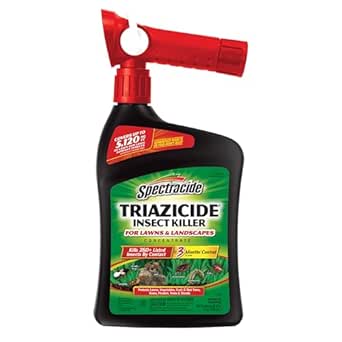 | Best Overall | Volume: 32 oz | Application: Concentrate or ready-to-spray | Insects Killed: Over 260 species | VIEW LATEST PRICE | See Our Full Breakdown |
| BioAdvanced Vegetable & Garden Insect Spray Concentrate – 32 fl oz |  | Best for Large Gardens | Volume: 32 fl oz | Coverage: Up to 5,333 sq ft | Application: Concentrate — mix and spray leaves until coated | VIEW LATEST PRICE | See Our Full Breakdown |
| Earth’s Ally 3-in-1 Plant Spray for Pests & Disease, 32 Oz |  | Best for Pollinator Gardens | Size: 32 oz | Type: Botanical oil 3-in-1 plant spray | Ingredients: Thyme oil, rosemary oil, clove oil, peppermint oil | VIEW LATEST PRICE | See Our Full Breakdown |
| BioAdvanced Rose & Flower Insect Killer Spray – 24 oz |  | Best for Ornamentals | Volume: 24 oz | Application: Ready-to-use spray | Suitable For: Roses, flowers, shrubs, vegetable gardens | VIEW LATEST PRICE | See Our Full Breakdown |
| Bonide Captain Jack’s Neem Oil, 32 oz Ready-to-Use Spray |  | Best for Organic Edibles | Volume: 32 oz | Application: Ready-to-use trigger spray | Functions: Fungicide, insecticide, miticide | VIEW LATEST PRICE | See Our Full Breakdown |
| BioAdvanced Organics Tomato, Vegetable & Fruit Insect Control – 24 oz |  | Best for Edible Gardens | Volume: 24 oz | Application: Ready-to-use spray | Certification: OMRI listed for organic gardening | VIEW LATEST PRICE | See Our Full Breakdown |
| Wondercide Outdoor Pest Control Spray with Natural Essential Oils – 32 oz |  | Best Pet-Safe Yard Spray | Volume: 32 oz | Coverage: Treats up to 5,000 square feet | Application: Garden hose attachment | VIEW LATEST PRICE | See Our Full Breakdown |
| Ortho BugClear Insect Killer for Lawns & Landscapes Ready-to-Spray, 32 oz |  | Best for Large Lawns | Volume: 32 oz | Application: Ready-to-spray hose end | Lawn coverage: 5,300 sq ft | VIEW LATEST PRICE | See Our Full Breakdown |
| Bonide Insecticidal Soap, 32 oz Ready-to-Use Spray for Organic Gardening |  | Best Gentle Option | Volume: 32 oz | Application: Ready-to-use trigger spray | Mode of action: Kills by direct contact and ingestion | VIEW LATEST PRICE | See Our Full Breakdown |
| Sevin Insect Killer Spray, Ready-to-Use, 1 Gallon |  | Best for Severe Infestations | Volume: 1 gallon (128 oz) | Application: Ready-to-use, no mixing | Pests killed: Over 700 listed pests | VIEW LATEST PRICE | See Our Full Breakdown |
| Mighty Mint Peppermint Oil Insect Repellent Spray, 1 Gallon |  | Best Natural Repellent for Pet Households | Size: 1 gallon (128 oz) | Formulation: Plant-based peppermint oil | Type: Repellent/deterrent, not a contact killer | VIEW LATEST PRICE | See Our Full Breakdown |
| Ortho Home Defense Insect Killer for Indoor & Perimeter, 1.33 gal. |  | Best Long-Lasting Perimeter Barrier | Volume: 1.33 gallons | Application: Indoor and perimeter outdoor use | Sprayer: Battery-powered Comfort Wand | VIEW LATEST PRICE | See Our Full Breakdown |
| garden pest control spray | Volume | Application |
|---|---|---|
| Spectracide Triazicide Insect | 32 oz | Concentrate or ready-to-spray |
| BioAdvanced Vegetable & Garden | 32 fl oz | Concentrate — mix and spray leaves until coated |
| Earth’s Ally 3-in-1 Plant Spra | — | — |
| BioAdvanced Rose & Flower Inse | 24 oz | Ready-to-use spray |
| Bonide Captain Jack’s Neem Oil | 32 oz | Ready-to-use trigger spray |
| BioAdvanced Organics Tomato | 24 oz | Ready-to-use spray |
| Wondercide Outdoor Pest Contro | 32 oz | Garden hose attachment |
| Ortho BugClear Insect Killer f | 32 oz | Ready-to-spray hose end |
| Bonide Insecticidal Soap | 32 oz | Ready-to-use trigger spray |
| Sevin Insect Killer Spray | 1 gallon (128 oz) | Ready-to-use, no mixing |
| Mighty Mint Peppermint Oil Ins | — | — |
| Ortho Home Defense Insect Kill | 1.33 gallons | Indoor and perimeter outdoor use |
More Details on Our Top Picks
Spectracide Triazicide Insect Killer for Lawns & Landscapes 32 Oz
When a yard is under attack from seemingly everything at once — grubs, ants, fleas, ticks, beetles — Spectracide Triazicide stands out for sheer breadth, killing over 260 insect species on contact. Compared with BioAdvanced Vegetable & Garden, which targets around 70 insects, this is the far more aggressive option for whole-property problems rather than a single bed. The choice between concentrate and ready-to-spray hose-end format adds flexibility the Bonide products don’t offer. The tradeoff is real, though: this is a broad-spectrum chemical, so it demands careful handling and shouldn’t be sprayed carelessly around pollinator activity. Non-staining claims also depend on surface condition, so test before treating patios or siding.
Pros:- Kills over 260 insect species on contact
- Works across lawns, vegetables, trees, roses, and shrubs
- Available as concentrate or ready-to-spray
- Fast-acting formula with visible results quickly
Cons:- Requires mixing or hose attachment for application
- Potential chemical exposure risk without careful handling
- Non-staining performance varies by surface
Best for: Homeowners managing widespread, multi-pest infestations across lawns, trees, and vegetable gardens at once
Not ideal for: Bee-friendly or pollinator-focused gardens — its broad-spectrum chemistry doesn’t discriminate the way Earth’s Ally does
- Volume:32 oz
- Application:Concentrate or ready-to-spray
- Insects Killed:Over 260 species
- Use Sites:Lawns, landscapes, vegetables, fruit and nut trees, roses, flowers, shrubs
- Speed:Kills on contact
- Target Pests:Grubs, ants, fleas, ticks, beetles and more
Our verdict“Buy this if you need one heavy-duty spray to knock down a serious, yard-wide infestation fast — not if pollinators are a priority.”
BioAdvanced Vegetable & Garden Insect Spray Concentrate – 32 fl oz
Where this BioAdvanced concentrate earns its place is coverage per dollar: a single 32 oz bottle treats up to 5,333 square feet, which makes it far more economical per square foot than Bonide’s ready-to-use neem spray of the same size. The rainproof protection within an hour is another practical edge over sprays like BioAdvanced Rose & Flower, which can wash out and need redoing after rainfall. You do pay for that in effort — this is a concentrate, so there’s mixing involved, and over-application is easy if you’re heavy-handed with the hose-end sprayer. For a gardener with a substantial vegetable plot, that mixing chore is a fair exchange for treating the whole space in one session.
Pros:- Treats up to 5,333 sq ft per bottle
- Rainproof within one hour of application
- Kills over 70 listed insects on contact
- Covers lawns, vegetables, and gardens with one product
Cons:- Requires mixing before every application
- Outdoor use only
- Easy to over-apply without careful measuring
Best for: Gardeners with large vegetable plots or lawns who want maximum treated area from one bottle
Not ideal for: Small container gardens or balcony growers — mixing concentrate for a few pots is more hassle than a ready-to-use spray warrants
- Volume:32 fl oz
- Coverage:Up to 5,333 sq ft
- Application:Concentrate — mix and spray leaves until coated
- Insects Killed:Over 70 listed species
- Rainproof:Within one hour
- Use Sites:Lawns, vegetables, gardens
- Target Pests:Ants, aphids, mosquitos and more
Our verdict“The smart pick when square footage matters — one bottle covers what smaller sprays would need three of to match.”
Earth’s Ally 3-in-1 Plant Spray for Pests & Disease, 32 Oz
This is the lineup’s clearest pollinator-safe choice. Where Spectracide Triazicide kills broadly and indiscriminately, Earth’s Ally uses a blend of thyme, rosemary, clove, and peppermint oils that targets soft-bodied pests like aphids, spider mites, and whiteflies while leaving bees alone. The 3-in-1 action against both pests and disease also gives it more range than Bonide Insecticidal Soap, which handles insects only. Compared with Captain Jack’s Neem Oil, it’s gentler on plants and works indoors too. The honest tradeoff is persistence: botanical oils break down quickly, so stubborn infestations need repeat applications rather than one decisive spray, and overuse can sensitivity-stress delicate foliage.
Pros:- Safe for bees and beneficial insects
- Treats pests and common plant diseases in one spray
- Made with natural essential oils
- Works indoors and outdoors on many plant types
Cons:- Persistent pests may require multiple applications
- Essential oils can stress sensitive plants if overused
Best for: Pollinator-conscious gardeners and houseplant owners who want a natural spray safe around bees, kids, and pets
Not ideal for: Anyone facing a severe, fast-moving infestation — natural oils work slower and need repetition where a chemical spray acts in one pass
- Size:32 oz
- Type:Botanical oil 3-in-1 plant spray
- Ingredients:Thyme oil, rosemary oil, clove oil, peppermint oil
- Use:Indoor and outdoor
- Targets:Aphids, spider mites, whiteflies plus common diseases
- Pollinator Safety:Bee safe
Our verdict“The right choice when protecting bees and growing edible or indoor plants matters more than instant knockdown power.”
BioAdvanced Rose & Flower Insect Killer Spray – 24 oz
This one earns its slot through specialization and duration: it’s built for roses and flowering shrubs, controlling Japanese Beetles, Whiteflies, and Leafminers, and — unlike Earth’s Ally, which breaks down fast — it delivers up to 14 days of residual protection per application. That staying power means fewer trips out with the sprayer during peak beetle season. The smaller 24 oz ready-to-use bottle also makes it more grab-and-go than BioAdvanced’s Vegetable & Garden concentrate, with zero mixing. But the same residual chemistry is the drawback: it can harm beneficial insects visiting blooms, and rain can force reapplication. It’s a trade of convenience and duration for ecological precision.
Pros:- Up to 14 days of protection per application
- Fast-acting on contact against Japanese Beetles and more
- Ready-to-use with no mixing
- Safe for use on roses, shrubs, and vegetable gardens
Cons:- Outdoor use only
- May need reapplication after rain
- Chemical formula can affect beneficial insects
Best for: Rose growers and ornamental-flower gardeners battling recurring beetle and whitefly damage
Not ideal for: Vegetable-heavy or pollinator gardens — the residual formula can affect beneficial insects that flowering plants depend on
- Volume:24 oz
- Application:Ready-to-use spray
- Suitable For:Roses, flowers, shrubs, vegetable gardens
- Protection Duration:Up to 14 days
- Target Pests:Japanese Beetles, Whiteflies, Leafminers
- Use:Outdoor only
Our verdict“Pick this for a dedicated rose bed where long residual protection beats re-spraying every few days.”
Bonide Captain Jack’s Neem Oil, 32 oz Ready-to-Use Spray
Captain Jack’s Neem Oil is the strongest pick here for certified organic gardening on edible plants, functioning as a fungicide, insecticide, and miticide in a single ready-to-use trigger bottle. Compared with BioAdvanced Rose & Flower’s chemical residuals, neem breaks down naturally — that’s why it’s permitted in organic production, but also why it demands reapplication every 7-14 days. Versus Earth’s Ally, it covers more ground functionally by tackling fungal problems like powdery mildew alongside insects, though it needs thorough leaf coverage, including undersides, to work. No mixing, no measuring, OMRI-style organic credibility: that convenience-and-safety combination is the whole pitch.
Pros:- Approved for organic gardening and edible plants
- Works as fungicide, insecticide, and miticide
- Convenient ready-to-use trigger spray
- Treats and prevents common fungal issues like powdery mildew
Cons:- Requires reapplication every 7-14 days
- Needs thorough coverage, including leaf undersides, to be effective
Best for: Organic vegetable gardeners who want one spray to handle both insects and fungal disease on edibles
Not ideal for: Gardeners wanting set-and-forget protection — the 7-14 day reapplication cycle demands consistent attention
- Volume:32 oz
- Application:Ready-to-use trigger spray
- Functions:Fungicide, insecticide, miticide
- Organic:Yes
- Use Sites:Garden plants and vegetables
- Reapplication:Every 7-14 days
Our verdict“The go-to for organic growers who accept a regular spraying routine in exchange for safety on food crops.”
BioAdvanced Organics Tomato, Vegetable & Fruit Insect Control – 24 oz
This is the pick that makes the most sense for anyone growing food. The OMRI-listed organic formula means you can spray tomatoes and herbs on Friday and harvest over the weekend without second-guessing, something Sevin’s chemical-based gallon jug can’t offer. It also pulls double duty with curative powdery mildew protection, covering both the pest and the fungal problems that usually hit vegetable patches together. Compared with Bonide’s Insecticidal Soap, which kills only on contact, this one controls 30 listed pests including aphids, caterpillars, and spider mites across a broader range of scenarios. The tradeoff is persistence: expect to reapply every 7-10 days during heavy infestations, and the 24 oz bottle runs out faster than the one-gallon options in this lineup.
Pros:- OMRI listed for organic gardening
- Doubles as powdery mildew treatment
- Broad label covering 30 pests on edibles and ornamentals
- Ready-to-use with no mixing required
Cons:- Requires repeat applications every 7-10 days
- Small 24 oz bottle covers less area than gallon-size competitors
Best for: Vegetable gardeners and fruit growers who want organic-certified protection they can spray close to harvest
Not ideal for: Homeowners treating a whole lawn — this is a plant-by-plant spray, not a yard-wide solution like Ortho BugClear
- Volume:24 oz
- Application:Ready-to-use spray
- Certification:OMRI listed for organic gardening
- Suitable for:Vegetables, fruits, herbs, ornamentals, lawns, greenhouses
- Pests controlled:Aphids, caterpillars, mealybugs, spider mites, thrips, and 30 listed pests
- Disease control:Curative powdery mildew protection
- Reapplication:Every 7-10 days as needed
Our verdict“Buy this if your priority is safe, organic pest control on food crops rather than maximum coverage per dollar.”
Wondercide Outdoor Pest Control Spray with Natural Essential Oils – 32 oz
Wondercide stands out for a reason none of the chemical options in this roundup can match: safety for pets, kids, and pollinators with no drying time before re-entry. Where Ortho BugClear and Sevin both lock people and animals out of treated areas until dry, this essential-oil formula lets the dog back on the lawn immediately. It hooks to a garden hose and treats up to 5,000 square feet, targeting mosquitoes, ticks, fleas, and ants rather than garden pests on plants — a different job than BioAdvanced’s vegetable spray. Honest tradeoff: results depend on your hose pressure and walking pace, so coverage is less predictable than the synthetic alternatives, and it’s strictly an outdoor product.
Pros:- Plant-based essential oil formula safe for pets, family, and pollinators
- No drying time before re-entry
- Hose-end application treats up to 5,000 sq ft
- Works on mosquitoes, ticks, fleas, ants, and gnats
Cons:- Coverage and effectiveness depend on water pressure and walking speed
- Outdoor use only
- Weaker residual control than synthetic insecticides like Ortho BugClear
Best for: Pet owners and families who want to treat a whole yard for mosquitoes, fleas, and ticks without keeping kids and dogs indoors
Not ideal for: Gardeners fighting aphids or caterpillars on plants — this is a lawn-and-landscape repellent, not a plant treatment
- Volume:32 oz
- Coverage:Treats up to 5,000 square feet
- Application:Garden hose attachment
- Formula:Natural essential oils, plant-based
- Effective on:Mosquitoes, ants, ticks, fleas, gnats, Japanese beetles, no-see-ums, crickets
- Drying time:None required
- Safety:Safe for pets, family, beneficial insects, and pollinators
- Use area:Outdoor only
Our verdict“Choose this when peace of mind around pets matters more than the maximum kill count of chemical sprays.”
Ortho BugClear Insect Killer for Lawns & Landscapes Ready-to-Spray, 32 oz
If your problem is the yard rather than the vegetable bed, this option delivers the most sheer coverage per bottle: 5,300 square feet of lawn from a single 32 oz hose-end bottle. Its 235-bug kill list puts it near Sevin in breadth while staying focused on outdoor surfaces — ants, mosquitoes, ticks, and grubs rather than garden foliage specifically. Compared with Wondercide, the long-lasting residual control means fewer reapplications through the season, which is why it earns the large-lawn slot despite the chemical tradeoffs. Those tradeoffs are real: it’s outdoor only, needs a hose connection, and won’t appeal to anyone keeping pollinators or free-range pets on the property.
Pros:- Kills 235 listed insects quickly
- Covers 5,300 sq ft of lawn per bottle
- Long-lasting residual control reduces reapplications
- Simple hose-end application with no mixing
Cons:- Outdoor use only, no indoor or edibles coverage
- Chemical formula less safe for pollinators and pets than organic options
- Requires a hose connection, limiting spot treatments
Best for: Suburban homeowners with big lawns who want fast, season-long control of ants, ticks, and mosquitoes across the whole yard
Not ideal for: Pollinator gardeners and pet owners — Wondercide’s natural formula is the safer choice for shared outdoor space
- Volume:32 oz
- Application:Ready-to-spray hose end
- Lawn coverage:5,300 sq ft
- Foundation coverage:1,400 sq ft
- Foliage coverage:2,700 sq ft
- Pests targeted:235 listed bugs including ants, mosquitoes, ticks
- Speed:Fast knockdown with long-lasting control
- Use area:Outdoor lawns and landscapes only
Our verdict“The most efficient choice for treating a large yard fast, as long as chemical safety isn’t your top priority.”
Bonide Insecticidal Soap, 32 oz Ready-to-Use Spray for Organic Gardening
This is the gentlest chemistry in the roundup — a potassium soap formulation that kills soft-bodied pests on contact without leaving residues that worry organic gardeners. It works indoors and out, a flexibility no other spray here offers, making it the go-to for houseplants, herbs, and seedlings. Compared with BioAdvanced Organics, which adds mildew control and a broader pest list, Bonide’s soap trades range for softness: it’s safe around beneficials and gentle on tender growth, but it only kills what it physically touches. That means thorough leaf-underside spraying and repeat applications to catch survivors — more effort than a systemic or residual product demands.
Pros:- Organic gardening approved formula
- Works indoors on houseplants and outdoors in the garden
- Gentle on tender plants and seedlings
- Ready-to-use trigger spray, no mixing
Cons:- Contact-only action requires hitting each pest directly
- Multiple applications needed for established infestations
- No residual or long-term pest protection
Best for: Organic gardeners and houseplant owners who want the gentlest possible spray for aphids, mites, and soft pests on tender plants
Not ideal for: Anyone facing a heavy infestation — contact-only killing demands repeated, thorough spraying where a residual product like Ortho BugClear would work once
- Volume:32 oz
- Application:Ready-to-use trigger spray
- Mode of action:Kills by direct contact and ingestion
- Use:Indoor and outdoor organic gardening
- Suitable plants:Vegetables, herbs, fruits, ornamentals, houseplants
- Pests controlled:Aphids, caterpillars, mites, and other soft-bodied insects
- Residual protection:None — contact kill only
Our verdict“The right pick when gentleness and indoor flexibility matter more than one-spray convenience.”
Sevin Insect Killer Spray, Ready-to-Use, 1 Gallon
When a garden is genuinely under siege, nothing in this lineup matches Sevin’s 700-pest kill list. Japanese beetles, whiteflies, aphids, borers — if it crawls or flies, this covers it, and the one-gallon ready-to-use jug means you can fight through a full season without restocking, unlike the 24 oz BioAdvanced Organics bottle. It’s safe for plants and blooms once dry, so flower gardens survive treatment. The cost is caution: people and pets must stay off treated areas until dry, and the chemical handling requirements are the most demanding here — a fair reason for pollinator-minded gardeners to pick Bonide’s soap or Wondercide instead. It’s the heavy artillery option: best when you need decisive results, not gentle maintenance.
Pros:- Broadest coverage in the roundup at over 700 pests
- Full gallon of ready-to-use spray for extended treatment
- Kills on contact for fast results
- Safe for plants and blooms when used as directed
Cons:- People and pets must wait until spray dries before re-entry
- Chemical formula requires careful handling
- Harsher on beneficial insects than organic alternatives
Best for: Gardeners battling a severe, mixed infestation who need broad-spectrum knockdown and a big bottle that lasts
Not ideal for: Pollinator-friendly and edible-focused gardeners — organic options like BioAdvanced Organics handle food crops more safely
- Volume:1 gallon (128 oz)
- Application:Ready-to-use, no mixing
- Pests killed:Over 700 listed pests
- Mode of action:Kills on contact
- Plant safety:Safe for plants and blooms after drying
- Timing:Apply early season or at first signs of insect damage
- Re-entry:Wait until spray is dry before people and pets return
Our verdict“Reach for this when scale and severity demand the strongest, broadest treatment available — and handle it accordingly.”
Mighty Mint Peppermint Oil Insect Repellent Spray, 1 Gallon
Most sprays in this roundup kill on contact, but Mighty Mint takes a different approach: it deters pests before they settle in. Compared with Wondercide Outdoor Pest Control Spray, which also leans on essential oils, Mighty Mint wins on sheer volume — a full gallon at a similar price point means you can treat baseboards, entry points, and garden borders generously without rationing. The plant-based peppermint oil formula is the real draw for pet owners and parents, since it avoids the synthetic actives found in Sevin Insect Killer Spray and other chemical options in this guide. The tradeoff is honest: as a repellent rather than a killer, it won’t wipe out an established infestation, and outdoor applications fade faster than the 12-month barriers chemical sprays advertise. Think of it as prevention, not eradication.
Pros:- Pet-friendly and family-safe plant-based formula
- One-gallon size offers far more value per ounce than most essential oil sprays
- Works on a broad pest list including spiders, ants, and roaches
- Leaves a fresh mint scent instead of a chemical odor
- Versatile enough for both indoor and outdoor use
Cons:- Requires frequent reapplication outdoors where sun and rain break it down
- Repels rather than kills, so established pest populations persist
- Strong peppermint scent is unpleasant for scent-sensitive households
Best for: Pet owners and families who want a plant-based preventive spray for indoor entry points, patios, and garden borders
Not ideal for: Anyone dealing with an active infestation — this deters rather than eliminates, so a chemical option like Sevin will work faster
- Size:1 gallon (128 oz)
- Formulation:Plant-based peppermint oil
- Type:Repellent/deterrent, not a contact killer
- Target pests:Spiders, ants, roaches, and other common insects
- Use areas:Indoor and outdoor
- Safety:Pet-friendly and family-safe when used as directed
- Scent:Fresh peppermint
Our verdict“Buy this if you want safe, preventive pest deterrence around kids and pets; skip it if you need to kill an infestation outright.”
Ortho Home Defense Insect Killer for Indoor & Perimeter, 1.33 gal.
Where Mighty Mint deters pests temporarily, Ortho Home Defense is built to stop them at the door for up to 12 months. That long residual barrier is what separates it from shorter-lived options like Bonide Insecticidal Soap, which must be reapplied after nearly every treatment. The included battery-powered Comfort Wand is the other standout — compared with pump-spray bottles in this roundup like Bonide Captain Jack’s Neem Oil, it lets you treat an entire foundation perimeter without hand fatigue or chemical contact on your hands. The tradeoffs are real: this is a synthetic chemical formula, so it demands more careful handling than the organic picks, the odor is noticeable indoors, and rain will strip the outdoor barrier. It’s also a home-defense product at heart, not a vegetable-garden treatment.
Pros:- Barrier protection lasts up to 12 months indoors
- Battery-powered Comfort Wand enables effortless, no-pump application
- Effective against a wide range of household and perimeter pests
- 1.33-gallon capacity covers a full home perimeter
Cons:- Synthetic chemical formula requires careful handling and keeps kids and pets away until dry
- Outdoor barrier needs reapplication after heavy rain
- Strong odor during and after indoor application
Best for: Homeowners who want a set-and-forget chemical barrier around their foundation, basement, and entry points
Not ideal for: Edible gardeners and organic growers — this is a perimeter and home treatment, not a vegetable-safe spray
- Volume:1.33 gallons
- Application:Indoor and perimeter outdoor use
- Sprayer:Battery-powered Comfort Wand
- Residual protection:Up to 12 months on indoor surfaces
- Type:Synthetic chemical insect killer and barrier
- Target area:Home foundations, basements, entry points, patios
- Rain resistance:Requires reapplication after heavy rain outdoors
Our verdict“This is the pick for homeowners who want year-long perimeter defense with minimal effort — not for anyone growing food or avoiding synthetic chemicals.”
How We Picked
I evaluated each spray against five criteria that matter most to real gardeners: pest coverage (how many common garden pests it actually kills), edible-plant safety (labeled for vegetables and fruit, plus pre-harvest intervals), speed and residual control (knockdown versus weeks of protection), ease of use (ready-to-use versus concentrate mixing), and cost per treatment. Products labeled for food crops ranked higher when performance was close, because most people spraying a garden are protecting something they plan to eat. I also weighed environmental impact — bee toxicity and runoff risk — which is why several organic options earned spots despite narrower pest coverage.
The ranking order reflects a simple logic: broad-spectrum effectiveness on edible and ornamental plants first, then value, then specialty niches. Spectracide Triazicide leads for its unmatched pest list and coverage area, followed by vegetable-safe workhorses. The middle of the list groups the natural and organic sprays, ordered by versatility — Earth’s Ally’s 3-in-1 formula beats single-purpose oils and soaps. The bottom entries aren’t bad products; they’re simply niche tools with narrower use cases, like Mighty Mint’s repellent-only action and Ortho Home Defense’s indoor/perimeter focus.
Factors to Consider When Choosing Garden Pest Control Sprays
Before clicking buy on any spray, it helps to understand how the category actually works. These are the factors that separate a satisfying purchase from a bottle that sits half-used in the shed.Edible Versus Ornamental: Match the Label to Your Plants
The single most common mistake gardeners make is grabbing a strong lawn-and-landscape spray and using it on tomatoes. Products like Spectracide Triazicide and Ortho BugClear are formulated for ornamentals and turf; using them on food crops is off-label and can leave residues you don’t want on your plate. Always check the label for a list of approved plants and a pre-harvest interval — the days you must wait between spraying and picking. Some vegetable-safe products require just one day, while others demand up to a week or more, which matters enormously if you harvest daily during peak season. If your garden mixes flowers and vegetables, either buy an edible-labeled spray for everything or keep two bottles and spray selectively.
Contact Killers Versus Residual Control
Sprays work in two fundamentally different ways, and knowing which you need prevents wasted money. Contact killers like insecticidal soap and pyrethrin-based sprays only affect insects they touch during application — great for immediate knockdown, useless for pests that hatch next week. Systemic and residual sprays get absorbed by the plant or leave a coating that keeps killing for weeks, which is how products like BioAdvanced’s concentrates justify their price. If you’re fighting a rolling infestation of Japanese beetles or squash bugs, residual control wins. For a small aphid outbreak on herbs you’ll harvest tomorrow, a fast-contact organic spray is the smarter, safer call.
Concentrate Versus Ready-to-Use: The Real Cost Difference
A 32-ounce concentrate that mixes with water in a pump sprayer can treat thousands of square feet for the same price as a ready-to-use bottle covering a few hundred. That said, ready-to-use formats have genuine value: no measuring, no mixing errors, no storing diluted leftovers. The mistake to avoid is buying ready-to-use for a large garden — you’ll spend three to five times more per treatment and run out mid-season. Hose-end sprayers like Ortho BugClear offer a middle path with reasonable per-treatment economics and no pump sprayer required. My general rule: small patio gardens benefit from ready-to-use convenience, while anything over a few raised beds deserves a concentrate.
Organic Doesn’t Mean Harmless
Many buyers assume natural sprays can be applied freely without precautions, but that’s a costly assumption. Neem oil, pyrethrins, and even insecticidal soaps can harm pollinators and beneficial insects if sprayed on flowering plants or applied in midday heat. Natural oils also carry real plant-burn risk when temperatures climb above 85°F, especially on tender foliage. The advantage of organic options isn’t zero risk — it’s shorter persistence, no synthetic residues, and compatibility with organic certification. Spray in early morning or evening, avoid open blooms, and target the undersides of leaves where pests congregate. That discipline matters more than which organic bottle you choose.
Know Your Pest Before You Spray
Broad-spectrum sprays get marketed as do-everything solutions, but matching the product to the pest gets better results with less chemical. Soft-bodied insects — aphids, whiteflies, spider mites, mealybugs — fall quickly to soaps and oils, making the gentle options genuinely sufficient. Chewing insects like caterpillars, beetles, and earwigs shrug off soaps and need something stronger like spinosad, carbaryl, or a synthetic. Repellents like peppermint oil sprays prevent arrival but do nothing once pests are established and feeding. If you can’t identify the pest, check the damage pattern: curled leaves and sticky honeydew point to sap-suckers, while ragged holes and chewed edges point to chewers. Buying the wrong type wastes a full treatment cycle while the infestation grows.
Bee and Pet Safety Considerations
Gardens exist in ecosystems, and the spray you choose affects everything living in yours. Several synthetic options — particularly those with permethrin, carbaryl, or zeta-cypermethrin — are highly toxic to bees and should never be applied to blooming plants or near hives. If pollinators actively visit your garden during the growing season, the organic half of this list is the responsible choice, with the same evening-spraying discipline mentioned earlier. Pet owners face a parallel question: dogs and cats that chew treated grass or track residue indoors can be exposed. Natural essential-oil sprays like Wondercide are formulated with household pets in mind, while lawn-focused synthetics call for keeping animals off treated areas until dry. Read the environmental hazards box on any label — it’s more informative than the marketing on the front of the bottle.
Frequently Asked Questions
Can I use lawn and landscape sprays like Spectracide Triazicide on my vegetable garden?
No — Triazicide and similar lawn-and-landscape formulas are not labeled for edible crops, and using them on vegetables means applying the product off-label with unknown residue levels. The label is a legal document, not a suggestion, and it specifies exactly which plants and pests are approved. For vegetables, choose a product with an explicit edible-plant listing, such as BioAdvanced Vegetable & Garden Insect Spray or Bonide Insecticidal Soap. The compromise is that vegetable-labeled synthetics typically have a slightly shorter pest list than landscape formulas, so you may need a second product for ornamentals. If you want one bottle for everything, the organic sprays like Earth’s Ally or neem oil are usually labeled for both, accepting a gentler level of control.
How long do I need to wait before harvesting vegetables after spraying?
Pre-harvest intervals vary dramatically by product, from as little as one day for some organic soaps up to a week or more for certain synthetic concentrates. This single number should shape your buying decision if you harvest continuously during the season — a seven-day wait on productive tomatoes means missing ripe fruit while the interval runs. Check the label’s directions for use section, where the interval is listed per crop, since it can differ between tomatoes, leafy greens, and fruiting vegetables. Ready-to-use organic sprays like insecticidal soap generally carry the shortest intervals, sometimes just requiring a rinse at harvest. Set a reminder on your phone for the interval date; guessing is how residues end up on your plate.
Are natural pest control sprays actually effective, or just a marketing claim?
They’re effective within a narrower window, and knowing that window prevents disappointment. Insecticidal soap and neem oil reliably kill aphids, mites, whiteflies, and other soft-bodied pests on contact or shortly after, and university extension research backs them for those uses. Where natural sprays fall short is against armored or chewing pests — Japanese beetles, large caterpillar infestations, and squash bugs often survive organic treatment and keep feeding. Natural options also break down quickly in sunlight, so they need reapplication every few days versus the weeks of residual control from synthetics. If you’re practicing prevention or catching infestations early, naturals work well; if you’re facing a full invasion that’s destroying plants, a stronger labeled spray will save your crop faster.
Is a concentrate worth the extra mixing effort compared to a ready-to-use spray?
For anything beyond a small patio garden, yes — the economics are decisive. A 32-ounce concentrate typically makes 10 to 30 gallons of finished spray, driving the per-treatment cost down to a fraction of what pre-mixed bottles cost per ounce. You’ll need a pump sprayer (a modest one-time purchase) and the discipline to mix accurately, since overdosing wastes money and can damage plants while underdosing fails to control the pest. Ready-to-use still makes sense in three situations: tiny gardens where a bottle lasts a full season, gardeners with mobility issues who find mixing difficult, and urgent situations where you want to spray immediately. Many gardeners eventually settle into a hybrid — a concentrate for routine treatments and one ready-to-use bottle for quick spot fixes.
Will garden pest sprays harm bees, butterflies, and other beneficial insects?
Most will, to some degree — the difference is in how much risk each product poses and how you can reduce it. Synthetic pyrethroids, carbaryl, and systemic insecticides are directly toxic to bees and can remain dangerous on foliage for days after application. Organic options are gentler but not innocent: soaps, neem, and pyrethrins still kill bees they contact directly, which is why application timing matters as much as product choice. Spray after sunset when pollinators aren’t active, avoid open flowers entirely, and target stems and leaf undersides rather than blanketing the whole plant. If your garden depends on pollination — squash, cucumbers, fruit trees — lean toward the organic sprays with careful timing rather than long-residual synthetics, and reserve the strong stuff for non-blooming ornamentals and lawn areas.
Conclusion
The right spray depends less on which product is “best” and more on what you’re protecting. For best overall, Spectracide Triazicide delivers the widest pest coverage and the lowest cost per treated square foot, ideal for ornamental beds, lawns, and serious infestations — just keep it off food crops. The best value pick is BioAdvanced Vegetable & Garden Insect Spray Concentrate, which pairs edible-plant safety with long residual control and stretchs a single bottle across an entire season. Gardeners wanting premium-grade natural protection should choose Earth’s Ally 3-in-1, which tackles pests and disease in one bottle with a bee-safe formula when applied correctly.
Beginners get the easiest entry point with Bonide Captain Jack’s Neem Oil or the ready-to-use insecticidal soap — no mixing, forgiving application, and safe on nearly everything you’d grow. For specific needs: Sevin’s gallon jug suits large vegetable gardens battling chewing insects, BioAdvanced Rose & Flower is the targeted choice for ornamental growers, Wondercide handles yard-wide mosquito and tick control, and Ortho Home Defense belongs at your foundation and doorways, not on your tomatoes. Buy for your plants, your pests, and your harvest schedule — in that order — and you won’t go wrong with any pick on this list.
NFL season / tailgating Picks
team gear
As an affiliate, we earn on qualifying purchases.