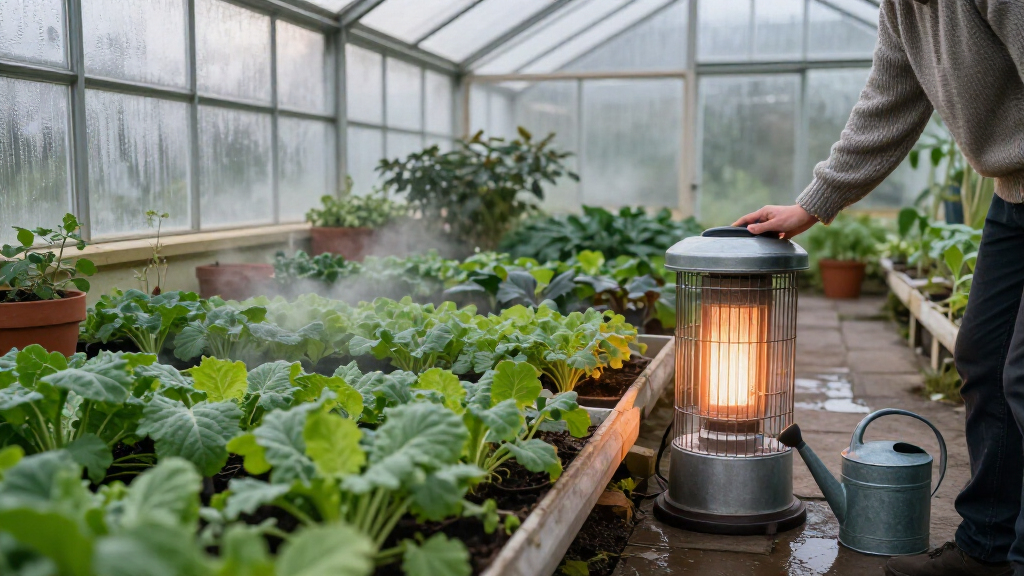

Greenhouse heaters help protect plants when temperatures drop, but the right choice depends on your space, power supply, and how closely you need to control heat. My best overall pick is the BioGreen PALMA for its heater-and-fan design with a digital thermostat; the Bio Green PHX 2.8/US Phoenix stands out for frost detection, while the Pasapair WiFi PTC adds remote control and an external probe. Most of the 1500W options trade advanced controls for simpler, compact heating, so they suit different greenhouse sizes and routines. Check electrical compatibility and safe placement before choosing any model. Read on for the full comparison, buying advice, and picks by buyer type.

Get garden gear delivered free with Prime
- Fast, free delivery on millions of items
- Prime Video, Amazon Music and more included
- Member-only deals all year
Complete the kit


Key Takeaways
- Control features separate the standouts: the PALMA pairs heating with a fan and digital thermostat, while Pasapair adds WiFi and an external probe for remote monitoring.
- Frost response is a distinct strength: the Bio Green Phoenix has frost detection and a 9553 BTU output, but its 220–240V requirement makes electrical compatibility a first check.
- Most of the lineup centers on 1500W heaters: PTC and fan models offer familiar, compact formats, but wattage alone cannot tell you whether a heater can hold temperature in your greenhouse.
- Convenience varies more than the basic heating format: Kiroto adds app control and oscillation, while adjustable-angle VEVOR models let buyers direct airflow without smart features.
- Probe placement and greenhouse insulation affect results: an external probe can help track conditions near plants, but gaps, drafts, and sensor location still shape temperature consistency.


| greenhouse heater | Power |
|---|---|
| 1500W Greenhouse Heater with T | 1500W |
| Greenhouse Heater with Thermos | 1500W |
| VEVOR 1500W Electric PTC Green | 1500W |
| Greenhouse Heater with Digital | 1500W |
| VEVOR Greenhouse Heater with T | 1500W |
| Bio Green PHX 2.8/US Phoenix G | 2,800 watts (1,000W + 1,800W elements) |
| VEVOR Greenhouse Heater | 1,500W |
| BioGreen Electric Greenhouse H | 1,500W, adjustable to 750W |
| Pasapair 1500W WiFi PTC Greenh | — |
| VEVOR 1500W Greenhouse Heater | 1,500W |
| Kiroto 1500W Greenhouse Heater | 1500W |
| VEVOR 1500W Electric PTC Green | 1500W |
| Roodike 1500W Blower Heater wi | 1500W |
| SEEYANG 1500W Greenhouse Heate | — |
| VEVOR 1500W Electric PTC Green | 1500W |
More Details on Our Top Picks
1500W Greenhouse Heater with Thermostat, IPX5 Waterproof Electric Fan Heater for Grow Tents and Greenhouses
For a greenhouse where splashes and damp air are part of the setup, this heater’s IPX5 water resistance gives it a practical advantage over the IPX4-rated Greenhouse Heater with Digital Thermostat, 1500W. Its independent digital thermostat and three power levels, including a 20W setting, let growers maintain a set temperature or use lower output when full heat is unnecessary. That flexibility suits seed starting and winter plant care across spaces up to 120 sq ft. The tradeoff is its smaller stated coverage compared with the 160 sq ft Greenhouse Heater with Digital Thermostat. It also needs a standard electrical outlet, and its protection rating does not replace sensible placement away from standing water. I’d choose it for a compact, humid growing space where thermostat control and splash resistance matter most.
Pros:- IPX5 water resistance is suited to splash-prone growing spaces.
- Independent digital thermostat automatically controls temperature.
- Three power levels provide more control than a single-output heater.
- PTC ceramic element and overheat protection support routine greenhouse use.
Cons:- Stated coverage tops out at 120 sq ft, below the 160 sq ft rating of one alternative.
- Requires a standard electrical outlet and offers no stated battery option.
Best for: Growers with a compact, humid greenhouse or grow tent who want automatic temperature control and stronger splash resistance.
Not ideal for: Owners of greenhouses larger than 120 sq ft or anyone needing a heater that can run without an electrical outlet.
- Power:1500W
- Heating element:PTC ceramic
- Coverage area:Up to 120 sq ft
- Power levels:20W, 750W, 1500W
- Control:Independent digital thermostat
- Water resistance:IPX5
- Safety:Overheat protection; flame-retardant materials
Our verdict“Choose this for a small, damp greenhouse where IPX5 protection and automatic temperature control outweigh broader coverage.”
Greenhouse Heater with Thermostat, Auto Power Control, Digital Temperature Display, Fast Heating, Overheat Protection – Electric Heater for Grow Tent, Greenhouse, Flower Room, Patio
This model combines automatic thermostat control with adjustable ventilation, so it can circulate air when heat is not needed. The listed three-second heat-up points to a quick response when a cold greenhouse needs a boost, while its 120 sq ft coverage puts it in the same compact-space class as the IPX5 1500W Greenhouse Heater. That other model offers a clearer advantage for splash-prone settings; this pick instead emphasizes airflow and a digital temperature display. Its main constraint is electrical: the supplied description calls for a 15A controller and says a dedicated circuit may be needed, which can complicate installation. I’d favor it for a grow tent or flower room with suitable wiring, where fast warmth and year-round air movement are more useful than a higher water-resistance rating.
Pros:- Digital thermostat automatically switches heat to maintain a set temperature.
- Adjustable ventilation can circulate air when heating is not needed.
- Described as reaching heat in as little as three seconds.
- Fire-proof materials and independent overheat protection are specified.
Cons:- Coverage is limited to about 120 sq ft.
- The 15A controller requirement may call for a dedicated circuit or installation work.
- No water-resistance rating is provided in the supplied specifications.
Best for: Growers with a properly wired grow tent or flower room who want quick heat, thermostat automation, and adjustable airflow.
Not ideal for: People without a suitable 15A circuit or growers who need a heater with a specified splash-resistance rating.
- Power:1500W
- Coverage area:Up to 120 sq ft
- Temperature control:Automatic on/off with digital display
- Heating response:As little as 3 seconds
- Ventilation:Adjustable wind speed
- Electrical controller:15A
- Safety:Fire-proof materials; independent overheat protection
Our verdict“Pick this for a compact growing room with suitable electrical capacity when quick heat and adjustable airflow are priorities.”
VEVOR 1500W Electric PTC Greenhouse Heater with Fan
The VEVOR stands out for growers who want to aim warmth at a specific bench or plant area: its head tilts by 15 degrees, and the compact, 3.7-pound body is easy to reposition. Two speeds and a fan mode give it more seasonal flexibility than a heater focused only on thermostat cycling. Compared with the VEVOR Greenhouse Heater with Thermostat, 1500W, this model’s supplied specs make adjustability and portability clearer, while the thermostat-equipped alternative is better suited to maintaining a chosen temperature automatically. The tradeoff is hands-on management: the angle is manual, and no coverage area or thermostat is listed here. Its stated maximum temperature is 75°C, so I’d direct it carefully and use it for localized warmth rather than assume it can regulate an entire greenhouse.
Pros:- 15-degree adjustable angle helps direct heat where plants need it.
- At 3.7 pounds, it is easy to move around a growing space.
- Two speeds and a fan mode support air circulation beyond heating.
- Cold-rolled steel construction and overheat protection are specified.
Cons:- Manual angle adjustment requires repositioning rather than automatic oscillation.
- No thermostat or coverage-area figure is provided in the supplied specs.
- Listed for indoor use only.
Best for: Growers who want a lightweight heater they can aim at a particular seedling bench, work area, or compact grow tent.
Not ideal for: Buyers seeking automatic temperature maintenance, a stated coverage area, or outdoor use.
- Power:1500W
- Voltage:120V
- Amperage:8.33A
- Maximum temperature:75°C
- Speeds:2
- Adjustable angle:15 degrees
- Dimensions:8.27 × 6.3 × 8.66 in
- Weight:3.7 lb
- Material:Cold-rolled steel
Our verdict“Choose this VEVOR for portable, directed warmth when manual control is acceptable and automatic thermostat regulation is not required.”
Greenhouse Heater with Digital Thermostat, 1500W
Among these five options, this heater has the broadest stated reach: up to 160 sq ft, versus 120 sq ft for the IPX5 1500W Greenhouse Heater and the digital-display model. That makes it a better fit for a larger covered greenhouse where one compact heater needs to serve more floor area. Its adjustable thermostat spans 41°F to 108°F and cycles automatically, while IPX4 splash resistance offers some protection in damp conditions. The tradeoff is that IPX4 is a lower stated rating than the IPX5 alternative, and the 7.7-pound unit is heavier than the portable VEVOR PTC model. The supplied data also gives no energy-efficiency or operating-cost information. I’d choose it when coverage and a broad temperature setting range matter more than lighter weight or stronger splash protection.
Pros:- Largest stated coverage in this batch at up to 160 sq ft.
- Thermostat range of 41°F–108°F supports a broad range of growing targets.
- IPX4 splash resistance and overheat protection suit covered, damp spaces.
- Floor-standing design needs no permanent installation.
Cons:- IPX4 offers less stated water resistance than the IPX5 1500W Greenhouse Heater.
- At 7.7 pounds, it is heavier than the portable VEVOR PTC option.
- Efficiency and operating-cost details are not provided.
Best for: Growers heating a covered space up to 160 sq ft who want a digital thermostat and floor-standing portability.
Not ideal for: People with very wet greenhouse conditions who prefer the IPX5 alternative, or buyers who need a lightweight unit.
- Power:1500W
- Heating method:Forced air
- Temperature range:41°F–108°F (5°C–42°C)
- Coverage:Up to 160 sq ft
- Water resistance:IPX4 splash-resistant
- Safety:Overheat protection; flame-resistant body
- Dimensions:7 × 9.4 × 12 in
- Weight:7.7 lb
- Mounting:Floor
Our verdict“Choose this for a larger covered greenhouse where its 160 sq ft coverage and wide thermostat range are more valuable than lighter weight or IPX5 protection.”
VEVOR Greenhouse Heater with Thermostat, 1500W
This compact VEVOR combines an independent thermostat with three speed settings and separate heating and ventilation modes, giving it a useful balance of temperature control and air movement. At 6.29 inches square and 4.5 pounds, it takes less room than the 7.7-pound Greenhouse Heater with Digital Thermostat, 1500W, though its coverage area is not stated, so I would not assume it can heat as much space. The key limitation is IP20 protection: it is a poor match for a greenhouse where water can splash onto the heater, unlike the IPX4 and IPX5 options in this batch. ETL certification and overheat protection are listed, but they do not change that moisture constraint. I’d place it in a dry grow tent or indoor growing corner where compact size and thermostat control take priority.
Pros:- Independent thermostat provides temperature control.
- Three speed settings and separate heating and ventilation modes add flexibility.
- Compact 6.29-inch footprint fits tight growing areas.
- ETL certification and overheat protection are listed.
Cons:- IP20 protection limits suitability for damp or splash-prone greenhouse conditions.
- No coverage-area figure is supplied.
- At 4.5 pounds, it is heavier than the 3.7-pound VEVOR PTC heater.
Best for: Growers with a dry indoor grow tent or small growing corner who want thermostat control, ventilation, and a compact floor heater.
Not ideal for: Owners of damp or splash-prone greenhouses, or buyers who need a confirmed coverage-area figure.
- Power:1500W
- Heating method:Forced air
- Speeds:3
- Modes:Heating and ventilation
- Protection:IP20; overheat protection
- Certification:ETL certified
- Dimensions:6.29 × 6.29 × 8.66 in
- Weight:4.5 lb
- Power source:AC
Our verdict“Pick this VEVOR for a dry, compact growing space where thermostat control and ventilation matter more than moisture protection or a stated coverage range.”
Bio Green PHX 2.8/US Phoenix Greenhouse Heater
The Bio Green Phoenix is the lineup’s higher-output choice for growers who need to heat more space: its 2,800 watts are rated for up to 215 square feet, compared with the 120-square-foot coverage listed for the BioGreen PALMA. Two separately adjustable heating elements let you use less power when full output is unnecessary, while the fan-only mode circulates air without adding heat. Its stainless steel housing and IPX4 protection suit damp greenhouse conditions, and it can sit on the floor or hang from a mount. The tradeoff is installation: this model needs a 220–240V connection, so it will not suit growers limited to standard outlets. Its larger size also takes more planning than the compact 1,500-watt heaters.
Pros:- 2,800 watts and stated coverage up to 215 square feet
- Two separately adjustable heating elements
- Fan-only mode supports air circulation without heat
- Stainless steel housing, IPX4 protection, and floor or hanging placement
Cons:- Requires a 220–240V power connection
- Its 18 x 15 x 11-inch body takes more space than compact 1,500-watt options
Best for: Greenhouse growers with up to 215 square feet of space and a compatible 220–240V connection
Not ideal for: Growers with only standard outlets or small greenhouses that do not need its higher output
- Power:2,800 watts (1,000W + 1,800W elements)
- BTU output:9,553 BTU
- Voltage:220–240V, 60 Hz
- Coverage area:Up to 215 sq ft
- Air circulation:16,000 ft³/hour
- Thermostat range:-58°F to 79°F
- Material:Stainless steel
- Dimensions:18 x 15 x 11 inches
Our verdict“Choose the Phoenix if you need more heating capacity than the BioGreen PALMA and have a suitable 220–240V supply.”
VEVOR Greenhouse Heater, 1500W Electric Space Heater with Thermostat and Adjustable Angle
The VEVOR 1500W suits growers who want a straightforward heater that can also move between a greenhouse, grow tent, or other room. Its 25° adjustable angle helps direct airflow toward the area that needs warmth, while heating and fan modes give it a use beyond cold spells. Compared with the BioGreen PALMA, this model emphasizes portable, angled airflow over a specified coverage area and adjustable wattage. That makes it easier to reposition, but its two temperature settings offer less fine control than the PALMA’s digital thermostat. IPX4 water resistance and overheat shutoff are useful in humid growing spaces; still, 1,500 watts may fall short in a large or poorly insulated greenhouse. Flame-retardant PP housing is practical, though it lacks the Phoenix’s stainless steel construction.
Pros:- Heating and fan modes support use across seasons
- 25° adjustable angle directs airflow
- IPX4 water resistance and overheat shutoff
- Portable handle makes relocation easier
Cons:- Two temperature settings provide limited control
- 1,500 watts may not heat a large greenhouse adequately
- Flame-retardant PP housing is less robust in feel than the Phoenix’s stainless steel
Best for: Growers who need a portable 1,500-watt heater they can angle and move between a grow tent and greenhouse
Not ideal for: Owners of large greenhouses or growers who need precise thermostat control and detailed temperature settings
- Power:1,500W
- Adjustable angle:25°
- Water resistance:IPX4
- Modes:Heating and fan
- Temperature settings:Two
- Housing material:Flame-retardant PP
Our verdict“Pick this VEVOR for portable, angled heat in a smaller growing space where two settings are enough.”
BioGreen Electric Greenhouse Heater & Fan with Digital Thermostat PALMA
The BioGreen PALMA prioritizes measured temperature control for smaller growing spaces. Its digital thermostat automatically starts and stops heating, and its output can be reduced from 1,500W to 750W when a greenhouse needs less heat. Air circulation up to 5,800 ft³ per hour helps spread warmth around plants rather than concentrating it beside the unit. Compared with the Phoenix, the PALMA covers less area—up to 120 square feet—but uses a standard 1,500-watt class of output and offers a stated lower-power setting. Its IPX4 splash-proof stainless steel body fits damp environments, though placement matters: airflow needs room to circulate, and its coverage rating makes it a poor match for larger structures. The listed temperature range is broad, but growers should check that it fits their intended control needs.
Pros:- Digital thermostat automatically starts and stops heating
- Adjustable 750W or 1,500W output
- IPX4 splash-proof stainless steel construction
- Fan circulation up to 5,800 ft³ per hour
Cons:- Coverage is limited to up to 120 square feet
- Placement must allow airflow to circulate effectively
Best for: Growers with greenhouses up to 120 square feet who want automatic digital temperature control and a lower power setting
Not ideal for: Owners of larger greenhouses who need more coverage or growers unable to give the heater clear space for airflow
- Power:1,500W, adjustable to 750W
- Heating capacity:5,100 BTU/hr
- Air circulation:5,800 ft³/h
- Temperature range:32°F to 185°F
- Coverage area:Up to 120 ft²
- Material:Stainless steel
- Water resistance:IPX4
Our verdict“Choose the PALMA for thermostat-led heating in a compact greenhouse; the Phoenix is better suited to larger spaces.”
Pasapair 1500W WiFi PTC Greenhouse Heater with Thermostat and External Probe
The Pasapair WiFi heater stands apart from basic 1,500-watt units by letting growers adjust settings remotely and schedule heating across the week. Its external probe can measure conditions near plants rather than beside the heater, which may help avoid controlling the greenhouse from a misleading local reading. Four control methods—app, remote, wired thermostat, and onboard panel—also offer alternatives if a phone is not at hand. Compared with the BioGreen PALMA, the Pasapair adds connectivity and scheduling, while the PALMA offers stated adjustable wattage and stainless steel construction. The Pasapair’s 215-square-foot coverage claim is broad for its 1,500W output, so actual results will depend on insulation and conditions. It needs 2.4 GHz Wi-Fi for app use and careful placement away from water and flammable materials.
Pros:- WiFi app control supports remote temperature adjustments
- External probe measures temperature away from the heater
- Seven-day scheduling and 24-hour timer
- App, remote, wired thermostat, and onboard controls
Cons:- App connectivity requires a 2.4 GHz Wi-Fi network
- Must be placed on a level surface away from water and flammable materials
- The 215-square-foot coverage claim depends on greenhouse conditions
Best for: Growers who want to monitor greenhouse temperatures remotely and automate heating schedules
Not ideal for: Buyers without 2.4 GHz Wi-Fi or those seeking a heater designed for placement in wet areas
- Power output:1,500W
- Heating method:PTC ceramic
- Temperature range:41°F to 108°F
- Coverage area:215 sq ft
- Connectivity:2.4 GHz Wi-Fi
- Controls:WiFi app, remote, wired thermostat, and onboard panel
- Safety features:Overheat protection, child lock, UL certified
- Dimensions:9.45 x 11.2 x 6.6 inches
Our verdict“Choose the Pasapair if remote monitoring and programmed schedules matter more than the PALMA’s adjustable power and stainless steel body.”
VEVOR 1500W Greenhouse Heater with Fan
This VEVOR 1500W heater is the simpler portable pick for growers who want three heat settings and fan-only ventilation without app controls or a digital thermostat. The handle and 25° adjustable angle make it easy to reposition as seedlings or benches change, while overheat protection and ETL certification add safety information absent from the VEVOR model with flame-retardant PP housing listed here. Its 5,100 BTU output matches the PALMA’s stated heating capacity, but the PALMA adds a digital thermostat, splash resistance, and adjustable wattage for more controlled use in damp conditions. This VEVOR instead has IP20 protection, so it is a poorer fit where irrigation splash or heavy dust is likely. It is best treated as a movable heater for a dry, smaller greenhouse or grow tent.
Pros:- Three temperature settings provide more steps than a two-setting heater
- Fan-only ventilation adds use beyond heating
- Lightweight, under-five-pound design with carry handle
- ETL certification and overheat protection
Cons:- IP20 protection limits suitability for damp or dusty spaces
- No digital thermostat or remote control is listed
Best for: Growers who want a lightweight, manually adjustable heater for a dry greenhouse or grow tent
Not ideal for: Growers working around irrigation splash, persistent humidity, or heavy dust who need water-resistant housing
- Power:1,500W
- Heating output:5,100 BTU
- Temperature settings:Three
- Modes:Heating and fan-only ventilation
- Protection:IP20; overheat protection
- Certification:ETL
- Weight:Less than 5 lbs
- Adjustable angle:25°
Our verdict“Choose this VEVOR for portable basic heating in a dry growing space; the BioGreen PALMA is better for damp areas and automatic control.”
Kiroto 1500W Greenhouse Heater with App Remote Control, Thermostat & Oscillation
The Kiroto stands out for growers who want to adjust heat without walking back to the greenhouse: its WiFi app control supports remote temperature monitoring and settings from 41°F to 113°F. Its 70-degree oscillation can spread warmth across a small growing area, while the listed coverage is 150 square feet. Compared with the SEEYANG 1500W Greenhouse Heater with Digital Thermostat, which uses a waterproof probe to manage temperatures, the Kiroto puts more emphasis on app access and movement than on probe-based control. That convenience depends on a stable WiFi connection, and the Kiroto’s coverage makes it a poor match for a large greenhouse. It also offers fan-only use for warmer weather and lists tip-over, overheat, and power failure protection.
Pros:- WiFi app control enables remote temperature monitoring and adjustment
- 70-degree oscillation spreads airflow across a small growing area
- Temperature settings range from 41°F to 113°F
- Lists overheat, tip-over, and power failure protection
Cons:- Listed coverage of 150 square feet limits its use in larger greenhouses
- App control depends on a stable WiFi connection
Best for: Small greenhouse growers who want to monitor and adjust temperatures remotely through WiFi
Not ideal for: Owners of large greenhouses or sites with unreliable WiFi who need dependable remote control
- Power:1500W
- Voltage:110–120V / 60Hz
- Amperage:12.5A
- Temperature range:41°F–113°F (5–45°C)
- Heating coverage:150 square feet
- Oscillation:70 degrees
- Timer:0–24 hours
- Smart features:WiFi app control
Our verdict“Choose the Kiroto for app-based control and oscillation in a small greenhouse, provided your WiFi is reliable.”
VEVOR 1500W Electric PTC Greenhouse Heater with Fan
The defining feature here is a 40-degree adjustable angle, which lets growers aim heat toward a bench or plant area instead of relying on oscillation. The portable handle, stable base, and cold-rolled steel body make it easy to reposition as the layout changes. Compared with the Kiroto 1500W Greenhouse Heater, this VEVOR gives up app control and automatic sweeping movement for straightforward directional airflow. Its two heat modes add flexibility, but the listing does not provide a thermostat or a greenhouse coverage figure, so buyers cannot judge temperature control or area fit from the supplied data. It is also described for indoor use, which narrows its suitability for exposed or damp greenhouse conditions. This is a simple pick for a small indoor growing space where manual aiming matters most.
Pros:- 40-degree adjustable angle directs heat toward a chosen area
- Two heat modes provide a choice of output
- Portable handle and 2.8-pound weight ease repositioning
- Cold-rolled steel construction with a stable base
Cons:- No thermostat is listed for automatic temperature regulation
- No coverage area is specified
- Indoor-use description limits suitability for exposed greenhouse settings
Best for: Growers with a small indoor greenhouse or grow tent who want to direct heat toward a specific bench
Not ideal for: Those who need remote control, a listed thermostat, or documented greenhouse coverage
- Power:1500W
- Amperage:12.5A
- Heat modes:Low and high
- Adjustable angle:40 degrees
- Material:Cold-rolled steel
- Dimensions:7.09 × 6.3 × 8.46 inches
- Weight:2.8 lbs
- Safety feature:Overheat protection
Our verdict“Pick this VEVOR when manually directing warmth matters more than app control or documented thermostat features.”
Roodike 1500W Blower Heater with Thermostat
The Roodike covers more day-to-day modes than the basic VEVOR 1500W Electric PTC Greenhouse Heater: it has high heat, low heat, and fan-only operation, plus an adjustable thermostat with automatic on/off. That gives growers a way to use one compact heater for temperature control and air movement, although its stated 120-square-foot coverage trails the Kiroto’s 150 square feet and the SEEYANG’s 200 square feet. Its 750W low setting may help moderate output in a smaller space, while ceramic heating and fan-forced airflow provide the warmth. The tradeoff is limited capacity for larger or especially cold greenhouses, and the supplied temperature range is broad without explaining how it relates to thermostat settings. Overheat protection is listed, but no other safety features are specified.
Pros:- Three modes include high heat, low heat, and fan-only
- Adjustable thermostat supports automatic on/off operation
- Low setting runs at 750W
- Compact freestanding design is portable
Cons:- Listed coverage is limited to 120 square feet
- No temperature probe or remote control is specified
- Only overheat protection is listed
Best for: Small-space growers who want low and high heat plus fan-only operation in one portable unit
Not ideal for: Growers with large or very cold greenhouses who need greater stated coverage
- Power:1500W
- Heating coverage:Up to 120 square feet
- Heating element:Ceramic
- Modes:High heat (1500W), low heat (750W), natural wind
- Thermostat:Adjustable, automatic on/off
- Temperature range:32°F–158°F
- Voltage:120V
- Dimensions:9.8 × 9.1 × 8.3 inches
Our verdict“Choose the Roodike for flexible three-mode operation in a small growing space, but look to the SEEYANG for greater stated coverage.”
SEEYANG 1500W Greenhouse Heater with Digital Thermostat
The SEEYANG is a strong fit for growers who want the thermostat sensor placed where plants are growing: its waterproof probe helps measure temperatures away from the heater itself, with a listed control range of 40°F to 108°F. The stated 200-square-foot coverage also exceeds the Kiroto’s 150 square feet and the Roodike’s 120, making it the broadest-coverage option among those three. Its stainless steel shell and fan-only mode add practical appeal for seasonal use. The tradeoff is a less hands-off interface: settings are switched with a top button, and the listing does not describe app control like the Kiroto. Coverage is still finite, so growers should match it to their space rather than assume it can heat a large greenhouse. Overheat protection and flame-retardant materials are listed.
Pros:- Waterproof probe supports temperature sensing away from the heater
- Listed coverage reaches up to 200 square feet
- Digital thermostat range spans 40°F–108°F
- Heating and fan-only modes support use across seasons
Cons:- Mode switching requires use of the top button
- Coverage remains limited for larger greenhouses
- No WiFi or remote control is specified
Best for: Greenhouse growers who want to place a waterproof thermostat probe near their plants and need up to 200 square feet of stated coverage
Not ideal for: Owners of larger spaces or buyers who want app-based adjustment instead of manual mode switching
- Power output:1500W
- Coverage area:Up to 200 square feet
- Temperature range:40°F–108°F
- Thermostat sensor:Waterproof probe
- Material:Stainless steel
- Modes:1500W heating, 25W fan-only
- Cord length:7.5 ft
- Safety features:Overheat protection, flame-retardant materials
Our verdict“Choose the SEEYANG for probe-based temperature control and the widest stated coverage in this group, if manual mode switching suits you.”
VEVOR 1500W Electric PTC Greenhouse Heater with Thermostat and Fan
This VEVOR’s separate thermostat gives growers a more direct temperature-control option than the other VEVOR in this batch, whose listing describes two heat modes but no thermostat. It also adds fan-only operation, so the unit can circulate air when heat is not needed. The 15-degree adjustment offers a narrower aiming range than that model’s 40-degree angle; that makes this version less flexible for directing airflow, but potentially sufficient when the heater stays in a fixed position. Cold-rolled steel, a portable handle, and a stable grip base support repositioning, while overheat protection and automatic shutoff are listed. The listing provides no coverage figure or thermostat range, so growers comparing it with the SEEYANG’s stated 200 square feet and defined range have less information for sizing their greenhouse.
Pros:- Separate thermostat provides dedicated temperature control
- Fan-only mode supports air circulation without heating
- Cold-rolled steel body with portable handle and stable grip base
- Automatic shutoff and overheat protection are listed
Cons:- No coverage area or thermostat temperature range is specified
- 15-degree adjustment offers less aiming flexibility than the other VEVOR in this batch
- No smart or remote control is listed
Best for: Growers who want a portable heater with a separate thermostat and fan-only mode for a small, measured space
Not ideal for: Buyers who need a listed coverage area, specified temperature range, or a wider adjustable angle
- Power:1500W
- Heating element:PTC
- Modes:Low heat, high heat, fan-only
- Thermostat:Separate thermostat
- Adjustable angle:15 degrees
- Material:Cold-rolled steel
- Safety features:Overheat protection, automatic shutoff
- Included accessories:Portable handle, stable grip base
Our verdict“Choose this VEVOR if a separate thermostat and fan-only mode matter more than a documented coverage area or wide aiming adjustment.”

How We Picked
I compared the 15 options by how well their stated features address greenhouse-specific needs: maintaining a suitable temperature, distributing warmth, and giving growers a practical way to monitor or adjust heat. I weighed thermostat and probe arrangements, frost detection, fan or oscillation functions, stated output, electrical requirements, and ease of control. Safety features such as overheat protection and water resistance matter in damp growing spaces, but a rating or feature name does not replace careful installation and following the manufacturer’s instructions.
The ranking gives more weight to useful greenhouse control and versatility than to repeated 1500W specifications alone. The PALMA and Phoenix rise for differentiated temperature management, while Pasapair and Kiroto suit buyers who value remote access. The many similar compact VEVOR and generic 1500W fan heaters remain practical straightforward choices, but their relative order depends on the specific control or airflow feature named. Product descriptions do not provide enough consistent coverage data to claim a particular heater fits every greenhouse size, so buyers should check the manufacturer’s guidance against their own space and climate.
Factors to Consider When Choosing Greenhouse Heaters
Choosing among greenhouse heaters starts with the conditions you need to maintain, not the longest feature list. I would first match the heater to the greenhouse’s electrical supply and heat loss, then decide how much monitoring and airflow control will make day-to-day use manageable.
Match heating capacity to heat loss
A heater’s wattage does not predict performance by itself: greenhouse volume, insulation, wind exposure, glazing, and the difference between indoor and outdoor temperatures all affect heat demand. Measure the growing space and look for the manufacturer’s coverage or sizing guidance rather than assuming a 1500W model suits any greenhouse. A poorly sealed structure can lose warmth faster than a small heater can replace it, leading to long run times and uneven temperatures. Insulating around the base and sealing drafts may improve results more than moving to a feature-heavy model. For large or exposed greenhouses, consider whether a single heater can distribute warmth adequately or whether the setup needs a different heating plan.
Choose a thermostat and sensor location
A thermostat controls cycling around a target temperature, while a separate probe can give you more choice about where that temperature is measured. Place a probe near the plants you are protecting, away from direct heater airflow, cold glazing, and sunlight that can distort readings. A sensor mounted too close to a heat source may shut the heater off while plant-level air stays cold. Digital displays can make adjustments easier to read, but they do not guarantee precise conditions throughout the greenhouse. If your plants have narrow temperature tolerances, use an independent thermometer to check for cold and warm spots before trusting a single sensor.
Check voltage, circuit capacity, and installation
Confirm the heater’s voltage matches the supply available at the greenhouse before comparing convenience features. The Phoenix listing specifies 220–240V, which will not suit every outlet or circuit. High-wattage electric heaters draw substantial current, so check the circuit rating and follow the manufacturer’s directions about extension cords, grounding, and clearances. Keep the unit away from water, leaves, potting materials, and anything that could block airflow. A greenhouse can be humid even when the heater itself has a water-resistance rating, so that rating should not be treated as permission to expose electrical components to standing water or direct spray.
Decide whether airflow features help your layout
A fan can move warmed air beyond the heater’s immediate vicinity, while oscillation or an adjustable angle can direct that airflow across a wider area or toward a specific bench. These features may reduce pronounced hot and cold spots, but they do not add heating capacity. Tall shelves, dense foliage, and partitions can still interrupt circulation, so think about placement before buying. Leave the clearances specified by the manufacturer and avoid aiming heat directly at delicate leaves or plastic coverings. If your greenhouse is small and open, a basic fan heater may be enough; a more adjustable design has greater value when the layout creates uneven airflow.
Weigh remote controls against simple operation
WiFi or app control can help when the greenhouse is away from the house or you want to check settings without walking outside. Its usefulness depends on reliable connectivity, a compatible setup, and clear information about how the heater responds if the network drops. A digital thermostat or straightforward automatic control may be easier for growers who prefer local adjustments. Remote access also does not replace an independent way to notice a power outage or sudden temperature change. Pay more for connected features when they solve a real monitoring problem; otherwise, prioritize dependable temperature control and safe installation.
Plan for cold snaps and power interruptions
Electric greenhouse heaters stop producing heat when power fails, so consider how long your plants can tolerate a temperature drop and what backup plan is realistic. Frost detection can automate a response to falling temperatures, but it still depends on a working power supply and correctly placed sensor. Avoid assuming that one heater will protect every plant during an extreme cold snap, especially in a drafty structure. Grouping sensitive plants, adding horticultural fleece, and insulating exposed surfaces can reduce the load on the heater. Before the cold season, check the heater, thermostat, and electrical connection so a fault does not go unnoticed on the night you need heat.
Frequently Asked Questions
Will a 1500W greenhouse heater keep my greenhouse above freezing?
It depends on greenhouse size, insulation, outdoor temperature, and drafts, so wattage alone cannot promise frost protection. Compare the heater’s coverage guidance with your greenhouse dimensions and expected winter conditions. A small, sheltered structure may need less heat than a large greenhouse with thin glazing and wind exposure. Check temperatures at plant height during cold weather, since the thermostat reading may not represent every area. For valuable or frost-sensitive plants, combine heating with insulation and a backup plan for power loss.
Is a WiFi greenhouse heater worth choosing over a digital thermostat?
WiFi is most useful when you need to check or adjust the heater remotely, such as for a greenhouse away from your home. An external probe can also help you monitor conditions at a more relevant spot than the heater’s body. If you visit the greenhouse often and can adjust settings locally, a digital thermostat may provide the control you need with less setup. Check what happens to schedules and controls when the network is unavailable. Whichever type you choose, remote access cannot replace a reliable temperature check during severe weather.
Can I use a 220–240V greenhouse heater with a standard household outlet?
Only if the outlet and circuit match the heater’s electrical requirements; do not assume compatibility from the plug shape or product category. The Phoenix listing specifies 220–240V, so check your local supply and the manufacturer’s installation instructions before buying. A qualified electrician can advise whether a suitable circuit is available. Avoid improvised adapters or undersized extension cords, which can create hazards with high-load appliances. Confirm electrical compatibility before planning where the heater will sit.
Does a water-resistant rating mean I can leave a heater in a wet greenhouse?
No rating makes placement irrelevant: condensation, irrigation spray, puddles, and direct water exposure can still create problems. Check the exact protection rating and the manufacturer’s instructions for the model you are considering. Position the unit on a stable surface, protect its electrical connection, and keep it clear of water sources and wet foliage. Never cover the heater or block its air intake and outlet. If your greenhouse is routinely damp, treat safe placement and inspection as part of choosing the heater.
Should I choose a heater with a fan, oscillation, or frost detection?
Choose based on the problem in your greenhouse: a fan circulates warm air, oscillation or an adjustable angle changes where it goes, and frost detection can trigger heating as temperatures fall. None of these features compensates for insufficient capacity or major heat loss. Open layouts may work well with a basic fan heater, while benches or partitions can make adjustable airflow more useful. Frost detection matters most when low temperatures can arrive while you are away, provided the heater has power and the sensor is placed well. Match the feature to your layout and routine rather than treating a longer feature list as proof of better heating.
Conclusion
For the broadest mix of heater-and-fan operation and digital control, my best overall pick is the BioGreen PALMA. The VEVOR 1500W fan heaters are the best value direction for buyers who want a straightforward compact format, while the Bio Green Phoenix is the premium-style choice for frost detection when its 220–240V requirement fits the installation. Beginners may prefer a 1500W model with a clear digital thermostat, such as the SEEYANG, and growers who want remote monitoring should look at the Pasapair WiFi PTC; choose the Kiroto if app control and oscillation are higher priorities. Before deciding, match the unit to your greenhouse’s heat loss, electrical supply, and sensor placement.
Fall yard work Picks
leaf blowers
As an affiliate, we earn on qualifying purchases.