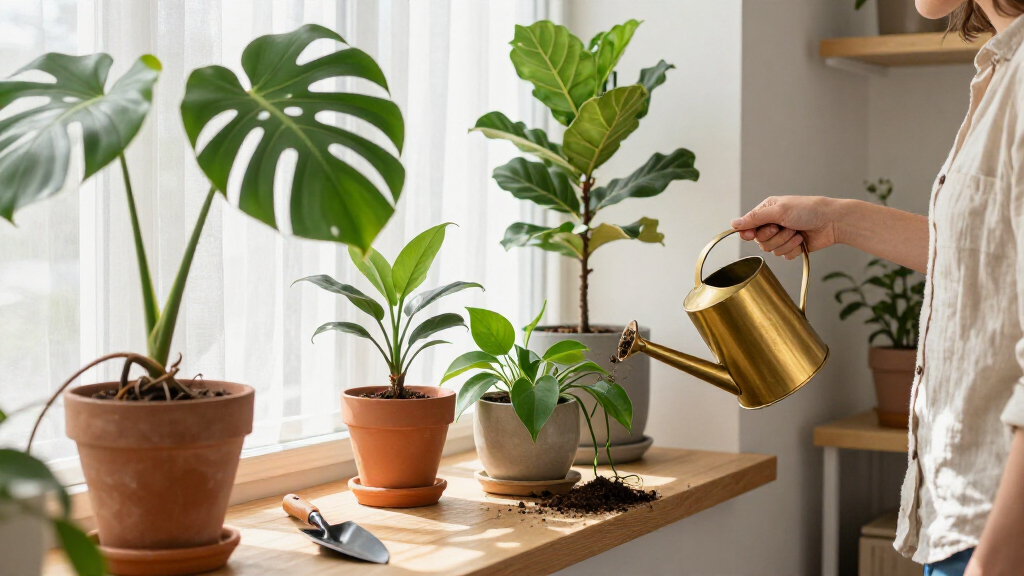
The best indoor houseplants are the ones suited to your light, watering habits, and available space—not simply the most striking ones. My best overall pick is the Costa Farms Snake Plant for its tolerance of lower light and relatively forgiving care; the ZZ Plant is another strong choice for people who prefer infrequent watering, while the Chinese Evergreen offers a leafy look for rooms without bright sun. More decorative plants such as the Pink Anthurium and Rattlesnake Calathea bring color and pattern but call for closer attention to their growing conditions. This roundup also includes three houseplant books for readers who want guidance rather than another live plant. Read on for the full comparison and a match for your space and routine.

Get garden gear delivered free with Prime
- Fast, free delivery on millions of items
- Prime Video, Amazon Music and more included
- Member-only deals all year
Complete the kit



Key Takeaways
- Snake Plant leads for low-effort care: It pairs lower-light tolerance with less frequent watering needs, making it the clearest choice for many busy or new plant owners.
- ZZ Plant is the closest alternative for hands-off care: Like the Snake Plant, it suits a relaxed watering routine, but buyers should still match it to an appropriate spot and avoid treating low light as no light.
- Decorative foliage comes with more specific care needs: The Maranta and Rattlesnake Calathea offer distinctive leaf patterns, but are less suitable for buyers who want a plant they can largely ignore.
- Ready-to-display pots shape the decision: Several Costa Farms picks arrive in decorative containers, while nursery-pot plants may require a separate planter to achieve the same finished look.
- Books serve a different purpose from live plants: The Pocket Guide, How Not to Kill Your Houseplant, Houseplants: The Complete Guide, and Plantopedia offer learning value, but cannot fill a room with living greenery.
| Lemon Lime Maranta Prayer Plant in 4-Inch Pot |  | Best for Colorful, Pet-Conscious Homes | Plant type: Lemon Lime Maranta Prayer Plant | Height: Approximately 12–16 inches | Pot size: 4 inches | VIEW ON AMAZON | See Our Full Breakdown |
| Pocket Guide to Houseplants: Over 240 Easy-Care Favorites |  | Best Pocket Reference for Plant Shopping | Publisher: Creative Homeowner | Format: Pocket guide | Dimensions: 5 x 7 inches | VIEW ON AMAZON | See Our Full Breakdown |
| Costa Farms Chinese Evergreen Indoor Plant in 6-Inch Planter |  | Best Ready-to-Display Planter | Plant type: Chinese Evergreen (Aglaonema) | Height at shipping: Approximately 14–15 inches | Expected plant height: 36 inches | VIEW ON AMAZON | See Our Full Breakdown |
| How Not to Kill Your Houseplant (New Edition): Survival Tips for the Horticulturally Challenged |  | Best Beginner Troubleshooting Guide | Format: Book | Edition: New edition | Intended audience: Inexperienced houseplant owners | VIEW ON AMAZON | See Our Full Breakdown |
| Lucky Bamboo Live Plant, Two-Tier Indoor Arrangement |  | Best Soil-Free Desk or Office Accent | Plant: Dracaena sanderiana (Lucky Bamboo) | Arrangement: Two-tier | Stalk count: 21 | VIEW ON AMAZON | See Our Full Breakdown |
| Houseplants: The Complete Guide to Choosing, Growing, and Caring for Indoor Plants | 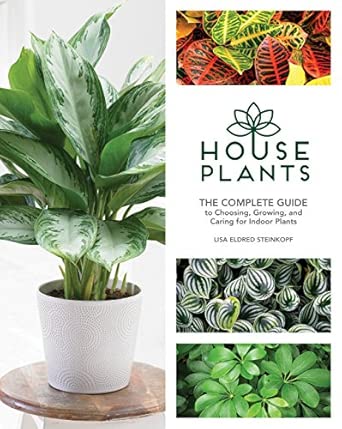 | Best for Choosing the Right Plant | Format: Guidebook | Subject: Indoor plants | Coverage: Choosing, growing, and caring for indoor plants | VIEW ON AMAZON | See Our Full Breakdown |
| Costa Farms Snake Plant – Live Indoor Plant, Air Purifying, Low Light |  | Best for Low-Water, Low-Light Spaces | Plant type: Snake Plant (Sansevieria) | Pack size: 3 plants | Plant height: 8–12 inches | VIEW ON AMAZON | See Our Full Breakdown |
| Pink Anthurium Live Plant, Approx. 13-16″ Tall in 4″ Nursery Pot – Air Purifying Houseplant |  | Best for Long-Lasting Pink Blooms | Plant type: Pink Anthurium | Plant height: Approximately 13–16 inches | Pot size: 4-inch nursery pot | VIEW ON AMAZON | See Our Full Breakdown |
| Costa Farms Peace Lily Live Indoor Plant in 6-inch Bamboo Pot |  | Best Ready-to-Display Flowering Plant | Brand: Costa Farms | Plant type: Peace Lily | Pot size: 6 inches | VIEW ON AMAZON | See Our Full Breakdown |
| Costa Farms Live ZZ Plant in Decorative Pot |  | Best for Infrequent Watering | Plant type: ZZ Plant (Zanzibar Gem) | Use: Indoor | Pot size: 6 inches | VIEW ON AMAZON | See Our Full Breakdown |
| Costa Farms Money Tree Live Indoor Plant in Decorative Pot |  | Best Compact Desk Plant | Plant type: Pachira aquatica (Money Tree) | Intended use: Indoor | Height on arrival: 12–16 inches | VIEW ON AMAZON | See Our Full Breakdown |
| Rattlesnake Calathea Live Indoor Plant |  | Best for Patterned Foliage | Plant type: Calathea lancifolia (Rattlesnake Calathea) | Intended use: Indoor | Expected height: 9 inches | VIEW ON AMAZON | See Our Full Breakdown |
| Plantopedia: The Definitive Guide to Houseplants |  | Best Reference for Houseplant Care | Format: Houseplant care guide | Subject: Care and cultivation of houseplants | Intended use: Reference for indoor greenery | VIEW ON AMAZON | See Our Full Breakdown |
| indoor houseplants for | Plant type |
|---|---|
| Lemon Lime Maranta Prayer Plan | Lemon Lime Maranta Prayer Plant |
| Pocket Guide to Houseplants: O | — |
| Costa Farms Chinese Evergreen | Chinese Evergreen (Aglaonema) |
| How Not to Kill Your Houseplan | — |
| Lucky Bamboo Live Plant | — |
| Houseplants: The Complete Guid | — |
| Costa Farms Snake Plant | Snake Plant (Sansevieria) |
| Pink Anthurium Live Plant | Pink Anthurium |
| Costa Farms Peace Lily Live In | Peace Lily |
| Costa Farms Live ZZ Plant in D | ZZ Plant (Zanzibar Gem) |
| Costa Farms Money Tree Live In | Pachira aquatica (Money Tree) |
| Rattlesnake Calathea Live Indo | Calathea lancifolia (Rattlesnake Calathea) |
| Plantopedia: The Definitive Gu | — |
More Details on Our Top Picks
Lemon Lime Maranta Prayer Plant in 4-Inch Pot
The Lemon Lime Maranta makes the list for foliage that brings more visual movement than the compact, upright look of Lucky Bamboo. Its yellow-green markings and dark veins stand out, while leaves that fold upward at night add a small daily change to a shelf or side table. At about 12–16 inches tall, it offers a noticeable display without needing a large floor space. The listing describes it as non-toxic to cats and dogs, a useful distinction from the Chinese Evergreen, which should be kept away from pets and children. The tradeoff is care: Maranta prefers warmth and humidity, plus bright, indirect light and attentive watering. Choose it for expressive foliage, not for a plant you can routinely neglect.
Pros:- Lemon-lime markings and dark veins create strong foliage contrast
- Leaves fold upward at night, adding visible movement
- Described as non-toxic to cats and dogs
- Compact 4-inch nursery pot suits shelves and tabletops
Cons:- Needs a warm, humid environment to suit its preferences
- Requires attention to soil dryness and moderate watering
- Color and shape may vary between plants
Best for: Plant owners who want vividly patterned foliage for a bright, indirect-light spot and value a plant described as non-toxic to cats and dogs.
Not ideal for: People seeking a low-attention plant or homes with cool, dry air, since this Maranta prefers warmth and humidity.
- Plant type:Lemon Lime Maranta Prayer Plant
- Height:Approximately 12–16 inches
- Pot size:4 inches
- Light:Bright, indirect light; partial sun
- Watering:Every 1–2 weeks when the top half of the soil is dry
- Temperature:65–75°F (18–24°C)
- Soil:Loam; moderate moisture
- Pet safety:Described as non-toxic to cats and dogs
Our verdict“Choose this Maranta for striking, pet-conscious tabletop greenery if you can provide steady warmth and humidity.”
Pocket Guide to Houseplants: Over 240 Easy-Care Favorites
Unlike the individual plants in this roundup, Pocket Guide to Houseplants helps readers compare a broad set of options before bringing one home. Its 240-plus easy-care species and more than 300 photos and drawings make it useful for matching a plant’s appearance to a shopping list or identifying familiar varieties. The 5 x 7-inch format is more portable than Houseplants: The Complete Guide to Choosing, Growing, and Caring for Indoor Plants, so this guide is easier to carry around a garden center. That convenience has a limit: the compact format may leave less room for detailed care instructions, and its focus on easy-care choices excludes more demanding plants such as the humidity-preferring Lemon Lime Maranta. It suits quick selection and visual reference better than in-depth plant troubleshooting.
Pros:- Covers more than 240 easy-care houseplant species
- Includes over 300 photos and illustrations for visual identification
- Compact 5 x 7-inch format is convenient to carry while shopping
Cons:- Pocket size may restrict the depth of care guidance
- Focus on easy-care varieties leaves out more complex plants
Best for: New plant shoppers who want a small, illustrated reference for comparing easy-care varieties while browsing in person.
Not ideal for: Readers seeking detailed care plans or guidance on demanding and unusual houseplants, since the pocket format and easy-care focus limit its scope.
- Publisher:Creative Homeowner
- Format:Pocket guide
- Dimensions:5 x 7 inches
- Plant count:More than 240 species
- Visual content:More than 300 photos and illustrations
- Focus:Easy-care houseplants
Our verdict“Pick this guide for portable, illustrated help choosing beginner-friendly plants, but choose a larger reference for detailed care advice.”
Costa Farms Chinese Evergreen Indoor Plant in 6-Inch Planter
The Chinese Evergreen is a practical choice for buyers who want a leafy display already paired with a decorative container. It ships about 14–15 inches tall in a 6-inch white composite planter, making it more presentation-ready than the Lemon Lime Maranta, which arrives in a smaller nursery pot. Its medium, indirect-light preference also gives it a straightforward placement target for many indoor rooms. The main compromise is the planter: there are no drainage holes, so excess water cannot escape and watering needs a careful hand. Unlike the Maranta, this plant is not presented as pet-safe; the listing advises keeping it away from pets and children and not consuming it. Choose it for convenient décor, but skip it if drainage or household access is a concern.
Pros:- Ships in a decorative 6-inch white composite planter
- Approximately 14–15 inches tall at shipping for an immediate display
- Medium, indirect light suits many indoor locations
- Expected plant height of 36 inches offers room for future growth
Cons:- Planter has no drainage holes, increasing the risk of excess water staying around the roots
- Direct sunlight may burn the leaves
- Must be kept away from children and pets
Best for: Indoor plant buyers who want a medium-sized leafy accent in a decorative planter and can water carefully.
Not ideal for: Pet owners or households with young children who cannot keep the plant out of reach, and anyone who prefers planters with drainage holes.
- Plant type:Chinese Evergreen (Aglaonema)
- Height at shipping:Approximately 14–15 inches
- Expected plant height:36 inches
- Planter:6-inch white composite planter
- Planter drainage:No drainage holes
- Light:Medium, indirect light
- Watering:Water when the top 2 inches of soil are dry
- Safety:Not intended for consumption; keep out of reach of children and pets
Our verdict“Choose this Chinese Evergreen for a ready-to-display indoor accent if you can manage careful watering and keep it out of reach of pets and children.”
How Not to Kill Your Houseplant (New Edition): Survival Tips for the Horticulturally Challenged
For readers who need help caring for a plant after choosing it, How Not to Kill Your Houseplant fills a different role from the Pocket Guide to Houseplants. Rather than emphasizing a large illustrated plant list, it focuses on step-by-step advice and troubleshooting for common problems, delivered in a humorous, approachable style. That makes it a useful companion for first-time owners deciding how to respond when a plant looks unwell. It is a book, not a live plant, so it offers no ready-made greenery like the Chinese Evergreen or Lucky Bamboo. The tradeoff is that its beginner-friendly approach may not satisfy experienced growers seeking advanced care detail. I’d choose it for accessible problem-solving, especially if plant care feels intimidating, rather than as a deep reference for specialist species.
Pros:- Step-by-step advice is aimed at inexperienced plant owners
- Troubleshooting tips address common houseplant problems
- Humorous tone makes practical guidance approachable
Cons:- Content may be too basic for advanced gardeners
- Does not provide the broad illustrated species coverage of the Pocket Guide to Houseplants
Best for: First-time houseplant owners who want approachable instructions and practical help diagnosing common care problems.
Not ideal for: Experienced growers looking for advanced botanical detail or buyers who want a live plant rather than a care guide.
- Format:Book
- Edition:New edition
- Intended audience:Inexperienced houseplant owners
- Guidance:Step-by-step advice and troubleshooting
- Tone:Witty and beginner-friendly
- Coverage:Common houseplant care problems
Our verdict“Choose this book if you are new to houseplants and want friendly troubleshooting rather than an advanced plant reference.”
Lucky Bamboo Live Plant, Two-Tier Indoor Arrangement
Lucky Bamboo stands apart from the potted foliage picks because it grows in water, not soil. Its two-tier arrangement of 21 stalks gives a desk or office a structured, upright display, while indirect sunlight and partial shade make it a fit for spaces where stronger light is limited. Compared with the Chinese Evergreen, this avoids soil and a planter without drainage holes, though it does require a different routine: roots need to stay submerged and the water must be refreshed regularly. That ongoing water care means it is not entirely hands-off. Stalk height, shape, and foliage can also vary, so the delivered arrangement may not match a fixed visual expectation. I’d choose it for a tidy, soil-free accent rather than for broad, leafy coverage like the Maranta.
Pros:- Water-grown setup requires no soil
- Two-tier design with 21 stalks creates a structured display
- Indirect sunlight and partial shade suit lower-light indoor placements
- Beginner-friendly care routine
Cons:- Roots must stay submerged and the water needs regular refreshing
- Stalk height, shape, and foliage may vary
Best for: Office workers and home decorators seeking an upright, soil-free arrangement for a spot with indirect light or partial shade.
Not ideal for: Buyers who want a broad, leafy plant or prefer a setup that does not require regular water refreshing.
- Plant:Dracaena sanderiana (Lucky Bamboo)
- Arrangement:Two-tier
- Stalk count:21
- Growing method:Water-grown; no soil required
- Light:Indirect sunlight; partial shade
- Watering:Keep roots submerged in clean water and refresh regularly
- Use:Indoor
- Variation:Stalk height, shape, and foliage may vary
Our verdict“Choose this Lucky Bamboo for a sculptural, soil-free desk or office accent if regular water changes suit your routine.”
Houseplants: The Complete Guide to Choosing, Growing, and Caring for Indoor Plants
This book is the roundup’s planning pick: it focuses on choosing, growing, and caring for indoor plants, rather than supplying a live plant ready for a shelf. That makes it useful if you are weighing options such as the low-watering Costa Farms Snake Plant against the more regularly watered Pink Anthurium. A general care guide can help you think through fit before bringing a plant home, but the listing provides no specific care methods, plant coverage, or format details to judge how deep or practical its advice is. Unlike the live plants here, it will not add greenery or blooms to a room. I’d choose it for readers who want a reference alongside plant shopping, not for anyone seeking a decorative plant or detailed, verified instructions for a particular species.
Pros:- Covers choosing, growing, and caring for indoor plants
- Can support planning before committing to a plant with specific light or watering needs
- Pairs naturally with live options such as the Snake Plant and Pink Anthurium
Cons:- No details are provided about the book’s depth, layout, or specific plants covered
- Does not provide a living plant or immediate home décor
Best for: New indoor gardeners who want a general reference to help choose and care for houseplants before buying live specimens
Not ideal for: Readers seeking a specific plant-care manual with documented species coverage, or shoppers who want a live plant for their home
- Format:Guidebook
- Subject:Indoor plants
- Coverage:Choosing, growing, and caring for indoor plants
- ASIN:1591866901
- Plant included:No plant details provided
- Specific care coverage:Not specified
Our verdict“Choose this guide if you want broad houseplant-selection and care guidance, but look elsewhere for documented species-specific instructions or a live plant.”
Costa Farms Snake Plant – Live Indoor Plant, Air Purifying, Low Light
The Costa Farms Snake Plant 3-Pack is the strongest fit here for buyers who want three upright accents with very little watering. The listed plants stand 8–12 inches tall and suit partial-sun conditions, making them easier to place in modest-light rooms than the Pink Anthurium, which calls for bright, indirect light and more consistent moisture. Compared with the single Costa Farms ZZ Plant, this set gives you plants for several spots, though the ZZ listing describes a slower-growing specimen with a decorative pot. Snake plants’ tough, drought-tolerant nature reduces routine care, but it does not make them pet-safe: ingestion can be harmful. Choose this multipack for an easy-care visual rhythm across shelves or rooms; skip it if pets may chew foliage or if you want flowering color.
Pros:- Three plants offer coordinated greenery across multiple rooms
- Low watering needs suit owners with irregular care routines
- Partial-sun tolerance gives more placement flexibility than the Pink Anthurium
- Stated 8–12-inch height helps set expectations for initial scale
Cons:- Not safe for pets if ingested
- No decorative planter details are provided, unlike the ZZ Plant listing
- Does not provide the flowering color of the Anthurium or Peace Lily
Best for: Busy beginners who want several compact, upright plants for rooms with partial sun and infrequent watering
Not ideal for: Pet owners whose animals may chew plants, or shoppers seeking colorful flowers and a supplied decorative planter
- Plant type:Snake Plant (Sansevieria)
- Pack size:3 plants
- Plant height:8–12 inches
- Sunlight exposure:Partial sun
- Soil type:Pot soil
- Moisture needs:Little to no watering
- Foliage color:Green with silver/gray variegation
- Water container material:Plastic
Our verdict“Pick this three-plant set for drought-tolerant greenery in partial-sun spaces, provided pets cannot reach the leaves.”
Pink Anthurium Live Plant, Approx. 13-16″ Tall in 4″ Nursery Pot – Air Purifying Houseplant
For a compact plant that brings color rather than just foliage, the Pink Anthurium stands out with pink spathe flowers and heart-shaped leaves. Its stated 13–16-inch height and 4-inch nursery pot make it a tabletop-scale choice, while the taller Peace Lily offers white blooms and a larger 6-inch pot. The Anthurium’s listed year-round bloom period is appealing, but its care is less forgiving than the Costa Farms Snake Plant: it needs bright, indirect light and evenly moist soil, with the top inch allowed to dry. That routine may suit a hands-on plant owner, but not someone who wants to water rarely. It is also not pet-friendly, so placement matters. Choose it for a bright indoor spot where pink color is a priority; skip it for dim rooms or pet-accessible surfaces.
Pros:- Pink spathe flowers add color beyond the green foliage
- Listed to bloom year-round
- 13–16-inch height suits tabletops and shelves
- Bright indirect light can work well in a suitable indoor display spot
Cons:- Not safe for pets
- Needs regular watering and consistently moist soil
- Requires brighter indirect light than the Snake Plant
Best for: Plant owners with a bright, indirect-light tabletop who want pink blooms and are willing to monitor soil moisture
Not ideal for: People with pets that can reach plants, or owners seeking a low-watering option for a dim location
- Plant type:Pink Anthurium
- Plant height:Approximately 13–16 inches
- Pot size:4-inch nursery pot
- Light requirement:Bright, indirect light (partial sun)
- Watering needs:Keep soil evenly moist; allow the top inch to dry
- Bloom period:Year-round
- USDA hardiness zone:11–12
- Pet friendly:No
Our verdict“Choose the Anthurium for pink, long-lasting blooms in a bright spot if you can keep up with watering and restrict pet access.”
Costa Farms Peace Lily Live Indoor Plant in 6-inch Bamboo Pot
The Peace Lily is the most immediately display-ready flowering option in this group: it arrives in a 6-inch bamboo pot with deep green foliage and white blooms, rather than the Pink Anthurium’s 4-inch nursery pot. Its approximately 15-inch shipping height gives it presence as a tabletop centerpiece, and the listed mature height of 48 inches points to a substantially larger plant over time. Care is described as weekly watering, but the pot has no drainage holes, so excess water needs careful management to limit root problems. That makes it less forgiving than the low-water Snake Plant or ZZ Plant. Peace Lilies are toxic to humans and pets if ingested, a more serious placement concern for households with children or animals. Choose it for a safe, visible spot where its supplied pot and white flowers can be enjoyed.
Pros:- Includes a decorative bamboo pot for immediate display
- White blooms contrast with deep green foliage
- Approximately 15-inch shipping height provides tabletop presence
- Listed weekly watering routine is straightforward to schedule
Cons:- Toxic to humans and pets if ingested
- Pot has no drainage holes, increasing the need to control watering
- Plant appearance may vary from the listing photos
Best for: Shoppers who want a flowering tabletop plant already presented in a decorative pot for a pet- and child-free display area
Not ideal for: Households with pets or young children, or owners who prefer pots with drainage holes and forgiving watering routines
- Brand:Costa Farms
- Plant type:Peace Lily
- Pot size:6 inches
- Pot material:Bamboo
- Shipping height:Approximately 15 inches
- Expected mature height:48 inches
- Sunlight requirement:Bright, indirect sunlight
- Watering frequency:Approximately once a week; about 1 cup
- USDA hardiness zone:10b–11
Our verdict“Choose the Peace Lily for a ready-to-display white-flowering centerpiece if you can manage its non-draining pot and keep it away from children and pets.”
Costa Farms Live ZZ Plant in Decorative Pot
The Costa Farms ZZ Plant is a practical choice for owners who want upright foliage without frequent watering: the listing suggests about 1 cup every two weeks and describes slow growth. Its 6-inch plastic pot and medium, indirect-light preference make it a straightforward indoor option, though the container has no drainage holes. Compared with the three-plant Snake Plant set, this is one larger, slow-growing accent rather than a way to furnish several spaces; compared with the Peace Lily, it gives up flowers and a decorative bamboo pot in favor of a more restrained foliage look. The expected height is listed as 48 inches, so buyers should leave room for eventual growth. It is a better match for a desk or shelf than for anyone who wants blooms, pet-safe foliage, or a pot that drains freely.
Pros:- Approximately two-week watering interval suits infrequent-care routines
- Slow-growing upright foliage works as a restrained indoor accent
- Medium, indirect-light preference fits many indoor display areas
- 6-inch pot arrives with the plant
Cons:- Pot has no drainage holes, so excess water must be managed carefully
- Keep out of reach; not intended for consumption
- No flowers, unlike the Anthurium and Peace Lily
Best for: Busy plant owners who want one slow-growing foliage plant for medium, indirect light and can control watering in a non-draining pot
Not ideal for: Pet owners seeking a plant safe to ingest, or buyers who want flowers, fast growth, or a planter with drainage holes
- Plant type:ZZ Plant (Zanzibar Gem)
- Use:Indoor
- Pot size:6 inches
- Pot material:Plastic
- Drainage holes:None
- Light:Medium, indirect light
- Watering:Approximately 1 cup every 2 weeks
- Expected plant height:48 inches
- Growth habit:Slow-growing
Our verdict“Pick the ZZ Plant for a slow-growing, low-watering foliage accent if its non-draining pot and ingestion warning fit your household.”
Costa Farms Money Tree Live Indoor Plant in Decorative Pot
The braided trunk gives this Money Tree a sculptural look that sets it apart from the foliage-focused Rattlesnake Calathea. At 12–16 inches tall on arrival, it fits a desk, shelf, or small office nook without immediately taking over the space, and the included decorative pot means it arrives ready to display. Its care routine is relatively straightforward: provide bright, indirect light and water about once a week, keeping the soil moderately moist.
Compared with the larger Costa Farms Peace Lily, this is the more compact accent, but it is not a fit-and-forget plant: light and watering still matter, and natural variation means the delivered plant may not match product images exactly. State shipping restrictions may also affect availability. The listing describes it as pet-friendly, a useful distinction for households comparing indoor plants, though buyers should still check plant safety with a trusted veterinary source.
Pros:- Arrives pre-potted in a decorative planter
- Compact arrival size suits desks and shelves
- Braided trunk adds a distinctive decorative feature
- Described as pet-friendly and low maintenance
Cons:- Needs bright, indirect light rather than a dim location
- Natural variation can change its appearance from the listing
- Shipping restrictions may apply in some states
Best for: Apartment dwellers or office workers who want a compact, ready-potted plant with a distinctive trunk and room to grow.
Not ideal for: People seeking a plant for dim corners, a consistently hands-off watering routine, or a specific guaranteed shape and size.
- Plant type:Pachira aquatica (Money Tree)
- Intended use:Indoor
- Height on arrival:12–16 inches
- Expected plant height:84 inches
- Light:Partial shade; bright, indirect light
- Watering:Weekly; moderate moisture
- Soil:Peat soil
- Container:Plastic decorative planter
- Special features:Air purification, low maintenance, and described as pet-friendly
Our verdict“Choose this Money Tree for a compact, decorative desk plant if you can provide bright indirect light and accept natural variation.”
Rattlesnake Calathea Live Indoor Plant
The patterned, colorful leaves make this Rattlesnake Calathea a stronger choice for visual impact than the Costa Farms Money Tree, whose appeal centers on its braided trunk. At an expected height of about 9 inches, it can add a vivid detail to a shelf or tabletop without needing the footprint of a larger floor plant. Its care directions call for partial sunlight, moderate watering about once a week or when the topsoil dries, and monthly feeding from spring through fall.
The tradeoff is that its preference for humid conditions makes it less forgiving in dry rooms than a buyer may want from a small indoor plant. The listing supplies no specific humidity or temperature guidance, so owners must judge their home conditions themselves. Compared with the more structural Money Tree, this pick offers more leaf pattern but asks for closer attention to its environment.
Pros:- Distinctive patterned foliage adds visual interest
- Compact expected height suits shelves and tabletops
- Care directions cover watering and seasonal fertilizing
- Designed for indoor growing
Cons:- Prefers humid conditions that may be hard to maintain in dry rooms
- No specific humidity or temperature guidance is provided
- Requires seasonal monthly fertilizing in addition to watering
Best for: Plant owners with a humid room or a way to maintain humidity who want compact foliage with distinctive patterns.
Not ideal for: Beginners in dry homes who want clear environmental instructions or a plant that tolerates irregular care.
- Plant type:Calathea lancifolia (Rattlesnake Calathea)
- Intended use:Indoor
- Expected height:9 inches
- Light:Partial sun
- Moisture needs:Moderate watering
- Watering:About once a week or when topsoil is dry
- Fertilizing:Once a month from spring to fall
- Expected blooming period:Spring and summer
- Preferred conditions:Humid conditions
Our verdict“Pick the Rattlesnake Calathea for striking compact foliage if you can provide humidity and keep up with its care routine.”
Plantopedia: The Definitive Guide to Houseplants
Plantopedia is the non-living pick in this roundup: it helps readers make sense of houseplant care rather than adding greenery to a room. Its broad coverage and reference-guide format suit people who want one resource for learning about indoor plants, whether they are planning a collection or trying to care for plants such as the Costa Farms Money Tree and Rattlesnake Calathea. That wider scope is its main distinction from How Not to Kill Your Houseplant, which is framed around survival tips for less confident growers.
The tradeoff is that the supplied product information gives no detail about specific topics, layout, illustrations, or care instructions, so I cannot judge how quickly a reader can find answers or whether it covers a particular plant. It is a guide, not a substitute for choosing a plant that fits your light and humidity. Buyers who want a narrowly focused, quick-start rescue manual may prefer the more targeted book in this roundup.
Pros:- Dedicated to houseplant care and cultivation
- Broad reference-guide approach can serve varied indoor plant interests
- Useful companion for owners of different plants, including the Money Tree and Calathea
Cons:- Provided product details do not identify specific topics or plant coverage
- No information is supplied about layout or how quickly answers can be found
- Does not provide a live plant or replace plant-specific care research
Best for: Houseplant owners and aspiring collectors who want a broad reference for learning about indoor plant care.
Not ideal for: Readers seeking a live plant, a specific care answer confirmed in the listing, or a narrowly focused quick-start guide.
- Format:Houseplant care guide
- Subject:Care and cultivation of houseplants
- Intended use:Reference for indoor greenery
Our verdict“Choose Plantopedia if you want a broad houseplant reference, but opt for a focused guide if you need quick, specific troubleshooting.”

How We Picked
I compared the 13 listed options across three buyer needs: live plants for different home conditions, attractive plants that can act as room accents, and books for people who want practical or reference-style care guidance. For plants, I considered stated light tolerance, likely watering demands, visual character, size and pot presentation, and how much attention the plant may ask of its owner. For books, I looked at their apparent role in a plant owner’s library, from quick, approachable advice to broader reference material.
The ranking gives priority to useful fit across common homes and routines, not appearance alone. The Snake Plant ranks first as the most broadly practical live-plant choice; the ZZ Plant and Chinese Evergreen follow as strong alternatives with different display and care profiles. More distinctive flowering or patterned plants rank lower because their appeal is more specialized, while the books are separated from live plants rather than treated as substitutes. Product descriptions do not establish that any plant is safe for pets or suited to every room, so buyers should verify those details for their household.
Factors to Consider When Choosing 15 Best Indoor Houseplants For
Before choosing a plant, I would match its needs to the conditions and habits you already have. These broader checks can prevent a common mismatch: buying for appearance, then discovering the room or care routine does not suit the plant.
Match the plant to the light you actually have
Check the room at the spot where the plant will sit, rather than judging by how bright the room feels overall. Nearby windows, direction, curtains, trees outside, and distance from glass all affect the light reaching leaves. A plant described as low-light tolerant may survive in dimmer conditions, but that does not mean it can thrive in a windowless corner. If your space is consistently shaded, prioritize adaptable foliage such as a Snake Plant or ZZ Plant over plants selected mainly for patterned leaves or flowers. Rotate a plant’s position only if its care requirements still fit the new spot. When light is uncertain, observe the space through the day before choosing.
Choose care demands that fit your routine
Watering needs are not a calendar appointment: they change with pot size, soil, season, temperature, and available light. A fixed weekly schedule can leave roots too wet, especially in a cool or dim room. Before buying, decide whether you prefer plants that tolerate a missed watering or are willing to check soil and humidity more closely. The Snake Plant and ZZ Plant make more sense for a hands-off routine than moisture-sensitive foliage choices such as calatheas. Do not compensate for uncertainty by watering more often; check the growing medium first. If your routine varies, a forgiving plant is usually a better first purchase than the one with the most dramatic leaves.
Plan for mature size, not just the delivery size
A plant that arrives compact may grow wider or taller and need a different location later. Measure the shelf, tabletop, or floor area, including room for leaves to spread and for you to reach the pot when watering. Hanging or trailing growth, broad foliage, and upright leaves each occupy space differently, so a simple height measurement may not tell the whole story. Small nursery pots can also make a plant look less substantial than expected beside established furniture. If you want a finished display immediately, a plant sold with a decorative pot can save a separate styling step. Leave room for growth rather than choosing a location that only works on delivery day.
Check what the pot and growing setup include
A decorative outer pot affects appearance, but it does not automatically mean the plant has ideal drainage. Find out whether the plant sits in an inner nursery pot, whether excess water can drain, and how you will empty standing water. A container without a drainage opening can make overwatering easier, particularly for plants that prefer drying between waterings. Buyers choosing a basic nursery pot should budget space and effort for a suitable planter, drip tray, and repotting supplies if needed. Avoid moving a new plant into an oversized container simply to create a fuller display; excess soil can stay wet longer. The practical setup matters as much as the pot’s finish.
Treat books as a care tool, not a plant substitute
The book choices in this roundup fill different jobs: a pocket guide can help with quick lookups, a survival-focused title can suit a worried beginner, and larger guides can support broader learning. Think about how you prefer to find answers before buying: short, approachable tips are different from a substantial reference you can consult over time. A book cannot account for the exact light, temperature, or watering conditions in your home, so use its advice alongside observation of the plant. For someone still deciding what to buy, a guide may prevent several avoidable mismatches. For someone who already knows the basics, a live plant may provide more immediate value than another general reference.
Check household and placement needs before ordering
Household fit includes more than light and available floor space. If children or pets can reach the plant, confirm its safety from a reliable source before bringing it home; do not infer pet safety from a product title or a plant’s popularity. Also think about drafts, heating vents, humid rooms, and places where leaves may be brushed or knocked. A plant meant for a high shelf may not work if it needs frequent inspection or careful watering. Flowering and patterned plants can be worthwhile accent choices, but they should suit the room conditions as well as the decor. When any care or safety detail is unclear, verify it with the seller or a trusted horticultural reference.
Frequently Asked Questions
Which plant in this roundup makes the most sense for a dim room?
The Snake Plant is the strongest starting point here because it is described as tolerant of lower light, and the ZZ Plant is another practical option to compare. Low-light tolerance does not mean a plant can grow well in complete darkness, so check how much natural light reaches the exact spot. If the room is very dim, a position closer to a window may work better than a distant corner. Avoid choosing the Maranta or Rattlesnake Calathea solely for their patterned leaves without checking whether their light and humidity needs match the room.
Are the books a better first purchase than a live plant?
That depends on whether your main uncertainty is plant care or which plant to choose. How Not to Kill Your Houseplant is the most directly approachable option for someone worried about making basic mistakes, while the broader guides suit readers who want a reference to return to. A live Snake Plant or ZZ Plant may be a more satisfying first step if you already have a suitable spot and want to start with a forgiving plant. Books cannot tailor advice to your home’s conditions, so use any guidance alongside checks of light, soil, and watering. If you expect to buy several plants, a book may help you make better choices over time.
Should I choose a decorative-pot plant or a nursery-pot plant?
A decorative-pot option is convenient when you want a plant that looks ready to display, but the pot’s appearance does not confirm that water can drain properly. A nursery pot can be easier to lift out for watering and lets you choose a planter that suits your home, though it adds a separate purchase and setup step. Check whether a decorative container has a drainage hole or holds an inner pot before watering. If you are new to houseplants, a removable inner pot can make it easier to avoid leaving roots in standing water. Choose based on care practicality as well as looks.
Which picks suit someone who forgets to water?
The Snake Plant and ZZ Plant are the most sensible choices in this list for a less frequent watering routine. They are better starting points than moisture-sensitive patterned foliage such as the Maranta or Rattlesnake Calathea. Even forgiving plants can suffer if their soil stays wet, so check the growing medium rather than adding water on a fixed schedule. Pot drainage, room temperature, and light can all affect how quickly soil dries. If you often forget, place the plant somewhere visible enough that you notice it without putting it in an unsuitable spot.
How do I choose between a Chinese Evergreen, Peace Lily, and Anthurium?
Start with the look and care attention you want, then verify each plant’s requirements for your home. The Chinese Evergreen is the foliage-led choice in this group, while the Peace Lily and Pink Anthurium appeal more to buyers seeking flowers or a stronger display accent. Flowering plants may call for different light and ongoing attention than a foliage plant, so do not select by bloom color alone. Compare the plants’ size, the pot included, and the light available where you intend to place them. If you prefer a lower-effort option, compare all three against the Snake Plant or ZZ Plant before deciding.
Conclusion
For the widest range of homes and routines, I recommend the Costa Farms Snake Plant as best overall; it is the clearest match for buyers seeking lower-light tolerance and forgiving care. The ZZ Plant is my best value-style pick for someone who wants a similarly hands-off foliage plant, while the Chinese Evergreen suits buyers who want a fuller leafy display. For beginners, I would choose the Snake Plant or consult How Not to Kill Your Houseplant before adding a more particular plant. The Money Tree or Pink Anthurium makes more sense for shoppers prioritizing a decorative focal point, while the Maranta and Rattlesnake Calathea suit those prepared to pay closer attention to growing conditions. Pick the plant that fits your room and routine first, then choose a book if you want ongoing care guidance.
Fall Picks
fall essentials
As an affiliate, we earn on qualifying purchases.