The best windproof plant pots need a stable shape and enough weight—or room for ballast—to resist gusts; no planter is guaranteed not to tip in every location. My best overall pick is the Acellegic Half-Round Patio Umbrella Planter Set, whose cement construction and low profile suit exposed patio edges. For taller displays, the WORTH 20-Inch Tall Tapered Planters offer more height, while the multi-pot WEICHENGXING Whiskey Barrel Planters are a flexible choice for grouping smaller plants. The main tradeoff is between heavier, steadier materials and lighter pots that are easier to move. Read on for how these six options differ and which one fits your space.

Get garden gear delivered free with Prime
- Fast, free delivery on millions of items
- Prime Video, Amazon Music and more included
- Member-only deals all year
Complete the kit


Key Takeaways
- Acellegic’s cement, half-round design has the clearest stability advantage in this lineup, especially when placed against a wall or railing; its shape is less suited to open, central spots.
- WORTH’s 20-inch tapered pair serves buyers who want height, but a tall planter can catch more wind than a low, broad one, so placement and plant canopy matter.
- Myfeegoin’s four 8-inch pots and WEICHENGXING’s five 12-inch pots prioritize quantity and arrangement flexibility over the anchoring weight of cement.
- SAFAVIEH Kenslia and Pure Garden’s square planter offer single-pot formats for focused displays; their actual wind resistance depends on construction weight and whether the base can be weighted.
- Across the roundup, shape, filled weight, and placement matter more to wind stability than a product’s outdoor styling alone; check the material and ballast options before buying.
| Myfeegoin 8-Inch Whiskey Barrel Planters with Saucers, Set of 4 |  | Best for Small, Coordinated Displays | Set size: 4 planters | Diameter: 8 inches | Height: 5.1 inches | VIEW LATEST PRICE | See Our Full Breakdown |
| WORTH 20-Inch Tall Tapered Planters, Set of 2, Black |  | Best for Tall Entryway Displays | Quantity: 2 planters | Dimensions: 11.5 × 11.5 × 20 inches each | Capacity: 8 gallons each | VIEW LATEST PRICE | See Our Full Breakdown |
| SAFAVIEH Kenslia Outdoor Planter, 15.7-Inch, Black |  | Best for Wind-Prone Spots | Dimensions: 15.7 × 15.7 × 12.7 inches | Material: Cement Ficonstone | Item weight: 15 pounds | VIEW LATEST PRICE | See Our Full Breakdown |
| Pure Garden Black Square Outdoor Planter Box, 13-Inch Tall |  | Best for Flexible Pot-in-Pot Planting | Material: Polypropylene | Color: Black | Dimensions: 14.75 × 14.75 × 13 inches | VIEW LATEST PRICE | See Our Full Breakdown |
| WEICHENGXING 12-Inch Whiskey Barrel Planters, 5-Pack with Saucers |  | Best Value for Multi-Pot Planting | Quantity: 5 planters | Diameter: 12 inches | Dimensions: 12 × 8.3 × 12 inches | VIEW LATEST PRICE | See Our Full Breakdown |
| Acellegic Half-Round Patio Umbrella Planter Set, Brown Cement, 2-Piece |  | Best for Umbrella-Base Stability | Material: Cement | Color: Brown | Shape: Semicircular | VIEW LATEST PRICE | See Our Full Breakdown |
| windproof plant pot | Material | Drainage | Dimensions | Color |
|---|---|---|---|---|
| Myfeegoin 8-Inch Whiskey Barre | Polypropylene resin | Drainage holes | — | — |
| WORTH 20-Inch Tall Tapered Pla | Plastic | Pre-drilled drainage hole | 11.5 × 11.5 × 20 inches each | Black |
| SAFAVIEH Kenslia Outdoor Plant | Cement Ficonstone | — | 15.7 × 15.7 × 12.7 inches | Black |
| Pure Garden Black Square Outdo | Polypropylene | Open bottom; holes can be drilled in insert | 14.75 × 14.75 × 13 inches | Black |
| WEICHENGXING 12-Inch Whiskey B | Plastic | 5 holes per planter | 12 × 8.3 × 12 inches | Brown |
| Acellegic Half-Round Patio Umb | Cement | Drainage holes; plugs sold separately | Approximately 12 x 4 inches (30.5 x 10.2 cm) | Brown |
More Details on Our Top Picks
Myfeegoin 8-Inch Whiskey Barrel Planters with Saucers, Set of 4
The four-pot set makes it easy to arrange matching plants along a railing, step, or tabletop, while the faux barrel finish gives lightweight polypropylene a rustic look. For wind-prone spots, the removable saucers help manage runoff, but the pots themselves are light, so they are better suited to sheltered areas or plants that do not catch much wind. Compared with the WEICHENGXING 12-Inch Whiskey Barrel Planters, these are easier to fit into tight spaces but offer much less room for roots and soil, which also limits their potential stability. Each pot is only 5.1 inches tall; that compact profile is convenient for small plantings, not a fix for exposed conditions. UV- and weather-resistant construction adds outdoor flexibility, though the plastic does not have the heft or feel of real wood.
Pros:- Four matching planters make coordinated groupings straightforward
- Removable saucers help catch excess water and protect surfaces
- Drainage holes support water release
- UV- and weather-resistant polypropylene suits indoor or outdoor placement
Cons:- Lightweight construction can be vulnerable to tipping in strong wind
- The 5.1-inch height limits planting depth
- Faux wood plastic lacks the weight and material character of a real barrel
Best for: Balcony and porch gardeners who want four matching pots for small plants in sheltered spots
Not ideal for: People placing tall, top-heavy plants in exposed wind or needing deep pots for substantial root systems
- Set size:4 planters
- Diameter:8 inches
- Height:5.1 inches
- Capacity:0.69 gallons each
- Material:Polypropylene resin
- Shape and finish:Round; faux wood
- Drainage:Drainage holes
- Included components:Removable saucers
Our verdict“Choose this set for small plants in sheltered locations, but pick the larger WEICHENGXING pots if you need more soil volume and a better chance of resisting gusts.”
WORTH 20-Inch Tall Tapered Planters, Set of 2, Black
The 20-inch tapered profile gives entryways and patios a clean, upright look, and two planters make paired arrangements easy. Each holds 8 gallons, offering more room for soil and roots than the short Myfeegoin barrel pots; that added volume can help anchor a planting, though the lightweight plastic body is still a limitation in exposed gusts. The pre-drilled drainage hole is a practical advantage for outdoor use, while the black finish suits modern settings. Compared with the heavier SAFAVIEH Kenslia, this set is easier to move and provides two vessels, but it lacks that model’s 15-pound cement construction, which is more reassuring for wind resistance. The 11.5-inch width also narrows the choice of plants, and tall foliage can catch wind even when the pot is filled.
Pros:- Two matching floor-standing planters suit paired displays
- Eight-gallon capacity provides room for soil and roots
- Pre-drilled drainage hole supports outdoor planting
- Lightweight construction makes repositioning easier than with cement planters
Cons:- Light plastic construction offers limited resistance to being blown or tipped
- The 11.5-inch width may be restrictive for larger plants
- Tall plants can act as wind sails above the tapered base
Best for: Homeowners styling a sheltered porch or entryway with a matched pair of medium-sized upright plants
Not ideal for: Gardeners with exposed, gusty patios or large, wide-rooted plants that need a broader base
- Quantity:2 planters
- Dimensions:11.5 × 11.5 × 20 inches each
- Capacity:8 gallons each
- Material:Plastic
- Color:Black
- Shape:Square tapered
- Drainage:Pre-drilled drainage hole
- Weight:3.14 kg
Our verdict“Pick this pair for sheltered entryways where height and easy repositioning matter more than the ballast of a heavier pot.”
SAFAVIEH Kenslia Outdoor Planter, 15.7-Inch, Black
Among these picks, the 15-pound cement Ficonstone body gives the Kenslia the clearest advantage for resisting movement in wind. Its 15.7-inch orb shape sits low and broad, making it a more grounded choice than the tall, lightweight WORTH tapered planters, which are easier to move but less suited to exposed patios. The sculptural silhouette and smooth stone finish also make this a statement piece rather than a set of practical nursery-style pots. Its tradeoff is weight: repositioning it is harder, and the listed capacity is 27 pounds, not a volume measurement, so buyers should not assume a particular soil volume. Frost resistance is useful for outdoor display, but the product guidance calls for emptying and storing it indoors or covering it before hard freezes to help prevent cracking.
Pros:- Fifteen-pound cement Ficonstone construction is heavier than the plastic alternatives
- Low, rounded silhouette is less top-heavy than tall tapered planters
- Frost-resistant construction supports outdoor display
- Fully assembled and ready to place
Cons:- Single planter does not provide a matched set
- Weight makes seasonal repositioning more difficult
- Needs protection or indoor storage before hard freezes to help prevent cracking
Best for: Gardeners who want one substantial, low-profile planter for a windy deck or patio and can leave it in place
Not ideal for: People who need several matching pots, move planters often, or leave containers exposed through hard freezes
- Dimensions:15.7 × 15.7 × 12.7 inches
- Material:Cement Ficonstone
- Item weight:15 pounds
- Listed capacity:27 pounds
- Shape:Round orb
- Color:Black
- Pieces:1
- Assembly:Fully assembled
Our verdict“Choose the Kenslia when a heavier, low-slung single pot matters more than portability or a coordinated multi-pot set.”
Pure Garden Black Square Outdoor Planter Box, 13-Inch Tall
The open-bottom design and support stand make this a flexible choice for patios: place a nursery pot inside, or use the optional insert for direct planting. That flexibility can help buyers avoid committing a large amount of soil to a lightweight outer box, though it does not add the ballast needed for a reliably windproof setup. Compared with the SAFAVIEH Kenslia, the Pure Garden planter is lighter and easier to assemble, while the Kenslia’s cement construction is a stronger fit for exposed locations. The lattice pattern gives this square pot a decorative presence, and snap-together assembly needs no tools. The tradeoffs are a modest 11.5-inch interior and an insert that may need extra drainage holes drilled. For better stability in wind, a heavy inner pot would be more suitable than planting directly into the empty shell.
Pros:- Open bottom and support stand allow drainage and elevation
- Optional insert offers a choice between direct planting and pot-in-pot use
- Tool-free snap-together assembly
- Lightweight polypropylene is easier to handle than cement
Cons:- Lightweight body may need a heavy inner pot or sheltered placement to resist wind
- Interior planting area is limited to 11.5 inches square
- Additional drainage holes may need to be drilled in the insert
Best for: Balcony and porch gardeners who want a decorative outer planter that can hold an existing pot or optional insert
Not ideal for: Buyers seeking a heavy, ready-to-fill planter for an exposed windy area or plants needing a broad root zone
- Material:Polypropylene
- Color:Black
- Dimensions:14.75 × 14.75 × 13 inches
- Interior dimensions:11.5 × 11.5 inches
- Weight:4.6 pounds
- Shape:Square
- Assembly:Tool-free snap-together
- Drainage:Open bottom; holes can be drilled in insert
Our verdict“Choose this planter for adaptable, decorative pot-in-pot use in a sheltered spot, not as a stand-alone wind anchor.”
WEICHENGXING 12-Inch Whiskey Barrel Planters, 5-Pack with Saucers
With five 2.5-gallon pots, this set offers more room for roots and soil than the compact Myfeegoin barrels, making it the stronger pick for grouping medium-sized plants. Each planter has five drainage holes and a matching saucer, while the textured wood-grain styling and metal-look bands keep the barrel theme without the upkeep of wood. More soil can add useful weight compared with a smaller empty pot, but these remain lightweight plastic planters, not a substitute for a heavy cement option like the SAFAVIEH Kenslia in exposed wind. The listed dimensions give a 12-inch diameter and 8.3-inch height; the oval shape is narrower than the diameter suggests. Fade resistance supports outdoor use, though buyers should plan for sheltered placement or added ballast if wind regularly moves their pots.
Pros:- Five planters provide a coordinated group for multiple plants
- 2.5-gallon capacity offers more planting room than the Myfeegoin 8-inch set
- Five drainage holes per pot and matching saucers support water management
- Fade-resistant plastic and textured barrel styling suit outdoor displays
Cons:- Lightweight plastic can be moved by strong gusts unless filled or secured
- Oval shape is narrower than the 12-inch diameter may suggest
- Plastic does not provide the heft or material feel of cement, clay, or wood
Best for: Gardeners furnishing a sheltered patio or balcony with several medium-sized plants and matching saucers
Not ideal for: People who need heavy, wind-stable containers for exposed sites or prefer genuine wood, clay, or ceramic
- Quantity:5 planters
- Diameter:12 inches
- Dimensions:12 × 8.3 × 12 inches
- Capacity:2.5 gallons each
- Material:Plastic
- Color:Brown
- Drainage:5 holes per planter
- Included components:Matching black saucers
Our verdict“Pick this set for several medium-sized plants in a sheltered location, but choose the SAFAVIEH Kenslia for a heavier single pot in a wind-exposed spot.”
Acellegic Half-Round Patio Umbrella Planter Set, Brown Cement, 2-Piece
The Acellegic Half-Round Patio Umbrella Planter Set earns its place for a specific patio problem: adding planting space around an umbrella pole without taking up a separate patch of ground. Its cement construction gives each half weight that can help keep the arrangement settled in breezy conditions, while the two-piece shape fits around poles up to 2 inches wide. That makes it a more targeted wind-resistant choice than the Myfeegoin Whiskey Barrel Planters, which offer more separate planting containers but are not designed to encircle an umbrella.
The tradeoff is capacity: at about 12 x 4 inches, these planters are shallow and best suited to compact plants, flowers, pebbles, or candles. Drainage holes help excess water escape, but the plugs are sold separately, so placement on a surface that should stay dry takes extra planning. Skip it if your umbrella pole is wider than the stated limit or you want deep planting space.
Pros:- Cement construction adds weight that can help the planters stay settled in breezy patio conditions.
- Two semicircular pieces fit around an umbrella pole instead of requiring a separate footprint.
- Drainage holes let excess water escape.
- Can be arranged with plants, flowers, pebbles, or candles.
Cons:- Drainage plugs are not included, limiting control over water runoff.
- The approximately 4-inch depth restricts planting to compact selections.
- Fits umbrella poles only up to 2 inches in diameter.
Best for: Patio owners with an umbrella pole up to 2 inches wide who want weighted, compact planting space fitted around its base.
Not ideal for: Gardeners seeking deep soil capacity, or anyone with an umbrella pole wider than 2 inches or a surface that needs sealed drainage.
- Material:Cement
- Color:Brown
- Shape:Semicircular
- Set size:2 planters
- Dimensions:Approximately 12 x 4 inches (30.5 x 10.2 cm)
- Umbrella pole fit:Up to 2 inches in diameter
- Drainage:Drainage holes; plugs sold separately
Our verdict“Choose this set if you want weighted planters that fit around a compatible umbrella pole; choose a conventional planter set for greater soil depth or planting capacity.”
How We Picked
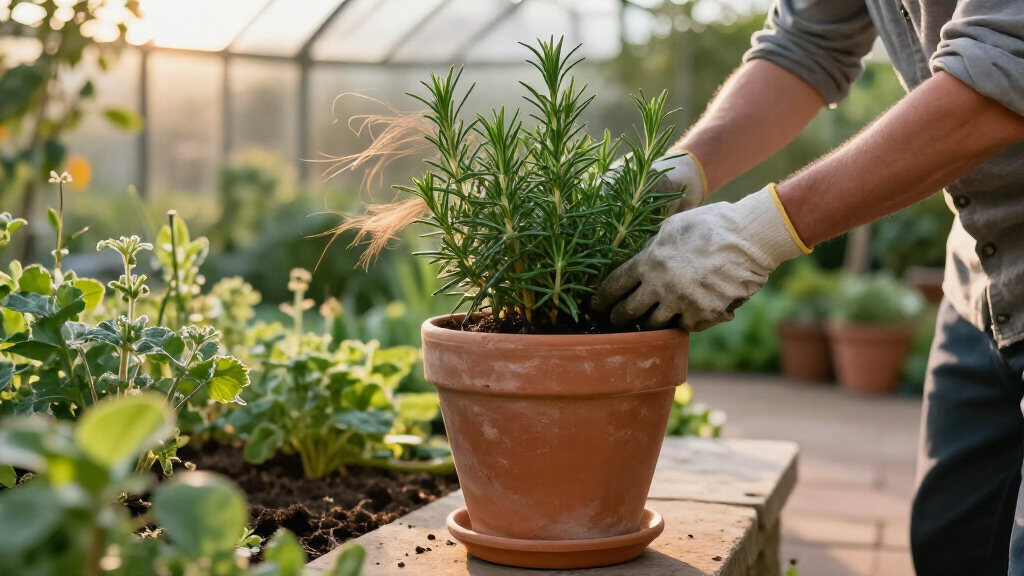
I ranked these planters by how well their described form and materials support stability outdoors, then weighed usability, capacity, and flexibility. Cement construction and a low, broad profile offer a more direct route to resisting gusts than lightweight-looking, small-format sets, while taller designs can be useful but expose more plant and container surface to wind. Since product names do not establish exact filled weight, anchoring features, or wind ratings, I avoid treating any pot as windproof under all conditions.
The order reflects the balance between likely stability and practical use, not appearance alone. The Acellegic set leads for its cement build and half-round shape; WORTH ranks highly for buyers who need tall planters but carries a height-related wind tradeoff. SAFAVIEH and Pure Garden suit individual displays, while the Myfeegoin and WEICHENGXING sets offer more pots for arranging groups, with less evidence from their listed formats of built-in anchoring. Buyers should verify material details, drainage, and ballast capacity before choosing.
| windproof plant pot | Material | Color | Shape |
|---|---|---|---|
| Myfeegoin 8-Inch Whiskey Barre | Polypropylene resin | — | — |
| WORTH 20-Inch Tall Tapered Pla | Plastic | Black | Square tapered |
| SAFAVIEH Kenslia Outdoor Plant | Cement Ficonstone | Black | Round orb |
| Pure Garden Black Square Outdo | Polypropylene | Black | Square |
| WEICHENGXING 12-Inch Whiskey B | Plastic | Brown | — |
| Acellegic Half-Round Patio Umb | Cement | Brown | Semicircular |
Factors to Consider When Choosing Best Windproof Plant Pots
Wind resistance is a combination of the pot, the plant, and the spot where both sit. Use these broader checks to avoid buying a container that looks sturdy but becomes unstable once a tall plant catches a gust.
Compare Filled Weight, Not Empty-Pot Weight
A planter’s stability changes once it holds damp soil, but that added weight can vary with pot size, mix, and watering. Check whether the manufacturer lists the container’s material and weight rather than assuming that an outdoor label means it is heavy. If the pot is light, see whether it has space for stones or another safe ballast layer without reducing root room too much. Avoid adding loose weight that blocks drainage or makes the planter difficult to handle. For balconies, also follow any building limits on concentrated loads before adding heavy containers.
Match Shape to the Wind and Placement
Low, broad containers generally present a different stability profile from narrow, tall pots, but the best choice also depends on where the planter will stand. A half-round pot can sit against a wall, while a freestanding planter needs a base and footprint suited to open exposure. Corners and sheltered walls may reduce direct gusts, though wind can funnel between buildings or along railings. Measure the available footprint before choosing a wider base, and leave enough clearance for drainage and maintenance. Do not rely on a wall alone if a container can still slide or tip forward.
Account for the Plant Above the Rim
A stable container can still be vulnerable when a plant has a tall stem, broad leaves, or a dense canopy that catches wind. Choose a pot with enough root volume for the plant rather than sizing up solely to gain weight. For exposed spots, compact or flexible-stemmed plants may place less leverage on the pot than a tall, top-heavy selection. Pruning and staking can reduce movement, but stakes need secure anchoring and should not transfer force in a way that cracks the container. Think of the plant and pot as one system when judging stability.
Treat Drainage and Ballast as a Pair
Drainage holes help prevent waterlogged roots, but they can complicate ballast choices and may let soil wash out. Check whether a saucer is included and whether it can handle runoff without leaving standing water beneath the pot. If adding weight, keep drainage openings clear and use a method compatible with the planter’s design. A saucer can catch water, but it is not an anchor and may allow a pot to shift on a smooth surface. On windy patios, a non-slip base or a secure placement may matter as much as extra weight.
Choose Sets for the Space, Not Just the Count
Multi-pot packs can make it easier to spread plants across a patio, yet several small containers may be easier to move or scatter than one substantial planter. Grouping pots can create a fuller display, but close placement does not automatically keep them from tipping. Consider whether each pot will have a protected position and whether you can bring smaller containers indoors during severe weather. A single larger planter can simplify care, though it may be harder to reposition once filled. Buy for the arrangement you can maintain, not just the number of containers in the box.
Know When a Heavier or More Secure Setup Is Worth It
Paying more for a heavier material or a purpose-built anchoring feature can make sense on an exposed terrace where containers stay outside year-round. For a sheltered porch or seasonal display, a lighter set may be easier to rearrange and store. Check whether a product is actually designed to accept ballast or attachment hardware; do not drill or modify a planter unless its instructions allow it. In very gusty locations, moving pots to shelter may be safer than relying on weight alone. If the site has strict rules about securing objects, follow those before setting planters near an edge.
Frequently Asked Questions
Can any of these planters be guaranteed not to tip in strong wind?
No planter in this roundup can be called guaranteed windproof based on its listed name alone. Stability depends on the container’s actual weight, the soil and plant inside it, wind direction, and the surface beneath it. The Acellegic cement set has the clearest material and shape cues for a steadier setup, but even a heavy pot can move in severe gusts. For exposed areas, use a sheltered position or an approved securement method and move containers when extreme weather is expected.
Is a tall planter or a wide planter better for a windy patio?
A wider, lower planter often has a more favorable shape for stability than a narrow, tall one, though material and filled weight still matter. Tall containers can catch more wind, and tall plants add leverage above the rim. WORTH’s 20-inch planters may suit a vertical display, but they call for more care with placement than a low-profile design. If you prefer height, use a sheltered position and choose plants whose size will not make the arrangement top-heavy.
Are multi-packs a good choice if my patio gets gusts?
They can work if each pot has a stable location and the plants are small enough not to make the containers top-heavy. The Myfeegoin and WEICHENGXING sets offer several pots for flexible layouts, but a group of small planters is not automatically more secure than one heavy container. Check each pot’s material, base, and capacity for ballast before spreading them around an exposed area. If you cannot secure or shelter every pot, a smaller number of heavier containers may be easier to manage.
Should I add stones to the bottom of a light planter?
Extra weight may help lower a planter’s center of gravity, but stones also take up space and do not replace proper drainage or secure placement. Follow the planter’s instructions and keep drainage holes open; standing water can harm roots and add unpredictable weight. If the manufacturer allows ballast, use a method that does not press on or damage the container. For a very light pot in a highly exposed spot, moving it to shelter may be a safer answer than loading it with stones.
Which planter style makes the most sense for a balcony with limited floor space?
Start by measuring the usable footprint and checking balcony load rules before choosing a heavy container. A half-round design such as the Acellegic set can fit against a wall more neatly than a full-round pot, while a tall planter can preserve floor area but may catch more wind. Sets of smaller pots allow flexible placement, though they need stable spots where they will not slide toward an edge. Leave room for drainage and access, and do not place planters where a gust could push them over a railing.
Conclusion
For the strongest stability cues in this lineup, I’d choose the Acellegic Half-Round Patio Umbrella Planter Set as best overall, particularly for a sheltered wall or patio edge. The Myfeegoin 8-inch set is my best value-style pick for buyers who want several small containers, while the WORTH 20-inch pair is the premium-style choice for a taller display—provided you can limit wind exposure. Beginners may find the small Myfeegoin pots easier to arrange and reposition, though they should not expect the same anchoring feel as cement. For a specific need, choose Acellegic when a low-profile cement design suits the location, or WEICHENGXING when you want a larger multi-pot grouping. Check the material, drainage, and ballast details before ordering, and remember that placement matters as much as the planter itself.