Postharvest pests like Drosophila flies can quickly infest stored fruits and vegetables, causing significant quality and quantity losses. To protect your produce, you should implement pest-resistant storage practices, such as sealing entry points, maintaining proper humidity, and keeping storage areas clean. Biological control methods and integrated pest management strategies further help reduce infestations sustainably. If you want to discover effective ways to keep pests at bay and preserve your harvest longer, there’s more to explore.
Key Takeaways
- Drosophila flies rapidly infest ripe fruits and vegetables, causing quality degradation and reducing shelf life.
- Biological control methods, like parasitoid wasps, effectively manage Drosophila populations sustainably.
- Sealing entry points and maintaining proper humidity prevent Drosophila infestation in storage facilities.
- Implementing integrated pest management combines biological controls and resistant storage practices for best results.
- Regular monitoring and sanitation are essential to detect early infestation and minimize postharvest losses.
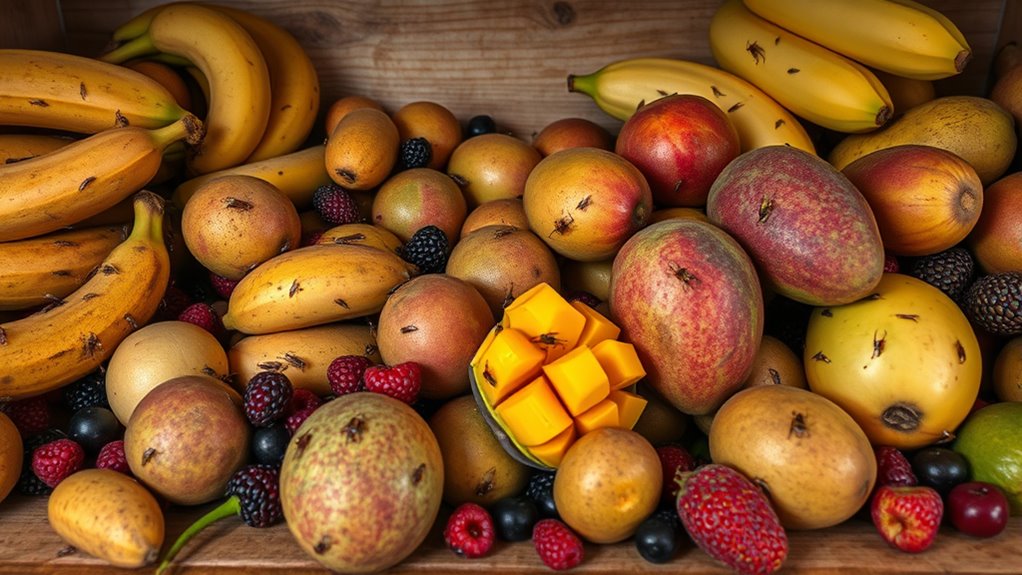
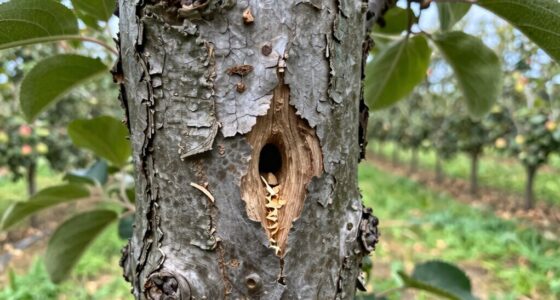
Postharvest pests are a major threat to stored crops, causing notable losses in quality and quantity. Among these pests, Drosophila flies are particularly problematic because they infest a wide range of fruits and vegetables, rapidly reproducing and compromising the freshness of your stored produce. To combat these pests effectively, you need to understand the importance of integrated pest management strategies that focus on biological control and pest resistant storage.
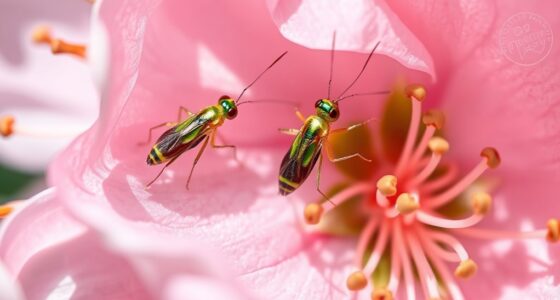
Biological control offers a sustainable and eco-friendly way to manage Drosophila populations. Instead of relying solely on chemical pesticides, you can introduce natural enemies such as parasitoid wasps or beneficial nematodes that target the pest larvae or adults. These biological agents help keep pest numbers in check without contaminating your stored crops, preserving their quality and safety. Implementing biological control methods requires careful timing and monitoring, but once established, they provide a long-term solution that reduces the need for chemical interventions.
Biological control uses natural enemies to sustainably manage Drosophila populations.
In addition to biological control, adopting pest resistant storage practices is vital. Pest resistant storage involves designing and maintaining storage facilities that create an inhospitable environment for pests like Drosophila. This can include sealing entry points to prevent pests from getting inside, maintaining proper humidity levels, and ensuring good sanitation to eliminate breeding sites. Using storage containers with tight-fitting lids or screens greatly reduces the chances of infestation. Pest resistant storage not only protects your crops but also minimizes postharvest losses and extends the shelf life of your produce.
Combining biological control with pest resistant storage creates an all-encompassing approach to managing postharvest pests. This integrated strategy minimizes reliance on chemical pesticides, which can have health and environmental impacts, and provides a more sustainable solution for maintaining the quality of your stored crops. Regular inspection and monitoring are essential to identify early signs of infestation and to assess the effectiveness of your control measures. Educating yourself on pest behavior and control options helps you make informed decisions and adapt your storage practices accordingly.
Additionally, understanding the IRA investment strategies and their tax implications can help you allocate resources efficiently toward pest management solutions that are both effective and financially sustainable.
As an affiliate, we earn on qualifying purchases.
Frequently Asked Questions
How Do Drosophila Pests Affect Fruit Nutritional Value?
Drosophila pests cause fruit nutrient degradation by accelerating pest-induced spoilage, which reduces the fruit’s nutritional value. As these pests feed and lay eggs, they introduce bacteria and fungi that break down essential nutrients like vitamins and sugars. This process weakens the fruit’s quality, making it less nutritious and less appealing for consumption. Consequently, controlling Drosophila helps preserve fruit nutrients and prevents spoilage.
What Are the Economic Impacts of Postharvest Pest Infestations?
You face significant economic impacts from postharvest pest infestations, including market loss and trade restrictions. When pests like Drosophila infest your stored fruit, it becomes less appealing and harder to sell internationally. This can lead to rejected shipments, decreased revenue, and increased costs for pest control and storage. Ultimately, these factors harm your profitability and global market access, emphasizing the importance of effective pest management strategies.
Can Natural Predators Control Drosophila Populations Effectively?
Like David facing Goliath, natural predators can control Drosophila populations, but their effectiveness varies. Biological control offers a promising solution, with predators like certain beetles or parasitic wasps targeting these pests. While they can reduce infestations, relying solely on natural predators may not fully eliminate Drosophila. You should combine biological control with good storage practices for more reliable, effective pest management.
How Long Do Drosophila Pests Typically Survive in Storage Conditions?
Drosophila pests typically have a lifespan in storage of about 8 to 14 days, depending on temperature and humidity. The infestation duration can extend if conditions remain favorable, allowing multiple generations to develop. You should regularly inspect your storage area and maintain proper conditions, such as low moisture and cool temperatures, to limit their survival and break the infestation cycle effectively.
Are There Specific Storage Materials That Deter Drosophila Infestation?
In a hypothetical strawberry farm, using airtight, opaque storage containers can dramatically reduce Drosophila infestation. Natural repellents like neem oil or essential oils infused into packaging also help deter these pests. When selecting storage materials, prioritize those that are pest-resistant, non-porous, and sealed tightly. Proper storage material selection, combined with natural repellents, creates an effective barrier, keeping Drosophila away and preserving your produce’s quality better.
sealed storage containers for fruits
As an affiliate, we earn on qualifying purchases.
As an affiliate, we earn on qualifying purchases.
Conclusion
Understanding postharvest pests like Drosophila is vital for protecting your stored produce. Did you know that Drosophila infestations can cause up to 20% of stored fruit to spoil? By keeping storage areas clean and monitoring for pest activity, you can considerably reduce losses. Staying vigilant not only preserves your harvest but also saves you money. Remember, a proactive approach makes a big difference in managing storage issues effectively.
biological pest control for stored produce
As an affiliate, we earn on qualifying purchases.
As an affiliate, we earn on qualifying purchases.
storage humidity monitor for fruits
As an affiliate, we earn on qualifying purchases.
As an affiliate, we earn on qualifying purchases.