To improve airflow around your plants, use staking and trellising to keep foliage open and well-ventilated. Choose sturdy materials like wood, metal, or wire and place supports strategically to avoid crowding and shading. Regularly prune to remove crowded or dead growth, which helps prevent pests and disease. Proper support installation and maintenance encourage healthier growth, making it easier to care for your plants. Keep exploring to discover more tips for ideal airflow and plant health.
Key Takeaways
- Use tall, sturdy supports like trellises or stakes to encourage upward growth and improve airflow around plants.
- Place supports with adequate spacing to prevent shading and allow for proper air circulation.
- Secure plants gently to supports to avoid restricting airflow and promote healthy development.
- Prune regularly to maintain an open structure that enhances airflow and reduces disease risk.
- Inspect supports frequently for stability and remove debris to ensure unobstructed airflow around plants.
Have you ever wondered how to support your climbing plants effectively? Proper staking and trellising are essential for promoting healthy growth and guaranteeing your plants stay strong and productive. When you set up a sturdy framework, you create an environment that encourages airflow, reduces disease risk, and makes maintenance easier. To achieve this, you need to understand the right techniques for supporting your plants and how to keep them healthy through pruning techniques and pest management.
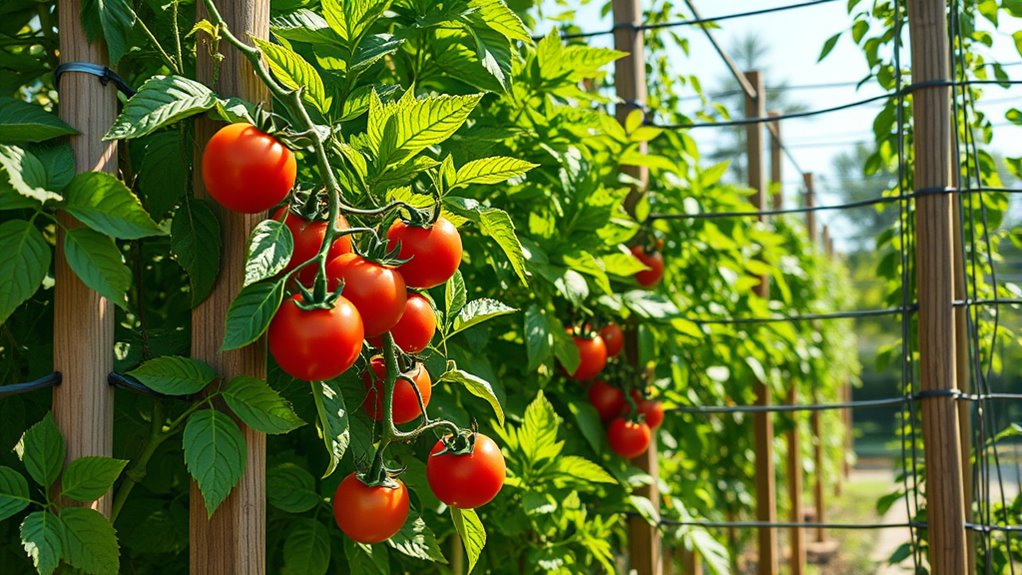
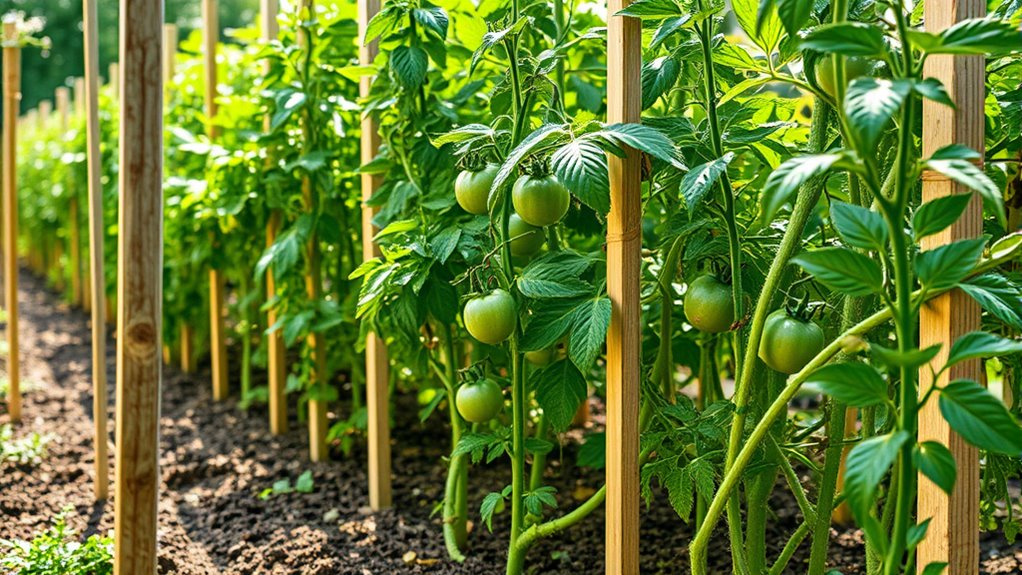
Start by selecting the appropriate staking or trellising method based on your plant type. For vine-like plants such as tomatoes, cucumbers, or beans, a trellis made of wood, metal, or sturdy wire works well. Ensure the structure is tall and strong enough to support the mature size of your plants. When installing, position your supports so they don’t shade each other and allow plenty of room for air to circulate around the foliage. This increased airflow helps prevent fungal diseases and discourages pests from settling on the plants. Remember, a well-ventilated plant is less likely to develop problems, making pest management easier and more effective.
Choose sturdy trellises for vine plants, ensuring proper height and spacing for healthy airflow and growth.
Pruning techniques are vital for maintaining this airflow and keeping your plants healthy. Regularly remove dead or crowded growth to prevent the plant from becoming too dense. Thin out lateral shoots and lower leaves that block sunlight and air circulation. As you prune, focus on maintaining a balanced shape that encourages upward growth along the support structure. Proper pruning also reduces hiding spots for pests, making it easier to spot any issues early on. When you prune, do so carefully to avoid damaging the plant and to promote vigorous new growth.
Pest management is also crucial in a well-supported garden. With good airflow, pests have a harder time establishing colonies, but you still need to stay vigilant. Check your plants frequently for signs of insects or disease. Use natural deterrents like neem oil or introduce beneficial insects such as ladybugs to control common pests. Avoid overwatering, which can foster fungal diseases, and keep the area tidy by removing fallen leaves and debris. Supporting your plants properly allows you to access them easily for inspections and treatments, making pest management more straightforward.

RUBFAC 7.8ft Garden Arch, Metal Trellis for Climbing Plants Outdoor
- Versatile Garden Decoration: Ideal for events, weddings, and gardens
- Dimensions: 55 inches wide x 94 inches high
- Easy to Assemble: Simple setup for indoor and outdoor use
As an affiliate, we earn on qualifying purchases.
As an affiliate, we earn on qualifying purchases.
Frequently Asked Questions
What Are the Best Materials for Staking and Trellising?
You should choose materials like bamboo, wooden stakes, or metal for staking and trellising, as they offer good material durability. Bamboo and wood are cost-effective options, easy to install, and environmentally friendly. Metal stakes are more durable and long-lasting but may cost a bit more. Consider your budget, plant needs, and climate when selecting, ensuring your stakes provide sturdy support while being affordable and durable.
How Often Should Staking and Trellising Be Adjusted During Growth?
Adjust your staking and trellising as often as a gardener tends to their plants—regularly and with care. During growth monitoring, check every one to two weeks, or whenever you notice stems stretching or heavy fruit causing instability. Timing adjustments are vital to support healthy development, prevent damage, and guarantee ideal airflow. Keep a close eye on your plants’ progress, and don’t hesitate to tighten or reposition your supports as needed.
Can Staking and Trellising Prevent Pest Damage?
Yes, staking and trellising can help prevent pest damage by acting as a pest deterrent and improving plant support. When plants are well-supported and kept off the ground, pests like slugs and insects find it harder to reach them. Additionally, better airflow reduces humidity and creates a less inviting environment for pests and diseases. Regularly adjusting your staking and trellising guarantees plants stay healthy and safeguarded against pest issues.
Are There Eco-Friendly Options for Staking and Trellising?
Sure, eco-friendly staking options exist—because who doesn’t want to save the planet while supporting their plants? You can use biodegradable stakes that break down naturally or recycled trellis materials that give old stuff a new purpose. These options not only reduce plastic waste but also keep your garden green and guilt-free. So go ahead, choose sustainable, because your plants—and the Earth—will thank you.
How Does Staking Influence Fruit or Flower Quality?
Staking improves fruit and flower quality by supporting healthy fruit development and maintaining flower symmetry. When you stake plants, you prevent branches from bending or breaking, which promotes even growth. This support guarantees better air circulation and sunlight exposure, leading to more uniform flowering and higher-quality fruit. As a result, your plants produce stronger, more attractive flowers and better-quality fruit, making your garden more productive and visually appealing.

Xiny Tool Garden Stakes, 25 Pack Steel Plant Garden Tomato Stakes with Plastic Coat for Climbing Plants (25 Pack 58 Inch)
- Package Quantity: 25 steel plant stakes
- Stake Diameter: 0.43 inches
- Material: Steel with plastic coating
As an affiliate, we earn on qualifying purchases.
As an affiliate, we earn on qualifying purchases.
Conclusion
Don’t think staking and trellising take too much effort; they’re worth every minute. Proper support improves airflow, reduces disease, and boosts your crop’s yield. Even if you’re worried about the time or effort, the benefits far outweigh the hassle. With just a little planning, you can make your plants healthier and easier to harvest. So, start today—your future harvest will thank you for it!

YDSL 100 Feet Soft Tie for Plants, Green Twist Garden Ties Gardening Supplies for Supporting Climbing Plants, Tomatoes, Vegetables, (Diameter – 2.5MM)
- High-Quality Material: Made of durable rubber TPR for protection
- Enhanced Strength: Inner metal cord for added durability
- Natural Green Color: Blends seamlessly with garden plants
As an affiliate, we earn on qualifying purchases.
As an affiliate, we earn on qualifying purchases.

2-Pack Stainless Steel Gardening Scissors, Pruning Shears and Clippers for Gardening
- Versatile Pruning Combo: Includes shears and snips for all tasks
- Ultra Sharp Blades: Made from premium stainless steel with titanium coating
- Durable and Rustproof: Constructed from rust-proof stainless steel for longevity
As an affiliate, we earn on qualifying purchases.
As an affiliate, we earn on qualifying purchases.