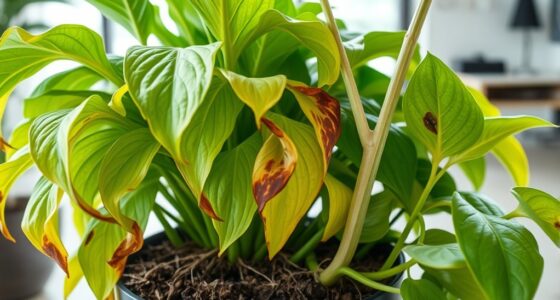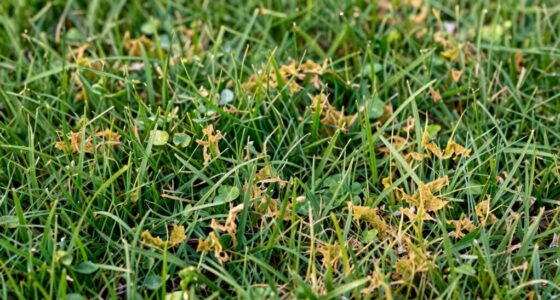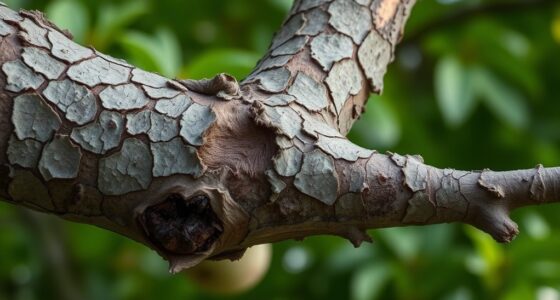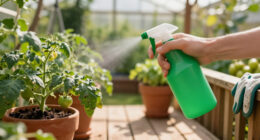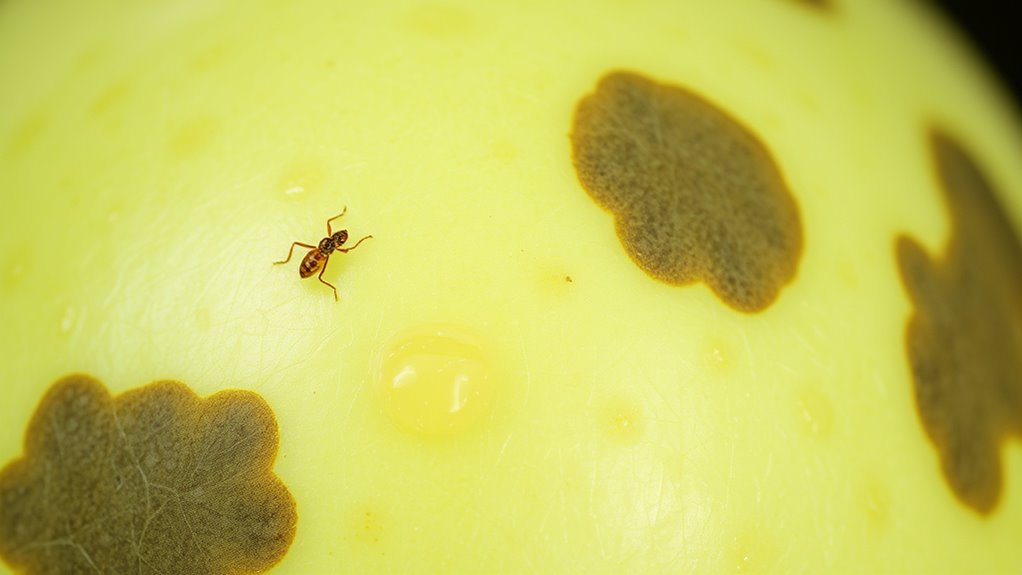

Sticky honeydew and sooty mold usually come from pests like aphids, whiteflies, or scale insects that feed on plant sap. These pests pierce plant tissues and excrete honeydew, which settles on leaves and surfaces. The honeydew then promotes mold growth, resulting in black, sooty layers that block sunlight and harm your plants. Spotting these signs early helps you manage pests more effectively—keep going to discover how to control and prevent this cycle.

Get garden gear delivered free — and shop member deals
- Fast, free delivery on millions of items
- Access to Prime Big Deal Days deals on October 6–7
- Prime Video, Amazon Music and more included
Key Takeaways
- Pests like aphids, scale insects, and whiteflies feed on plant sap, producing honeydew as a waste product.
- Honeydew accumulation on plant surfaces encourages sooty mold growth, which appears as a black, sooty layer.
- The presence of honeydew indicates active pest infestations that should be targeted for control.
- Sooty mold further weakens plants by blocking sunlight, reducing photosynthesis.
- Managing pests and removing honeydew can prevent mold development and protect plant health.
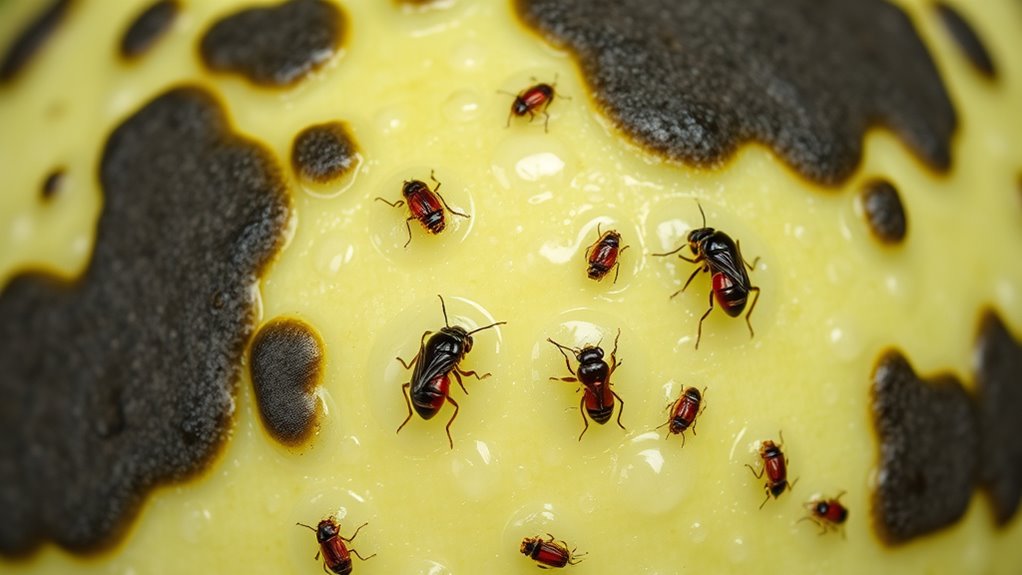
Have you ever wondered where pests originate from? Many pests, especially those that cause sticky surfaces and unsightly mold, start with the presence of honeydew production. This sweet, sticky substance is excreted by insects like aphids, scale insects, and whiteflies when they feed on plant sap. As they pierce plant tissues to extract nutrients, they leave behind honeydew, which quickly settles on leaves, branches, and nearby surfaces. If this honeydew isn’t cleaned up or managed, it creates an ideal environment for mold growth factors to thrive. The moisture and sugar content in honeydew make it a perfect food source for mold spores, allowing mold to develop rapidly on affected surfaces.
Once mold begins to grow, it not only discolors plants and structures but also exacerbates pest problems. Mold growth factors include high humidity, accumulated honeydew, and inadequate airflow. When these conditions align, mold spores settle and germinate on surfaces coated with honeydew, forming a black, sooty layer known as sooty mold. This mold isn’t just an unsightly nuisance; it can interfere with photosynthesis in plants and weaken their overall health. As mold spreads, it can also attract additional pests, such as ants, which are drawn to the sweet, sugary residue. These ants tend to farm the honeydew-producing insects, protecting them from predators and further facilitating pest infestations. Understanding pest behavior helps in developing effective control strategies.
Mold growth worsens pest problems and weakens plant health by forming sooty mold from honeydew and attracting ants.
The cycle continues as pests that produce honeydew keep feeding on plants, releasing more honeydew, which sustains mold growth factors. This creates a self-perpetuating problem that’s difficult to break without intervention. You might notice the presence of sticky, blackened surfaces on your plants or structures, indicating the presence of sooty mold. These signs are often accompanied by a decline in plant vigor and increased pest activity, which should alert you to a bigger issue. Managing this problem starts with controlling the source of honeydew production—targeting the pests responsible. Regularly inspecting plants for signs of aphids, scale insects, or whiteflies, and promptly removing or treating infestations, can substantially reduce honeydew buildup.
Additionally, improving airflow and reducing humidity around affected plants can cut down mold growth factors. Washing surfaces with appropriate solutions can also help remove mold and honeydew residues. Remember, preventing pests from establishing themselves in the first place is the most effective way to avoid the cascade of problems caused by honeydew and sooty mold. By understanding where these issues originate—from pests that produce honeydew to the mold growth factors they promote—you can take targeted steps to protect your plants and structures from these persistent problems.
As an affiliate, we earn on qualifying purchases.
Frequently Asked Questions
How Can I Prevent Honeydew Accumulation on My Plants?
To prevent honeydew buildup on your plants, regularly prune affected areas to remove pests and improve airflow. Use proper pruning techniques to keep your plants healthy and less attractive to pests. Additionally, consider companion planting with pest-repellent plants like marigolds or basil, which can help deter insects that produce honeydew. These strategies help reduce pest populations and keep your plants cleaner and healthier.
What Are the Best Natural Remedies for Sooty Mold?
To treat sooty mold naturally, you can use homemade sooty mold treatments with natural antifungal remedies like a mixture of dish soap and water or a solution of baking soda and water. Spray these on affected leaves gently, ensuring good coverage. Regularly wipe off the mold with a damp cloth, and prune heavily infested areas. These simple, natural methods help combat sooty mold effectively without harsh chemicals.
Are There Eco-Friendly Pest Control Options for Source Pests?
Yes, you can use eco-friendly pest control options like releasing beneficial insects such as ladybugs and lacewings to target source pests. Additionally, organic sprays containing neem oil or insecticidal soaps help manage pests without harming the environment. These methods work together to reduce pest populations naturally, preventing honeydew buildup and sooty mold growth while keeping your garden safe for beneficial insects and other wildlife.
How Often Should I Inspect My Plants for Pests?
Don’t wait for trouble to knock on your door—regular monitoring keeps pests at bay. You should inspect your plants at least once a week, especially during peak growing seasons. Incorporate seasonal inspections to catch issues early. Monitoring frequency helps you spot sticky honeydew and sooty mold before they spread. Staying vigilant guarantees your plants stay healthy, and pest problems won’t sneak up on you when you least expect it.
Can Sticky Honeydew Harm Plant Health Directly?
Sticky honeydew itself doesn’t directly harm your plant’s health, but it can cause issues like plant nutrient deficiencies by blocking sunlight and trapping moisture. This creates ideal conditions for sooty mold, which further hampers photosynthesis. While some pests produce honeydew, beneficial insects often help control these pests, naturally reducing honeydew buildup. Regular inspection allows you to spot pest activity early, supporting a healthy balance that keeps your plants thriving.
As an affiliate, we earn on qualifying purchases.
Conclusion
By understanding your source pests, you take control of your plants. You identify the pests, you prevent the sticky honeydew, and you eliminate the sooty mold. You protect your garden’s health, you preserve its beauty, and you enjoy its bounty. You become the gardener who cares, the gardener who acts, the gardener who wins. Keep vigilant, stay proactive, and watch your garden thrive with resilience and pride.
As an affiliate, we earn on qualifying purchases.
As an affiliate, we earn on qualifying purchases.
Fall yard work Picks
leaf blowers
As an affiliate, we earn on qualifying purchases.