If you notice sticky residue on your fruit trees, it’s often more than just aphids. While aphids are common, other pests like scale insects, whiteflies, and mealybugs also produce honeydew, which causes the sticky buildup. This signals active pest feeding that can lead to mold, leaf damage, or weakened trees. Recognizing these signs early helps prevent bigger problems later. Keep investigating to discover how to manage these pests effectively.
Key Takeaways
- Sticky residue often indicates multiple pests, such as scale insects or whiteflies, not just aphids.
- Honeydew buildup attracts sooty mold, which can hide other pests beneath the fungus.
- The presence of various pests suggests a more complex infestation requiring comprehensive management.
- Sticky residue combined with mold signals ongoing pest activity that may damage tree health.
- Early detection of diverse pests helps prevent extensive damage beyond what aphids cause alone.
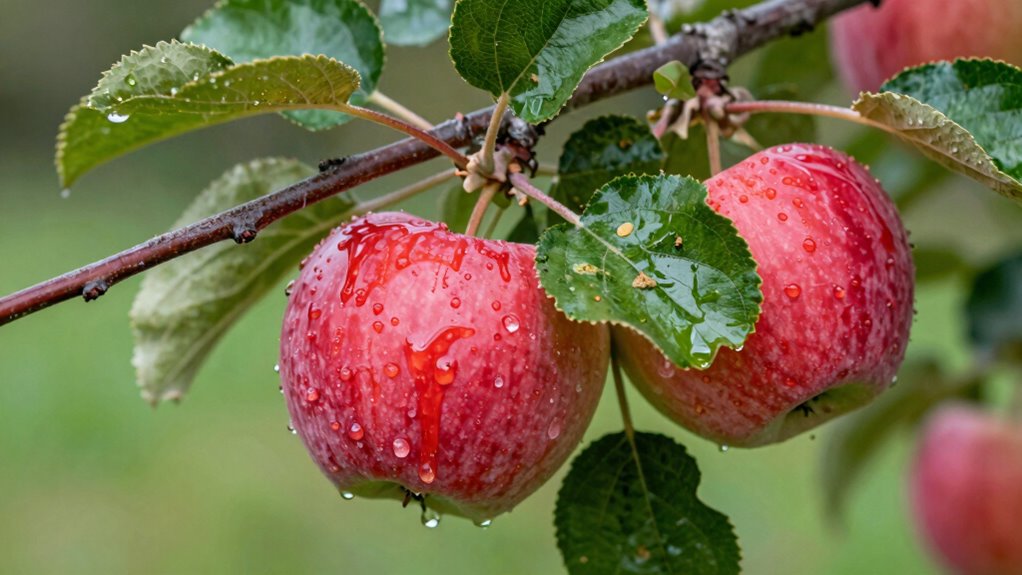
If you notice sticky residue on your fruit trees, it’s often a sign that pests or diseases are present, and addressing the issue promptly can prevent further damage. This residue, commonly called honeydew, is a sugary byproduct produced by various insect pests. While many people associate honeydew with aphids, it’s important to understand that other pests can cause similar issues. Proper pest identification becomes essential so you can target the right problem and manage your tree’s health effectively. Ignoring the sticky residue can lead to more serious issues, such as mold growth or weakened trees, which makes tree health management necessary for maintaining a thriving orchard or garden.
Sticky residue on your fruit trees signals pests or diseases—early detection helps prevent serious damage.
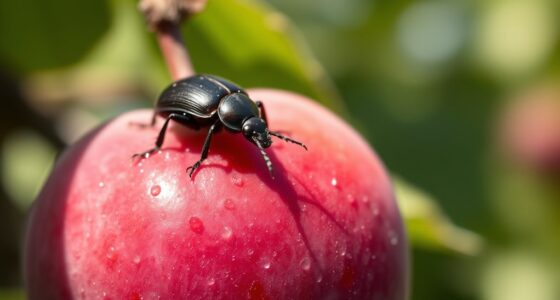
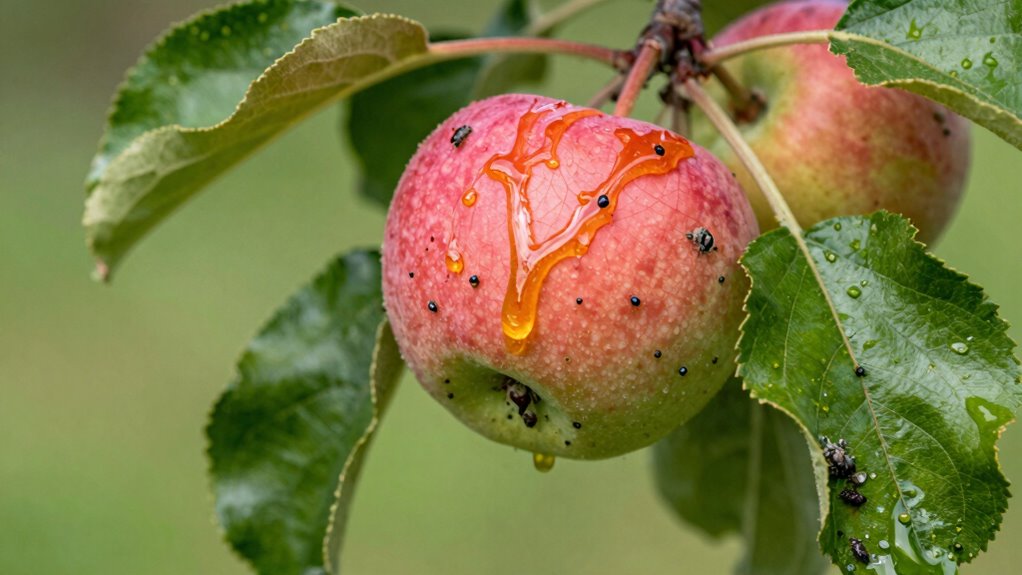
The presence of honeydew indicates that pests are feeding on your fruit trees. Aphids are the most common culprits, but scale insects, whiteflies, and mealybugs can also produce sticky excretions. These pests tend to cluster on new growth, undersides of leaves, or along branches, and their feeding weakens the tree’s natural defenses. As they suck sap from the plant, they excrete honeydew, which coats leaves and branches. This sticky substance not only signals pest activity but also creates a perfect environment for sooty mold to grow—a black fungus that further hampers photosynthesis and weakens the tree. Recognizing that pest activity can be hidden beneath the sticky residue is crucial for effective management. Understanding the signs of infestation and pest identification can help you catch issues early before they become severe. Regular monitoring practices are vital to detect early signs of pest presence and prevent extensive damage. Additionally, understanding the life cycle of pests can improve the timing of control measures, making treatments more effective.
Identifying which pest is responsible is key to effective tree health management. For example, aphids are soft-bodied and often appear in large colonies, while scale insects look like small bumps attached to stems or leaves. Whiteflies are tiny, flying insects that can be seen fluttering around when you shake a branch. Once you’ve identified the pest, you can choose appropriate control methods, whether it’s natural predators, horticultural oils, or insecticidal soaps. Proper pest identification helps you avoid unnecessary or ineffective treatments, saving you time, money, and potential harm to beneficial insects.
Understanding that sticky residue usually points to more than just aphids helps you stay vigilant. It’s a clear sign that pests are actively feeding on your trees, and if left unchecked, they can cause serious damage. Regular monitoring and proactive pest identification are your best tools in managing your trees’ health. By acting quickly and accurately, you prevent pests from spreading or causing irreversible harm, ensuring your fruit trees stay strong, healthy, and productive. Remember, early intervention is the key to effective pest control and maintaining overall tree vitality.

BioAdvanced Fruit & Citrus Tree Insect Control Concentrate – Pest Control for Gardens – 2 Month Infestation Prevention – Treats Up to 9 Fruit Trees – 32 oz Bottle
KILLS LISTED FRUIT & CITRUS TREE INSECTS: Controls Asian Citrus Psyllid, Whiteflies, Aphids Thrips, Citrus Leafminers, Leafhoppers, Blackfly,…
As an affiliate, we earn on qualifying purchases.
As an affiliate, we earn on qualifying purchases.
Frequently Asked Questions
Can Sticky Residue Harm the Fruit’s Taste or Quality?
Sticky residue can harm the fruit’s taste and quality because it leaves a residue impact that might alter the natural fruit flavor. If you don’t remove it, the residue may cause fermentation or attract mold, which further diminishes quality. Regularly cleaning the fruit or treating the tree helps prevent residue buildup, ensuring your fruit remains fresh, tasty, and visually appealing, free from any sticky, unappetizing coatings.
Are There Natural Remedies for Sticky Residue Besides Chemical Pesticides?
Like a gentle rain washing away the shadows, natural remedies and organic solutions can effectively tackle sticky residue. You can spray a mixture of neem oil, insecticidal soap, or horticultural oil to deter pests without chemicals. These eco-friendly options disrupt pest life cycles while preserving your fruit’s taste and quality. Regular applications help keep your trees healthy, echoing nature’s own way of restoring balance without the need for harsh pesticides.
How Often Should I Check My Trees for Sticky Residue?
You should check your trees for sticky residue at least once a week during the growing season. Regular inspections help you spot issues early, especially after tree pruning or periods of heavy rain. Look for signs of pests like scale or aphids, which can affect soil health and overall tree health. Keeping a close eye guarantees you catch problems early, allowing for natural remedies and proper soil management to keep your trees healthy.
Does Sticky Residue Attract Other Pests Besides Aphids?
Think of your trees as bustling neighborhoods. Sticky residue acts like a flashing neon sign, attracting more pests beyond aphids. Ant deterrents can help keep this pest party under control. By pest identification, you’ll notice if other pests—like scale insects or beetles—are drawn in. Addressing the sticky situation early prevents infestations from spreading, ensuring your fruit trees stay healthy and productive. Stay vigilant, and you’ll keep the neighborhood pest-free.
Is Sticky Residue a Sign of a Serious Underlying Disease?
Sticky residue on your fruit trees isn’t necessarily a sign of a serious disease, but it can indicate pest problems like aphids or scale insects. Look for other disease symptoms such as leaf spots or wilting to determine if a disease is present. Proper pest identification is essential, so inspect your trees carefully. Addressing pest issues promptly can prevent potential damage, but if symptoms worsen, consult a professional for accurate diagnosis and treatment.

Mighty Mint Peppermint Oil Plant Protection Spray – Insect & Pest Control for Gnats, Spider Mites & Aphids – Plant-Based, Easy-to-Use – 16 oz
Plant-Based Pest Protection: Helps protect plants from common pests including gnats, spider mites, aphids, fungus issues, and other…
As an affiliate, we earn on qualifying purchases.
As an affiliate, we earn on qualifying purchases.
Conclusion
So, next time you notice sticky residue on your fruit trees, don’t just assume it’s aphids. That sticky mess often points to other pests or issues, like scale insects or fungal problems, which can harm your trees more than you think. Ignoring it might lead to bigger troubles down the line. Stay vigilant, identify the true cause, and take action early—your trees will thank you with healthier fruit and vibrant growth.

Bonide Annual Tree & Shrub Insect Control with Systemaxx, 128 oz Concentrate, Year Long Protection and Insect Killer
Kill borers, miners and more in your lawn and garden with Annual Tree & Shrub Insect Control Concentrate…
As an affiliate, we earn on qualifying purchases.
As an affiliate, we earn on qualifying purchases.

Monterey Fruit Tree & Vegetable Systemic Soil Drench Bundled with Garden Measure Spoon, Apply Once for Season Long Control, Imidacloprid Systemic Insecticide – 1 Quart
CONCENTRATE INSECT KILLER – This pest control is great for use on aphids, flea beetles, leafhoppers, trips, whiteflies,…
As an affiliate, we earn on qualifying purchases.
As an affiliate, we earn on qualifying purchases.