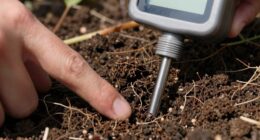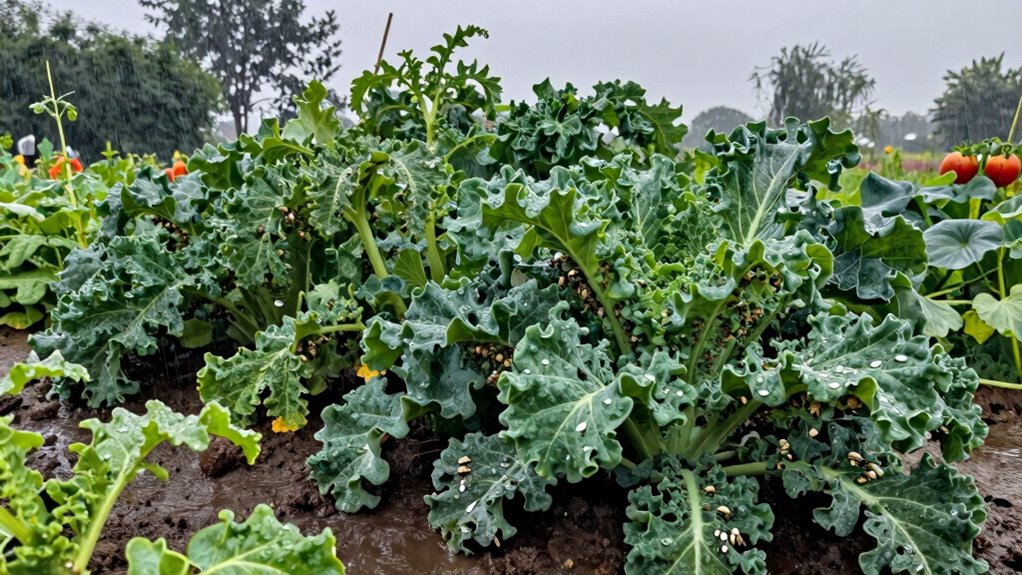

Heavy rainfall can surprise gardeners by quickly boosting pest populations more than expected. When the soil becomes saturated, pests like larvae and burrowing insects develop faster and spread more easily. Wet conditions also soften soil, making it easier for pests to move and invade new areas. Plus, moisture promotes fungi and bacteria that weaken plants, inviting pests to attack. To manage these sudden outbreaks, understanding how rainfall impacts pests can make all the difference — explore further to stay ahead.
Key Takeaways
- Heavy rainfall increases soil moisture, rapidly accelerating pest development and population growth beyond gardener expectations.
- Saturated soil conditions soften pests’ burrowing sites, enabling faster spread and new infestations.
- Sudden rains can wash pests into previously unaffected areas, causing unexpected outbreaks.
- Excess moisture weakens plant defenses by promoting fungi and bacteria, making plants more vulnerable to pests.
- Inconsistent watering post-rain can unintentionally create ideal conditions for pest proliferation.
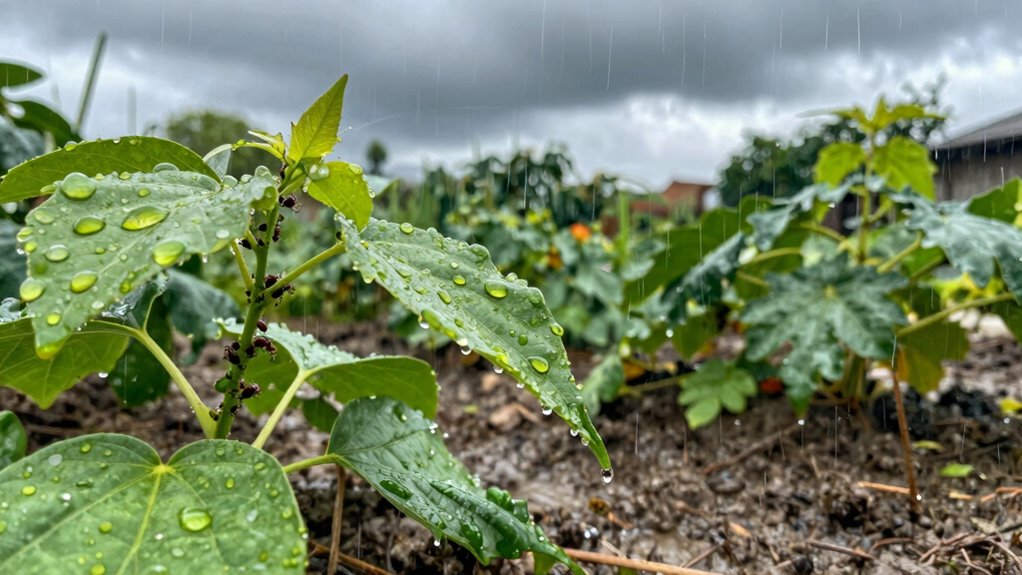
Rainfall plays an essential role in shaping pest populations, often determining whether infestations will thrive or dwindle. When it rains, the soil becomes saturated, and soil moisture levels rise, directly impacting pests that rely on specific environmental conditions. Many gardeners overlook how fluctuations in soil moisture influence pest behavior and lifecycle progression. As soil absorbs water, it creates an ideal environment for certain pests to hatch, feed, and reproduce more efficiently. Conversely, drought conditions can suppress pest activity, but heavy rainfall often triggers sudden outbreaks. Additionally, the increased humidity from rainfall can promote the growth of mold and fungi, which can further weaken plants and make them more prone to pest attacks.
Understanding the connection between rainfall and pest lifecycle is fundamental. Many pests, like soil-borne insects and larvae, depend on moist soil to complete their development. When soil moisture is high, eggs and larvae can survive longer and develop faster, leading to larger pest populations in a shorter time. This rapid development can catch gardeners off guard, especially when they don’t realize that a recent rain has set the stage for an infestation. Moreover, increased soil moisture encourages the growth of fungi and bacteria that can weaken plant defenses, making plants more susceptible to pest attacks.
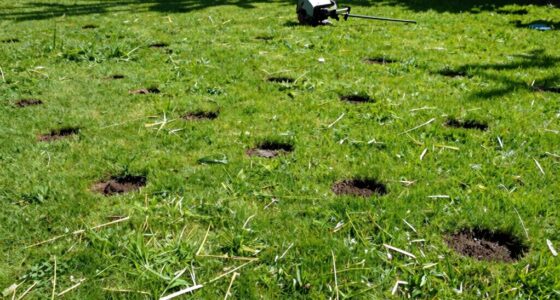
Rainfall doesn’t just influence pest populations by providing a suitable environment; it also affects their movement and dispersal. Wet conditions soften the soil, making it easier for pests like root maggots or wireworms to burrow and spread. In addition, rain can wash pests into new areas or spread their eggs across your garden, complicating pest management efforts. You might notice an uptick in pest pressure shortly after heavy rains, and that’s because the moisture has created perfect conditions for pests to thrive and expand their reach. Furthermore, fluctuations in soil moisture can also influence the behavior of beneficial insects and natural predators, indirectly impacting pest control. An understanding of soil moisture levels can help gardeners better manage pest populations and prevent outbreaks. Recognizing the importance of soil composition can also be crucial, as it affects how quickly soil retains moisture and influences pest habitats.
Additionally, the timing and intensity of rainfall matter. Light, consistent watering can sometimes keep pests at bay by preventing the soil from becoming overly moist, whereas heavy, infrequent rains often cause a surge in pest activity. Too much water can also lead to waterlogging, which destroys root systems and weakens plants, making them even more vulnerable to pest damage. As a gardener, you need to monitor soil moisture levels closely and adjust your watering practices accordingly, especially after heavy rains, to help control pest populations. Being aware of how weather patterns influence soil moisture can help you better anticipate pest outbreaks and plan preventative measures.

Nature’s MACE Rodent Repellent 40oz Concentrate, Covers 16,800 Sq. Ft.,Repel Mice & Rats, Keep Mice, Rats & Rodents Out of Home, Garage, Attic, and Crawl Space, Safe to Use Around Cildren & Pets
POWERFUL & EFFECTIVE RODENT REPELLENT: Nature’s MACE Rodent Repellent has more active ingredients for repelling mice, rats, and…
As an affiliate, we earn on qualifying purchases.
As an affiliate, we earn on qualifying purchases.
Frequently Asked Questions
How Does Soil Type Influence Pest Outbreaks During Rainfall?
Soil type influences pest outbreaks during rainfall by affecting soil drainage and pest habitat. Well-drained soils prevent water from pooling, reducing conditions that attract pests like mosquitoes and fungi. Conversely, poorly drained soils create damp environments, making your garden more inviting for pests such as slugs and root rot-causing organisms. Understanding your soil type helps you manage pest risks effectively, ensuring your plants stay healthy even during heavy rains.
Can Rainfall Patterns Predict Specific Pest Species’ Emergence?
Yes, rainfall patterns can help predict specific pest species’ emergence. By paying attention to rainfall timing, you can anticipate when pests will become active, as it influences their lifecycle stages. For example, heavy rains often trigger the start of certain pest lifecycles, leading to outbreaks. Monitoring these patterns allows you to plan effective pest management strategies, reducing damage and keeping your garden healthier.
What Are the Long-Term Effects of Rainfall Fluctuations on Pest Populations?
You’ll find that fluctuations in rainfall can subtly shape pest populations over time, testing your garden’s climate resilience. As pests adapt to changing moisture levels, their numbers may increase or shift, making management trickier. Long-term, these variations can lead to more resilient pest species or unexpected outbreaks, emphasizing the need for adaptive strategies. Staying vigilant helps you stay ahead, ensuring your garden remains healthy despite these evolving environmental challenges.
How Do Gardeners Track Rainfall Impact on Pest Activity Effectively?
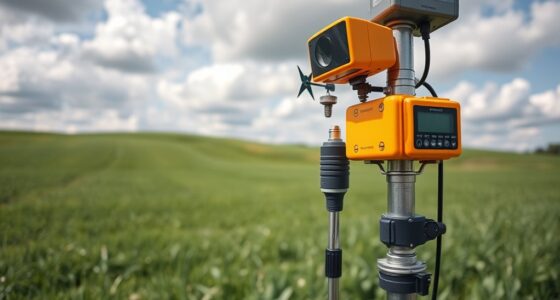
You can track rainfall impact on pest activity effectively by using a reliable rain gauge to monitor accurate rainfall levels. Combine this with pest monitoring tools like sticky traps or visual inspections to observe pest populations. Record rainfall data alongside pest activity regularly, noting patterns and correlations. This approach helps you understand how rainfall influences pest behavior, enabling better timing for pest control measures and more sustainable garden management.
Are Certain Garden Plants More Resistant to Pest Pressure After Rain?
You might notice that certain garden plants, like herbs or native species, show better plant resilience after rain, making them less appealing to pests. When rain triggers pest adaptation, these resilient plants naturally resist pest pressure, thanks to their robust health and natural defenses. This coincidence helps reduce pest problems, so planting more of these hardy varieties can keep your garden healthier and more pest-resistant in wet conditions.

XLUX Long Probe Deep Use Soil Moisture Meter, Water Monitor Indicator Sensor, Hygrometer for Outdoor Indoor Large Pot Plants, Flower, Gardening, Farming
Accurate Soil Moisture Detection: The XLUX Soil Moisture Meter can tell you if the soil deep inside your…
As an affiliate, we earn on qualifying purchases.
As an affiliate, we earn on qualifying purchases.
Conclusion
So, next time you’re annoyed by pests, remember that all that rain isn’t just watering your plants—it’s inviting trouble too. You might think you’re safe under a drizzle, but ironically, too much rain can turn your garden into a pest paradise. You carefully plan, water sparingly, yet Mother Nature’s unpredictable mood swings still outsmart you. Sometimes, the very weather you hope will help your garden ends up being its biggest pest ally.

Kate's Home & Garden Plant Spray for Insects & Getting Rid of Gnats with 12 Sticky Traps. Fungus Gnat Killer & Bug Spray for Indoor Plants (16oz, Peppermint, Pet Safe, Non Toxic)
GNAT CONTROL FOR INDOOR PLANTS: This bundle includes our natural plant bug spray and 12 gnat sticky traps…
As an affiliate, we earn on qualifying purchases.
As an affiliate, we earn on qualifying purchases.

Garden Safe Fungicide 3 32 Oz. Ready to Use Trigger Spray Fungicide – 1 Each
FOR ORGANIC GARDENING: Use in & around the home & home garden on roses, flowers, houseplants, ornamental trees…
As an affiliate, we earn on qualifying purchases.
As an affiliate, we earn on qualifying purchases.