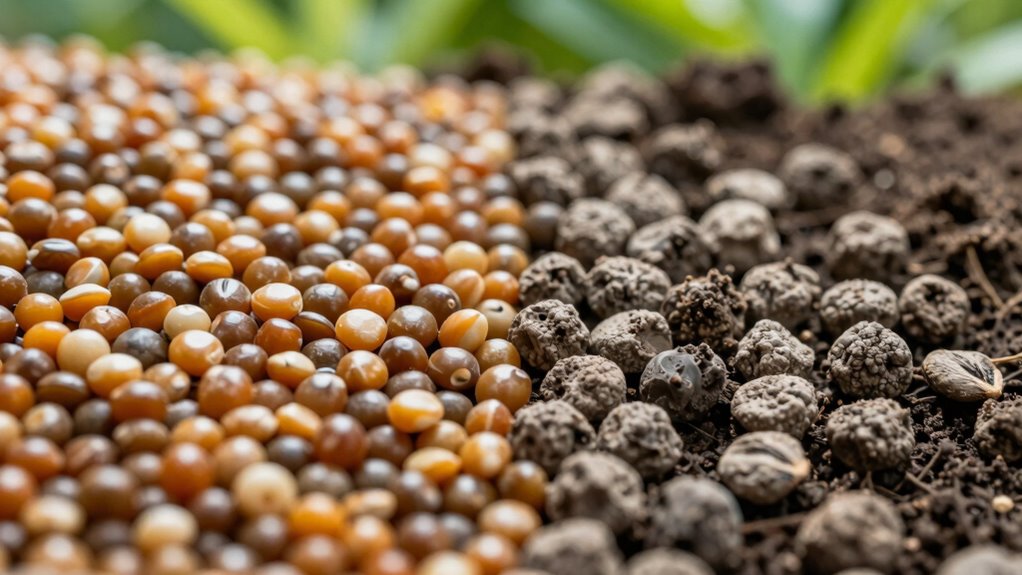

When you use pelleted seeds, handling becomes easier because they are uniform in size and easier to see and space correctly. This helps guarantee proper depth planting and reduces seed wastage. Coated seeds also improve germination, especially in challenging soils, and work better with modern planting equipment. Loose seeds, on the other hand, require more manual effort and precise placement, which can lead to variability. Keep going to discover how these differences impact your planting success.

Get garden gear delivered free with Prime
- Fast, free delivery on millions of items
- Prime Video, Amazon Music and more included
- Member-only deals all year
Key Takeaways
- Pelleted seeds are easier to handle, see, and space accurately during planting, reducing wastage and improving precision.
- Coatings on pelleted seeds enhance uniformity and ensure proper depth placement with compatible planting machinery.
- Seed coatings improve germination in challenging soils by retaining moisture and providing protection against pests and diseases.
- Pelleted seeds often cost more upfront but can lead to better crop establishment and higher yields.
- Loose seeds require manual handling, increasing variability, while pelleted seeds support advanced planting technology for consistent emergence.
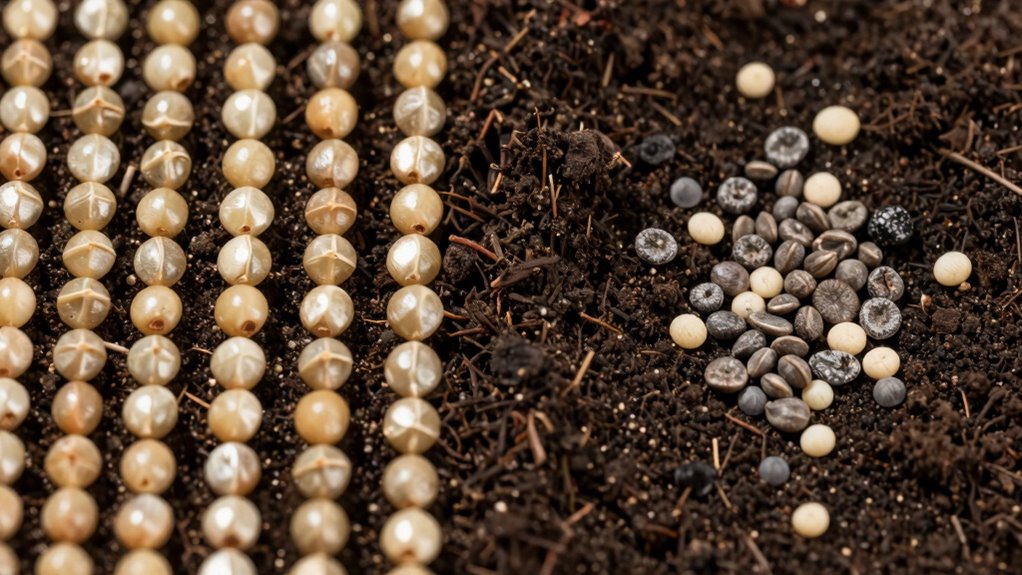
Are pelleted seeds better than loose seeds? The answer depends on several factors, but one thing’s clear: pelleted seeds often simplify planting and improve your chances of success. These seeds have undergone seed treatment, where coatings are applied to enhance seed protection, improve handling, and sometimes include nutrients or pesticides. This seed treatment guarantees that each seed is uniformly coated, which not only makes them easier to handle and plant but also provides better protection against pests and diseases right from the start. When you choose pelleted seeds, you typically get more consistent planting results, especially in large-scale operations. Additionally, the coatings can include moisture-retaining agents, which help seeds germinate even in less-than-ideal soil moisture conditions.
Pelleted seeds offer uniformity, better protection, and easier handling for improved planting success.
Soil compatibility plays an essential role here. Pelleted seeds are usually designed to work well across a range of soil types, but it’s vital to match the seed treatment with your specific soil conditions. If your soil is heavy or prone to compaction, the coating on pelleted seeds can help improve germination by providing a better environment for sprouting. Conversely, in soils with high organic matter or good drainage, loose seeds might suffice, but pelleted seeds still offer advantages like uniformity and ease of planting. The coatings can also include moisture-retaining agents, which help seeds germinate even in less-than-ideal soil moisture conditions.
Handling and planting efficiency is another factor that tilts the scale in favor of pelleted seeds. They’re easier to see and space out accurately, reducing seed wastage and ensuring proper depth during planting. This precise placement is especially beneficial if you’re planting in rows or using machinery, where consistency can markedly impact crop yields. Loose seeds, on the other hand, require more careful handling and often need to be planted at specific depths manually or with less precise equipment, increasing the chance of uneven emergence or missed spots. Furthermore, planting technology advancements have made pelleted seeds even more compatible with modern machinery, enhancing overall planting efficiency.
While pelleted seeds generally cost more upfront, the benefits they bring—such as better seed treatment, improved soil compatibility, and easier planting—often lead to higher germination rates and healthier plants. Your choice should consider your soil type, planting method, and budget. Overall, if you’re aiming for a smoother planting process with more uniform results, pelleted seeds could be the smarter option, especially in challenging soil conditions or large-scale planting. In some cases, seed coating technology can even include nutrients or pesticides, further enhancing seed performance.
As an affiliate, we earn on qualifying purchases.
Frequently Asked Questions
How Do Seed Coatings Affect Germination Rates?
Seed coatings can improve germination rates by protecting seeds from pests and environmental stress, but their durability matters. A durable coating guarantees consistent germination timing and minimizes seed damage, leading to more uniform growth. If the coating breaks down too quickly, it could delay germination or reduce success. So, choose coatings that balance durability with proper seed release, helping your seeds sprout reliably and on schedule.
Are Pelleted Seeds More Resistant to Pests?
Pelleted seeds act like a suit of armor, offering better seed durability and pest resistance. The coating shields the seed from pests, preventing them from munching on it before germination. While not completely pest-proof, pelleted seeds generally have a higher chance of survival, giving your plants a head start. This added protection makes them a smarter choice if you’re battling pests in your garden or farm.
What Is the Cost Difference Between Pelleted and Loose Seeds?
You’ll find that pelleted seeds generally cost more than loose seeds, primarily due to seed coating benefits like improved handling, uniformity, and easier planting. The cost comparison shows that while pelleted seeds are pricier upfront, they can save you time and reduce seed wastage during planting. If you value convenience and efficiency, investing in pelleted seeds might be worthwhile despite the higher initial price.
How Long Do Pelleted Seeds Stay Viable?
Pelleted seeds generally stay viable for 1 to 3 years if stored properly. You should focus on seed storage conditions, keeping seeds in a cool, dry place away from direct sunlight. The coating durability helps protect seeds from moisture and pests, extending their viability. Properly stored pelleted seeds maintain their germination potential longer, giving you confidence that your planting efforts will succeed now and in the future.
Can I Use Pelleted Seeds in Organic Farming?
Yes, you can use pelleted seeds in organic farming, but only if they meet organic certification standards. Guarantee the pelleted seeds maintain seed purity and are free from synthetic coatings or treatments. Always check the label for organic certification and verify that the seed coating complies with organic regulations. Using certified organic pelleted seeds helps you uphold organic practices while enjoying easier planting and better seed handling.
As an affiliate, we earn on qualifying purchases.
Conclusion
Choosing between pelleted and loose seed is like deciding whether to ride a rocket or a bicycle into your garden. Pelleted seeds are like tiny, perfectly packaged missiles that burst through soil barriers effortlessly, while loose seeds are daring adventurers, risking chaos in the chaos. Your choice shapes your planting adventure—so pick wisely, because one path leads to a smooth, effortless planting voyage, and the other to a wild, seed-spilling rollercoaster!
seed planting machinery for pelleted seeds
As an affiliate, we earn on qualifying purchases.
As an affiliate, we earn on qualifying purchases.
As an affiliate, we earn on qualifying purchases.
Halloween Picks
halloween
As an affiliate, we earn on qualifying purchases.