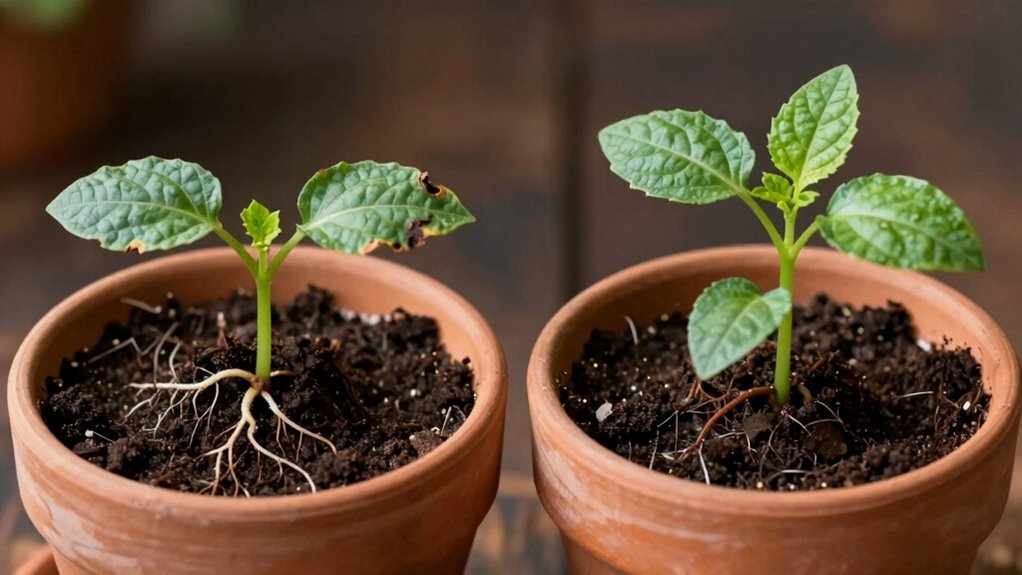

Potting-up too soon can disrupt tender roots, causing damage and growth setbacks, while waiting too long can lead to root-bound plants that struggle to absorb nutrients and water. Watch for signs like root circling or quickly drying soil to determine if it’s time to move up. Timing is essential for healthy development, so understanding when your plant shows these signs helps prevent stress and promotes vigorous growth — there’s more to uncover here.
Key Takeaways
- Potting up too early can damage tender roots and slow growth; wait until roots show signs of congestion.
- Delaying potting up too long causes root-bound plants, reducing nutrient uptake and potentially stunting growth.
- Watch for roots protruding from drainage holes and rapid soil drying as indicators to repot.
- Understanding plant type and growth rate helps determine the optimal timing for repotting.
- Proper timing supports healthy root development, minimizes transplant shock, and promotes vigorous growth.
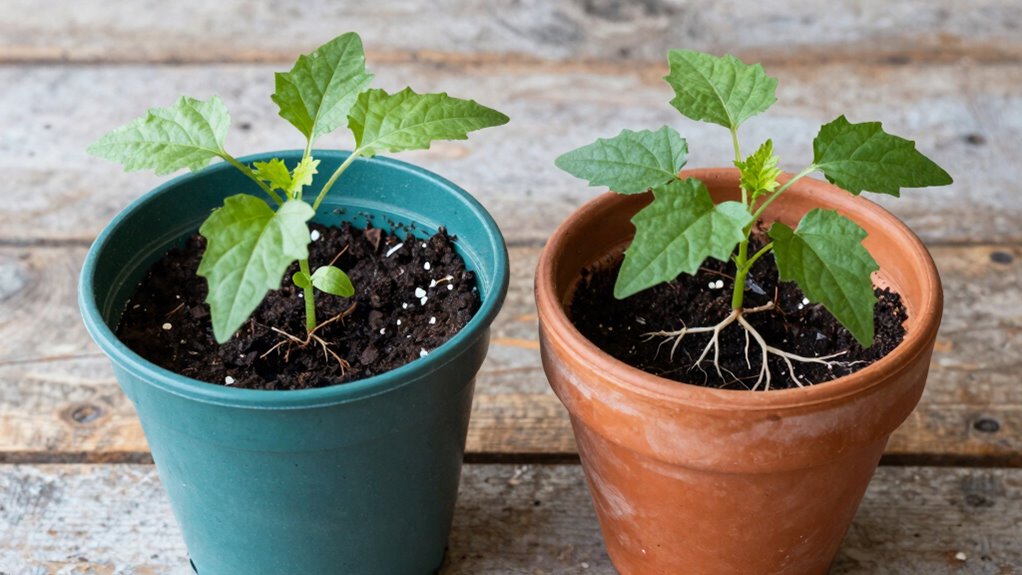
Knowing the right moment to pot up your plants can make a significant difference in their growth and health. When you move plants to larger containers at the proper time, you support better root development and guarantee ideal nutrient absorption. If you do it too early, you risk disturbing delicate roots and causing shock, which can stunt growth or lead to transplant stress. Conversely, waiting too long can result in the roots becoming cramped and tangled, limiting the plant’s ability to take up essential nutrients and water.
Timing transplanting correctly promotes healthy growth and prevents root damage or congestion.
Timing is everything. When you pot up too soon, the plant may still be in a stage where it’s focusing on establishing a healthy root system in its current container. Forcing it into a larger pot prematurely can damage tender roots that have yet to develop fully. This disruption can impair root development, making it harder for the plant to absorb nutrients effectively. As a result, the plant may struggle to grow as vigorously as it could if given the right environment at the right time. Recognizing root development stages early can help you make more informed repotting decisions.
On the other hand, if you wait too long to pot up, the roots often become root-bound—circling tightly around the inside of the container. This root congestion diminishes the plant’s ability to absorb nutrients efficiently because the roots are no longer expanding outward into fresh soil. Nutrient absorption becomes less effective, and the plant may show signs of stress, such as yellowing leaves or stunted growth. By the time you realize it’s time to repot, the plant has already experienced some degree of stress, which can set back its overall development. Proper container size management is essential to prevent this issue and promote healthy growth.
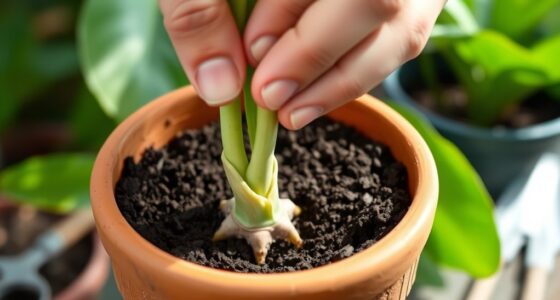
The ideal timing depends on the type of plant and its growth rate. Generally, you want to look for signs that the plant has outgrown its current container—such as roots poking out of the drainage holes or the soil drying out quickly after watering. At this stage, it’s best to move the plant into a slightly larger pot. This allows the roots to spread out and grow more extensively, promoting healthier root development. With more space, the roots can access a greater volume of soil, which boosts nutrient absorption and supports more vigorous growth. Recognizing root-bound conditions early can help you prevent unnecessary stress and promote healthy development. Additionally, understanding plant growth patterns can assist in timing your repotting more accurately.
As an affiliate, we earn on qualifying purchases.
Frequently Asked Questions
How Does Potting-Up Timing Affect Root Development?
If you pot-up too early, your plant’s root growth might be cramped, leading to poor soil aeration and stunted development. On the other hand, waiting too long allows roots to become root-bound, making it harder for them to spread and access nutrients. Proper timing guarantees healthy root development, promoting better soil aeration and stronger growth. Timing is key to giving your plants the best start.
Can Incorrect Timing Cause Plant Stress or Shock?
Incorrect potting-up timing can hit your plant like a lightning bolt, causing root shock or nutrient deficiency. If you transplant too early, roots struggle to establish, leading to stress and stunted growth. Wait too long, and your plant may become root-bound, making it harder to adapt. Proper timing helps your plant adjust smoothly, avoiding shock and ensuring healthy development. Pay attention to signs, and give your plant the right start.
What Signs Indicate It’s the Right Time to Pot-Up?
You’ll know it’s time to pot-up when your plant shows steady growth, healthy roots, and the container feels crowded. Check soil preparation; if the soil has become compacted or depleted of nutrients, it’s a sign. Before repotting, apply fertilizer to support new growth. Make certain roots are not circling the pot’s edges, and the plant looks vigorous. These signs indicate it’s the right moment to give your plant more space.
Does Potting-Up Timing Vary Between Plant Species?
Yes, potting-up timing varies between plant species because each has different growth cycles. Some plants, like tomatoes, need to be potted up early to support their rapid growth, while others, like ferns, may require more time before transplanting. You should observe signs like root development and plant size to determine the right timing, ensuring they’re not rushed or delayed, which can hinder healthy growth.
How Often Should I Check if It’s Time to Repot?
You should check if it’s time to repot every couple of weeks. Look for signs like soil moisture needing more frequent watering or roots pushing through the drainage holes. Make sure your plant gets the right light requirements, as poor lighting can slow growth. If roots are crowded or the plant looks stressed, it’s time to repot. Regular checks help you catch these signs early, promoting healthy growth.

Root Hook Japanese Garden Tool for Loosing Soil, Heavy Duty Japanese Steel, Root Pick Tool for Repotting Bonsai and Transplanting Flower, Made in Japan, Silver
- Versatile Root Pick Tool: Ideal for replanting and transplanting
- Durable Japanese Steel Blade: Chrome-plated for wear resistance
- Comfortable Wooden Handle: Easy to grip during use
As an affiliate, we earn on qualifying purchases.
As an affiliate, we earn on qualifying purchases.
Conclusion
Remember, timing is everything. Potting up too soon can stunt growth, while waiting too long might leave your seedlings cramped. Trust your plants’ cues and give them the right space at the right time. As the saying goes, “A stitch in time saves nine.” By potting up at the right moment, you guarantee healthy roots and vibrant growth, setting the stage for a flourishing garden. Your patience now pays off in a lush, thriving future.
large plant pots with drainage holes
As an affiliate, we earn on qualifying purchases.
As an affiliate, we earn on qualifying purchases.
As an affiliate, we earn on qualifying purchases.