
Weather-based watering saves water and protects your plants, but only if you set it up right. Proper calibration, placement, and regular maintenance are essential for accuracy and responsiveness. Incorrect setup can cause overwatering, underwatering, or system failures, wasting resources and risking plant health. By ensuring your sensors are correctly installed and schedules adapt to current conditions, you get the most benefit. Keep going—there are key tips that can help you get it right from the start.

Get garden gear delivered free with Prime
- Fast, free delivery on millions of items
- Prime Video, Amazon Music and more included
- Member-only deals all year
Key Takeaways
- Incorrect sensor calibration or placement can cause inaccurate weather data, leading to improper watering decisions.
- Poorly configured schedules may overwater during rain or underwater during drought conditions.
- Faulty sensors or delayed data updates reduce system responsiveness, risking plant health.
- Neglecting regular maintenance and calibration diminishes system reliability and water savings.
- Proper setup and ongoing management ensure the system adapts accurately to weather changes.

Weather-based watering systems promise to make lawn and garden care smarter by adjusting irrigation based on real-time conditions, saving water and promoting healthier plants. These systems rely heavily on automatic sensors that monitor weather conditions—like rainfall, temperature, humidity, and wind—to determine when and how much to water. Your goal is to establish ideal watering schedules that prevent overwatering and underwatering, ensuring your garden thrives with minimal effort. But if the setup isn’t correct, these systems can quickly become ineffective or even counterproductive.
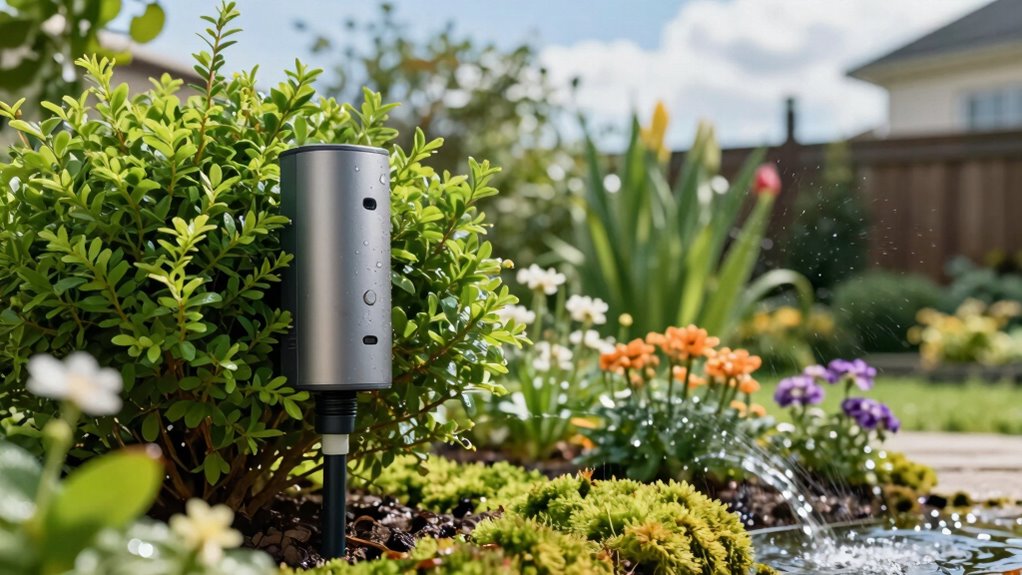
When you’re installing a weather-based watering system, the first step is configuring the automatic sensors properly. Many models allow you to calibrate moisture levels and set thresholds for rain and temperature. If you neglect this calibration or set incorrect parameters, your system might shut off watering during dry spells or continue watering during rain, wasting water or leaving your plants thirsty. It’s crucial to understand the sensor’s capabilities and limitations, so you can input accurate data that reflects your local climate conditions. Proper placement of sensors is equally important—they should be located where they can reliably detect weather changes without being shaded or affected by artificial heat sources. Additionally, understanding the sensor calibration process ensures your system responds accurately to weather variations. Regular maintenance and sensor placement are also vital to ensure reliable operation over time. Conducting periodic weather data updates helps the system stay aligned with current conditions. Ensuring your sensors are properly calibrated and maintained can significantly improve system responsiveness.
Next, you need to establish effective watering schedules that align with your plants’ needs and local weather patterns. If your schedule is too rigid—say, watering at the same times every day regardless of the forecast—you risk watering unnecessarily during rain or drought conditions. This is where weather-based systems shine, but only if you set them up correctly. Make sure your watering schedules are flexible enough to adapt to weather updates provided by the sensors. Many systems allow you to customize these schedules, so you can specify maximum watering times, days of the week, or conditions under which watering should be skipped. Without these adjustments, the system may either overwater, leading to runoff and root rot, or under-water, causing stress to your plants.
Additionally, keep an eye on the system’s responsiveness. If it’s not updating in real-time or if there’s a lag between weather changes and watering adjustments, your garden may suffer. Regularly checking the system’s data logs and sensor readings ensures it’s functioning as intended. Remember, weather-based watering relies on accurate, timely information; if the sensors are faulty or poorly placed, your watering schedules won’t match the actual conditions. To maximize efficiency, many systems also benefit from weather data integration that links with local weather services for more precise adjustments.
In the end, the success of a weather-based watering system depends on your initial setup. Proper calibration of automatic sensors, thoughtful planning of watering schedules, and ongoing maintenance are key. When you get these elements right, your system will truly work as intended—saving water, reducing effort, and keeping your garden healthy. But a wrong setup can turn this smart technology into a source of frustration and wasted resources.
As an affiliate, we earn on qualifying purchases.
Frequently Asked Questions
How Do Weather-Based Watering Systems Save Water Effectively?
Weather-based watering systems save water effectively by adjusting irrigation based on soil moisture levels and rainfall. You set up rain sensors that detect when it’s raining, preventing unnecessary watering. The system then reduces or stops watering when soil moisture is sufficient or rain is detected, ensuring plants receive only what they need. This smart approach minimizes water waste, saves you money, and promotes healthier plant growth.
What Are Common Setup Mistakes That Can Cause System Failure?
You might cause system failure by placing sensors in incorrect spots, like in direct sunlight or windy areas, which skews readings. Also, forget to calibrate your system accurately; if calibration is off, it won’t respond properly to weather changes. To guarantee your weather-based watering system works effectively, position sensors correctly and double-check calibration accuracy regularly. This prevents overwatering or underwatering, saving water and protecting your plants.
How Often Should I Calibrate My Weather-Based Watering System?
Think of your system as a finely tuned orchestra; regular sensor calibration guarantees every note hits perfectly. You should calibrate your weather-based watering system at least once a season, or more often if weather patterns shift dramatically. This keeps your watering schedules in sync with actual conditions, avoiding underwatering or overwatering. Proper calibration helps your system respond accurately, so your plants stay healthy and your water use stays efficient.
Can Weather-Based Systems Adapt to Changing Climate Conditions?
Yes, weather-based systems can adapt to changing climate conditions if you set them up correctly. They use real-time data to make seasonal adjustments, helping you build climate resilience into your watering schedule. However, you need to regularly update the system’s settings and calibrate sensors to guarantee accuracy. With proper maintenance and seasonal adjustments, your system can effectively respond to climate fluctuations, saving water and supporting healthy plants.
What Maintenance Is Required for Optimal Performance?
You need to regularly check soil moisture levels and adjust your system accordingly to avoid underwatering or overwatering. Don’t forget to perform filter maintenance—clogged filters can sabotage your efforts. Neglect these tasks, and your system’s performance could suddenly falter, leaving your plants stressed or dying. Stay vigilant, keep soil moisture in check, and clean filters often. The difference between thriving gardens and a watering disaster is just consistent maintenance.
automatic garden moisture sensor
As an affiliate, we earn on qualifying purchases.
As an affiliate, we earn on qualifying purchases.
Conclusion
If you rush through setup, your smart watering system can turn your garden into a parched desert or a soggy swamp. Imagine the droplets splashing unevenly, like a faulty faucet, instead of gently quenching your plants’ thirst. To truly enjoy the benefits, take your time, double-check your settings, and make certain everything’s just right. When it’s done right, your garden will flourish, a lush oasis thriving under the careful watch of your well-placed system.
rain sensor for sprinkler system
As an affiliate, we earn on qualifying purchases.
As an affiliate, we earn on qualifying purchases.
smart watering system calibration tools
As an affiliate, we earn on qualifying purchases.
As an affiliate, we earn on qualifying purchases.
Fall Picks
fall essentials
As an affiliate, we earn on qualifying purchases.