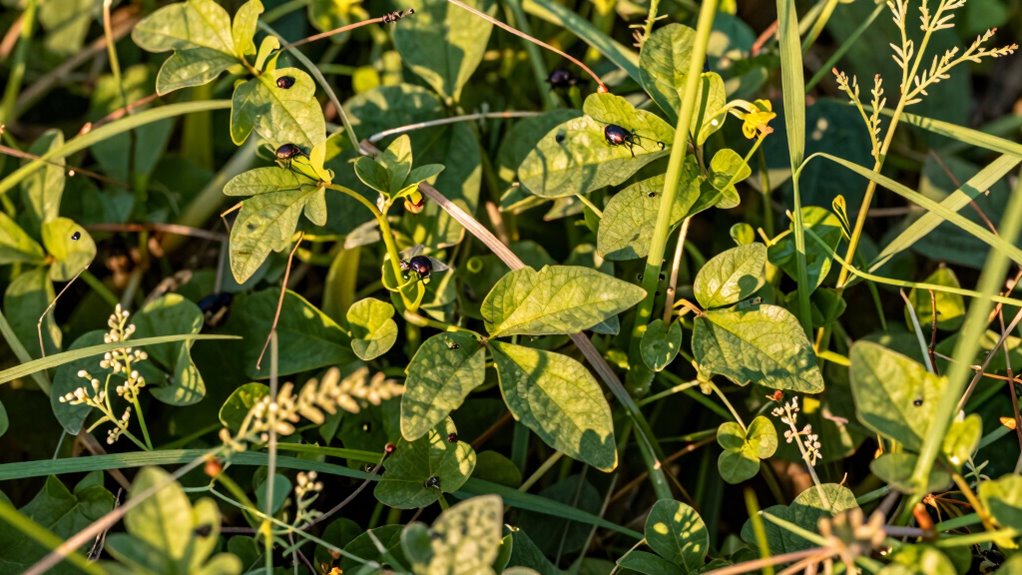

Your orchard’s weed patches hide more pests than you might realize, acting as essential shelters for insects, rodents, and diseases. These dense, tangled areas provide safe breeding grounds, supporting pest populations that can easily migrate to your trees and fruits. Without regular control, weeds can quickly turn into pest havens, threatening orchard health and productivity. Keep an eye on these patches, and you’ll discover effective strategies to keep pests at bay and your orchard thriving.
Key Takeaways
- Weeds provide shelter and breeding grounds for a variety of pests, increasing infestation risks in orchards.
- Dense weed patches hide pests like insects and rodents, making detection and control more difficult.
- Untended weeds support pest populations by offering staging areas before pests attack trees directly.
- Weeds harbor pests that can spread diseases, amplifying orchard health issues.
- Regular weed control disrupts pest habitats, reducing pest populations and protecting orchard productivity.

Tucked away in the corner of the orchard, the weed patch has become a constant challenge for anyone tending the land. It’s easy to overlook, but this neglected spot can turn into a haven for pests that threaten your trees and fruit. You might think of weeds simply as a nuisance, but in reality, they serve as a pest habitat, providing shelter and breeding grounds for insects and rodents. The dense foliage and tangled roots create a safe space where pests can thrive without disturbance. If you don’t address this area, these pests can multiply rapidly, spreading to healthy trees and compromising your entire orchard’s health. Proper weed control is your best weapon against this problem. You need to act decisively to clear out the weeds and eliminate their cover. Mulching, herbicide application, or even manual removal can be effective tools, but consistency is key. Regularly inspecting the weed patch prevents pests from establishing a foothold. When weeds are allowed to grow unchecked, they not only interfere with your orchard’s aesthetics but also become a breeding ground for pests that can damage your crops or spread diseases. Keeping the area clear reduces the risk and makes it easier to spot signs of pest activity early. It’s important to understand that pests don’t just stay hidden in weeds—they often use these plants as staging grounds before attacking your fruit trees. For example, certain insects lay their eggs on weeds, and when the larvae hatch, they migrate to nearby trees. Rodents also find refuge among the tangled roots and thick foliage, nibbling on bark or roots and causing further damage. Your efforts at weed control directly impact the pest habitat, making your orchard less inviting to unwanted visitors. Removing weeds isn’t just about neatness; it’s about disrupting the pests’ environment and reducing their population before they cause serious harm. Understanding how weeds serve as pest habitat can help you develop more targeted control methods. Additionally, understanding the role of biodiversity in natural pest regulation can enhance your integrated pest management strategies. You should also consider how your weed management strategies fit into your overall pest management plan. Combining weed control with other practices like proper pruning, beneficial insect introduction, and soil health maintenance creates a less hospitable environment for pests. The more you understand about how weeds serve as pest habitat, the better equipped you’ll be to prevent infestations. For instance, understanding how weed habitat supports pest populations can help you develop more targeted control methods. In addition, preventing weeds proactively reduces the chances of pests establishing a foothold in your orchard. Incorporating weed identification into your regular orchard assessments can help you recognize early signs of pest activity and respond more effectively. In the end, preventing weeds from taking over is a proactive step that saves you time, effort, and resources down the line. By staying vigilant and maintaining a clean, well-managed orchard, you’re not just controlling weeds—you’re safeguarding your entire crop from pests that lurk unseen in that seemingly harmless corner.
orchard weed control tools
As an affiliate, we earn on qualifying purchases.
As an affiliate, we earn on qualifying purchases.
Frequently Asked Questions
How Can I Identify Invasive Weed Species in My Orchard?
To identify invasive weed species in your orchard, compare plants to native species and look for differences in leaf shape, size, and growth patterns. Invasive weeds often have a rapid weed lifecycle, spreading quickly and outcompeting native plants. Check for aggressive growth habits, unusual seed production, or plants that don’t match the typical native flora. Regularly inspect your orchard and consult local guides to stay ahead of invasive species.
Are There Eco-Friendly Methods to Control Orchard Weeds?
Think of your orchard as a balanced dance floor, where eco-friendly weed control keeps pests at bay. You can use natural herbicide options like vinegar or boiling water to target weeds without harming your trees. Plus, embracing companion planting benefits your orchard by naturally suppressing weeds and attracting beneficial insects. These methods work in harmony, creating a thriving, pest-resistant environment that respects nature’s rhythm while keeping weeds in check.
Do Certain Weeds Attract Specific Orchard Pests?
Yes, certain weeds attract specific orchard pests through weed pest relationships and plant attractants. You might notice pests like aphids or beetles gathering on particular weeds, which serve as breeding grounds or food sources. By understanding these relationships, you can manage weeds strategically, reducing pest populations naturally. Removing or controlling these weeds minimizes their role as plant attractants, helping you protect your orchard without relying solely on chemical controls.
How Often Should I Inspect the Orchard Weed Patch?
You should inspect your orchard weed patch weekly to effectively manage weeds and prevent pests. Regular inspections allow you to identify invasive weeds early, reducing their ability to shelter pests that could harm your trees. Consistent weed management is key to pest prevention, so stay vigilant. By staying proactive with your inspections, you minimize pest habitats and protect your orchard’s health effectively.
Can Weeds in the Orchard Improve Soil Health?
Think of weeds as nature’s compost crew—they can boost soil health when managed right. Weeds contribute to soil nutrient enhancement and organic matter improvement by adding organic residues that decompose over time. For example, some weeds fix nitrogen, enriching the soil naturally. When you control weeds properly, you turn a potential pest shelter into a valuable resource, improving soil structure and fertility, which benefits your orchard’s overall health.
weed removal herbicide for orchards
As an affiliate, we earn on qualifying purchases.
As an affiliate, we earn on qualifying purchases.
Conclusion
Don’t overlook that weed patch in your orchard; it’s more than just unsightly growth. Surprisingly, studies show that these patches can harbor up to 70% of the pest populations attacking your trees. By managing or removing weeds, you not only improve orchard health but also reduce the need for chemical controls. Taking action now keeps pests at bay and your harvest thriving—so get out there and give your orchard the care it deserves.

Garden Elements 100% Natural Cocoa Bean Shell Mulch for Gardens, Flower Beds, Potted Plants, and Mulching, 2 cu ft
100% Natural Cocoa Mulch – Made from the outer shells of cocoa beans, this premium mulch is free…
As an affiliate, we earn on qualifying purchases.
As an affiliate, we earn on qualifying purchases.
pest monitoring traps for orchard pests
As an affiliate, we earn on qualifying purchases.
As an affiliate, we earn on qualifying purchases.