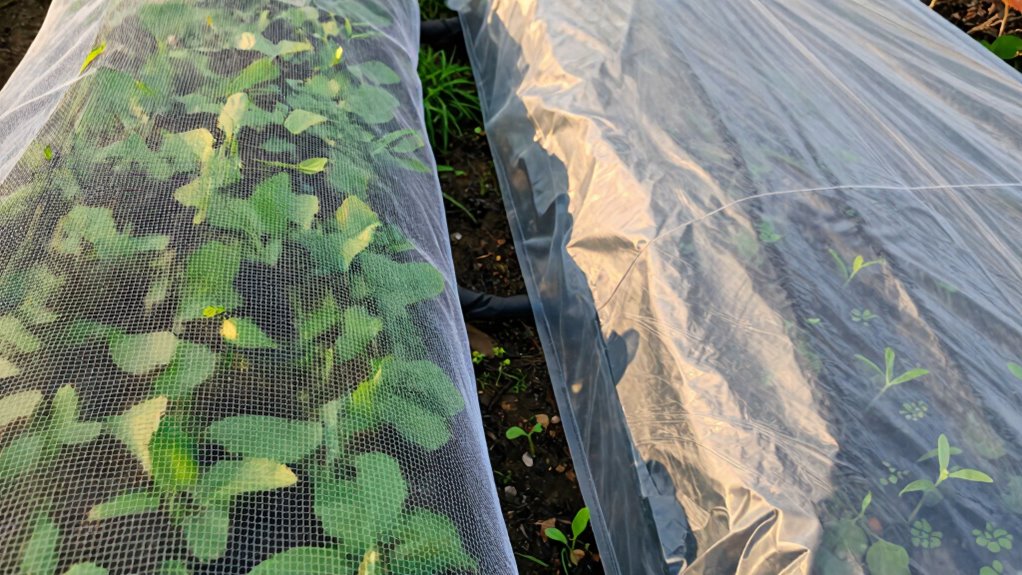

Insect netting primarily protects your plants from pests like insects and bugs, using a fine mesh that allows airflow and sunlight. Floating covers, on the other hand, create a warmer environment by trapping heat and moisture, helping extend the growing season and shielding against cold and wind. If you want warmth and weather protection, floating covers are your best choice; for pest prevention, insect netting works well. Keep exploring to find out how you can combine both for superior results.
Key Takeaways
- Floating covers trap heat and moisture, providing a warming microclimate for plants.
- Insect netting mainly prevents insect pests, with minimal impact on temperature.
- Floating covers extend growing seasons by shielding plants from cold and frost.
- Insect netting allows airflow and sunlight, protecting against pests without significantly warming plants.
- Combining both covers offers thermal protection and pest control for optimal plant health.
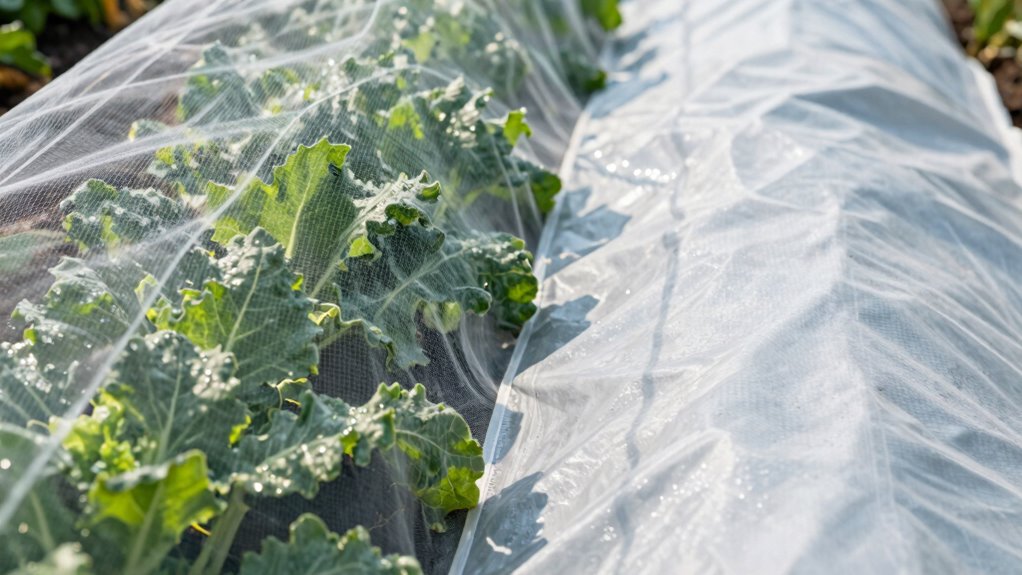
Insect netting is designed to keep pests away from your plants. Made from fine mesh, it acts as a physical barrier that prevents insects like aphids, beetles, and caterpillars from reaching your crops. Because of its tight weave, it’s especially effective at pest prevention, giving your plants a fighting chance without relying on chemicals. Insect netting is durable and can be used throughout the growing season, providing continuous protection. It’s ideal if pests are a significant concern or if you’re growing plants that are particularly vulnerable to insect damage. The mesh allows for good airflow and sunlight penetration, so your plants still receive what they need to grow healthy and strong.
Insect netting acts as a durable, mesh barrier to protect plants from pests while allowing airflow and sunlight.
Floating covers, on the other hand, are lightweight, breathable fabrics that you lay directly over your crops. They’re often used to shield plants from temperature fluctuations, frost, and wind, making them excellent for crop protection against harsh weather. These covers create a microclimate around your plants, trapping heat and moisture while still allowing air and water to pass through. This makes them particularly effective in extending your growing season or protecting seedlings from cold snaps. Unlike insect netting, floating covers are less about pest prevention and more about creating a controlled environment. They can also help prevent some pests, but their primary role is to shield plants from weather stressors. Additionally, some floating covers are made from UV-resistant materials, increasing their durability in outdoor conditions. Proper installation and maintenance of these covers are crucial for maximizing their protective benefits. Understanding the microclimate that these covers create can help optimize plant growth and resilience.
Furthermore, selecting the right cover depends on considering your specific garden needs and the types of pests or weather challenges you face. While both covers offer protection, your choice depends on your priorities. If pest prevention is your main goal, insect netting is the reliable option. It keeps insects at bay without interfering with plant growth or airflow. If your focus is on crop protection against weather and minor pest issues, floating covers can help create a stable environment that promotes healthy growth. In many gardens, gardeners use both in combination—covering plants with floating covers early in the season and switching to insect netting once pests become active.
Ultimately, selecting between insect netting and floating covers depends on your specific threats and goals. Both provide essential protection, but understanding their differences ensures you make the right choice for your garden’s needs.
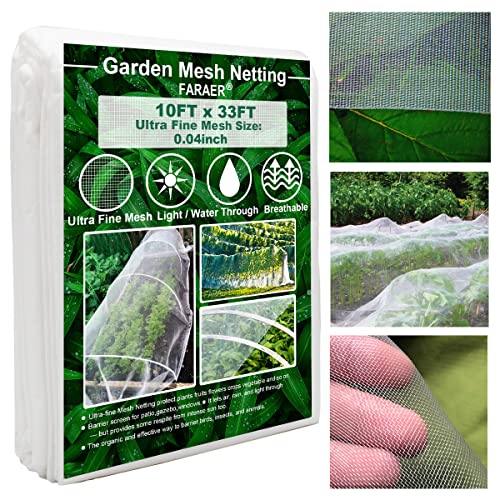
Garden Netting, Plant Covers 10x33Ft Net Ultra Fine Mesh Protection Netting for Vegetable Plants Fruits Flowers Crops Greenhouse Row Cover Raised Bed Barrier Screen Protection Net Cover (10x33ft)
【Ultra-Fine Mesh Netting】Large Size 10×33 Feet provide more security, Ultra Fine Garden Netting has a 0.8mm x 1mm…
As an affiliate, we earn on qualifying purchases.
As an affiliate, we earn on qualifying purchases.
Frequently Asked Questions
How Long Does Each Cover Typically Last Before Needing Replacement?
Insect netting typically lasts 2-5 years, depending on material quality and exposure to elements, while floating covers usually need replacement every 1-3 years. Durability comparison shows that high-quality insect netting is more resilient against tears and UV damage, offering longer material longevity. Floating covers, made from polyethylene, tend to degrade faster due to weather and sunlight, requiring more frequent replacements to maintain effectiveness.
Can Insect Netting and Floating Covers Be Used Together?
Ever wondered if you can use insect netting and floating covers together? Absolutely! Combining them allows you to protect your plants while still giving pollinators access. During cover installation, guarantee the netting is placed underneath or alongside the floating cover to avoid blocking pollinator entry. This combo maximizes pest protection and pollination, creating a healthier environment for your crops. Wouldn’t you want the best of both worlds for your garden?
Are There Specific Pests That Floating Covers Effectively Block?
Floating covers effectively block pests like aphids, beetles, and moths, providing excellent pest exclusion for your crops. They create a physical barrier that prevents pest access, ensuring better crop protection. By covering your plants, you reduce the need for chemical controls and promote healthier growth. Use floating covers during vulnerable periods to keep pests out and safeguard your harvest, making them a smart choice for organic and integrated pest management strategies.
What Maintenance Is Required for Insect Netting?
You need to regularly inspect your insect netting for wear and tear, ensuring its netting durability remains intact. Clean the netting gently to prevent debris buildup that could compromise its effectiveness. When cover installation, secure the edges properly to prevent pests from sneaking in. Replace damaged sections promptly to maintain protection. Proper maintenance keeps your netting effective and extends its lifespan, safeguarding your plants from pests and environmental damage.
Do These Covers Affect Plant Growth or Airflow?
Think of your plants as actors on a stage; the covers are the curtains. They can influence plant microclimates, warming the environment, but might also cast shadows that reduce airflow. These covers slightly limit air circulation, creating a cozy microclimate but potentially trapping humidity. While they protect your plants, they also require you to monitor airflow so your plants stay healthy and vibrant.

JUNKOGO Plant Freeze Protection Cover, 7x100ft Frost Cloth Winter Garden Blanket, Floating Row Cover for Cold Weather and Shade, Perfect for Outdoor Vegetables, Trees, Greenhouse
Comprehensive Winter Protection for Your Garden: Our outdoor plant covers provide complete freeze protection for strawberries, vegetables, tomatoes,…
As an affiliate, we earn on qualifying purchases.
As an affiliate, we earn on qualifying purchases.
Conclusion
Think of insect netting as a vigilant shield, gently guarding your plants from sneaky pests without blocking the sun’s warm embrace. Floating covers, on the other hand, are like an cozy, floating blanket, wrapping your crops in a soft layer that traps heat and shields against the elements. Both are your garden’s guardians—one warms, the other protects. Choose your armor wisely, and watch your garden thrive like a sunlit paradise.

Plant Covers Freeze Protection, Antifrost Cover 7ft×10ft Reusable Rectangle Frost Protection Floating Row Cover Plant Blanket Garden Winterize Cover for Cold Weather Snow
【All-Purpose Garden Plant Cover】Faraer Floating Row Cover is a polypropylene garden covers that transmits 70 percent of available…
As an affiliate, we earn on qualifying purchases.
As an affiliate, we earn on qualifying purchases.

RIFNY Garden Netting, 2 Pack 10x33Ft Ultra Fine Mesh Netting Pest Barrier Protection Bird Mosquito Net Plants Cover for Vegetables Fruits Flowers Crops Greenhouse Row Cover Raised Bed Patio
Ultra-Fine Mesh Netting: Large Size 2pack 10×33 Feet provide more security, Ultra Fine Garden Netting has a 0.04in…
As an affiliate, we earn on qualifying purchases.
As an affiliate, we earn on qualifying purchases.