
Bird damage often starts at your garden edge because these areas offer dense shrubs, tall grasses, and overgrown bushes that birds find safe for nesting and foraging. They’re less disturbed than the open center, so birds feel more secure. This makes edges ideal spots for settling and gathering nesting materials, leading to frequent activity and damage. If you keep exploring, you’ll discover ways to manage this issue and protect your garden.
Key Takeaways
- Garden edges provide dense cover, making them ideal nesting sites for birds.
- These areas are less disturbed, encouraging birds to establish nests and forage nearby.
- Birds seek shelter and concealment at edges, increasing nesting activity and associated damage.
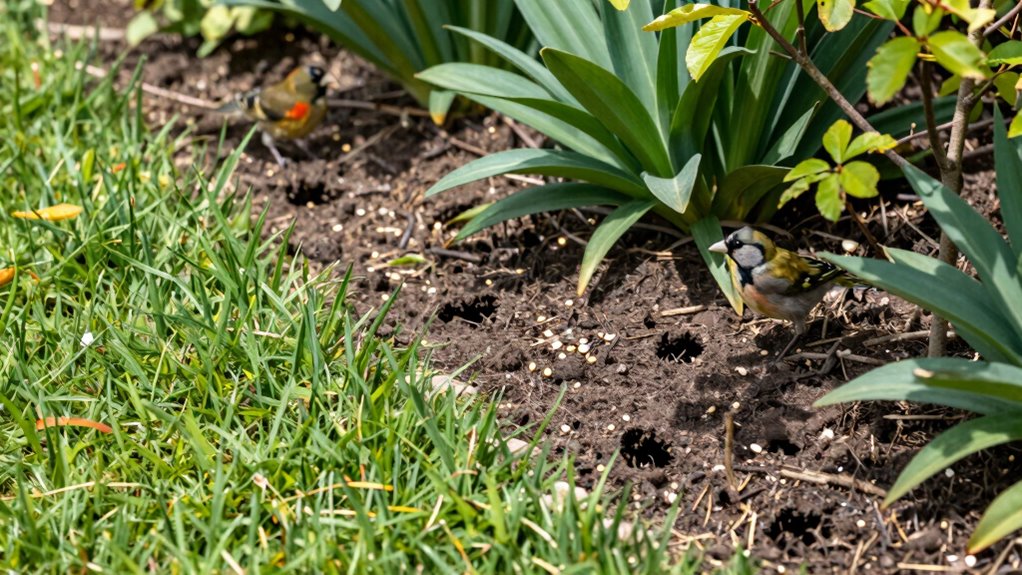
- Activity at edges includes digging and pecking, causing initial plant and soil disturbance.
- Increased bird presence at edges can lead to escalating damage spreading inward to the garden.

Have you noticed birds pecking at the edges of your garden? This behavior often signals more than just curiosity; it can lead to significant damage over time. Birds are naturally drawn to garden edges because these areas provide ideal spots for bird nesting. The edges of your garden typically offer dense shrubs, tall grasses, or overgrown bushes—perfect for birds seeking shelter and a safe place to raise their young. As they scavenge for nesting materials or forage for food, they can inadvertently cause damage to plants, flowers, or vegetables near the perimeter. Their activity can disturb your garden’s natural balance, especially if nesting becomes frequent at these locations.
Bird nesting at the garden edges is a common reason for damage, but it’s also closely linked to noise disturbance. When birds establish nests at the edge, their chirping and fluttering often increase, creating a constant noise that can be disruptive. If you’re trying to enjoy a quiet morning or tend to your plants peacefully, the persistent calls and movement of nesting birds can become an unwelcome distraction. This noise disturbance can make it harder to concentrate or relax in your garden, especially during peak nesting season when activity is at its highest.
Nesting birds’ calls and fluttering can disrupt your garden’s peace, especially during peak nesting season.
The edge of your garden acts as a natural boundary that birds recognize for safety and concealment. Because it’s sheltered and less disturbed than the open center of your yard, it becomes a preferred site for nesting. Unfortunately, as birds build nests and raise their young, they can unintentionally cause damage to nearby plants. They may peck at leaves, dig up soil, or break branches in their effort to gather nesting materials or find food. This kind of damage often starts small but can escalate quickly, especially if multiple pairs of birds settle in the same area. Habitat preference plays a significant role in where birds choose to nest and forage. In addition, their nesting activities can sometimes lead to plant damage, impacting the overall health of your garden.
Additionally, the edge of your garden is easily accessible for birds, making it an ideal starting point for their nesting activities. You might notice more bird droppings around these areas as well, which can lead to further issues like plant disease or soil imbalance. The combination of nesting, noise disturbance, and foraging makes the garden edge a hotspot for initial bird damage, and if left unmanaged, this damage can spread inward, affecting the health of your entire garden. Implementing deterrents or protective measures in these zones can help minimize the impact of bird activity management strategies.
In essence, the reason bird damage tends to begin at the garden edges is because these areas provide the perfect environment for bird nesting and comfort. The increased activity and noise from nesting birds can quickly become a problem, making it essential to monitor and manage these zones to protect your garden’s health and your peace.
As an affiliate, we earn on qualifying purchases.
Frequently Asked Questions
How Can I Identify the Specific Bird Species Causing Damage?
You can identify the bird species causing damage by listening to their bird song, which is often unique to each species. Pay attention to their nesting habits, like where they build nests or feed their young. Observing the pattern and timing of damage also helps. By noting these signs, you’ll better understand which birds are responsible, making it easier to implement targeted bird control measures.
Are Certain Plants More Vulnerable to Edge-Related Bird Damage?
Certain plants are more vulnerable to edge-related bird damage because of their location and attractiveness. Plants with bright flowers, seeds, or berries near the garden edge tend to attract birds, increasing their vulnerability. To protect these, you should focus on garden edge protection by installing barriers or netting. Recognizing plant vulnerability helps you implement targeted measures, reducing bird damage and preserving your garden’s beauty and productivity.
What Time of Year Is Bird Damage Most Common at Garden Edges?
Imagine a time when birds gather at the garden edge like a bustling marketplace. Bird damage is most common during spring and early summer when birds are nesting and actively dispersing seeds. During this period, they peck at tender plants and pluck seeds for their nests. This heightened activity makes garden edges vulnerable, as birds seek food and nesting sites, leading to increased damage at this time of year.
How Does Nearby Wildlife Influence Bird Activity at Edges?
Nearby wildlife influences bird activity at garden edges by creating wildlife corridors that attract or deter birds. When predators are present, birds tend to stay alert and avoid vulnerable areas, reducing damage. Conversely, safe corridors without predator presence encourage more bird activity, leading to increased feeding and potential damage at the garden’s edges. Understanding these dynamics helps you manage bird interactions and protect your plants effectively.
Can Landscaping Techniques Effectively Reduce Bird Damage?
You can curb bird damage by combining clever landscaping with effective bird deterrents and garden barriers. Strategically placing spiky plants or reflective objects creates a defensive line that deters daring birds. These techniques make your garden less appealing and more protected, reducing damage. By layering visual and physical barriers, you transform your garden into a fortress, discouraging birds from venturing into sensitive areas and safeguarding your plants from persistent pests.
As an affiliate, we earn on qualifying purchases.
Conclusion
Think of your garden as a delicate dance floor, where each step matters. When birds start at the edges, it’s like a gentle breeze nudging the dance, gradually spreading across the floor. By paying attention to those perimeters, you can gently guide the rhythm back into harmony. Protecting the edges is like tending to the first notes of a song — it sets the tone for the entire melody. Keep watch, and your garden’s song remains sweet and whole.
As an affiliate, we earn on qualifying purchases.
As an affiliate, we earn on qualifying purchases.