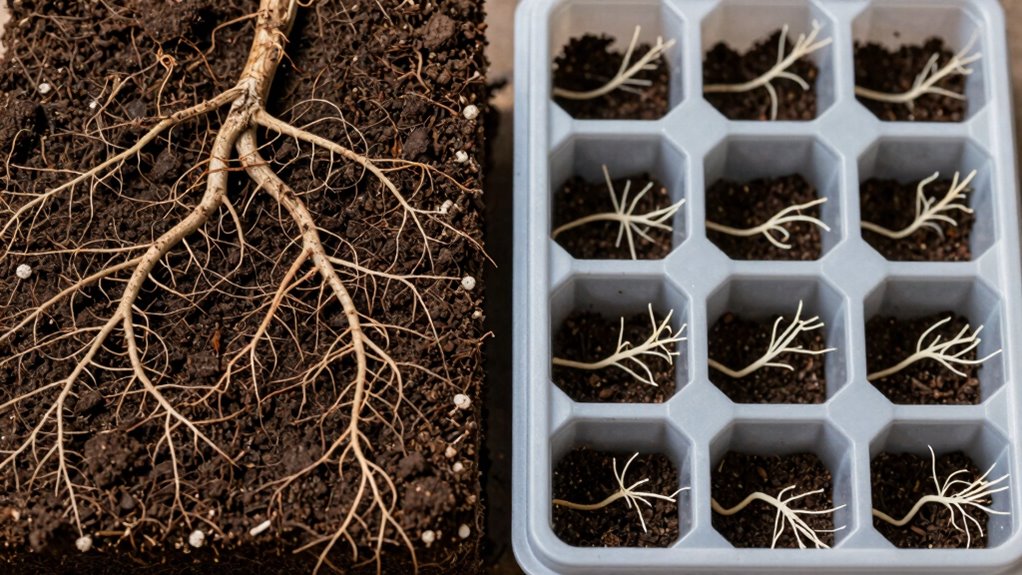

If you’re choosing between soil blocking and cell trays, soil blocking tends to produce healthier, stronger roots. It encourages air pruning, which prevents roots from circling and becoming root-bound, resulting in a fibrous root system that’s better at anchoring seedlings. Soil blocks also reduce transplant shock and disease risk. While cell trays are easier to handle, soil blocking offers superior root development. By understanding these differences, you’ll see which method best helps your plants thrive.

Get garden gear delivered free with Prime
- Fast, free delivery on millions of items
- Prime Video, Amazon Music and more included
- Member-only deals all year
Key Takeaways
- Soil blocks promote outward root growth and air pruning, leading to stronger, fibrous root systems.
- Roots in soil blocks are less likely to become root-bound or circling, enhancing transplant success.
- Cell trays can restrict root expansion and increase risk of root damage during transplanting.
- Soil blocking encourages healthier root development with minimal transplant shock.
- Proper management of both methods is essential for optimal root health and seedling vigor.
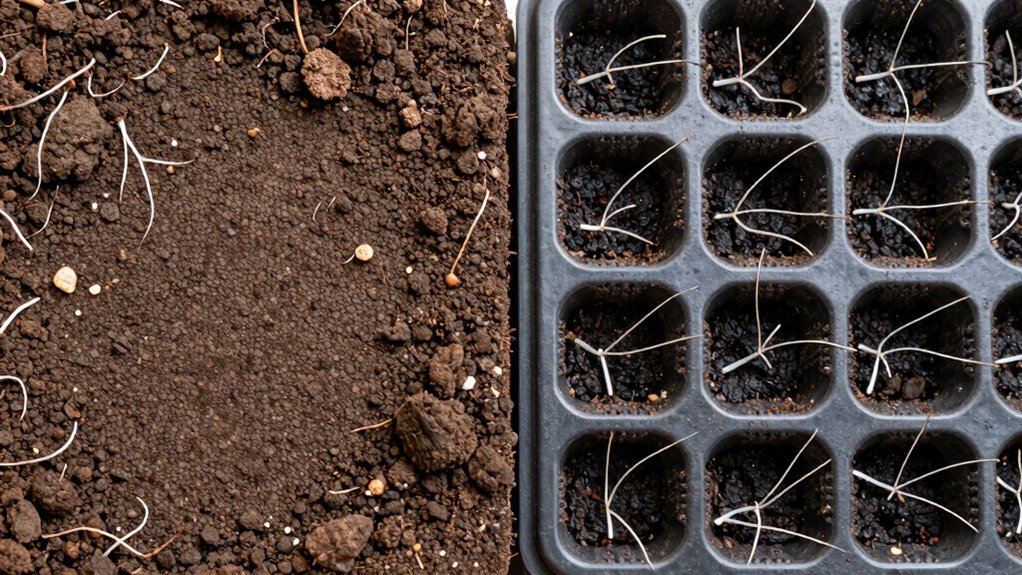
When choosing the best method for starting seedlings, understanding the differences between soil blocking and cell trays is essential. Both methods influence how roots develop and how well water is retained, ultimately impacting the success of your seedlings. Soil blocking involves forming compacted blocks of soil without containers, while cell trays use individual compartments to hold soil and seedlings separately. Your choice affects root development, water management, and ease of handling.
Soil blocking encourages healthier root development because it prevents roots from circling or becoming root-bound, a common problem with traditional trays. When roots reach the edge of a soil block, they tend to grow outward and then branch into new roots rather than circling inward. This air pruning process stimulates the roots to grow more fibrous, which results in a stronger, more resilient root system. As a result, seedlings grown in soil blocks often develop better anchorage and are less prone to transplant shock. Additionally, soil blocks are free of containers, reducing the risk of disease transmission, which can be a concern with reused cell trays.
Water retention plays a significant role in seedling health, and here, both methods differ. Soil blocks tend to retain moisture effectively because their compact structure limits water loss while still allowing for good airflow. This balance helps prevent overwatering and root rot, ensuring roots receive consistent moisture. On the other hand, cell trays can sometimes hold too much water in the individual compartments, especially if drainage isn’t adequate. Overwatering in trays can lead to waterlogged roots, hindering development and increasing disease risk. However, trays are easier to monitor and manage, especially if you’re watering manually or using automation.
Handling and transplanting are easier with soil blocks because you don’t need to remove seedlings from individual containers; you simply plant the entire block into the ground or larger pots. This minimizes root disturbance and encourages a smoother transition outdoors. Conversely, with cell trays, you often need to carefully pry seedlings apart, which can damage delicate roots if not done properly. This step might slow down your transplant process and increase the risk of root damage.
In the end, whether soil blocking or cell trays produce better roots depends on your priorities. If you want to promote strong, fibrous root systems and reduce transplant shock, soil blocking offers clear advantages. For ease of use and straightforward watering management, cell trays might suit your needs better. Both methods can produce healthy seedlings, but understanding these key differences helps you choose the right approach for your gardening goals.
Frequently Asked Questions
How Does Soil Blocking Affect Root Pruning?
Soil blocking promotes better root pruning because it encourages roots to grow outward rather than circling. As roots reach the edges of the block, they are naturally pruned, which stimulates healthier, more fibrous root development. Additionally, soil blocking enhances soil aeration, preventing rootbound conditions and promoting even root growth. This process results in stronger, more resilient plants ready for transplanting.
Are Soil Blocks More Environmentally Friendly Than Trays?
You’ll find soil blocks are generally more eco-friendly than trays, thanks to their minimal plastic use—reducing waste by up to 80%. This makes them a great choice for eco-friendly practices. They also promote sustainability benefits because they break down naturally, unlike plastic trays that often end up in landfills. By choosing soil blocks, you support environmental health while nurturing healthy roots, making it a smarter, greener gardening option.
Can Soil Blocks Be Reused for Multiple Plantings?
Yes, soil blocks can be reused for multiple plantings. Their durability depends on how carefully you handle them, but generally, soil blocks have good reuse potential if they’re kept moist and protected from damage. Over time, they may wear down or crack, reducing durability. To maximize reuse potential, store them properly, avoid excessive handling, and inspect them for cracks before reusing.
What Is the Cost Difference Between Soil Blocking and Cell Trays?
The cost comparison between soil blocking and cell trays varies, but generally, soil blocking is more affordable long-term. Cell trays require ongoing purchases of trays and inserts, which adds up. Soil blocks need minimal equipment and can be reused, reducing costs over time. In an affordability analysis, soil blocking often proves more economical, especially for larger-scale operations, while cell trays may be more convenient initially but costlier in the long run.
Which Method Is Better for Organic Gardening?
You’ll find soil blocking better for organic gardening because it promotes superior root development and soil aeration. With soil blocks, roots grow more naturally, reducing transplant shock and encouraging stronger, healthier plants. The improved aeration prevents root circling and promotes better nutrient uptake. This method aligns well with organic practices by avoiding plastic containers and supporting eco-friendly, sustainable gardening. Overall, soil blocking helps your plants thrive from the start.
Conclusion
So, after all this, it turns out the “better” method isn’t so clear-cut. Soil blocking promises healthier roots, yet cell trays are easier and more familiar. Honestly, you might find yourself surprised—sometimes the old, traditional way wins, even if it’s not the flashiest. So go ahead, experiment. Who knows? You might just discover that the “less modern” approach actually grows better roots. Irony’s a funny thing, isn’t it?
Halloween Picks
halloween
As an affiliate, we earn on qualifying purchases.