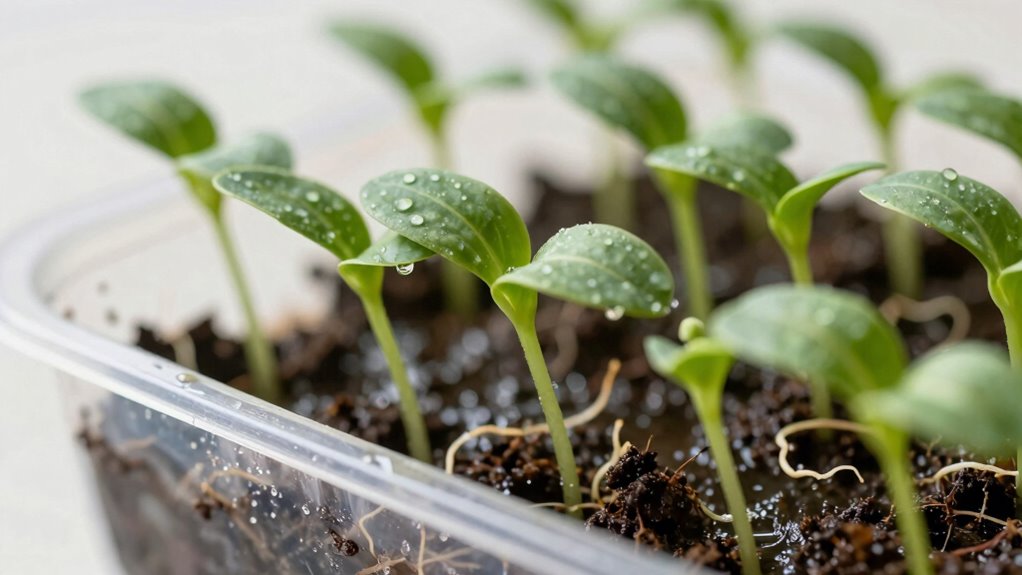
To prevent algae and fungus gnats when bottom watering seedlings, wait until the soil is just dry on the surface before watering again. Check moisture levels regularly with your finger or a moisture meter, and avoid overwatering, especially in hot or dry conditions. Proper timing guarantees the soil isn’t constantly damp, discouraging pests and mold growth. Keep an eye on your plants and discover more tips for healthy, pest-free seedlings below.
Key Takeaways
- Water seedlings when the soil feels dry an inch below the surface to prevent excess moisture.
- Bottom watering is best done when soil moisture levels are just starting to decline.
- Avoid overwatering by checking soil moisture regularly before re-wetting from the bottom.
- Water only enough to keep soil moist without creating waterlogged conditions.
- Ensure proper drainage and airflow to reduce algae growth and discourage fungus gnat habitats.
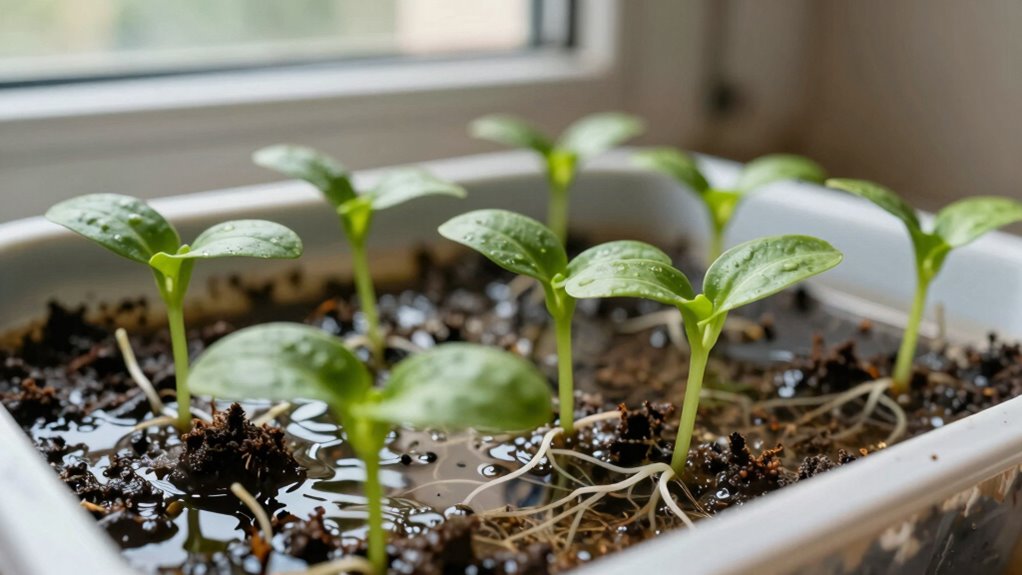
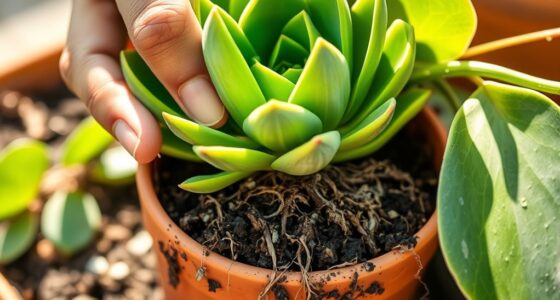
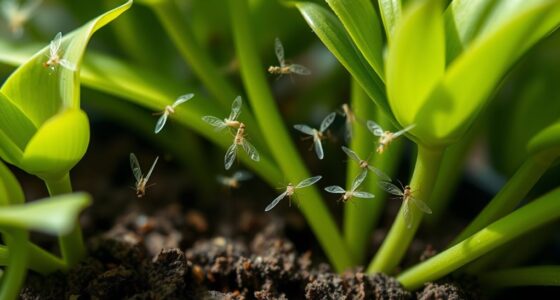
To get the timing right, you should pay close attention to the moisture level in the soil. Insert your finger into the soil or use a moisture meter to check soil moisture regularly. When the top inch feels dry, it’s time to water again. This approach ensures you’re not overdoing it, as overwatering can lead to a surplus of moisture that fosters algae growth and encourages fungus gnats. These pests thrive in damp, organic-rich environments, so controlling soil moisture is your best defense against infestations. By watering only when necessary, you keep the soil at a consistent moisture level, discouraging these pests from taking hold.
The key to successful bottom watering is understanding the proper watering frequency. Instead of sticking to a strict schedule, you should base your watering on the soil’s needs. During hot or dry periods, seedlings may require more frequent watering, but you should always verify soil moisture before adding water. On cooler or more humid days, watering frequency should decrease. This balance prevents excess water buildup that can create an environment conducive to algae growth—a common problem in poorly drained or consistently wet soil. soil drainage is essential to prevent these issues from developing. Additionally, maintaining good air circulation around the seedlings can help prevent fungal issues that often develop when water remains on the surface or on the leaves. Since you’re watering from underneath, leaves stay dry, minimizing the chances of fungal infections. Proper timing and monitoring of soil moisture are essential to maintaining healthy seedlings and preventing pests and fungi. Being aware of the soil moisture levels helps you make informed watering decisions, ensuring you maintain the ideal environment for growth. By establishing a routine that respects the soil’s moisture needs, you create an environment that supports robust growth. Remember, the goal is to keep the soil moist but not waterlogged, and to do so with a watering frequency informed by actual soil conditions, not just a fixed timetable. This approach ensures your seedlings grow strong, healthy, and free from pests and diseases.
As an affiliate, we earn on qualifying purchases.
Frequently Asked Questions
Can Bottom Watering Be Used for All Types of Seedlings?
You can use bottom watering for many seedling types, but not all. It works well for seedlings with delicate roots, encouraging even water absorption without over-saturating the soil. However, some seedlings with larger or more sensitive root systems might prefer different watering methods. Always observe your seedlings’ response and adjust accordingly to guarantee proper water absorption, preventing issues like root rot or underwatering.
How Often Should I Bottom Water My Seedlings?
You should bottom water your seedlings every 2-3 days, adjusting based on seedling humidity and soil moisture. Check the soil’s surface; if it feels dry, it’s time to water. Consistent watering frequency keeps the soil evenly moist without overwatering, reducing algae and fungus gnat risks. Avoid letting seedlings sit in water too long, and guarantee proper drainage to promote healthy growth and prevent issues.
What Signs Indicate Overwatering During Bottom Watering?
Are your seedlings crying out for help? Overwatering shows in soil moisture that’s too high, leaving roots drowning instead of thriving. Signs include wilting despite wet soil, yellowing leaves, and a musty smell. If you notice these, you risk root rot and poor root health. To prevent this, check soil moisture regularly and water only when the top inch feels dry. Balance keeps roots happy and growth steady.
Does Bottom Watering Affect Nutrient Absorption?
Bottom watering can influence nutrient absorption by reducing nutrient leaching, helping your seedlings retain essential nutrients. This method promotes healthier root growth since roots absorb water more efficiently from the bottom, encouraging strong root health. However, if overdone, it might lead to uneven nutrient uptake. To prevent this, guarantee you water just enough to keep the soil moist without oversaturating, supporting ideal nutrient absorption and root development.
Can I Combine Bottom Watering With Top Watering?
You can definitely combine bottom and top watering, but you need to find the sweet spot. Make sure your seedling spacing allows for even moisture distribution, and keep water temperature consistent to avoid stressing your plants. Start with bottom watering to prevent algae and fungus gnats, then top water if seedlings need extra moisture. Just watch for overwatering, and remember, a little goes a long way.
As an affiliate, we earn on qualifying purchases.
Conclusion
By timing your bottom watering carefully, you can effectively prevent algae growth and fungus gnats, ensuring healthier seedlings. For instance, imagine a gardener who schedules watering early in the morning, allowing excess moisture to evaporate during the day. This simple adjustment resulted in fewer fungal issues and stronger seedlings. With mindful watering habits, you’ll create a ideal environment that promotes robust growth while keeping pesky pests and algae at bay.
seedling watering can with drainage
As an affiliate, we earn on qualifying purchases.
As an affiliate, we earn on qualifying purchases.
fungus gnat control for seedlings
As an affiliate, we earn on qualifying purchases.
As an affiliate, we earn on qualifying purchases.