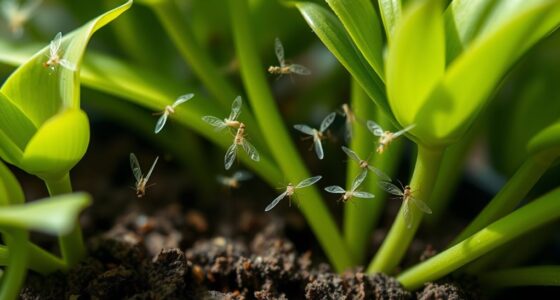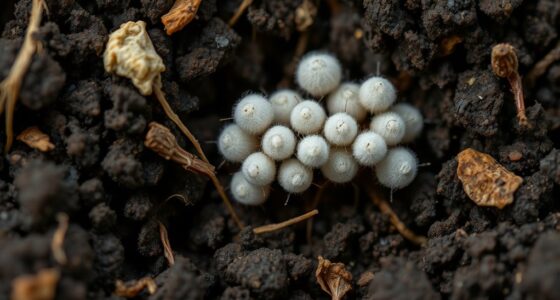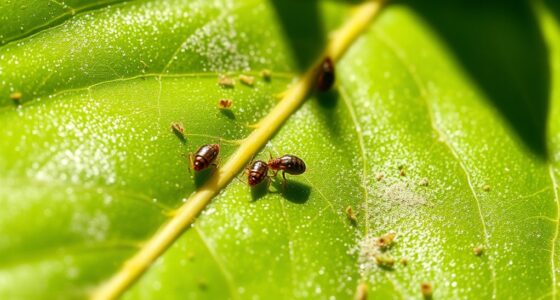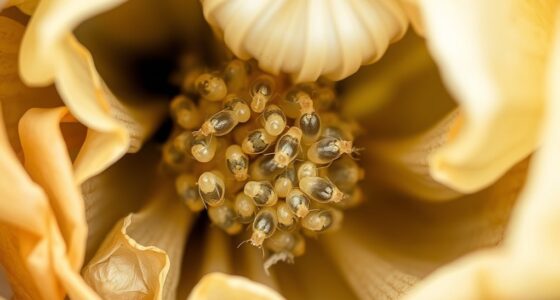

Repotting is an effective way to break pest cycles because it allows you to remove infested soil and uproot hidden pests, eggs, and larvae that hide beneath the surface. By choosing high-quality, sterile soil and thoroughly inspecting roots, you create a fresh start for your plant. Combining repotting with soil sterilization and natural repellents further reduces pest recurrence. Keep exploring to discover more strategies that can help keep your plants pest-free.

Get garden gear delivered free with Prime
- Fast, free delivery on millions of items
- Prime Video, Amazon Music and more included
- Member-only deals all year
Key Takeaways
- Disrupt the pest life cycle by removing infested soil and roots during repotting.
- Sterilize new soil to eliminate pests, eggs, and larvae before introducing it to the plant.
- Use natural repellents like neem oil or garlic extracts during repotting to deter pests.
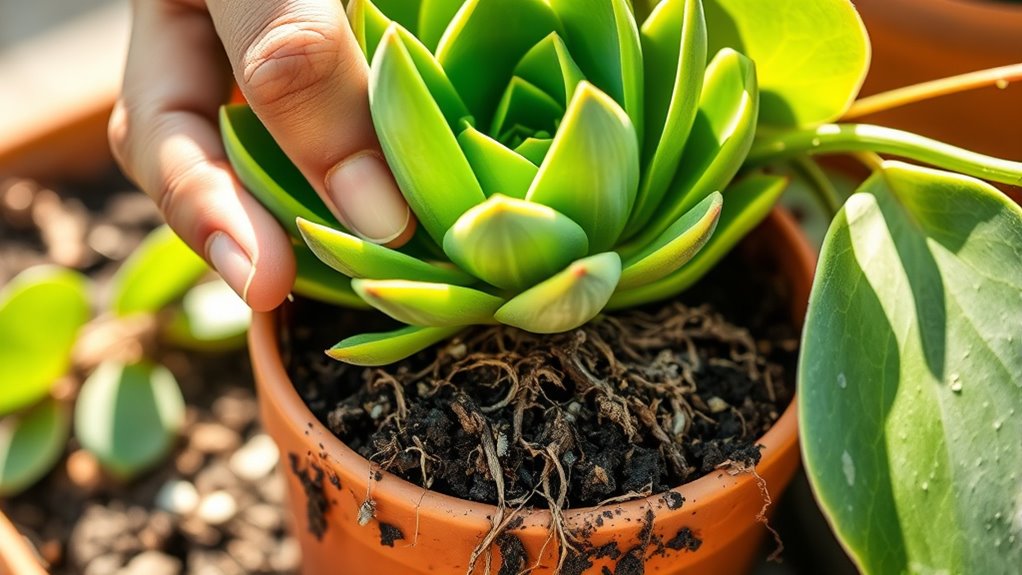
- Gently inspect and remove visible pests and eggs from roots and surface during the process.
- Follow up with proper environmental conditions and regular inspections to prevent reinfestation.
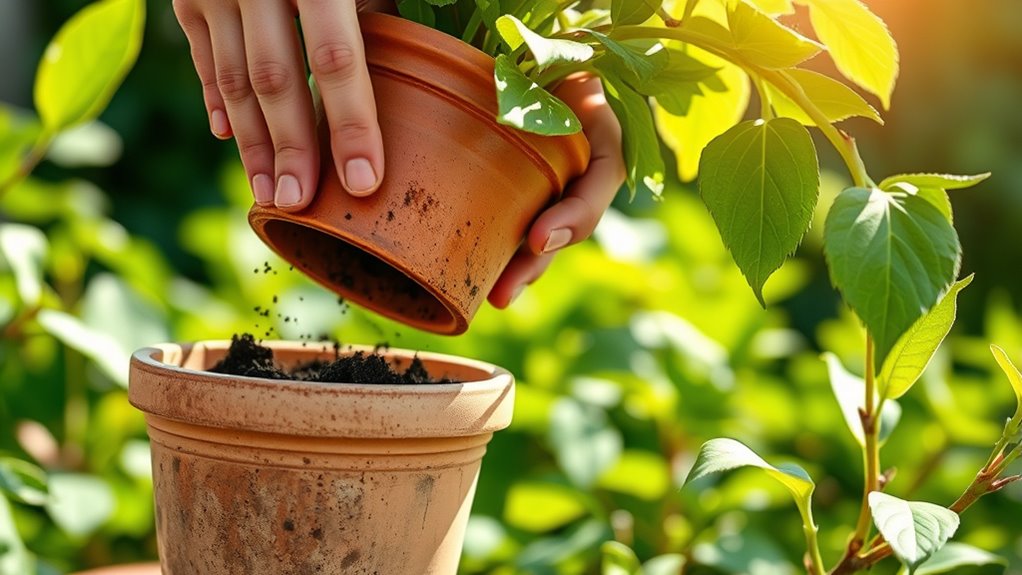
Pest infestations can become a persistent problem that’s hard to eliminate through traditional treatments alone. If you’re battling recurring pests, repotting your plants might be the key to breaking their cycle. When you repot, you’re fundamentally giving your plant a fresh start, which can disrupt the pests’ life cycle and reduce their chances of survival. One of the first steps to guarantee success is soil sterilization. This process involves heating or treating the soil to kill any hidden pests, eggs, or larvae lurking beneath the surface. You can do this by placing the soil in an oven at a safe temperature or using microwave sterilization for smaller batches. Sterilizing your soil eliminates the pests’ hiding spots and prevents reinfestation, giving your plant a cleaner environment to thrive.
Along with soil sterilization, incorporating natural repellents can further protect your plants. Many natural options, like neem oil, diatomaceous earth, or garlic extracts, act as barriers that pests dislike. These repellents are safer for your plant and the environment compared to chemical treatments. When you apply natural repellents during repotting, you create an inhospitable environment for pests, discouraging them from returning. Combining soil sterilization with natural repellents enhances your chances of breaking the pest cycle entirely. Be sure to thoroughly coat the roots and soil surface to maximize their effectiveness.
Choosing the right soil is equally important. Use high-quality, sterile potting mix designed for your specific plant. Avoid reusing old soil, as it could harbor pests or diseases. When repotting, gently remove pests by hand if visible, and inspect roots carefully. This step guarantees you’re not just hiding pests but actively removing their habitat. After repotting, place your plant in a suitable location with proper light and airflow. Good air circulation helps prevent future pest issues and keeps your plant healthy.
As an affiliate, we earn on qualifying purchases.
Frequently Asked Questions
How Long Should I Wait Before Repotting After Pest Infestation?
You should wait at least two to three weeks before repotting after a pest infestation. This timing considers pest lifecycle and plant recovery, ensuring you remove pests effectively and allow your plant to heal. During this period, treat the plant with appropriate pest control methods and monitor its health. Rushing the repotting process might trap pests or hinder recovery, so patience optimizes the chances of a successful, pest-free future.
Can Repotting Completely Eradicate All Pest Eggs?
Repotting doesn’t guarantee complete eradication of all pest eggs because some may hatch later. To improve results, you should combine repotting with soil sterilization, which kills dormant eggs and larvae. Keep in mind that pest egg hatching can occur over time, so monitor your plant closely after repotting. Regular inspection and integrated pest management are essential for effectively breaking pest cycles and protecting your plant long-term.
What Are the Best Soil Types to Prevent Pest Recurrence?
You should choose well-draining soil to prevent pest recurrence, as it discourages pests from settling and thriving. Look for a mix that offers excellent soil drainage and includes organic amendments like compost or worm castings, which boost plant health and resist pests naturally. Avoid heavy, clay soils that retain moisture, creating a perfect environment for pests. Regularly inspecting and maintaining soil health helps keep pests at bay long-term.
How Often Should I Reassess for Pests After Repotting?
Did you know that pests can reappear within just a week if soil health isn’t supervised? You should reassess for pests weekly after repotting, especially during the first month. Regular pest monitoring helps catch issues early, protecting your plant’s health. Keep an eye on soil moisture and look for signs of pests so you can act fast. Consistent checks ensure your plant stays pest-free and thriving.
Are There Natural Remedies to Complement Repotting Efforts?
Yes, you can use natural remedies to complement repotting efforts. Apply natural repellents like neem oil or insecticidal soap to your plants, which help deter pests without chemicals. Organic treatments such as introducing beneficial insects or using garlic spray can also be effective. These methods support pest control naturally, making your repotting more successful and reducing the chances of pests returning. Always follow application instructions for best results.
natural pest repellent for houseplants
As an affiliate, we earn on qualifying purchases.
As an affiliate, we earn on qualifying purchases.
Conclusion
By repotting your plants, you not only refresh their environment but also disrupt pest cycles. Some gardeners believe pests can’t survive long without their preferred habitat, making repotting a powerful tool. While not foolproof, evidence suggests that changing the soil and pot can considerably reduce infestations. So, next time pests invade, try repotting—you might just be breaking their cycle and giving your plants a fresh start.
sterile potting soil for repotting
As an affiliate, we earn on qualifying purchases.
As an affiliate, we earn on qualifying purchases.
As an affiliate, we earn on qualifying purchases.
Halloween Picks
halloween
As an affiliate, we earn on qualifying purchases.