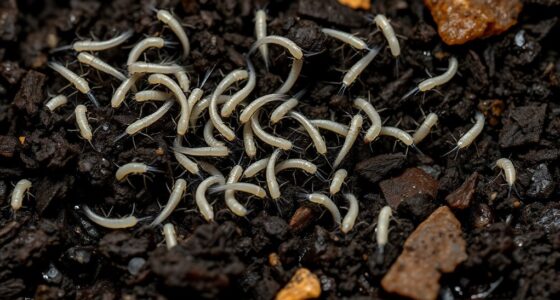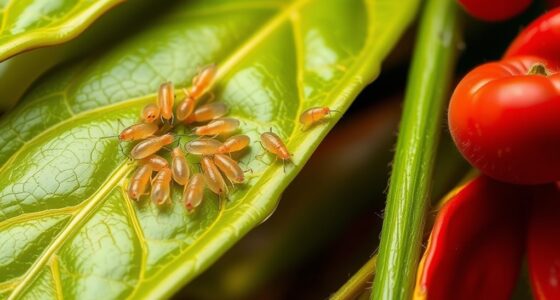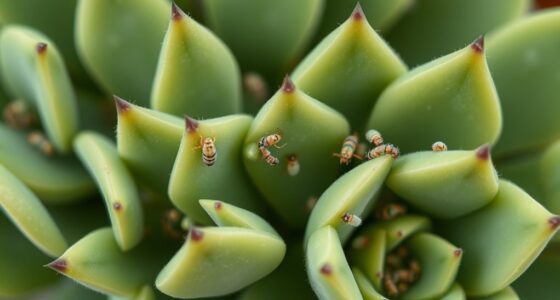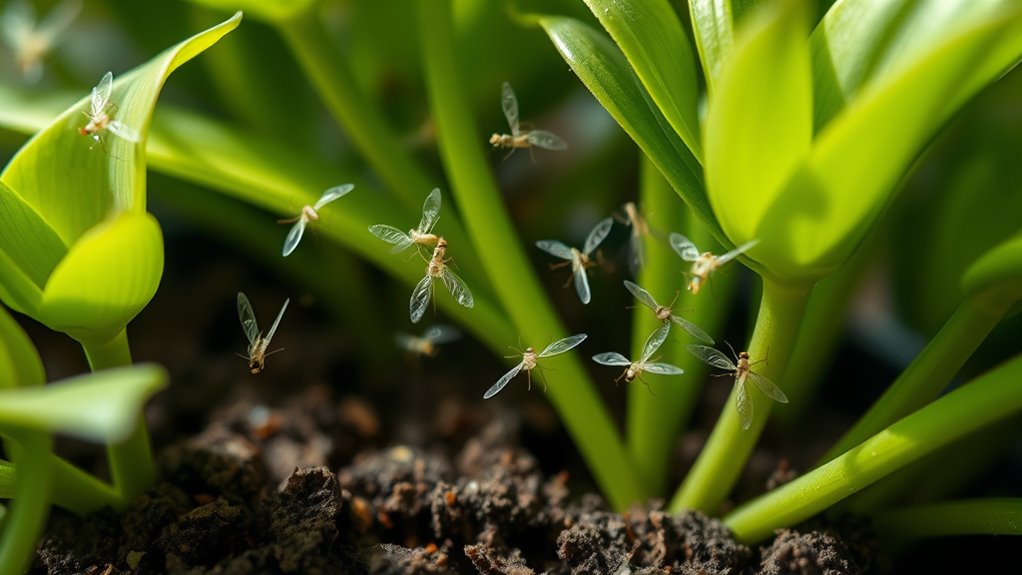
Fungus gnats are tiny insects attracted to moist soil in your houseplants, with larvae that feed on roots and organic matter. To control them, you can introduce natural predators like nematodes or predatory mites, apply biological soil drenches with Bti, or reduce watering to dry out the soil. Regularly inspecting plants and adjusting watering habits helps prevent infestations. Keep going to discover more effective techniques to protect your plants from these pesky pests.

Get garden gear delivered free with Prime
- Fast, free delivery on millions of items
- Prime Video, Amazon Music and more included
- Member-only deals all year
Key Takeaways
- Fungus gnats lay eggs in moist soil, with larvae feeding on organic matter and plant roots, completing their life cycle rapidly indoors.
- Natural predators like predatory nematodes and beneficial mites can effectively reduce gnat populations biologically.
- Soil treatments with Bti target larvae directly, breaking the gnat life cycle when combined with biological controls.
- Keeping soil dry by allowing the top inch to dry between waterings discourages gnat breeding habitats.
- Regular monitoring and patience are essential, as multiple control methods over several weeks effectively diminish infestations.
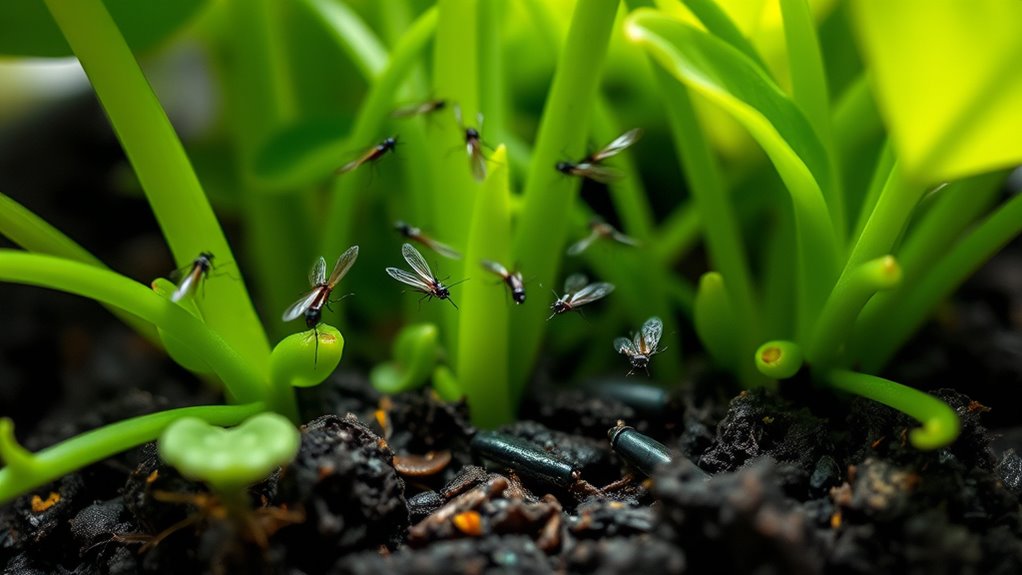
Fungus gnats are a common pest that can quickly become a nuisance on your houseplants. These tiny insects are often mistaken for fruit flies but are specifically attracted to moist soil where their larvae feed on organic matter and roots. To effectively control them, understanding their life cycle and the best methods to interrupt it is essential. One natural approach involves encouraging natural predators, such as predatory nematodes or beneficial insects, to help keep the gnat population in check. These predators hunt down the larvae in the soil, reducing their numbers without chemicals. You can purchase beneficial nematodes or introduce predatory mites into your soil, providing a biological control that minimizes harm to your plants and the environment.
Another effective strategy is soil treatment, which targets fungus gnat larvae directly. You can apply biological soil drenches containing Bacillus thuringiensis israelensis (Bti), a naturally occurring bacterium that infects and kills the larvae. This treatment is safe for your plants and pets, making it a popular choice for indoor gardening. Regularly watering with these solutions helps break the life cycle by eliminating larvae before they mature into adult gnats. Additionally, you can modify your watering habits to keep the soil drier, since fungus gnats thrive in consistently moist conditions. Allowing the top inch of soil to dry out between waterings deprives larvae of their habitat, markedly reducing their population.
Using soil treatment in conjunction with encouraging natural predators can be highly effective. As the larvae are suppressed, fewer adults will emerge to lay eggs, creating a cycle of decline. Keep in mind that patience is key, as it might take several weeks to notice a noticeable drop in gnat activity. Regularly inspecting your plants and soil can help you catch infestations early, making control easier. Moreover, choosing skincare products that are transparent about sourcing and formulations can ensure the safety and effectiveness of your pest control methods.
beneficial nematodes for fungus gnat control
As an affiliate, we earn on qualifying purchases.
As an affiliate, we earn on qualifying purchases.
Frequently Asked Questions
Are Fungus Gnats Harmful to Humans?
Fungus gnats aren’t harmful to your human health directly, but they can cause allergy concerns if their presence triggers respiratory or skin reactions. You might notice sneezing or itchy eyes if you’re sensitive. While they don’t bite or spread disease, their constant buzzing can be annoying. To prevent discomfort, manage moisture levels and remove decaying plant material, reducing their breeding sites and keeping your indoor environment healthier.
Can Fungus Gnats Damage All Types of Houseplants?
Did you know fungus gnats can infest over 300 plant species? Yes, they can damage most houseplants, especially if the soil stays moist. Their larvae feed on roots, which can weaken your plant’s health and cause yellowing or wilting. To prevent infestation, avoid overwatering and improve drainage. Regularly check your plants, and act quickly if you see signs of gnats to protect your plants’ health effectively.
How Long Do Fungus Gnats Live Indoors?
Indoor infestation of fungus gnats typically lasts about a week to ten days, but their gnat lifespan can extend up to three weeks if conditions are ideal. During this time, you’ll see tiny flies flying around your houseplants. To reduce their lifespan, focus on drying out the topsoil, removing decaying plant material, and using control methods like traps or biological agents. Act quickly to break their life cycle and eliminate the infestation.
Are There Natural Predators for Fungus Gnats?
Yes, there are natural predators for fungus gnats. Beneficial insects like predatory nematodes and certain types of mites serve as biological control, helping to keep gnat populations in check. You can introduce these beneficial insects to your indoor plants to reduce fungus gnat issues naturally. Using biological control methods is eco-friendly and effective, making it a smart choice for managing fungus gnats without harsh chemicals.
Can Fungus Gnats Infest Outdoor Garden Plants?
Imagine tiny shadows dancing over your outdoor garden plants, signaling an infestation. Yes, fungus gnats can attack your garden, turning your lush greenery into a battleground. An outdoor plant infestation might seem small now, but if ignored, it can spread rapidly. Practice vigilant garden pest management by removing decaying plant material and applying beneficial nematodes. Stay alert—early action keeps your garden thriving and safe from these persistent pests.
biological soil drenches with Bti for houseplants
As an affiliate, we earn on qualifying purchases.
As an affiliate, we earn on qualifying purchases.
Conclusion
While fungus gnats may seem harmless, some believe they signal deeper issues in your plant care routine. If you ignore them, you might unknowingly invite root rot and plant decline. But here’s the truth: tackling these pests early can save your houseplants and restore your indoor jungle’s health. Don’t let a tiny gnat make you doubt your green thumb. With the right control, you can turn things around and keep your plants thriving.
predatory mites for indoor plant pests
As an affiliate, we earn on qualifying purchases.
As an affiliate, we earn on qualifying purchases.
soil moisture meter for houseplants
As an affiliate, we earn on qualifying purchases.
As an affiliate, we earn on qualifying purchases.
Fall yard work Picks
leaf blowers
As an affiliate, we earn on qualifying purchases.