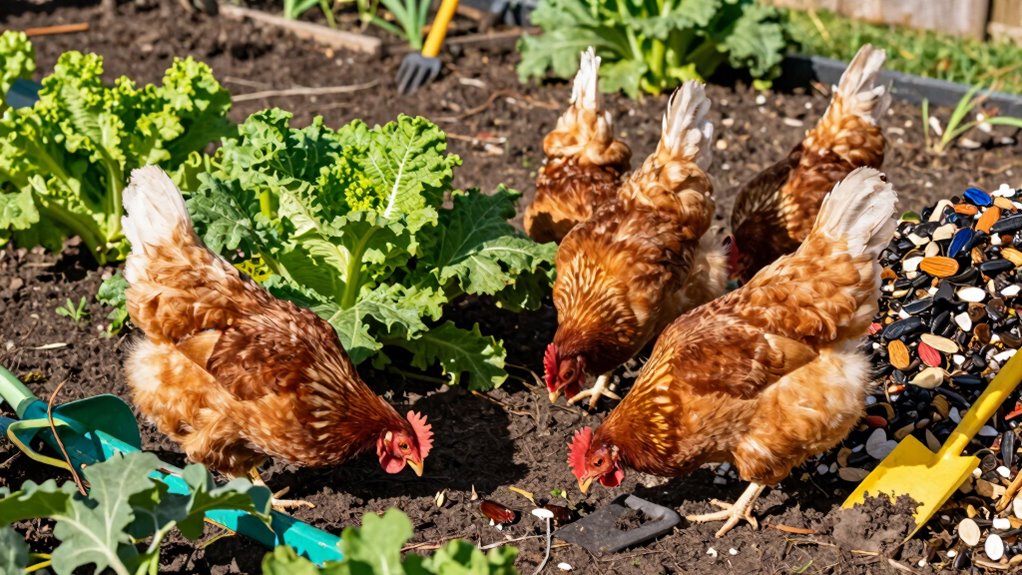
Having a backyard flock can considerably lower pest pressure around your compost and beds. Chickens hunt insects, larvae, and small pests, helping control populations naturally. Their scratching aerates the soil and uncovers pests hiding in compost, reducing their numbers and disrupting habitats. This creates a healthier, balanced environment for your garden. By encouraging natural pest control, you’ll support a resilient ecosystem. Keep exploring to discover more ways your flock benefits your garden’s health.
Key Takeaways
- Chickens hunt and consume pests like larvae and beetles in compost and garden beds, reducing pest populations.
- Their scratching aerates soil and compost, disrupting pest habitats and making environments less favorable for pests.
- Foraging behavior naturally controls pests without chemical interventions, promoting ecosystem health.
- Backyard flocks attract beneficial insects and birds, enhancing natural pest regulation.
- Regular chicken activity maintains a balanced ecosystem, lowering long-term pest pressure around compost and beds.
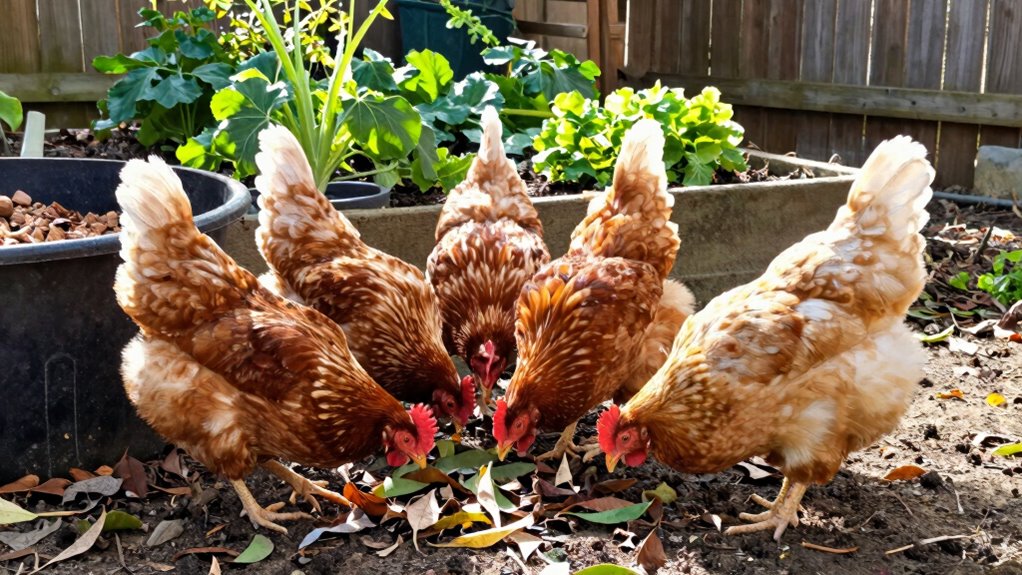
Have you ever considered how backyard flocks can naturally help with pest control? When chickens or other poultry into your yard, you’re creating a dynamic environment that promotes a natural predator balance. Chickens instinctively hunt insects, larvae, and even small pests that threaten your garden and compost areas. Their foraging behavior keeps pest populations in check without the need for chemical interventions, making your garden healthier and more sustainable. This natural predator balance is key to maintaining a balanced backyard ecosystem, where beneficial insects and birds coexist with pests at manageable levels. It’s a natural form of pest management that also reduces your reliance on pesticides, which can harm beneficial insects and soil health.
Introducing chickens naturally helps control pests and promotes a healthy, balanced backyard ecosystem.
Integrating a backyard flock into your space isn’t just about pest control; it’s about creating a harmonious ecosystem. When chickens forage around compost bins and garden beds, they help break down organic matter while simultaneously reducing pest habitats. They scratch through compost piles, uncovering and eating pests like beetles, grubs, and their larvae, which often thrive in decomposing organic material. This behavior prevents pests from establishing large populations and spreading to your plants. Plus, chickens tend to avoid healthy, mature plants, focusing instead on pests and decaying matter, so your garden remains largely undisturbed and productive.
By fostering backyard ecosystem integration, you’re encouraging a natural cycle where pests are kept in check without disrupting plant growth. Chickens often target pests hidden in the soil or within leaf litter, reducing the need for mechanical removal or chemical treatments. As they forage, they also aerate the soil, improving its structure and making it less hospitable for pests that prefer dense, compacted ground. This creates a healthier environment for your plants and reduces pest pressure around your compost and beds. Additionally, promoting biodiversity in your yard attracts other beneficial creatures like predatory insects and songbirds that further contribute to pest regulation. Creating a balanced environment supports natural pest control and enhances the overall health of your garden.
You’ll find that the presence of a backyard flock promotes biodiversity, attracting other beneficial creatures like predatory insects and songbirds that further contribute to pest regulation. Over time, your yard becomes a self-sustaining system, where pest populations are naturally managed, and your garden thrives. In essence, integrating chickens into your backyard isn’t just about raising poultry; it’s about cultivating a balanced, resilient ecosystem where pests are kept under control through natural predation, supporting healthier plants and reducing the need for external interventions. Incorporating pest management strategies that leverage natural behaviors can further enhance this balance.

Garden Safe Brand Crawling Insect Killer Containing Diatomaceous Earth, 4 Pounds, Kills Cockroaches, Ants and Other Listed Crawling Insects by Contact, For Use Indoors & Outdoors
FOR ORGANIC GARDENING: Diatomaceous earth-based formula is good for organic gardening
As an affiliate, we earn on qualifying purchases.
As an affiliate, we earn on qualifying purchases.
Frequently Asked Questions
Do Backyard Chickens Require Special Shelter Near Compost Areas?
Yes, backyard chickens do require a backyard flock shelter near compost areas. A proper shelter keeps your chickens safe from predators and harsh weather, while also minimizing disruptions to your compost and beds. Placing the shelter close to compost areas encourages chickens to forage naturally, helping control pests. Make certain the shelter is well-ventilated, secure, and easy to clean, creating a healthy environment for your flock and your garden.
How Often Should I Rotate Chickens Between Different Garden Zones?
You should rotate your chickens every few days to a week, like shifting pieces in a puzzle to keep pests guessing. Their roaming patterns and diet help control insects and pests naturally, but constant access to the same area can lead to over-patting and soil degradation. By rotating, you encourage healthy foraging, prevent buildup of pests, and give your garden zones time to recover, creating a balanced ecosystem for both your flock and your plants.
Can Chickens Help Reduce Specific Types of Garden Pests?
Yes, chickens can help reduce specific garden pests by acting as natural predators. They forage on insects like beetles, grubs, and caterpillars, providing pest suppression naturally. Your flock’s foraging behavior keeps pest populations in check, reducing the need for chemical controls. By encouraging chickens around your garden beds and compost, you create a helpful, eco-friendly pest management system that benefits your plants and promotes a healthier garden environment.
Are There Risks of Chickens Spreading Diseases to Plants or Humans?
Yes, there’s a risk of chickens spreading diseases through pathogen transmission, which can affect both plants and humans. You need to be cautious about contamination from chicken droppings, especially around edible plants. Regularly cleaning your coop and washing produce thoroughly reduces this risk. Always monitor your chickens for illness and practice good hygiene to minimize disease transmission, ensuring your garden remains safe and healthy for everyone.
What Is the Best Age for Chickens to Start Pest Control?
You should start your chickens on pest control when they’re around 6 to 8 weeks old. At this age, their foraging instincts are strong, allowing them to effectively hunt for pests like insects and larvae. Pest control timing is key—early introduction helps them develop good foraging habits, reducing pests around your compost and beds. Just make certain they’re healthy and protected from harsh weather to maximize their pest control benefits.

Ketive 83" L Large Chicken Coop with Run for 4-6 Chickens, Expandable Wooden Backyard Hen House Poultry Cage with 4 Reinforced Nesting Boxes, Dual Ramp Doors, Removable Slide-Out Tray, Curved Roof
𝟒 𝐑𝐞𝐢𝐧𝐟𝐨𝐫𝐜𝐞𝐝 𝐍𝐞𝐬𝐭𝐢𝐧𝐠 𝐁𝐨𝐱𝐞𝐬 𝐟𝐨𝐫 𝐄𝐚𝐬𝐢𝐞𝐫 𝐄𝐠𝐠 𝐂𝐨𝐥𝐥𝐞𝐜𝐭𝐢𝐨𝐧 𝐚𝐧𝐝 𝐀𝐝𝐝𝐞𝐝 𝐏𝐫𝐨𝐭𝐞𝐜𝐭𝐢𝐨𝐧 – Fresh eggs are why many families…
As an affiliate, we earn on qualifying purchases.
As an affiliate, we earn on qualifying purchases.
Conclusion
Just like the wise Athena guided heroes through challenges, your backyard flock becomes a natural protector, reducing pests around your compost and beds. Their presence turns your garden into a thriving, balanced ecosystem, where every peck and cluck plays a part in keeping pests at bay. Embrace this ancient wisdom of harmony between animals and land, and watch your garden flourish, echoing the timeless dance of nature’s own pest control—a story as old as time itself.

Knee-Friendly Lawn Aerator Tool, Manual Lawn Aerator for Yard,Spring Loaded Self-Cleaning Spike Aerator for Soil Loosening, Lawn Care and Garden Aeration
1.Knee-Friendly Clearance Design:Built with an open center frame, this lawn aerator gives your knees enough room to move…
As an affiliate, we earn on qualifying purchases.
As an affiliate, we earn on qualifying purchases.

Beautiful Kitchen Compost Bin with Smell Proof Lid – Rust Proof and Odorless Compost Bucket for Your Countertop with No Smell Filters – Easy to Clean 1.1 Gallon Bin Looks Great On Any Kitchen Counter
Effortless Recycling: Revolutionize your kitchen with KIBAGAs’ countertop compost bin, designed for recycling food & other organic waste….
As an affiliate, we earn on qualifying purchases.
As an affiliate, we earn on qualifying purchases.