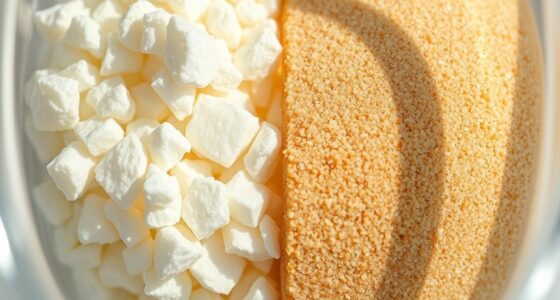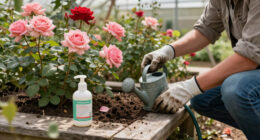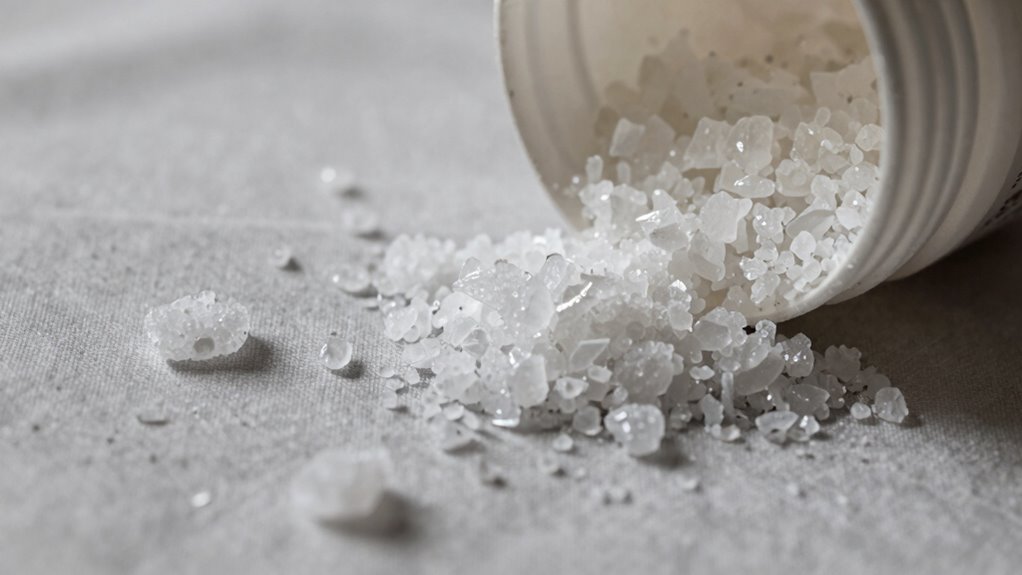
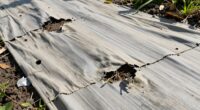
You’ll notice salt buildup in beds and containers as white deposits or crusty residues on the soil surface and container walls. Sometimes, salt crystals form a chalky appearance or a white film on the soil. There may also be a salty smell nearby. These signs appear as water evaporates, leaving minerals behind. If you want to identify these symptoms and learn how to prevent or fix them, keep exploring further.

Get garden gear delivered free — and shop member deals
- Fast, free delivery on millions of items
- Access to Prime Big Deal Days deals on October 6–7
- Prime Video, Amazon Music and more included
Key Takeaways
- White crusty deposits or salt crystals form on soil surface or container walls.
- Chalky or powdery white film appears on soil or pot interiors.
- Crystalline salt deposits are visible along container edges or soil surface.
- Salty smell often accompanies visible salt deposits.
- Soil may look discolored or have a crusty texture near the surface.
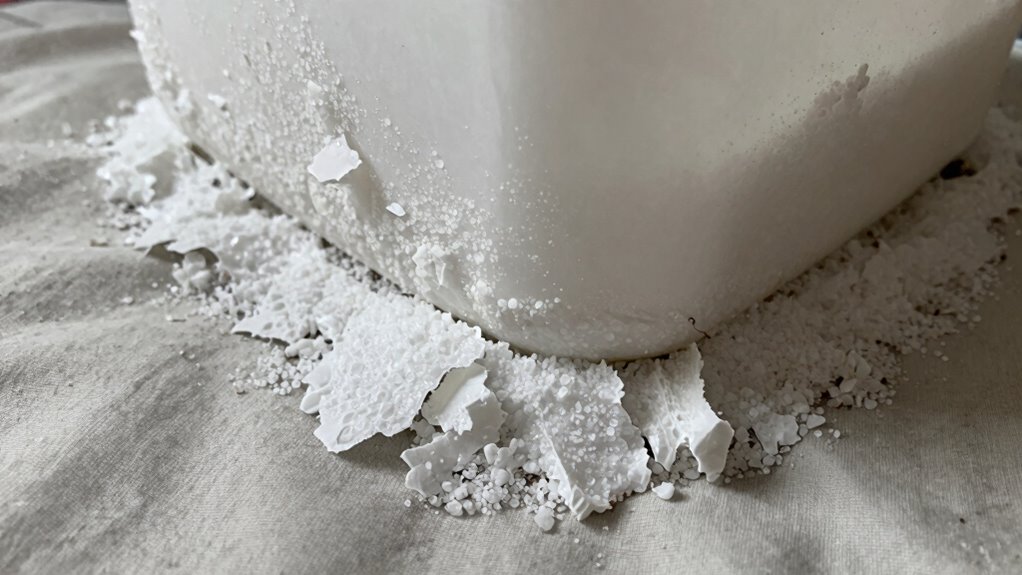
The white deposits you observe are primarily composed of salts that are left behind when water evaporates. If you’re using tap water, especially hard water rich in minerals, the risk of salt buildup increases. Over time, repeated watering without proper leaching causes these salts to concentrate. The first thing you might notice is a change in soil texture—perhaps the soil feels crusty or hardened near the surface. In containers, salt crystals can also stick to the interior walls, giving a chalky appearance that’s easy to see once you’ve looked closely. In garden beds, these deposits often appear as a thin white film on the soil surface, sometimes accompanied by a salty smell. Salt buildup can also affect the soil’s pH balance, making it more alkaline. When soil pH rises, certain nutrients, such as iron, manganese, and phosphorus, become less available to your plants. This disruption results in deficiencies that can stunt growth and cause discoloration. You might notice that your plants aren’t thriving even if you’re providing adequate water and nutrients. The imbalance caused by salt accumulation can be particularly problematic in containers, where drainage and leaching are limited, causing salts to concentrate more quickly. Regularly monitoring soil pH with a tester can help you catch changes early and take corrective measures. Additionally, using water with lower mineral content can help reduce the risk of salt buildup over time. Understanding how soil composition affects salt retention can further aid in managing buildup. Incorporating organic matter like compost can also improve soil structure and enhance drainage, reducing salt accumulation. To prevent or reduce salt buildup, you need to pay attention to watering habits. Regularly leaching the soil with plenty of water helps wash away excess salts, maintaining a healthier soil pH and nutrient balance. Furthermore, employing appropriate watering techniques can help prevent salt accumulation from occurring in the first place. If you notice signs of salt accumulation, consider flushing your beds or containers thoroughly and adjusting your watering schedule to avoid over-concentrating salts. Overall, managing salt buildup is essential to maintaining ideal soil conditions and ensuring your plants stay vigorous and healthy.
As an affiliate, we earn on qualifying purchases.
Frequently Asked Questions
How Can I Prevent Salt Buildup in My Garden Beds?
To prevent salt buildup in your garden beds, you should regularly test your soil to monitor salt levels. Improve drainage by adding organic matter or creating proper slopes, which helps excess salts wash away with watering. Avoid over-fertilizing and use low-salt fertilizers when needed. These steps keep your soil balanced, ensuring healthy plant growth while minimizing salt accumulation.
Does Salt Buildup Harm All Plant Types Equally?
Did you know that salt tolerance varies markedly among plants? Salt buildup doesn’t harm all plant types equally; some tolerate higher soil pH and salt levels, while others are highly sensitive. If your soil has high salt content, it can disrupt nutrient uptake, especially for plants with low salt tolerance. You should select plants suited to your soil’s salt levels or work to reduce salt buildup to protect sensitive species.
What Are Natural Methods to Reduce Salt Accumulation?
To naturally reduce salt accumulation, you should regularly perform soil testing to monitor salinity levels. If you find high salt levels, flush your beds with plenty of water to leach out excess salts. Incorporate organic amendments like compost or mulch, which improve soil structure and help prevent salt buildup. These methods promote healthy plant growth and keep soil conditions balanced without relying on chemical treatments.
How Often Should I Check for Salt Buildup?
Think of salt buildup as an unwelcome guest creeping in—it’s best caught early. You should check for salt accumulation every few months by performing soil testing and inspecting your beds and containers. Adjust your watering techniques, ensuring you don’t overwater, and use leaching methods when necessary. Regular monitoring helps prevent salt-related issues, keeping your plants healthy and thriving without the need for constant intervention.
Are There Specific Plants That Tolerate Salt Better?
Yes, some plants tolerate soil salinity better than others. You should look for salt-tolerant plants like succulents, certain grasses, and Mediterranean herbs. These plants have adapted to thrive in higher soil salinity levels, making them ideal if you notice salt buildup. By choosing salt-tolerant plants, you help your garden or containers withstand soil salinity, ensuring healthier growth even when salt buildup occurs.
As an affiliate, we earn on qualifying purchases.
Conclusion
So, next time you notice a chalky residue or white crust on your plants or containers, don’t ignore it. Salt buildup can silently damage your garden’s health over time. Are you prepared to take action before it’s too late? Regular flushing and proper watering can help prevent this issue, ensuring your beds and containers stay vibrant and productive. After all, a healthy garden begins with paying attention to the subtle signs—don’t let salt buildup be one of them.
As an affiliate, we earn on qualifying purchases.
drainage improvement for garden beds
As an affiliate, we earn on qualifying purchases.
As an affiliate, we earn on qualifying purchases.
Fall Picks
fall essentials
As an affiliate, we earn on qualifying purchases.