
Leaf litter can boost your garden’s health by enriching soil with nutrients and promoting sustainable composting. It helps retain moisture and naturally decomposes, supporting healthy plant growth. However, if left unmanaged, thick layers can attract pests like insects and rodents, and foster fungal diseases. Balancing these benefits and problems depends on proper maintenance. Keep this in mind, and you’ll discover how to enjoy the advantages while avoiding common pitfalls.

Get garden gear delivered free — and shop member deals
- Fast, free delivery on millions of items
- Access to Prime Big Deal Days deals on October 6–7
- Prime Video, Amazon Music and more included
Key Takeaways
- Leaf litter enriches soil through natural nutrient recycling but can also harbor pests and fungi if not managed properly.
- Proper composting transforms leaves into valuable fertilizer, reducing waste, but damp, decaying leaves can attract pests.
- Leaves act as natural mulch promoting plant health, yet thick layers create habitats for rodents and insects.
- Regular yard maintenance balances composting benefits with pest prevention, preventing pest infestations.
- Embracing leaf litter supports sustainability but requires mindful handling to avoid pest-related issues.

Have you ever wondered what happens to all those fallen leaves in your yard? They seem like a nuisance at first glance, piling up and cluttering your outdoor space. But, surprisingly, leaf litter can be both a benefit and a problem, depending on how you handle it. When you think about urban composting, leaves become a valuable resource. Instead of sending them to the landfill, you can collect and turn them into nutrient-rich compost that feeds your garden. This process reduces waste, enriches your soil, and promotes sustainable gardening. Leaves decompose naturally, releasing essential nutrients like nitrogen and carbon back into the earth, which benefits plants and improves soil health. Plus, by composting leaves, you’re engaging in eco-friendly practices that support urban sustainability. Proper management of leaf litter can also enhance personal growth by encouraging mindful environmental responsibility.
Turning fallen leaves into compost enriches soil, reduces waste, and supports eco-friendly urban gardening practices.
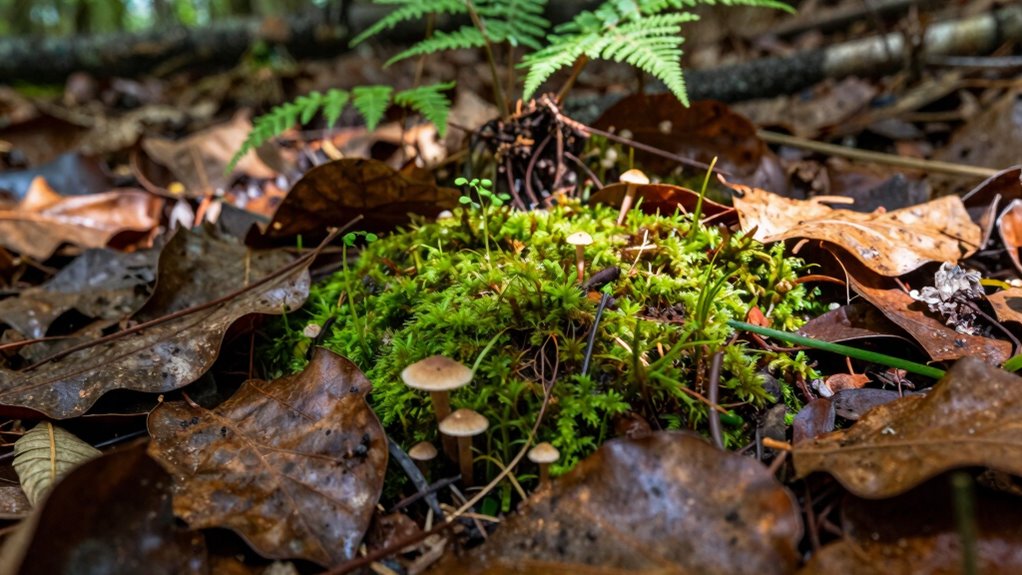
However, there’s a flip side. If you leave the leaf litter in your yard unchecked, it can turn into a pest habitat. Thick layers of leaves create cozy hideouts for pests like rodents, insects, and even mosquitoes. These pests find shelter in the damp, decaying leaves, which can lead to infestations that spread to nearby homes or gardens. Plus, the mulch-like layer of leaves can harbor fungi and bacteria that may cause plant diseases or attract unwanted critters. This makes managing leaf litter a balancing act. You want to enjoy the benefits of composting and natural soil enrichment, but you also need to prevent it from becoming a breeding ground for pests. Understanding the importance of biodiversity can help you recognize how pests and beneficial organisms coexist in your yard, guiding better management practices. Incorporating proper maintenance techniques can further prevent pest issues while maximizing composting benefits.
To strike that balance, consider regularly raking or mulching your leaves, especially in areas where pests are a concern. You can shred the leaves with a lawnmower, making them decompose faster and reducing their habitat value for pests. If you’re into urban composting, create a designated compost pile or bin away from your home’s foundation and living spaces. This keeps pests away from your main yard while still allowing you to recycle those leaves effectively. It’s also helpful to turn or aerate your compost regularly, preventing it from becoming too damp or compacted, which can attract pests. Additionally, understanding how decomposition processes work can help you optimize your composting efforts for faster, pest-free results. Being aware of pest attractants can further help you design your yard and composting system to deter unwanted visitors.
In essence, leaf litter offers a chance to be environmentally conscious and resourceful, but it requires mindful management. When you approach it as an opportunity for composting, you reduce waste and nourish your garden. When ignored or left in thick layers, it can serve as a pest habitat, inviting trouble. The key is to find that middle ground—embracing the benefits while controlling the problems—so your yard remains healthy, productive, and pest-free.
As an affiliate, we earn on qualifying purchases.
Frequently Asked Questions
How Does Leaf Litter Affect Soil Moisture Levels?
Leaf litter affects soil moisture levels by enhancing moisture retention and improving soil absorption. When you leave leaf litter on the ground, it acts as a natural mulch, reducing evaporation and keeping the soil moist longer. This layer allows water to seep gradually into the soil, supporting plant roots. However, too much leaf litter can hinder proper absorption in heavy layers, so maintaining a balance is key to optimizing soil moisture levels.
Can Leaf Litter Attract Pests or Wildlife?
Yes, leaf litter can attract pests or wildlife. It creates a cozy wildlife habitat, offering food and shelter for insects, rodents, and other creatures. While this benefits local biodiversity, it might also lead to pest attraction near your home, potentially causing issues. Regularly raking or managing leaf litter can help balance attracting beneficial wildlife while reducing pest problems, ensuring your yard remains healthy and safe.
What Types of Leaf Litter Are Best for Composting?
Think of composting as a symphony, where the right leaf litter plays a vital role. Opt for leaves like oak, maple, and birch, which decompose steadily and enrich your soil. These leaves support efficient leaf decomposition and nutrient cycling, turning waste into wealth for your garden. Avoid glossy or heavily treated leaves, as they slow down the process. Using diverse, healthy leaves guarantees your compost hums with life.
Does Removing Leaf Litter Improve Lawn Health?
Removing leaf litter can improve lawn health by promoting nutrient cycling and reducing weed growth. When you clear leaves, you prevent them from smothering grass, allowing sunlight and air to reach the soil. This encourages healthy grass growth and minimizes weed invasion. However, leaving some leaf litter can also protect soil moisture and add organic matter. Balance your approach based on your lawn’s needs for ideal health.
How Often Should Leaf Litter Be Cleaned Up?
You should remove leaf litter regularly, ideally every 1-2 weeks during peak fall. Studies show that unmanaged leaf litter can smother grass and harbor pests, leading to costly damage. For best leaf litter management, consider your lawn’s aesthetic and health needs; frequent cleanups keep your yard tidy and healthy, but too much removal can also strip beneficial nutrients. Balance is key to maintaining a beautiful, thriving landscape.
As an affiliate, we earn on qualifying purchases.
Conclusion
Just like Pandora’s box, leaf litter can surprise you—offering nourishment and shelter, yet sometimes causing problems like pests or decay. Embrace its dual nature, understanding that what’s beneficial today might pose challenges tomorrow. By managing leaf litter wisely, you become the gardener who balances nature’s gifts with mindful care, turning chaos into harmony. After all, in the grand dance of ecosystems, a little leaf litter here and there keeps the rhythm lively.
As an affiliate, we earn on qualifying purchases.
As an affiliate, we earn on qualifying purchases.
Halloween Picks
halloween
As an affiliate, we earn on qualifying purchases.