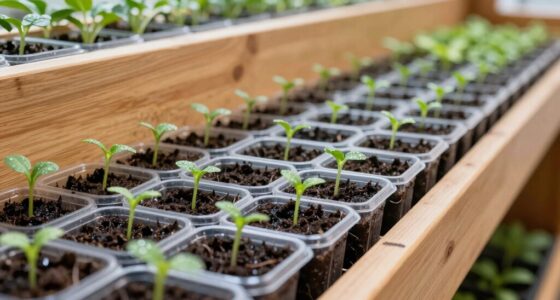
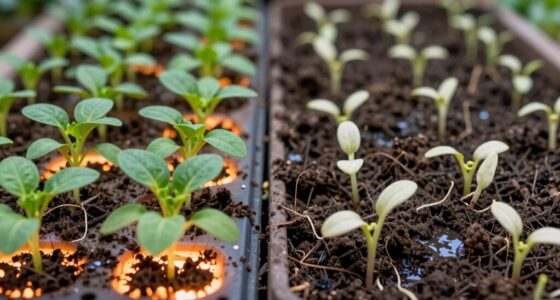
The top of tower gardens grows differently because lighting is carefully focused there to promote healthy shoot development, which indirectly strengthens roots below. Bright, targeted light encourages vibrant, resilient growth, affecting overall plant health. Different light spectrums, like blue for bushy growth and red for flowering, help control how plants grow vertically and horizontally. If you want to understand the full impact of lighting on tower garden growth, keep exploring how these strategies work together.
Key Takeaways
- Top lighting encourages healthy shoot growth, which indirectly promotes stronger root development below.
- Different light spectra at the top influence vertical plant growth and flowering patterns.
- Illuminating the top enhances plant resilience and overall health, affecting growth at the bottom.
- Light intensity and spectrum calibration at the top optimize photosynthesis and nutrient uptake.
- The top section’s targeted lighting creates visual appeal and supports balanced plant development.
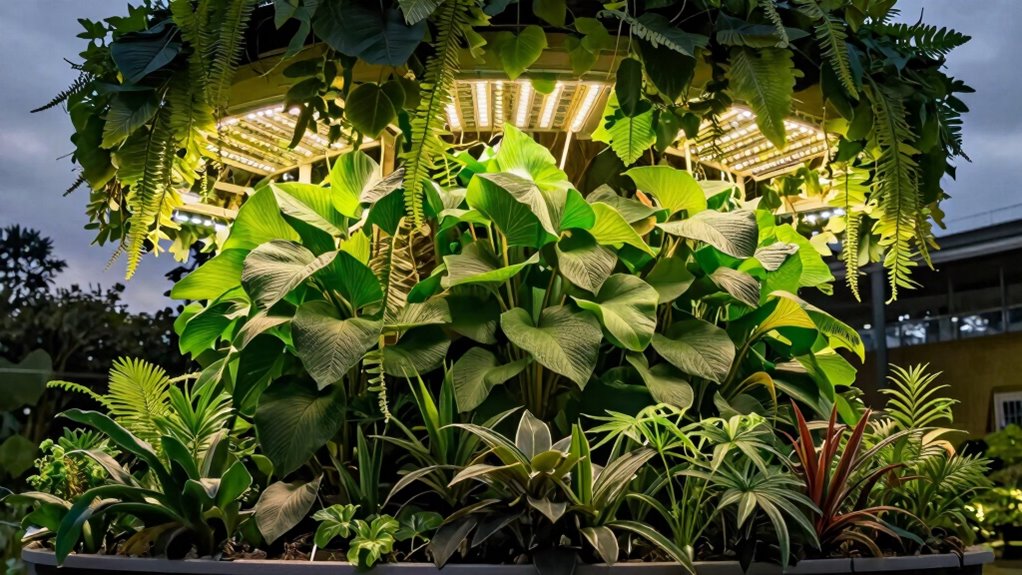
Tower gardens not only serve as striking visual landmarks but also enhance urban spaces through innovative lighting. As you observe these towering structures, you may notice that the top sections flourish differently than the bottom, especially when illuminated with various lights. This difference largely stems from how light interacts with plant development, particularly root growth and light spectrum exposure. The roots of plants in tower gardens develop underground, but their health and growth are influenced indirectly by the light that reaches their shoots and leaves. When the upper parts of the plants receive optimal lighting, their photosynthesis process becomes more efficient, encouraging stronger root development below. This is because healthy shoots produce the energy needed for roots to grow and absorb nutrients more effectively. Additionally, understanding the specific effects of different light spectrums can help growers fine-tune their lighting setups for better plant outcomes.
Lighting at the top of tower gardens isn’t just about visibility; it’s about optimizing plant growth. Different parts of the plant respond uniquely to light, especially when considering the light spectrum. The light spectrum includes various wavelengths—such as blue, red, and far-red—that affect growth patterns. For example, blue light encourages compact, bushy growth and healthy leaf development, while red light promotes flowering and fruiting. When lighting is carefully calibrated at the top of the tower, plants receive balanced exposure to these wavelengths, resulting in more vigorous growth at the top and, subsequently, better root development below. Conversely, if the light spectrum is skewed or insufficient at the top, growth can become uneven, with weaker roots and less robust plants overall. Recognizing how light spectrum exposure influences plant development is crucial for creating optimal growth conditions. Proper lighting not only impacts the visible growth but also affects plant resilience, making plants better able to withstand environmental stresses.
Properly calibrated top lighting promotes vigorous growth and healthy root development in tower gardens.
As you walk around these towers, you might notice that lighting designs are deliberate, often focusing on the top sections to maximize plant health. By using specific light spectrums, growers can influence how the plants grow vertically and horizontally, ensuring the roots develop strong and deep. The interplay between light spectrum and root development is crucial because healthy roots anchor the plant securely and allow for better nutrient uptake, which fuels overall growth. When lighting at the top is optimized, it sets off a chain reaction, supporting vigorous shoot growth, which in turn signals the roots to expand and strengthen. Additionally, understanding how light spectrum effects directly impact plant health allows for more precise control over growth conditions. Recognizing the importance of plant development factors helps growers cultivate resilient and thriving plants from root to leaf.
In the end, it’s clear that the top of a tower garden isn’t just growing taller; it’s grown smarter through carefully managed lighting. The way light spectrum influences both above-ground growth and root development helps create a balanced, thriving plant system. So, the reason the top grows different than the bottom isn’t just about aesthetics—it’s about the strategic use of light to foster healthy, resilient plants from root to leaf.
LED grow lights for tower gardens
As an affiliate, we earn on qualifying purchases.
As an affiliate, we earn on qualifying purchases.
Frequently Asked Questions
How Do Tower Gardens Affect Local Wildlife?
You might notice that tower gardens attract local wildlife, serving as a wildlife attraction and providing food or shelter. However, they can also cause habitat disruption if they replace native plants or disturb existing ecosystems. While they support some species, they may inadvertently displace others. To minimize negative impacts, guarantee your tower garden is integrated thoughtfully into your environment, promoting biodiversity without harming the local habitat.
Are Tower Gardens Suitable for All Climate Zones?
You might worry that tower gardens aren’t suitable for all climate zones, but they’re actually quite adaptable. With climate adaptability in mind, you can customize your setup to handle various weather conditions. Plus, their pest resistance features help protect your plants regardless of location. So, whether you live in a cooler or warmer climate, a tower garden can work well, giving you fresh produce year-round.
What Are the Long-Term Maintenance Costs?
You’ll find that long-term maintenance costs for tower gardens are relatively low, especially with proper upkeep. The cost comparison shows minimal expenses beyond initial setup, mainly for occasional replacements or upgrades. To keep costs down, follow maintenance tips like cleaning components regularly, checking water flow, and replacing parts promptly. These simple steps ensure your tower garden stays productive and cost-efficient over time, saving you money and effort.
Can Tower Gardens Be Integrated Into Existing Landscapes?
Yes, you can integrate Tower Gardens into your existing landscape, transforming your space into a lush, thriving oasis. Think of your garden as a canvas—Tower Gardens add vertical interest and maximize space, making them perfect for aesthetic integration. With thoughtful placement, they complement your landscape design, optimizing space while enhancing beauty. You’ll create a sustainable, eye-catching environment that blends functionality with visual appeal effortlessly.
Do Tower Gardens Require Special Permits or Zoning Approvals?
You usually don’t need special permits or zoning approvals for tower gardens, but it’s wise to check local permitting requirements first. Some areas have zoning regulations that might restrict certain structures or outdoor installations. Contact your city or county planning department to confirm if any approvals are needed. Being proactive helps you avoid potential fines or delays, ensuring your tower garden setup complies with all local regulations.
full spectrum grow lights for indoor plants
As an affiliate, we earn on qualifying purchases.
As an affiliate, we earn on qualifying purchases.
Conclusion
As you tend to your tower garden, remember that every part has its own needs—just like a tree with roots deep in the earth and branches reaching for the sun. By adjusting lighting and care from top to bottom, you guarantee each plant thrives. Think of your garden as a symphony, where harmony comes from understanding each instrument’s role. With patience and attention, you’ll see your garden flourish and grow in ways that remind us: the whole is greater than the sum of its parts.
plant root growth lighting system
As an affiliate, we earn on qualifying purchases.
As an affiliate, we earn on qualifying purchases.
vertical garden grow light setup
As an affiliate, we earn on qualifying purchases.
As an affiliate, we earn on qualifying purchases.