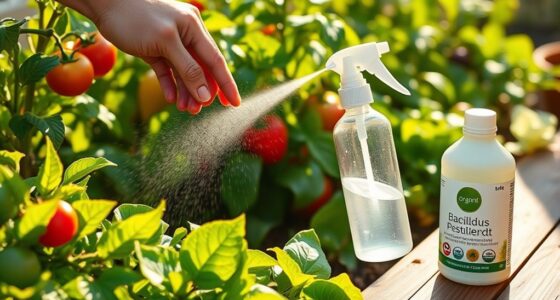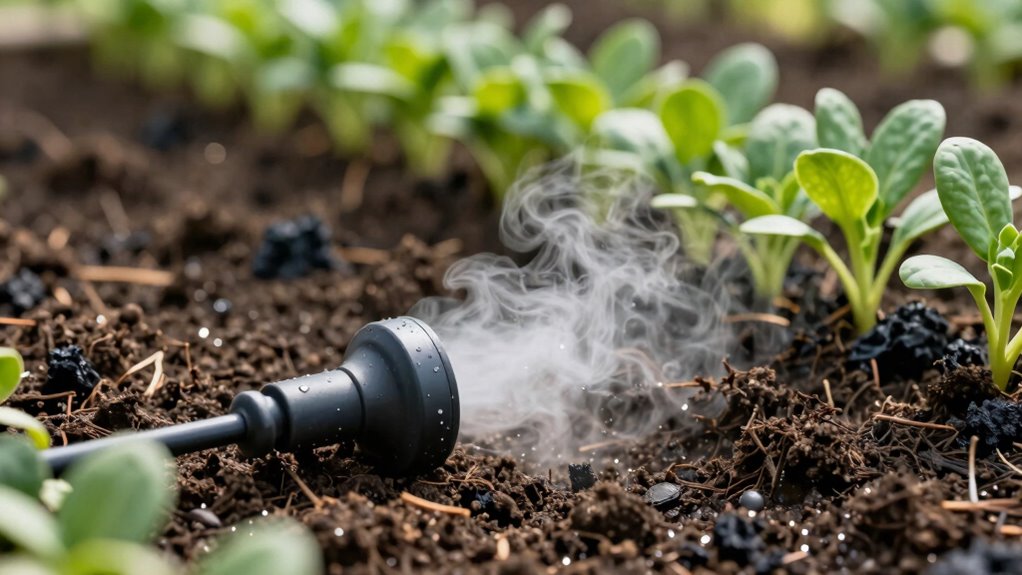
Soil steam sterilizing helps when you need to eliminate pests and pathogens before planting or after infestations, giving your crops a fresh start. However, it can wipe out beneficial microbes essential for soil fertility if you overdo it or don’t control the temperature carefully. Proper timing and post-sterilization amendments are vital to maintain soil health. Keep exploring to discover how to balance sterilizing benefits with preserving your soil’s natural ecosystem.
Key Takeaways
- Soil steam sterilization effectively eliminates pests and pathogens but can also destroy beneficial microbes if overused.
- It is most helpful before planting new crops or after pest outbreaks to reset soil health.
- Excessive or frequent sterilization risks depleting soil fertility and disrupting microbial balance.
- Proper temperature control and post-sterilization amendments help preserve soil microbial diversity.
- Balancing sterilization with soil ecosystem management ensures long-term soil health and productivity.
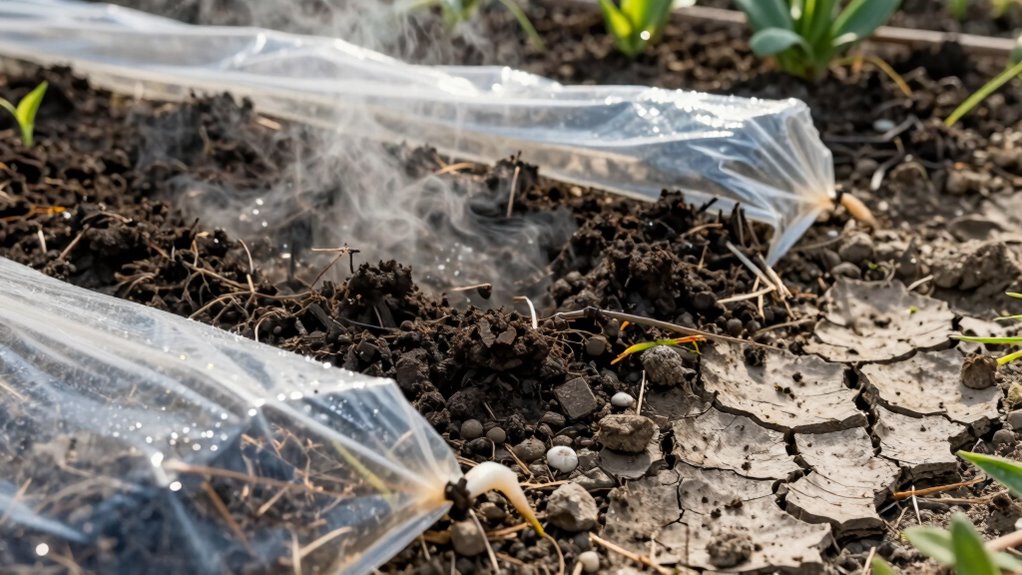
However, while steam sterilization is a powerful tool, it’s not always the perfect solution. One of the main issues you might face is that it can wipe out more than just the pests and disease-causing organisms. The heat doesn’t discriminate—it also kills beneficial microbes that contribute to soil fertility. These microbes help decompose organic matter, fix nitrogen, and support overall soil structure. If you overdo it or use sterilization too frequently, you risk damaging the delicate balance of soil life, which can lead to reduced soil fertility and poor plant growth over time. Additionally, understanding the soil microbiome is essential to ensure that sterilization doesn’t inadvertently harm the complex ecosystem necessary for healthy plant development. Maintaining a healthy soil ecosystem is crucial for sustainable gardening and long-term productivity. Recognizing the importance of soil biodiversity can help gardeners make more informed decisions about sterilization practices.
Another consideration is that soil sterilizing can sometimes be too aggressive, especially if you’re aiming for long-term soil health. After sterilization, you’ll need to reintroduce organic matter and beneficial microbes to restore soil robustness. Otherwise, you might find yourself stuck in a cycle of sterilizing and re-seeding, which can be labor-intensive and costly. Plus, the process requires careful temperature control; too little heat won’t kill the unwanted pests and pathogens, while too much can destroy essential soil organisms, leaving your soil biologically depleted.
In essence, soil steam sterilizing is an excellent method for pest control when you need to eliminate specific threats and reset your soil for planting. It’s particularly helpful before starting a new crop or after a pest outbreak. But you should weigh its benefits against the potential downsides. If used judiciously and followed by soil amendment practices, steam sterilization can enhance pest control and help maintain a healthy soil environment. Just keep in mind that balancing sterilization with the preservation of beneficial soil life is key to ensuring your garden or farm thrives in the long run.
soil steam sterilizer for gardening
As an affiliate, we earn on qualifying purchases.
As an affiliate, we earn on qualifying purchases.
Frequently Asked Questions
How Long Does Soil Sterilization Typically Last?
Soil sterilization typically lasts for several months, but it varies depending on factors like soil type and climate. During this time, your soil’s microbial balance is disrupted, temporarily reducing soil health. You need to reintroduce beneficial microbes to restore microbial diversity and promote healthy plant growth. Regular monitoring and soil amendments can help maintain soil vigor after sterilization, ensuring your garden remains productive and resilient over time.
Can Steam Sterilization Improve Soil Nutrient Levels?
Yes, steam sterilization can boost soil nutrients by breaking down organic matter into accessible forms, but it’s a double-edged sword. While it may enhance soil health temporarily, it risks wiping out beneficial microbes critical for microbial balance. This sudden shift might leave your soil vulnerable, potentially hindering natural nutrient cycling. Use steam sterilization carefully, balancing its benefits against the possible disruption to your soil’s delicate ecosystem.
Is Soil Steam Sterilizing Safe for Organic Farming?
Soil steam sterilizing isn’t typically considered safe for organic farming because it can harm soil microbial health, which organic certification standards aim to protect. You might sterilize soil to eliminate pests, but doing so can wipe out beneficial microbes essential for natural nutrient cycles. If you pursue organic certification, you’ll need to find alternative methods that preserve soil health while managing pests effectively.
What Types of Pests Are Most Effectively Eliminated?
You can effectively eliminate many pests like fungi, nematodes, and certain insect larvae through soil steam sterilizing. However, it also kills beneficial bacteria and disrupts the soil microbiome, which are essential for healthy plant growth. While sterilization controls harmful pests, it’s vital to reintroduce beneficial microorganisms afterward to restore soil balance and support resilient, productive crops.
How Does Steam Sterilization Compare to Chemical Treatments?
Think of steam sterilization as a gentle rain washing away pests, unlike harsh chemicals that leave residues behind. Compared to chemical treatments, steam is eco-friendly, reducing environmental impact and eliminating chemical residues in your soil. It’s highly effective at killing pathogens without risking long-term chemical buildup, making it a safer choice for your garden and the environment. Plus, it’s non-toxic for you and beneficial soil organisms.
beneficial microbes reintroduction soil
As an affiliate, we earn on qualifying purchases.
As an affiliate, we earn on qualifying purchases.
Conclusion
So, next time you think soil steam sterilizing’s your miracle cure, remember: it’s a double-edged sword. Sure, it zaps those pesky pathogens, but it might also wipe out your soil’s delicate microbial party. Overdo it, and you risk turning your garden into a sterile wasteland—great for zombies, not so much for plants. So, use it wisely, or you’ll end up with a dirt dessert—sweet, sterile, and utterly devoid of life.
As an affiliate, we earn on qualifying purchases.
As an affiliate, we earn on qualifying purchases.