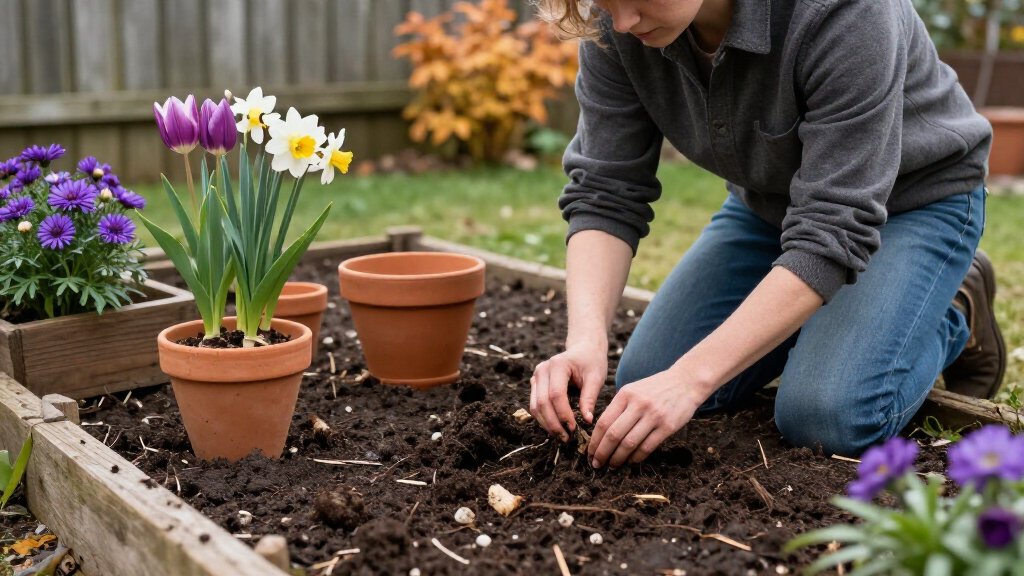

October planting is all about cold tolerance and smart timing: you need flowers that either establish roots before frost or bloom right through the chill. The Home Grown Wildflower Variety Mix earns my best overall pick for its unmatched versatility across climates, while the Costa Farms Purple Fall Mums deliver instant, guaranteed autumn color for gardeners who don’t want to gamble on seed germination. The main tradeoff you’ll face is seeds versus live plants — seeds cost less and establish hardier root systems, but live plants give you blooms this season rather than next spring. Climate matters too: perennials like asters and peonies thrive when planted in October in warmer zones, but northern gardeners should lean toward pansies and hardy annuals. Keep reading for the full breakdown of all ten options, including who each one suits and who should skip it.

Get garden gear delivered free — and shop member deals
- Fast, free delivery on millions of items
- Access to Prime Big Deal Days deals on October 6–7
- Prime Video, Amazon Music and more included
Complete the kit


Key Takeaways
- Seed mixes dominated this comparison because October sowing rewards volume and variety, but live plants like the Costa Farms mums were the only options offering immediate blooms this fall.
- Aster products appeared three times in the lineup, and the 1000+ Cold Hardy Mix stood out among them for germination reliability, while smaller packet sizes made sense only for small-space gardeners.
- The Walter Faxon peony was the only bare-root pick, and it carries the longest payoff timeline — no flowers until the second or third year, but decades of blooms afterward.
- Pansies proved the best bridge pick for northern gardeners, since they handle light frost and keep blooming in fall when perennials have already shut down.
- Collection-style kits like the Survival Garden Seeds Cool Season set made sense for beginners who want guidance, but they diluted focus compared to single-species picks for a specific October goal.
| 600 New England Aster Heirloom Flower Seeds (Aster Novae-Angliae) |  | Best for a Reliable Fall Perennial | Seed count: 600 seeds | Botanical name: Aster novae-angliae | Plant type: Perennial wildflower | VIEW LATEST PRICE | See Our Full Breakdown |
| HOME GROWN Autumn Beauty Sunflower Seeds, 40 Seeds (Helianthus annuus) |  | Best for a Tall Summer-to-Fall Backdrop | Seed count: 40 seeds | Botanical name: Helianthus annuus | Seed type: Non-GMO | VIEW LATEST PRICE | See Our Full Breakdown |
| 1000+ Mix New England Aster Flower Seeds – Perennial, Cold Hardy, Pollinator Friendly, Non-GMO Heirloom |  | Best for a Large, Multicolor Aster Drift | Seed quantity: 1,000+ seeds | Plant type: Perennial | Varieties: New England aster and other perennial types | VIEW LATEST PRICE | See Our Full Breakdown |
| 500+ Chrysanthemum Flower Seeds for Planting – Heirloom Perennial Ground Cover Mix |  | Best for a Rainbow Fall Ground Cover | Seed quantity: 500+ seeds | Plant type: Perennial flowering ground cover | Bloom season: Late summer to fall | VIEW LATEST PRICE | See Our Full Breakdown |
| Home Grown Wildflower Variety Mix – 19 Varieties, 44,000 Seeds (2 oz) |  | Best for Covering a Broad, Mixed Planting | Seed count: 44,000 seeds | Weight: 2 oz | Varieties: 19 wildflower varieties | VIEW LATEST PRICE | See Our Full Breakdown |
| New England Aster Seeds, 500+ Purple Perennial Wildflower Seeds |  | Best for Late-Season Pollinators | Seed quantity: 500+ | Flower color: Purple with golden-yellow centers | Plant type: Perennial wildflower | VIEW LATEST PRICE | See Our Full Breakdown |
| Walter Faxon Double Pink Peony – Bare Root Dormant Plant |  | Best Premium Perennial Investment | Plant type: Peony (bare root, dormant) | Bloom type: Double, pink | Fragrance: Fragrant | VIEW LATEST PRICE | See Our Full Breakdown |
| Pansy Seeds Mix for Planting – Cold Hardy Annual for Fall Planting, Containers & Garden Borders |  | Best for Beginners | Bloom type: Large ‘faced’ mixed colors | Cold tolerance: Blooms through light frosts | Sunlight: Full sun to partial shade | VIEW LATEST PRICE | See Our Full Breakdown |
| Survival Garden Seeds Cool Season Flower Seed Collection – 10 Heirloom Varieties for Spring & Fall Color |  | Best Variety Pack Value | Varieties included: 10, including pansy, sweet pea, snapdragon, calendula, alyssum, ornamental kale, forget-me-not, phlox, stock | Seed type: Heirloom, non-GMO, open-pollinated, untreated | USDA hardiness zone: 3–9 | VIEW LATEST PRICE | See Our Full Breakdown |
| Costa Farms Purple Fall Mums, Live Outdoor Chrysanthemum Plants, 2-Pack in 3-Quart Pots |  | Best Instant Impact | Brand: Costa Farms | Quantity: 2 plants | Pot size: 3 quarts (grower pot) | VIEW LATEST PRICE | See Our Full Breakdown |
| flowers to plant in October | Plant type | Seed type | Sunlight |
|---|---|---|---|
| 600 New England Aster Heirloom | Perennial wildflower | — | — |
| HOME GROWN Autumn Beauty Sunfl | — | Non-GMO | — |
| 1000+ Mix New England Aster Fl | Perennial | Non-GMO, heirloom | — |
| 500+ Chrysanthemum Flower Seed | Perennial flowering ground cover | — | — |
| Home Grown Wildflower Variety | — | — | Full sun to partial shade |
| New England Aster Seeds | Perennial wildflower | Non-GMO, open-pollinated heirloom | — |
| Walter Faxon Double Pink Peony | Peony (bare root, dormant) | — | Partial shade |
| Pansy Seeds Mix for Planting | — | GMO-free | Full sun to partial shade |
| Survival Garden Seeds Cool Sea | — | Heirloom, non-GMO, open-pollinated, untreated | Full sun |
| Costa Farms Purple Fall Mums | — | — | Full sun |
More Details on Our Top Picks
600 New England Aster Heirloom Flower Seeds (Aster Novae-Angliae)
New England aster is a practical October choice in regions where the ground is still workable: sowing then gives these hardy perennial seeds time in cold conditions before spring growth. The product data specifies eight weeks of cold stratification, so planting directly outdoors in October can suit gardeners who want to avoid arranging that chill period indoors. Compared with the broader-color 1000+ Mix New England Aster Flower Seeds, this packet focuses on one species and purple blooms, with a stated spacing of 18–24 inches that helps plan a defined bed. It also offers a long fall bloom window and food for bees and butterflies. The tradeoff is patience: fall sowing does not promise flowers the next autumn. Its rhizomes and reseeding can also spread beyond a tightly managed border.
Pros:- Cold stratification requirement can fit a fall sowing schedule in suitable climates.
- Hardy across USDA zones 2–8.
- Fall flowers provide nectar for bees and butterflies.
- Long stems suit cut flower arrangements.
Cons:- Requires eight weeks of cold stratification to germinate well.
- Rhizomes and reseeding can make it spread aggressively.
- Perennial establishment means blooms may take time.
Best for: Gardeners in USDA zones 2–8 who can sow before winter and want a hardy purple perennial for a pollinator bed or cutting garden.
Not ideal for: Gardeners seeking flowers next spring or those who need a contained plant for a small, formal border.
- Seed count:600 seeds
- Botanical name:Aster novae-angliae
- Plant type:Perennial wildflower
- USDA hardiness zones:2–8
- Cold stratification:8 weeks
- Sowing depth:Under 1/8 inch
- Plant spacing:18–24 inches
- Sun exposure:Full sun or part sun
- Bloom season and color:Early to late fall; purple
Our verdict“Choose this focused purple aster packet if you want a cold-hardy fall perennial and have room to manage its spread.”
HOME GROWN Autumn Beauty Sunflower Seeds, 40 Seeds (Helianthus annuus)
Autumn Beauty sunflowers make sense for October planting only where local conditions leave enough warm growing time; the listed 60–80 days to maturity and 70–75°F germination temperature favor warm regions or a long, mild fall. In colder areas, this packet is better saved for spring. Compared with the October-suited 600 New England Aster Heirloom Flower Seeds, it offers faster annual color in the right season, but it needs warmth and space rather than winter hardiness. The branching palette of yellow, red, and orange can bring a tall backdrop to a sunny bed, and the seeds can feed birds or be used as food. At 5–8 feet, plants may need a sheltered spot or support, and the packet’s 40 seeds cover less ground than the large wildflower mix.
Pros:- Matures in a listed 60–80 days when warmth and growing conditions are suitable.
- Produces blooms in yellow, red, and orange.
- Attracts pollinators and birds.
- Seeds can be used for snacks or bird feed.
Cons:- October sowing may not allow enough time before frost in many climates.
- Needs full sun and a germination temperature of 70–75°F.
- Plants reach 5–8 feet and can overwhelm small beds.
Best for: Gardeners in warm regions with a long fall who have a full-sun bed and want tall, multicolored annual blooms.
Not ideal for: Gardeners in regions with imminent frost, small plots, or shaded gardens that cannot provide the listed warm, sunny conditions.
- Seed count:40 seeds
- Botanical name:Helianthus annuus
- Seed type:Non-GMO
- Germination time:7–14 days
- Maturity time:60–80 days
- Plant height:5–8 feet
- Bloom diameter:4–6 inches
- Germination temperature:70–75°F
Our verdict“Pick these sunflowers for a warm-climate October sowing with ample space, or hold the packet for spring where frost arrives soon.”
1000+ Mix New England Aster Flower Seeds – Perennial, Cold Hardy, Pollinator Friendly, Non-GMO Heirloom
This mixed aster packet suits gardeners who want broad coverage and varied fall color: it contains over 1,000 seeds, with purple, pink, white, and lavender flowers across New England aster and other perennial types. Its USDA zones 3–8 range overlaps much of the 600 New England Aster Heirloom Flower Seeds listing, but this mix trades the single-species focus for more color and variety. That makes it a better fit for a naturalistic drift than for a uniform purple bed. October sowing can give seeds outdoor exposure to seasonal cold, though the product data does not specify a stratification period or sowing depth. The main compromise is delayed payoff: these perennials may not flower until their second year, so gardeners who want immediate fall blooms should look at established plants such as Costa Farms Purple Fall Mums.
Pros:- Over 1,000 seeds can cover a substantial planting area.
- Mix includes purple, pink, white, and lavender flowers.
- Cold hardy in USDA zones 3–8.
- Late-season blooms support bees and butterflies.
Cons:- Perennials may not bloom until the second year.
- Mixed varieties can produce less uniform results than a single-species packet.
- Product data does not specify a cold stratification period or sowing depth.
Best for: Gardeners in USDA zones 3–8 who want to seed a large, informal pollinator planting with several fall colors.
Not ideal for: Gardeners who need quick flowers, exact color uniformity, or detailed sowing instructions for fall establishment.
- Seed quantity:1,000+ seeds
- Plant type:Perennial
- Varieties:New England aster and other perennial types
- Flower colors:Deep purple, pink, white, lavender
- Cold hardiness:USDA zones 3–8
- Bloom season:Late summer through fall
- Seed type:Non-GMO, heirloom
Our verdict“Choose this mix for a broad, multicolor perennial planting if you can wait beyond the first growing season for flowers.”
500+ Chrysanthemum Flower Seeds for Planting – Heirloom Perennial Ground Cover Mix
This chrysanthemum mix offers more color range than the purple-focused New England aster packets, with listed flowers in purple, orange, red, rose, yellow, and white. Its late-summer-to-fall bloom period aligns with an October garden, but the sowing directions call for starting seeds indoors 2–4 weeks before the last spring frost. That makes it a less straightforward October sowing choice than the cold-hardy 1000+ Mix New England Aster Flower Seeds; October is better suited to planning the bed or, where the climate allows, sowing with the understanding that the provided guidance centers on spring starts. The 500-plus seeds and ground-cover designation suit broad planting, while cut-flower use adds flexibility. Expect variable timing across varieties, and keep soil moist during germination.
Pros:- More than 500 seeds support broad planting.
- Six listed colors offer a wider palette than the purple aster packets.
- Late-summer and fall flowering fits seasonal garden color.
- Flowers are listed for both ground cover and cut-flower use.
Cons:- Instructions specify indoor starting before the last spring frost rather than October sowing.
- Germination requires regular moisture.
- Flowering time varies by variety and growing conditions.
Best for: Gardeners planning a colorful perennial bed for next season who can start seeds indoors or provide consistent germination moisture.
Not ideal for: Gardeners seeking clearly specified October direct-sowing instructions, uniform bloom timing, or a low-water germination routine.
- Seed quantity:500+ seeds
- Plant type:Perennial flowering ground cover
- Bloom season:Late summer to fall
- Indoor starting:2–4 weeks before the last spring frost
- Sowing rate:2 seeds per plant
- Sun exposure:Full sun to low light
- Soil:Well-drained
- Flower colors:Purple, orange, red, rose, yellow, white
Our verdict“Choose this mix for a planned, colorful chrysanthemum bed if spring starting and variable bloom timing suit your schedule.”
Home Grown Wildflower Variety Mix – 19 Varieties, 44,000 Seeds (2 oz)
For a large October project, this wildflower mix offers the broadest coverage in the group: its 44,000 seeds are listed for up to 250 square feet, with 19 varieties and a spring-or-fall planting season. That makes it more adaptable for filling a meadow-style patch than the 600 New England Aster Heirloom Flower Seeds, which concentrate on one perennial species and a defined spacing. The tradeoff is less control over the final mix: blooms arrive across summer to fall, and some perennial varieties may wait until their second growing season. The listed zone range of 3–10 covers a wide climate span, while full sun to partial shade offers some flexibility. October sowing still depends on local conditions and the mix’s moderate moisture needs; the online grow guide is useful, but the data does not name each variety’s timing.
Pros:- 44,000 seeds are listed to cover up to 250 square feet.
- Includes 19 varieties for a varied planting.
- Fall is one of the listed planting seasons.
- Attracts bees, butterflies, and hummingbirds.
Cons:- Some perennial varieties may not bloom until the second growing season.
- Mixed varieties make the final flower balance less predictable.
- Full sun is listed for best results, limiting performance in deep shade.
Best for: Gardeners in zones 3–10 who want to sow a large, informal plot in fall and welcome mixed colors and staggered blooms.
Not ideal for: Gardeners seeking a uniform planting, reliable first-season flowers from every variety, or a mix specifically tailored to deep shade.
- Seed count:44,000 seeds
- Weight:2 oz
- Varieties:19 wildflower varieties
- Coverage:Up to 250 square feet
- Planting season:Spring, fall
- USDA hardiness zones:3–10
- Sunlight:Full sun to partial shade
- Blooming period:Summer to fall
- Moisture needs:Moderate watering
Our verdict“Choose this mix to seed a large, informal fall planting if varied timing and some second-year flowers work for you.”
New England Aster Seeds, 500+ Purple Perennial Wildflower Seeds
Most October plantings fade before frost arrives — New England aster does the opposite, flowering straight through the first hard freeze. This pick makes the most sense for gardeners who want reliable perennial color in Zones 3–9 without replanting every year, and the 48-inch stems hold up as cut flowers far better than the shorter blooms in the Survival Garden Seeds Cool Season Collection. Compared with the 1000+ Mix New England Aster option, this packet offers a smaller count but the same open-pollinated heirloom quality and pollinator draw. The tradeoff is patience: deer resistance only develops once plants are established, so first-year beds may still get browsed. It’s also a bare-seed product with no included planting instructions, so newer growers will need to research germination themselves — the Cool Season Collection’s detailed packets are friendlier on that front.
Pros:- Blooms from late summer through the first frost, outlasting most fall plantings
- Attracts bees, butterflies, and hummingbirds
- Hardy perennial across USDA Zones 3–9
- Tall 48-inch stems work well in cut arrangements
Cons:- Deer resistance only applies after plants are established, leaving first-year growth exposed
- No planting or germination instructions included
Best for: Pollinator gardeners in cold climates who want tall, frost-proof purple blooms that return yearly
Not ideal for: Beginners who expect instructions in the packet or instant color — asters establish slowly and ship with no germination guidance
- Seed quantity:500+
- Flower color:Purple with golden-yellow centers
- Plant type:Perennial wildflower
- Plant height:Up to 48 inches
- Hardiness zones:USDA Zones 3–9
- Seed type:Non-GMO, open-pollinated heirloom
- Bloom season:Late summer through first frost
Our verdict“Choose this if you’re building a permanent pollinator bed that peaks when everything else is fading — skip it if you want instant October color or hand-holding instructions.”
Walter Faxon Double Pink Peony – Bare Root Dormant Plant
Everything else in this roundup works on an annual timeline — Walter Faxon is the long-game pick. This fragrant heirloom double pink peony ships as a dormant bare root from Marde Ross & Company, a licensed California nursery operating since 1985, and that provenance matters when you’re buying roots sight unseen. Compared with seed-based options like the New England aster seeds, you’re paying for maturity and genetics: a named heirloom cultivar rather than a mixed seed population. The catch is timing — blooms may take a full season to appear while the root establishes, and October planting means you’re setting up next spring, not decorating this fall. Gardeners wanting immediate gratification should look at the Costa Farms live mums instead. But for fragrance, longevity, and a plant that thrives down to USDA Zone 3, nothing else here competes.
Pros:- Fragrant, old-fashioned double pink blooms on a named heirloom cultivar
- Extremely cold-hardy down to USDA Zone 3
- Ships from a licensed California nursery established in 1985
- Attracts pollinators and returns reliably each spring
Cons:- Bare root arrives dormant, so blooms may take a season to appear
- Requires regular watering in loam soil to establish well
Best for: Patient gardeners establishing a permanent spring-flowering border with fragrant heirloom blooms
Not ideal for: Anyone expecting flowers this season — the dormant root needs an establishment year before the double pink blooms appear
- Plant type:Peony (bare root, dormant)
- Bloom type:Double, pink
- Fragrance:Fragrant
- Expected height:35 inches
- Sunlight:Partial shade
- USDA hardiness zone:Zone 3 and above
- Soil type:Loam, regular watering
Our verdict“This is the buy-it-once, enjoy-it-for-decades choice — worth the wait for gardeners who plan beds in years, not weeks.”
Pansy Seeds Mix for Planting – Cold Hardy Annual for Fall Planting, Containers & Garden Borders
If your main goal this October is easy, forgiving flowers, this pansy mix is the entry point. Pansies germinate quickly, tolerate light frosts, and shrug off beginner mistakes that would kill fussier seedlings — a friendlier starting point than the New England aster seeds, which arrive with no instructions and establish slowly. The large ‘faced’ blooms deliver the showiest color-per-effort ratio in this roundup, and unlike the Walter Faxon peony, you’ll see flowers within the season, not next year. The tradeoffs are real, though: deadheading is mandatory if you want continuous blooms rather than a short flush, and pansies collapse in summer heat, so this is genuinely a cool-season plant. Deer resistance gives it a practical edge over tulip-adjacent alternatives in browse-heavy yards.
Pros:- Exceptional cold tolerance, blooming through light frosts in spring and fall
- Large, showy ‘faced’ blooms in a vibrant color mix
- Low maintenance and fast-growing — genuinely beginner-friendly
- Deer resistant while still attracting pollinators
Cons:- Requires regular deadheading to keep blooms coming
- Performs poorly once summer heat arrives
Best for: First-time fall gardeners and container growers who want fast, colorful results with minimal skill
Not ideal for: Gardeners in hot-summer regions or anyone unwilling to deadhead weekly for sustained blooming
- Bloom type:Large ‘faced’ mixed colors
- Cold tolerance:Blooms through light frosts
- Sunlight:Full sun to partial shade
- Planting period:Spring or fall
- Soil:Loam, moderate watering
- Seed type:GMO-free
- Special features:Deer resistant, attracts pollinators, low maintenance
Our verdict“The safest seed purchase in this lineup for novices — instant-gratification color as long as you’re willing to pinch spent blooms.”
Survival Garden Seeds Cool Season Flower Seed Collection – 10 Heirloom Varieties for Spring & Fall Color
Rather than betting on one flower, this collection spreads your October planting across ten heirloom varieties — pansies, sweet peas, snapdragons, calendula, alyssum, ornamental kale, and more — giving you layered heights, textures, and bloom windows from a single purchase. Compared with the single-species New England aster seed packet, the diversity hedges your bets: if one variety struggles in your microclimate, nine others carry the bed. Where the pansy mix wins on simplicity, this kit wins on depth — each packet includes variety-specific planting and seed-saving instructions, and the open-pollinated seeds let you harvest next year’s stock for free. The limitations are structural: it’s strictly a cool-season collection that fizzles in hot summers, and most varieties are annuals needing replanting. For gardeners who want a designed, mixed fall border rather than a monoculture, this is the strongest value in the roundup.
Pros:- Ten diverse heirloom varieties for layered height, texture, and color
- Open-pollinated, untreated seeds suitable for saving and replanting
- Detailed variety-specific planting instructions on every packet
- High germination rate with low-maintenance plants across Zones 3–9
Cons:- Strictly cool-season; poor performance in hot-summer climates
- Annual varieties require replanting each season
Best for: Gardeners who want a full mixed cool-season border with seed-saving potential and instructional support
Not ideal for: Gardeners in hot climates or those wanting permanent plantings — most varieties are annuals limited to cool weather
- Varieties included:10, including pansy, sweet pea, snapdragon, calendula, alyssum, ornamental kale, forget-me-not, phlox, stock
- Seed type:Heirloom, non-GMO, open-pollinated, untreated
- USDA hardiness zone:3–9
- Expected height:Up to 18 inches
- Sunlight:Full sun
- Blooming period:Spring to fall (cool seasons)
- Instructions:Planting and seed-saving instructions per packet
Our verdict“The smartest single purchase for building a varied fall-to-spring flower garden — as long as you accept replanting annuals each year.”
Costa Farms Purple Fall Mums, Live Outdoor Chrysanthemum Plants, 2-Pack in 3-Quart Pots
Every seed option in this roundup demands weeks or months of patience — the Costa Farms mums arrive at 14–18 inches tall in 3-quart pots, ready to set on the porch the day they land. That immediacy is the entire value proposition: no germination gamble, no establishment year like the Walter Faxon peony, no seed-saving project like the Cool Season Collection. The generous pot size means full, budded plants that deliver weeks of purple fall blooms and pair naturally with pumpkins and harvest décor. The tradeoffs are the flip side of buying mature plants: they’re vulnerable to freezing during shipping and need to be brought indoors or planted promptly on arrival, and as nursery-finished mums they’re a seasonal statement rather than a long-term investment. Treat them as living décor and the value is clear.
Pros:- Large 3-quart pots deliver instant seasonal impact with no growing wait
- Thrives in cool fall temperatures with weeks of blooms
- Ready to display as-is or transplant into containers and beds
- Pairs well with pumpkins and fall harvest décor
Cons:- Vulnerable to freezing temperatures during shipping; must be brought indoors promptly
- A finished seasonal product rather than a long-term garden investment
Best for: Homeowners decorating porches and entryways for fall who want full, blooming plants right now
Not ideal for: Gardeners on a budget or in freezing regions — mature plants cost more per bloom than seeds and can be damaged in transit
- Brand:Costa Farms
- Quantity:2 plants
- Pot size:3 quarts (grower pot)
- Arrival height:14–18 inches
- Expected height:Up to 36 inches
- Bloom color:Purple
- Sunlight:Full sun
Our verdict“Buy these when the party is this weekend, not next spring — zero patience required, but don’t expect a permanent planting.”

How We Picked
I judged every option against the specific demands of October planting: cold hardiness, time to bloom, germination or establishment reliability, and regional flexibility. An option that germinates beautifully in May but rots in cold, wet October soil ranked lower than one with proven fall performance. I also weighed practical factors buyers care about, including seed count relative to garden coverage, whether instructions were included, and whether the product works for containers as well as beds.
The ranking order reflects a simple logic: options that give the widest range of gardeners a realistic shot at success in October came first, while niche picks with longer timelines or narrower climate windows came later. Live plants ranked on establishment health and immediate visual payoff rather than seed viability. Where two products offered the same species — as with the three aster listings — I differentiated them on seed count, sourcing, and suitability for first-time sowers.
| flowers to plant in October | Plant type | Seed type | Sunlight |
|---|---|---|---|
| 600 New England Aster Heirloom | Perennial wildflower | — | — |
| HOME GROWN Autumn Beauty Sunfl | — | Non-GMO | — |
| 1000+ Mix New England Aster Fl | Perennial | Non-GMO, heirloom | — |
| 500+ Chrysanthemum Flower Seed | Perennial flowering ground cover | — | — |
| Home Grown Wildflower Variety | — | — | Full sun to partial shade |
| New England Aster Seeds | Perennial wildflower | Non-GMO, open-pollinated heirloom | — |
| Walter Faxon Double Pink Peony | Peony (bare root, dormant) | — | Partial shade |
| Pansy Seeds Mix for Planting | — | GMO-free | Full sun to partial shade |
| Survival Garden Seeds Cool Sea | — | Heirloom, non-GMO, open-pollinated, untreated | Full sun |
| Costa Farms Purple Fall Mums | — | — | Full sun |
Factors to Consider When Choosing Best Flowers To Plant In October
Choosing October flowers involves more than picking pretty blooms. These are the factors that actually determine whether your fall planting succeeds or wastes a season.Seeds vs. Live Plants vs. Bare Roots
The product format matters as much as the flower itself. Seeds are the cheapest path and let perennials develop deep, climate-adapted root systems, but many won’t bloom until the following year, and germination in cooling soil is less predictable. Live potted plants cost more per bloom but give you instant color and remove the germination gamble entirely — the right call if you’re decorating for this autumn, not next. Bare-root plants like peonies are the third option: they ship dormant, plant best in fall, and reward patience with decades of flowers, but they demand correct planting depth and a multi-year wait. A common mistake is buying bare roots expecting spring blooms; that mismatch causes more disappointment than any other October purchase.
Your Hardiness Zone and First Frost Date
October planting windows vary enormously by region. In zones 8–10, October is genuinely a second growing season where perennials establish before winter and some annuals keep blooming. In zones 3–6, you’re mostly sowing hardy seeds that will sit dormant or sprout slowly, plus planting spring bulbs and bare roots before the ground freezes. Check your average first frost date before ordering anything — a seed packet sown two weeks before a hard freeze in Minnesota behaves very differently from one sown in October in Georgia. Sellers rarely flag this clearly, so the responsibility falls on you to match species to zone.
Annual, Perennial, or Biennial Strategy
October forces a strategy decision most buyers skip. Hardy annuals like pansies buy you color now and possibly again in early spring, but they die after one cycle. Perennials like asters, mums, and peonies are the better long-term investment because October root establishment gives them a head start on spring-planted equivalents. Some flowers, including certain mums sold as annuals, are actually perennial only in warmer zones — a labeling gap that catches northern buyers every year. My advice: use annuals for gaps and containers, perennials for structure, and don’t confuse the two when budgeting.
Seed Count Realism and Coverage
Packets range from 40 seeds to 44,000, and the right number depends on your actual space, not on the appeal of a big figure. Wildflower mixes with huge counts suit meadows, borders, and slope coverage where you’re broadcasting broadly and expecting some losses. Small packets of 40–100 seeds make sense for a single bed or a first attempt with a finicky variety. Overspending on volume you can’t plant is the most common budget mistake here, and excess seeds lose viability within a few years unless stored cool and dry. Match count to square footage — roughly speaking, a modest border rarely justifies more than a few hundred seeds.
Germination Requirements and Effort Level
Some October-friendly flowers are direct-sow and forget, while others need stratification — a cold, moist period that mimics winter before they’ll sprout. New England asters, for instance, often benefit from fall sowing precisely because winter does the stratification for you. Pansies and sunflowers germinate readily but have their own temperature preferences that cooling October soil can frustrate. Read the germination notes before buying, not after. If a packet’s instructions feel vague, assume the variety needs more skill than a beginner packet would, and plan for lower germination rates as insurance.
Pollinator and Ecological Value
October flowers aren’t just decorative — they’re a late-season food source for pollinators when almost nothing else is blooming. Native species like New England aster attract monarchs preparing to migrate and native bees stocking up for winter, which non-native ornamentals often fail to do. If ecological impact matters to you, prioritize native wildflower mixes and single-species natives over heavily bred doubles, whose nectar access is often compromised. This is also where value compounds: a perennial pollinator bed planted in October comes back stronger every year with zero replanting cost.
Frequently Asked Questions
Is October actually too late to plant flowers?
Not at all — but the type of planting changes. October works well for hardy perennials, bare roots, and spring-blooming annuals in most zones because roots keep growing in soil that’s cool but not frozen. What fails in October is planting tender warm-season flowers that need heat to establish, like zinnias or most summer annuals. In zones 8–10, October is arguably one of the best planting months of the year. Northern gardeners can still sow cold-hardy seeds and plant peonies or mums, just expecting results next season rather than this one.
Should I buy seeds or live plants for October color this year?
If you want blooms this autumn, live plants are the only reliable choice — seeds sown in October simply won’t mature and flower before frost in most climates. Live mums and pansies are already blooming when they arrive, so you get weeks of immediate color. Seeds are the smarter choice when your goal is a bigger, cheaper, more permanent display next year and beyond. Many gardeners split the difference: live plants by the front door for now, broadcast seeds in beds for spring. Just don’t buy a seed packet in October expecting a flower show in November.
Which of these options work in cold northern climates?
The pansy mix, New England asters, and the cool-season collection are the safest bets for zones 3–6, since all tolerate frost and even benefit from cold stratification over winter. Pansies are the standout for northern fall because they keep blooming through light frosts and often rebound in early spring. The peony is also surprisingly cold-suited — peonies actually require a long winter chill to bloom well, making them one of the best bare-root purchases for cold zones. The wildflower mix works in cold climates too, though expect more variety loss the harsher your winters are.
Why did the peony rank lower if peonies are such great flowers?
Because this roundup judges options through an October-specific lens, and the peony’s payoff timeline works against it. A bare-root peony planted in October establishes well, but it typically produces few or no blooms for two to three years, and the double-flowered Walter Faxon form is also slower to mature than singles. It’s also a single plant, not coverage, so it suits a specific spot rather than a garden project. None of that makes it a bad purchase — it’s arguably the best long-term investment on this list — but gardeners wanting fall results or broad coverage should prioritize the mixes and live plants higher.
Do mums sold in fall actually come back next year?
Sometimes, and it depends on the mum and your timing. Florist mums sold as decorations are often not bred for hardiness, while garden mums — including the varieties in the chrysanthemum seed mix — can overwinter in zones 5–9 if planted early enough to root in before hard frost. Buying live mums in October and expecting them to perennialize is risky, because their roots have little time to establish. If perennial mums are the goal, spring planting or October-sown seeds give better odds. Treat fall-bought potted mums as a beautiful seasonal display first, with overwintering as a possible bonus.
Conclusion
Match the pick to what you actually want out of October planting. For best overall, the Home Grown Wildflower Variety Mix covers the most ground, climates, and pollinators for the money. For best value, the 1000+ Cold Hardy Aster Mix delivers a proven October performer at a low cost per plant. The Walter Faxon Double Pink Peony is the best premium pick — a lifetime plant for patient gardeners who want investment-grade blooms. Beginners should start with the Survival Garden Seeds Cool Season Collection, which bundles guidance and variety into one forgiving kit, or the nearly foolproof Costa Farms live mums if they want color without any germination risk. For specific needs: northern gardeners get the most from the pansy mix, container gardeners should stick with pansies and live mums, and pollinator-focused planters can’t beat native New England asters. Whatever you choose, order early enough in the month to give roots time — October rewards gardeners who don’t wait until the first frost is a week away.
Fall yard work Picks
leaf blowers
As an affiliate, we earn on qualifying purchases.