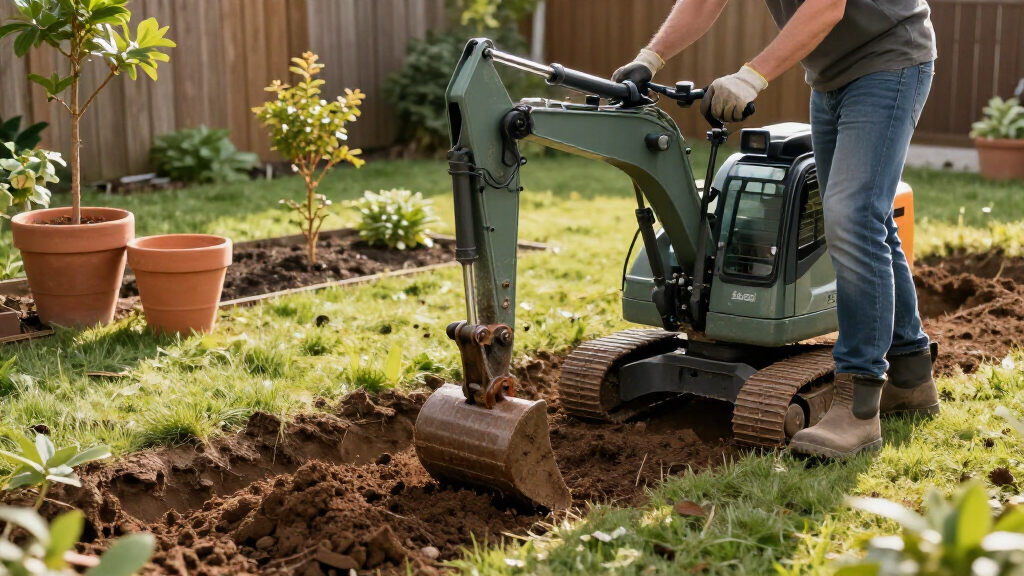

The best compact excavator for most buyers is the BisonTek 1.4-Ton Mini Excavator, because its Kubota diesel engine delivers the durability, torque, and fuel economy that the gas-powered models in this class struggle to match. If diesel is more machine than you need, the RELYMG 1.2-Ton with Auger and Hydraulic Thumb stands out for sheer attachment value, bundling an auger and thumb at a price point where competitors sell the machine alone. For tight residential work, the MMS 1.7-Ton with Side-Swing Boom digs next to walls and foundations in ways a conventional boom simply cannot. The core tradeoff in this category is gas versus diesel power, followed closely by weight class, track versus wheels, and how many attachments come bundled. Read on for the full breakdown of all 14 models and which one fits your workload.

Get garden gear delivered free — and shop member deals
- Fast, free delivery on millions of items
- Access to Prime Big Deal Days deals on October 6–7
- Prime Video, Amazon Music and more included
Complete the kit


Key Takeaways
- The BisonTek 1.4-Ton earned the top spot primarily because it is the only model in the lineup powered by a Kubota diesel engine, giving it longer service intervals and better torque at low RPM than the 13.5 HP gas engines used everywhere else.
- Nearly every excavator in this roundup runs the same 13.5 HP gas engine class, so real separation came down to bundled attachments — models shipping with a hydraulic thumb, auger, and rake (RELYMG, the 1.2-Ton Compact Digger) delivered noticeably better value than bare-bones configurations.
- Boom design proved to be a hidden differentiator: the MMS 1.7-Ton’s side-swing boom allows offset digging along structures, a capability none of the conventional-boom machines can replicate regardless of horsepower.
- The MMS MS10L is the only wheeled model in the lineup, making it the pick for buyers who trailer between sites weekly — but its wheeled undercarriage trades away the traction and stability that rubber tracks provide on soft or uneven ground.
- Sub-1-ton models like the MS10H fit through 36-inch gates but sacrifice digging depth and lifting capacity; buyers should size up to a 2,650 lb class machine unless gate access is a hard requirement.


| compact excavator | Engine | Operating weight | Warranty | Rotation |
|---|---|---|---|---|
| HUAYEE 1.2-Ton Mini Excavator | 420 cc 4-stroke gasoline, 13.5 hp | 2,600 lbs | 1 year | — |
| 2650 lb Mini Excavator with 13 | 13.5 HP gasoline | 2,650 lbs | — | — |
| MechMaxx MEC10 Mini Compact Ex | Honda GX390, 389cc, 11.7 HP, air-cooled, electric start | 2,100 lbs | 1 year | 360 degrees |
| MMS 1.7-Ton Mini Excavator wit | 23 HP two-cylinder RATO | 1.7 tons (3,000 lbs) | — | 360 degrees |
| BisonTek 1.4-Ton Mini Excavato | Kubota Z482 liquid-cooled twin-cylinder diesel | 1.4 tons | — | — |
| RELYMG 1.2-Ton Compact Mini Ex | 13.5 HP gasoline, EPA-certified | 1.2 tons | 1 year after-sales service | 360° |
| DigMaster 2650lb Mini Excavato | 13.5 HP Briggs & Stratton 4-stroke gasoline | — | — | — |
| MS10H 1-Ton Mini Excavator wit | 13.5 HP, 420 cc Briggs & Stratton gasoline | 2,205 lbs | — | 360 degrees |
| 1.2-Ton Mini Excavator with 13 | 13.5 HP gasoline, EPA Tier 4 / Stage V | 872 kg | 1 year for manufacturing defects | — |
| RELYMG 1.2 Ton Mini Excavator | 13.5HP gasoline, EPA-certified | 1.2 tons | 1 year after-sales service | 360° |
| MMS MS10L Wheeled Mini Excavat | 13.5 HP RATO gasoline engine (10 kW) | — | — | 360° |
| Mini Excavator | 13.5HP gasoline, EPA certified | 1.2 tons (1,917 lbs) | Six-month parts replacement; one-year after-sales service | 360° with zero tail swing |
| MACHPRO MP15PRO-MX Mini Excava | B&S 13.5 HP single-cylinder, air-cooled gasoline | 2,650 lb | 2 years | — |
| MACHPRO MP15PRO 2650 lb Mini E | 13.5 HP single-cylinder air-cooled gasoline | 2,650 lb | — | — |
More Details on Our Top Picks
HUAYEE 1.2-Ton Mini Excavator with 13.5 HP Engine and Attachments
This HUAYEE model makes the list because it arrives as a complete working kit rather than a bare machine. Where the MechMaxx MEC10 leaves you buying augers and rippers separately, this one includes two bucket sizes, a ripper, a rake, a dozer blade, and a hydraulic thumb — enough to move from trenching to grading to debris handling without another purchase. The 67-inch digging depth and 120-inch reach are respectable for a gas-powered 1.2-ton machine, and the 37-inch rubber-tracked chassis fits through standard gate openings. The tradeoff is mass: at 2,600 pounds, you’ll need a trailer rated well above a typical utility hauler, and the gasoline engine works harder than the diesel BisonTek when the thumb is loaded. Compared with similar 2650 lb gas models, the attachment bundle is what separates it.
Pros:- Complete attachment package: two buckets, ripper, rake, dozer blade, and hydraulic thumb
- 37-inch chassis with rubber tracks fits gates and tight access points
- 67-inch digging depth and 120-inch reach cover most residential jobs
- Removable canopy and adjustable seat improve comfort on long workdays
Cons:- 2,600 lb weight requires a substantial trailer and tow vehicle
- Gasoline engine is less fuel-efficient and shorter-lived than the Kubota diesel in the BisonTek under continuous load
Best for: Property owners and small contractors who want to dig, trench, grade, and clear debris with one purchase and no attachment shopping
Not ideal for: Buyers without a heavy-duty trailer or towing setup — the 2,600 lb operating weight demands serious transport planning
- Operating weight:2,600 lbs
- Engine:420 cc 4-stroke gasoline, 13.5 hp
- Hydraulic pressure:16 MPa
- Max digging depth:67 in
- Max reach radius:120 in
- Dimensions:92 × 37 × 92 in
- Included attachments:200 mm and 800 mm buckets, ripper, rake, hydraulic thumb, dozer blade
- Warranty:1 year
Our verdict“Buy this if you want the most capable out-of-the-box package in the lineup and already have the towing capacity to move it.”
2650 lb Mini Excavator with 13.5 HP Gas Engine, Hydraulic Thumb, and Quick Hitch
What earns this machine its spot is the dual joystick pilot control system, which gives new operators the same intuitive layout found on larger commercial excavators — a real step up from single-lever arrangements on budget 1.2-ton units like the RELYMG. The one-piece forged chassis is a meaningful durability point compared with bolted-frame competitors, and the quick coupler means attachment swaps don’t require tools. Shipping at roughly 90% pre-assembled mirrors the BisonTek’s approach, so setup is an afternoon rather than a weekend. The honest tradeoffs: it needs final installation before first use, and the air-cooled gas engine demands more attentive maintenance intervals than a liquid-cooled diesel, especially in dusty trenching work. It digs well but lacks the dozer blade and multi-bucket bundle the HUAYEE includes.
Pros:- Dual joystick pilot controls make learning curve gentle for beginners
- One-piece forged chassis resists flexing under load
- Quick coupler enables fast, tool-free attachment changes
- Ships approximately 90% pre-assembled with installation guidance
Cons:- Requires final assembly before it can run
- Air-cooled engine needs more frequent upkeep than liquid-cooled alternatives
Best for: Homeowners and hobby-farm operators running a mini excavator for the first time who want intuitive controls and a durable frame
Not ideal for: Buyers planning daily commercial use — the air-cooled gasoline engine isn’t built for sustained professional duty cycles
- Operating weight:2,650 lbs
- Engine:13.5 HP gasoline
- Controls:Dual joystick pilot control system
- Chassis:One-piece forged
- Attachments:Hydraulic thumb clamp, quick coupler
- Assembly:Approximately 90% pre-assembled
Our verdict“This is the pick if control feel and frame strength matter more to you than an attachment bundle or diesel power.”
MechMaxx MEC10 Mini Compact Excavator with Honda GX390 389cc 11.7HP Electric Start Engine
The MEC10 is the lightest tracked machine in this batch at 2,100 lbs operating weight, and that difference shows: it slips into alleys, side yards, and back lots where the HUAYEE and the 2650 lb models feel oversized. Its standout feature is the Honda GX390 with electric start — the most proven small engine here, with better parts availability and fuel economy than the generic 13.5 hp gas units on competing models. The enhanced hydraulics also accept high-flow attachments like augers and mulcher heads, something the standard 1.2-ton machines can’t run. The catch is that none of those attachments come included; only the hydraulic thumb does. Digging depth of 65.7 inches trails the MMS 1.7-ton’s 80.7 inches, so deep trenching isn’t its strength.
Pros:- Lightest tracked option in the batch at 2,100 lbs for easiest access and transport
- Honda GX390 engine with electric start offers proven reliability and fuel efficiency
- High-flow hydraulic compatibility supports augers, rippers, and mulcher heads
- Adjustable hydraulic thumb positions from the operator seat
Cons:- Key attachments are not included, only the thumb
- 2,376 lb shipping weight still requires a capable trailer
Best for: Buyers working in narrow lanes, fenced backyards, and urban side yards who value engine reliability and future attachment expansion
Not ideal for: Anyone expecting a ready-to-work package — augers, rippers, and mulcher heads are sold separately, and costs add up quickly
- Engine:Honda GX390, 389cc, 11.7 HP, air-cooled, electric start
- Operating weight:2,100 lbs
- Max digging depth:65.7 in
- Max ground digging radius:119 in
- Rotation:360 degrees
- Dimensions:113 × 37 × 89.3 in
- Warranty:1 year
Our verdict“Choose this one when access is the limiting factor and you’d rather build an attachment collection over time than pay upfront.”
MMS 1.7-Ton Mini Excavator with Side-Swing Boom and Hydraulic Thumb
If raw digging capability is the priority, this MMS machine leads the batch. The 23 HP two-cylinder RATO engine nearly doubles the output of the 13.5 hp gas models, and the 80.7-inch maximum digging depth beats every other pick here — the BisonTek manages just 61.5 inches by comparison. The side-swing boom lets the arm work parallel to walls and fences, a layout advantage shared with the BisonTek’s 115° swing but executed with more reach and a 109.6-inch digging height. Pilot controls keep it approachable despite the extra power. Be realistic about the downsides: 3,000 pounds means serious transport logistics, and no warranty coverage is specified, which is a genuine risk on an imported machine at this price tier.
Pros:- 23 HP twin-cylinder engine delivers the most power in this lineup
- 80.7-inch digging depth is the deepest of the batch
- Side-swing boom works along walls, fences, and foundations
- Pilot controls remain approachable for less experienced operators
Cons:- 3,000 lb weight demands a heavy trailer and careful access planning
- No warranty coverage specified in the product documentation
Best for: Small contractors and rural landowners who need to dig deeper footings, ponds, and utility trenches than lighter machines can reach
Not ideal for: Buyers who want documented warranty protection — coverage isn’t specified, and after-sale support is an open question
- Operating weight:1.7 tons (3,000 lbs)
- Engine:23 HP two-cylinder RATO
- Max digging depth:80.7 in
- Max digging height:109.6 in
- Rotation:360 degrees
- Controls:Pilot controls
- Length:96.4 in
Our verdict“This is the deepest, most powerful digger of the group — buy it for capability, but confirm warranty terms with the seller first.”
BisonTek 1.4-Ton Mini Excavator with Kubota Diesel Engine
The BisonTek earns its place through one thing the gas models can’t match: a liquid-cooled Kubota Z482 twin-cylinder diesel. Diesel torque and thermal management mean longer working sessions and better longevity than the air-cooled 13.5 hp gasoline engines in the HUAYEE and the 2650 lb machine — plus Kubota parts are available everywhere. The 115° side swing handles wall-adjacent digging, and the bundle of thumb, bucket, dozer shovel, and mechanical quick coupler covers most tasks out of the crate. The compromises are real: at 11.4 HP it’s the least powerful engine here, digging depth stops at 61.5 inches versus the MMS’s 80.7, and it arrives 90% assembled requiring final setup. You’re paying for durability and refinement, not speed.
Pros:- Kubota Z482 liquid-cooled diesel offers superior durability and nationwide parts support
- 115° side swing for working close to walls and structures
- Includes thumb, bucket, reinforced dozer shovel, and mechanical quick coupler
- 36.1-inch transport width fits narrow gates
Cons:- 11.4 HP output is the lowest in this lineup
- 61.5-inch digging depth trails every other pick here
- Requires final assembly before operation
Best for: Buyers who prioritize engine longevity, diesel fuel economy, and serviceable brand-name parts over maximum digging performance
Not ideal for: Anyone needing deep trenching — the 61.5-inch depth is the shallowest in this batch
- Operating weight:1.4 tons
- Engine:Kubota Z482 liquid-cooled twin-cylinder diesel
- Engine power:11.4 HP / 8.2 kW
- Max digging depth:61.5 in
- Side swing range:115°
- Transport width:36.1 in
- Digging force:9.2 kN
- Included attachments:Hydraulic thumb clamp, bucket, reinforced bulldozing shovel
Our verdict“Pick this if a serviceable diesel powertrain and included work kit matter more than raw depth or horsepower.”
RELYMG 1.2-Ton Compact Mini Excavator with 13.5 HP Gasoline Engine
This RELYMG 12U stands out for its zero tail swing, which matters more than most specs on paper — the machine never rotates beyond its tracks, so you can dig against fences, walls, and building footings without wrecking anything. Compared with the DigMaster 2650lb, which shares the same 13.5 HP gas engine class but trades some agility for capacity, this model prioritizes working inside confined spaces rather than hauling more material. The inclusion of two toothed buckets (200 mm and 400 mm) out of the box is a genuine value-add, since many rivals like the MS10H bundle a thumb but make you buy narrower buckets separately. The tradeoff: this is a light-duty machine, and the gasoline engine means routine fuel and spark-plug upkeep that diesel alternatives such as the BisonTek 1.4-Ton largely sidestep.
Pros:- Zero tail swing lets you dig flush against walls and fence lines
- Two toothed buckets (200 mm and 400 mm) included at purchase
- Rubber tracks handle varied terrain without tearing up lawns
- Built-in oil pipes and reinforced hoses protect the hydraulic system
Cons:- Gasoline engine demands ongoing fuel costs and routine maintenance
- Attachment ecosystem is limited compared with quick-attach rivals
Best for: Landscapers and homeowners trenching or digging next to fences, walls, and other obstacles where the machine can’t swing wide
Not ideal for: Buyers who want maximum attachment flexibility — unlike the RELYMG auger-and-rake package, this ships with buckets only
- Brand:RELYMG
- Model:12U
- Operating Weight:1.2 tons
- Engine:13.5 HP gasoline, EPA-certified
- Tail Swing:Zero tail swing
- Rotation:360°
- Included Buckets:200 mm and 400 mm toothed
- Warranty:1 year after-sales service
Our verdict“This pick makes the most sense for tight-quarter digging where tail swing is the dealbreaker, not raw capacity.”
DigMaster 2650lb Mini Excavator with 13.5HP Gas Engine, Hydraulic Thumb & Quick-Connect Attachments
Where the RELYMG 12U focuses on maneuverability, the DigMaster goes wide on versatility: its universal quick-attach system plus hydraulic thumb means you can swap between buckets, rakes, rippers, grapples, and breakers rather than owning separate machines for each job. The 36-inch transport width is narrower than you’d expect from a machine with this reach, letting it slip down garden paths the wider MMS 1.7-Ton can’t attempt. Shipping logistics are handled unusually well here — forklift, lift gate, and port storage are all bundled, which removes the surprise freight fees common in this category. Be realistic about two things: the 2,000 lb base weight means you must add counterweights to unlock the full 2,650 lb working capacity, and the tiny 0.014 m³ bucket makes big dig jobs slow.
Pros:- All-inclusive shipping covers forklift, lift gate, and port storage with no hidden fees
- Universal quick-attach plus hydraulic thumb supports buckets, rakes, rippers, grapples, and breakers
- 36-inch transport width fits narrow garden access routes
- Air-cooled Briggs & Stratton engine needs no coolant maintenance
Cons:- Counterweights must be added to reach the advertised 2,650 lb capacity
- 0.014 m³ bucket limits volume per pass
- Gas engine rules out indoor or emissions-restricted sites
Best for: Small contractors and rural property owners who want one machine to dig, grade, rip, and grab across varied tasks
Not ideal for: Buyers doing bulk excavation — the small bucket capacity means more passes for every cubic yard moved
- Operating Weight Capacity:2,650 lbs (max)
- Base Weight:2,000 lbs without operator
- Engine:13.5 HP Briggs & Stratton 4-stroke gasoline
- Fuel Capacity:5.5 liters
- Bucket Capacity:0.014 m³
- Transport Width:36 in (917 mm)
- Pre-Assembly:90% assembled on arrival
Our verdict“If attachment variety is your priority over pure digging speed, this is the most flexible machine in this batch.”
MS10H 1-Ton Mini Excavator with 13.5 HP B&S Engine
The MS10H’s differentiator is its three-way flow control valve, which lets you run two hydraulic attachments simultaneously — something none of the other 13.5 HP machines in this lineup can do, including the DigMaster 2650lb, which swaps attachments but powers them one at a time. That matters if you’re combining a thumb with an auger or other powered tool without constant replumbing. With a 420 cc Briggs & Stratton engine and 2,205 lb operating weight, it sits between the lighter RELYMG 1.2-Ton and the heavier MMS 1.7-Ton in the stability-versus-accessibility tradeoff. Serviceability is another quiet strength: accessible service points shorten routine maintenance on a machine you’ll be wrenching on yourself. The flip side is the removable canopy, which gives you flexibility for low-clearance work but far less weather protection than a fixed cab when conditions turn.
Pros:- Three-way flow control valve runs two hydraulic attachments at once
- Hydraulic thumb included rather than sold separately
- 360-degree rotation on a compact footprint
- Accessible service points make owner maintenance realistic
Cons:- Gas engine requires ongoing fuel and spark-plug maintenance
- Removable canopy provides weak weather coverage
- Heavier than the 1.2-ton class, slightly reducing access to the tightest spaces
Best for: Serious DIYers and small operators who want to power a thumb and a second hydraulic attachment at the same time
Not ideal for: Buyers working through rainy seasons — the removable canopy offers minimal weather protection
- Model:MMS-10H
- Engine:13.5 HP, 420 cc Briggs & Stratton gasoline
- Operating Weight:2,205 lbs
- Rotation:360 degrees
- Dimensions:110 x 37 x 87 in
- Key Features:Hydraulic thumb, three-way flow control valve, 4K travel motor
Our verdict“Choose this if simultaneous hydraulic attachment operation is a genuine need rather than a nice-to-have.”
1.2-Ton Mini Excavator with 13.5 HP Gasoline Engine, Bucket, and Canopy
This unbranded 1.2-ton machine punches above its weight on paper: a 1,562 mm digging depth and 9.2 kN of digging force put it ahead of comparable 13.5 HP units like the RELYMG 12U, which matches the engine but doesn’t publish force figures this strong. For trenching footings or irrigation lines, depth-per-machine-size is the spec that actually shortens your workday. The 917 mm transport width is on par with the DigMaster, meaning it clears standard garden gates, and the manganese steel construction suggests a bucket and boom built to survive rocky ground. It also backs itself with a one-year replacement parts policy and EPA Tier 4 / Stage V compliance claims — a real point of reassurance in a category full of vague warranty language. The catch is purely logistical: heavy freight means you need to sort out forklift or lift-gate unloading yourself, unlike DigMaster’s all-inclusive delivery.
Pros:- 1,562 mm max digging depth leads this size class
- 9.2 kN digging force handles compacted and rocky soil
- 917 mm width fits through garden gates and narrow access points
- One year of replacement parts for manufacturing defects included
Cons:- Heavy freight requires forklift or lift-gate arrangements on your end
- Single bucket included — thumbs and augers cost extra
- Brand recognition is thin compared with established names
Best for: Trenching-focused buyers who need the deepest reach and strongest digging force available in the 1.2-ton gas class
Not ideal for: Buyers without unloading equipment or a plan — freight delivery here is on you to coordinate
- Operating Weight:872 kg
- Engine:13.5 HP gasoline, EPA Tier 4 / Stage V
- Max Digging Force:9.2 kN
- Max Digging Depth:1,562 mm
- Max Digging Radius:2,852 mm
- Transport Width:917 mm (38.19 in)
- Bucket Capacity:0.014 m³ manganese steel
- Warranty:1 year for manufacturing defects
Our verdict“If digging depth per dollar is what you’re buying, this machine delivers the best numbers in this batch.”
RELYMG 1.2 Ton Mini Excavator with 13.5HP EPA-Certified Gasoline Engine, Rubber Tracks, Hydraulic Thumb, Bucket, and Auger
This RELYMG variant solves the biggest hidden cost in mini excavator ownership: attachments. The 9-piece accessory set — thumb, bucket, auger, rake, grab, soil loosener, quick-change coupler, and toolbox — arrives with the machine, where rivals like the MS10H include just a thumb and the base RELYMG 12U ships buckets only. Buying those pieces separately across this roundup could easily approach the cost of a second attachment-grade machine, so the bundled approach changes the real price comparison. The quick-connect system means switching from post-hole augering to raking happens in minutes, not an afternoon. It retains the same zero-tail-swing, 360° rotating chassis that makes the 12U platform strong against walls and fences. The tradeoff beyond price: the size and weight of a fully outfitted 1.2-ton rig means professional unloading is mandatory — this isn’t a pallet-jack delivery.
Pros:- 9-piece accessory set includes thumb, auger, rake, grab, and soil loosener
- Quick-connect coupler swaps tools in minutes
- Zero tail swing and 360° rotation for confined work
- Professional unloading and one-year after-sales service included
Cons:- Requires professional unloading due to size and weight
- Higher total investment than bare-bones single-bucket rivals
- Gasoline engine brings ongoing maintenance diesel units avoid
Best for: First-time mini excavator buyers who want every common attachment in one purchase instead of piecing together a kit over months
Not ideal for: Buyers who only need to dig — the bundled attachments add cost and delivery complexity you may never use
- Brand:RELYMG
- Model:12U
- Operating Weight:1.2 tons
- Engine:13.5HP gasoline, EPA-certified
- Tail Swing:Zero tail swing
- Rotation:360°
- Included Accessories:9-piece set (thumb, bucket, auger, rake, grab, soil loosener, quick change, toolbox)
- Warranty:1 year after-sales service
Our verdict“This is the turnkey choice — one purchase, one delivery, and a full attachment kit ready for landscaping day one.”
MMS MS10L Wheeled Mini Excavator with 13.5 HP RATO Gas Engine
Most mini excavators in this roundup ride on tracks, which is great for traction but terrible for finished driveways and pavement. The MS10L’s wheeled design flips that tradeoff: it rolls across asphalt and concrete without scuffing or gouging, something the rubber-tracked RELYMG 1.2-Ton can’t fully guarantee on hot summer pavement. Its 360° rotation and compact footprint make it workable in tight landscaping and trenching jobs, and the included mechanical thumb and bucket mean you can start moving material on day one.
The tradeoff is traction. On soft soil, mud, or loose gravel, wheels lose ground to every tracked model here, including the MACHPRO MP15PRO-MX. Buyers should also budget for extras, since additional attachments beyond the bundled pair are sold separately — unlike the RELYMG, which arrives as a 9-piece set.
Pros:- Wheeled design protects asphalt and concrete during travel
- Compact footprint with 360° rotation for tight work areas
- Bucket and mechanical thumb included in the box
- Manganese steel construction for durability
Cons:- Wheels provide noticeably less traction than tracks on soft or wet ground
- Additional attachments must be purchased separately, unlike bundled competitors
Best for: Homeowners and landscapers working mostly on pavement, concrete, or finished surfaces where tracked machines would cause damage
Not ideal for: Anyone digging in soft, muddy, or uneven terrain — wheels simply can’t match the traction and flotation of rubber tracks
- Manufacturer:MMS
- Engine:13.5 HP RATO gasoline engine (10 kW)
- Weight:2,204 lbs
- Dimensions:75 x 39 x 85 inches
- Maximum travel speed:5.2 km/h
- Rotation:360°
- Included components:Mechanical thumb, bucket
Our verdict“This is the pick if your job sites are mostly paved or hardscaped and tracked machines would do more harm than good.”
Mini Excavator, 1.2 Ton Compact Rubber Tracked Digger with 13.5HP EPA-Certified Gasoline Engine, Hydraulic Thumb, Bucket, Auger, and Rake
If buying attachments one at a time sounds like a budgeting headache, this RELYMG 12U solves it outright. It ships as a 9-piece set — thumb, bucket, auger, rake and more — whereas the MMS MS10L includes just two items and charges extra for everything else. The quick-connect system makes swapping between those tools a matter of minutes without wrenches, which matters when a single afternoon involves trenching, then post-hole drilling, then raking spoil.
The zero tail swing design lets the machine spin 360° inside its own footprint, a genuine advantage when digging against a fence line compared to the MACHPRO’s fixed-body crawler layout. The tradeoffs are real, though: at 1,917 lbs it demands professional unloading, the gas engine rules out enclosed work, and the six-month parts-replacement window is shorter than MACHPRO’s two-year warranty.
Pros:- 9-piece accessory set included — no piecemeal attachment buying
- Tool-free quick-connect swaps accessories in minutes
- Zero tail swing with 360° rotation for working flush against obstacles
- EPA-certified engine compliant with U.S. emission standards
Cons:- 1,917 lbs requires professional delivery and unloading equipment
- Parts replacement warranty covers only six months
- Gasoline engine unsuitable for enclosed or poorly ventilated sites
Best for: Small contractors and rural property owners who want a full attachment kit bundled up front for varied landscaping, fencing, and light construction work
Not ideal for: Buyers without freight unloading capability or those needing long warranty coverage for heavy daily use
- Manufacturer:RELYMG
- Model:12U
- Operating weight:1.2 tons (1,917 lbs)
- Engine:13.5HP gasoline, EPA certified
- Dimensions:82.68 x 37.01 x 80.71 inches
- Rotation:360° with zero tail swing
- Included components:9-piece set (thumb, bucket, auger, rake, and more)
- Warranty:Six-month parts replacement; one-year after-sales service
Our verdict“The strongest value play if you want every attachment in the box from day one and can handle freight logistics.”
MACHPRO MP15PRO-MX Mini Excavator, 13.5 HP Gas Engine
Arriving 90% pre-assembled with a Briggs & Stratton powerplant, the MP15PRO-MX is built for buyers who want to uncrate and dig the same weekend. Compared with the RELYMG 12U, which ships with more attachments but requires more deliberate delivery coordination, this MACHPRO keeps setup friction low: hydraulic thumb, dozer blade, dual-joystick controls, and a cushioned seat are all standard. The 38.19-inch transport width is the standout number — it slips through garden gates that would block most of this roundup, including the wider MMS MS10L at 39 inches plus wheel overhang.
The honest limitation is capacity. That 0.014 m³ bucket means more cycles per trench, and the 9.2 kN digging force positions this as a light-duty machine rather than a stump-pulling workhorse. Emissions compliance with EPA Tier 4 and Stage V, plus a two-year warranty, softens the blow for buyers planning regular use.
Pros:- 90% pre-assembled for minimal setup time
- Narrow 917 mm width accesses gates and tight passages
- Hydraulic thumb and dozer blade included
- Two-year warranty — the longest in this batch
Cons:- 0.014 m³ bucket capacity limits productivity on larger digs
- Fewer bundled attachments than the RELYMG 9-piece set
Best for: DIYers and small-property owners who want a near-turnkey machine with the strongest warranty in this lineup for weekend digging projects
Not ideal for: Anyone moving large volumes of soil — the tiny bucket capacity makes big excavation jobs slow and tedious
- Brand:MACHPRO
- Model:MP15PRO-mx
- Operating weight:2,650 lb
- Engine:B&S 13.5 HP single-cylinder, air-cooled gasoline
- Maximum digging force:9.2 kN
- Maximum digging depth:1,562 mm
- Transport width:917 mm (38.19 in)
- Emissions compliance:EPA Tier 4 and Stage V
- Warranty:2 years
Our verdict“The right choice when setup speed, warranty length, and narrow access matter more than raw digging capacity.”
MACHPRO MP15PRO 2650 lb Mini Excavator with 13.5 HP EPA Gas Engine and Hydraulic Thumb
This is the MP15PRO-MX taken to its logical conclusion: the same 2,650 lb crawler, Briggs & Stratton engine, and 917 mm gate-friendly width, but now paired with a quick coupler and a serious attachment spread — auger, rake, ripper, and mud bucket alongside the hydraulic thumb. It effectively closes the gap with the RELYMG 12U’s 9-piece bundle while keeping MACHPRO’s longer two-year warranty, which makes it the better-rounded package for buyers who don’t want to choose between attachments and coverage. The low 25.53 kPa ground pressure also translates directly into less lawn rutting on residential work.
It isn’t the machine for everyone. LTL freight and forklift unloading are non-negotiable, the same 0.014 m³ bucket capacity limits throughput, and a gas engine demands refueling stops and more upkeep than an electric or diesel alternative like the BisonTek’s Kubota diesel.
Pros:- Includes quick coupler, thumb, mud bucket, auger, rake, and ripper
- Narrow 917 mm width fits through garden gates
- Low ground pressure minimizes turf damage
- Two-year warranty with EPA Tier 4 / Stage V compliant engine
Cons:- Requires LTL freight delivery and forklift unloading
- Gas engine needs more frequent refueling and maintenance than diesel or electric options
- Small bucket capacity slows high-volume excavation
Best for: Property owners and light contractors who want a well-rounded, attachment-loaded machine with strong warranty backing for ongoing farm and garden work
Not ideal for: Sites without freight access or forklift unloading, and buyers who need diesel-grade durability for daily commercial use
- Brand:MACHPRO
- Model:MP15PRO-mx
- Operating weight:2,650 lb
- Engine:13.5 HP single-cylinder air-cooled gasoline
- Max digging depth:1,562 mm
- Max digging force:9.2 kN
- Transport width:917 mm (approx. 38.19 inches)
- Ground pressure:25.53 kPa
- Included components:Hydraulic thumb, quick coupler, mud bucket, 7.9in auger, rake, ripper, tool box
Our verdict“If you want one purchase that covers attachments, warranty, and tight-access capability, this is the most complete crawler package in the batch.”

How We Picked
Since almost every machine in this category shares the same 13.5 HP gas engine displacement, I ranked these excavators on the factors that actually separate them in the field. Powertrain type came first: a Kubota diesel carries real advantages in longevity and torque, so it rose to the top despite otherwise similar specs. Digging depth and lift capacity were next, because those two numbers determine whether a machine can finish a footing dig or gets parked halfway through the job. Attachment bundles mattered heavily in this price class — a hydraulic thumb or auger included in the box changes the total cost of ownership by a wide margin compared to buying them separately.
Beyond the spec sheet, I weighed undercarriage design (rubber tracks versus wheels, machine width relative to standard gate openings), starter convenience (electric start versus recoil), and the availability of EPA certification for buyers in emissions-regulated states. Machines were then ordered by how well they match the most common compact-excavator buyer: a property owner or small contractor doing utility trenching, stump work, and general landscaping. That ranking logic favors versatility and durability over raw size, which is why the lighter, better-equipped models sit above heavier but more basic machines.
Factors to Consider When Choosing Best Compact Excavators
Choosing between compact excavators is less about horsepower than about matching the machine to your access constraints, soil conditions, and attachment plans. These are the factors that moved the rankings in this comparison — and the mistakes that cost buyers the most.Gas or Diesel: The Decision That Shapes Everything Else
Almost every machine in this class offers a 13.5 HP gasoline engine, and only one offers a Kubota diesel. That difference is bigger than fuel type alone. Diesel engines produce more usable torque at low RPM, run longer between oil changes, and typically outlast gas engines by hundreds of hours when maintained properly — which matters if you plan to keep the machine for a decade. Gas engines, however, start easier in cold weather, cost less upfront, and fuel up at any gas station, which is why they dominate the entry-level market. The mistake buyers make is assuming diesel is always better: if you run the machine fewer than 100 hours a year, the durability advantage never gets a chance to pay for itself. Match the powertrain to your annual usage, not to spec-sheet bragging rights.
Machine Weight and Access: Measure Before You Buy
The difference between a 1-ton and a 1.7-ton excavator sounds small until you try to move one. Heavier machines in the 2,650 lb range dig deeper, lift more, and stay more stable on slopes, but they demand a stronger trailer, a tow vehicle rated for the combined load, and sometimes a wider gate than your property actually has. Sub-1-ton machines fit through standard backyard access but run out of reach quickly on deeper trenching. Before ordering anything, measure your narrowest access point — gate, fence gap, side yard — and check the machine’s overall width including tracks. The most common regret in this category is not buying too small; it is buying a machine that cannot physically reach the work area. Also confirm your trailer’s deck rating, because payload limits quietly eliminate half the lineup for many buyers.
Attachment Bundles and Where the Real Value Sits
In this price class, the bundled attachments often matter more than the machine itself. A hydraulic thumb transforms an excavator into a material-handling tool for logs, rocks, and demolition debris — buying one separately costs several hundred dollars and requires hydraulic plumbing knowledge. An included auger opens up fence-post and tree-planting work without renting a second machine. When two excavators share the same engine and weight class, the one shipping with a thumb, auger, and rake is effectively the better deal even if its sticker price runs higher. The reverse also holds: a cheap bare machine becomes expensive fast once you price in the bucket, hitch, and thumb you still need. Buyers should price the complete working package, never the base unit.
Tracks Versus Wheels: Traction Against Convenience
Most compact excavators ride on rubber tracks, but wheeled models like the MMS MS10L occupy a real niche. Tracks win on soft ground, slopes, and traction, and they distribute weight to avoid rutting lawns when used carefully. Wheels win on transport and hard surfaces — a wheeled machine rolls onto a trailer easily, drives across pavement without chewing it up, and often travels between nearby work spots under its own power. The tradeoff is stability: wheeled excavators feel less planted when digging at full reach, and they struggle in mud. If your work is mostly one property with soft soil, stay with tracks. If you move between paved sites weekly, wheels deserve serious consideration.
Boom Design and Digging Geometry
Boom configuration is the most overlooked spec on the page. A side-swing boom lets the entire digging arm offset to the side, so you can trench directly alongside a foundation, fence line, or retaining wall that a conventional boom would force you to work around. Standard center-mount booms are simpler, often stronger for their weight, and fine for open-area digging. Buyers doing utility work near structures should treat side-swing capability as a must-have feature rather than a nice-to-have. Also compare maximum digging depth honestly against your projects: footing work and septic lines routinely need more depth than entry-level machines provide.
After-Sale Support and Parts Availability
Every machine in this category eventually needs filters, tracks, hoses, and seals, and that is where lesser-known brands can sting. Check whether common wear parts use standard sizes or proprietary fittings before purchasing, because a cheap excavator with unobtainable parts becomes yard art after one failed hydraulic hose. Brands running established engines — Honda, Briggs & Stratton, Kubota, RATO — score better here since engine service items are widely stocked. Confirm the seller’s warranty terms and whether they ship replacement parts domestically. The buyers who regret compact excavator purchases most often cite parts delays, not performance, as the reason.
Frequently Asked Questions
Is a 13.5 HP engine enough power for real digging work?
Yes, within its intended scale. A 13.5 HP engine in a 1-to-1.7-ton machine handles trenching, stump removal, footer digs, and general excavation in normal soil, because hydraulic systems multiply engine output far more efficiently than raw horsepower numbers suggest. Where it struggles is heavy clay, rock, and continuous full-load digging — jobs where a diesel machine with more low-end torque keeps its hydraulic pressure up without bogging down. If your work is occasional property projects, the 13.5 HP class is genuinely sufficient. If you plan commercial daily use, the diesel-powered BisonTek is the only machine in this lineup built for that cadence.
What size trailer do I need to haul one of these excavators?
Most machines in this roundup weigh between 2,200 and 2,650 lb, which means you need a trailer rated for at least 3,500 lb gross to leave margin for fuel, attachments, and buckets. A single-axle 3,500 lb trailer handles the lighter 1-ton models but sits at its limit with the 2,650 lb class — a tandem axle is the safer choice there. Your tow vehicle matters just as much: check its rated towing capacity against the trailer-plus-machine combined weight, not just the excavator. Also verify deck width and ramp rating, since tracked machines concentrate load on the ramp edges during loading. Many buyers discover their trailer, not their budget, is the real constraint.
Are the cheaper no-name brands reliable enough to trust?
The reliability risk with lesser-known brands concentrates less in the machine itself and more in the support behind it. The steel, hydraulics, and undercarriages on most of these units are broadly similar in design, and several run the same Honda, Briggs & Stratton, or RATO engines as name-brand equipment. What differs is parts availability — a failed hose, track, or control valve on an unsupported brand can sideline the machine for weeks. Before buying, confirm the seller stocks wear parts domestically and ask specifically about hydraulic hose fittings and track compatibility. Models using recognized engines sidestep the biggest parts risk, since engine service items are universally available.
Do I really need a hydraulic thumb, or is it an extra I can skip?
A hydraulic thumb is the single attachment that most changes how you use the machine, so I would rarely skip it. Without a thumb, an excavator can only dig and dump; with one, it grips logs, pulls fence posts, sorts rocks, and handles demolition debris — effectively becoming a grapple. Retrofitting a thumb onto a bare machine costs far more than choosing a bundled package upfront, and some entry-level machines lack the auxiliary hydraulics to accept one at all. If your work includes any land clearing, brush removal, or material handling, treat the thumb as standard equipment rather than an upgrade. Several models in this roundup bundle one, which is a major reason they rank above similarly equipped bare machines.
Wheeled or tracked compact excavator — which suits a homeowner better?
For most homeowners, rubber tracks are the better fit because residential work happens on soft lawns, slopes, and uneven ground where tracks deliver superior traction and stability. Tracks also spread the machine’s weight, reducing rutting when you work carefully. Wheels make sense only if your property is mostly paved or firm, or if you frequently roll the machine between nearby work areas and want to avoid loading and unloading a trailer. The MMS MS10L, the one wheeled model here, trades digging stability for that mobility — noticeable when working at full reach. Unless transport convenience is your top priority, default to tracks.
Conclusion
The right pick here depends entirely on how hard you will work the machine. For the best overall choice, the BisonTek 1.4-Ton with its Kubota diesel engine stands apart on durability and torque, and it is the model I would point any serious or long-term buyer toward. For the best value, the RELYMG 1.2-Ton with auger, thumb, and EPA-certified engine delivers a complete working package where rivals sell the machine alone. The premium pick is the MMS 1.7-Ton with side-swing boom — its offset digging capability justifies the spend for buyers working along walls, fences, and foundations.
For beginners and first-time buyers, the MS10H 1-Ton with Briggs & Stratton power offers approachable size and a familiar engine, while the MMS MS10L wheeled model suits buyers who prioritize moving between sites without a trailer. If your needs are specialized — fence posting and planting — the attachment-heavy 1.2-Ton Compact Digger with auger and rake covers that work out of the box. Whatever you choose, price the complete package with attachments, confirm your trailer can carry it, and match the powertrain to your annual hours. Do that, and any of these machines will earn its place on your property.
Fall yard work Picks
leaf blowers
As an affiliate, we earn on qualifying purchases.