TL;DR
A garden-advice article describes three possible uses for pine cones in containers: helping water drain, serving as mulch and making pots less inviting to slugs and snails. The benefits are expert guidance rather than evidence of a guaranteed fix; pine cones decompose slowly and are not a foolproof pest deterrent.
A seasonal gardening report says pine cones can be reused in outdoor pots to help water drain, provide a layer of winter mulch and make the soil surface less inviting to slugs and snails. The advice, attributed to nursery manager Morris Hankinson, offers gardeners a free material to try as colder, wetter weather puts container plants at risk of sitting in saturated compost.

Get garden gear delivered free with Prime
- Fast, free delivery on millions of items
- Prime Video, Amazon Music and more included
- Member-only deals all year
Hankinson, managing director of Hopes Grove Nurseries, says gardeners can place pine cones at the bottom of a container to help drainage. He says this may reduce the chance of roots sitting in wet soil, which can contribute to root rot. The report also says using cones to take up some space in a pot may mean using less potting compost; it gives no estimate of how much could be saved.
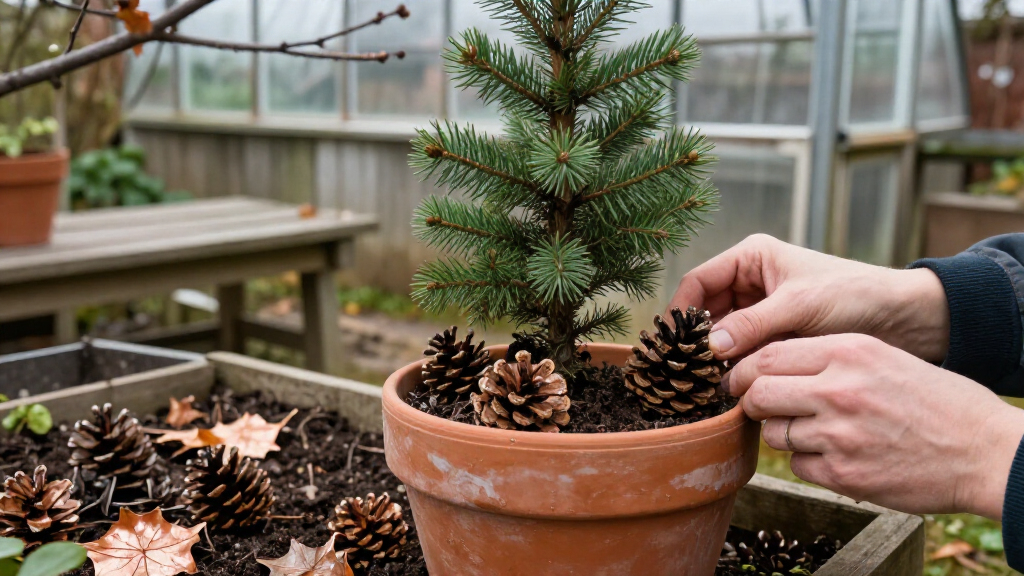
A second use is as a covering on top of the compost. Hankinson describes pine cones as a natural mulch that can help maintain soil temperature and protect pots during winter. He says the cones decompose over time and add nutrients, although the source does not specify how quickly this happens or how much insulation or nutrition they provide.
The third suggested benefit is pest deterrence. Hankinson says the cones’ hard, uneven surfaces may make pots less appealing to slugs and snails. The report also notes that gardeners use them in the hope of deterring cats from digging, but explicitly cautions that they are not a foolproof solution. These are proposed practical uses, not guarantees that cones will prevent pests or resolve drainage problems.
Pine cones in pots Three possible uses
Gardeners can reuse fallen pine cones in containers as colder, wetter weather arrives. The suggested benefits are expert advice, not guaranteed results.
Three ways to use them
Morris Hankinson of Hopes Grove Nurseries outlines these possible roles in outdoor pots.
At the bottom
Cones may help water drain and take up space, potentially reducing the compost needed.
On the surface
A layer may act as mulch, helping maintain soil temperature and protect pots in winter.
A rough barrier
Hard, uneven cones may make soil less inviting to slugs and snails.
Possible benefits, not promises
The report provides no independent trials or measurements of effects in pots.
- Help water drain
- Provide a winter surface covering
- Make pots less appealing to some pests
- They will prevent root rot or fix poor drainage
- They will reliably stop slugs, snails or cats
- How much compost they could save
Adding cones to compost
Christopher O’Donoghue of Gardens Revived describes cones as carbon-rich “brown” material.
Shredding or crushing cones can help them decompose sooner.
Their shape can create air pockets that support airflow through compost.
Cones break down slowly; their acidity declines during decomposition and has little effect on finished compost pH, according to O’Donoghue.
Low-Cost Options for Winter Pots
Container plants are exposed to changing weather, and pots can remain wet during rainy spells. The suggested uses give gardeners a way to reuse a readily available natural material rather than discard it, while potentially reducing the amount of compost needed to fill a large pot. For people preparing containers for winter, the advice is an inexpensive option to test alongside ordinary care.
The limits matter as much as the possible benefits. Pine cones cannot be assumed to fix poor drainage, prevent root rot or keep every pest away. Their usefulness will depend on the plant, the container and local conditions. Gardeners should treat them as one possible addition, not a substitute for suitable pots, drainage arrangements or checking plants regularly.
Products Worth Considering

Orbit B-hyve XR 8-Zone Indoor/Outdoor Smart Sprinkler Controller

EGO Power+ 21-Inch Cordless Push Lawn Mower with 56V 4.0Ah Battery and Charger (LM2112)

Husqvarna ST 124 212cc Two-Stage Snow Blower, 24-Inch
As an affiliate, we earn on qualifying purchases.
How Cones Fit Into Autumn Care
The report frames pine cones as a seasonal find that can be collected during an autumn walk and put to use in containers or compost. Its advice comes from two named gardening professionals: Morris Hankinson discusses pot drainage and mulch, while Christopher O’Donoghue, director of Gardens Revived, addresses composting. The source provides no independent trial results or measurements for the claimed effects in pots.
O’Donoghue says pine cones count as carbon-rich “brown” material for compost and that their shape can create air pockets in a heap. He says better airflow can support aerobic decomposition and help prevent a wet pile becoming slimy or smelly. Cones are slow to break down, so he recommends shredding them or running over them with a lawnmower before adding them. He also says their acidity declines during decomposition and has little effect on the pH of finished compost.
“Pinecones are a great “brown” material.”
— Christopher O’Donoghue, director of Gardens Revived
How Reliable Are the Benefits?
The source does not report controlled tests, measurements or comparisons showing how much pine cones improve drainage, insulate roots or reduce pest activity. It is also unclear how many cones a pot would need, whether the method suits all container plants, or how long cones take to decompose in a particular garden. The claimed benefits should therefore be understood as expert gardening advice, not guaranteed results.
The report likewise gives no quantified compost savings and no evidence that cones will keep cats out of pots. Hankinson says they may discourage slugs and snails, while the source acknowledges that cat deterrence is not foolproof. Conditions such as pot design, soil mix, rainfall and pest pressure could affect the outcome.
What Gardeners Can Try
Gardeners who want to test the advice can collect clean, fallen cones and use a modest layer in a container or as a surface covering, then monitor how the compost and plants respond through wet or cold weather. The source does not set out a specific quantity or method for every plant, so gardeners should account for their container and plant’s needs rather than assume cones alone will provide adequate drainage or winter protection.
Those adding cones to compost can break them into smaller pieces to help them decompose sooner, following O’Donoghue’s advice. The source gives no upcoming trial, official guidance or scheduled follow-up; no further development is identified.
Key Questions
What are the three suggested uses for pine cones in pots?
The report says cones may help with drainage beneath compost, serve as a mulch on the surface and make the pot less inviting to slugs and snails.
Will pine cones stop slugs or cats?
They may deter some slugs and snails because of their hard, uneven surfaces, according to Morris Hankinson. They are not guaranteed to stop pests, and the report says they are not a foolproof way to keep cats from digging.
Can pine cones go in compost?
Yes. Christopher O’Donoghue describes them as carbon-rich “brown” material that can create air pockets. Because cones decompose slowly, he recommends shredding or breaking them up before adding them.
Will pine cones make compost too acidic?
O’Donoghue says the acidity of fresh cones decreases as they break down and has little effect on finished compost’s pH. The report provides no pH measurements.
Source: idealhome.co.uk