
TL;DR
Northern cardinals can mistake their reflections in windows for rival birds and repeatedly peck or fly at the glass, particularly during breeding season. Ornithologists quoted in the source recommend breaking up or blocking reflections, placing feeders either very close to windows or well away, and providing food, water and shelter.
Northern cardinals that repeatedly peck at windows may be reacting to their own reflection, which they perceive as a rival, according to ornithologists cited in the source material. The behavior can tire or injure birds, so experts recommend breaking up the reflection and taking steps to reduce the risk of a hard strike.

Get garden gear delivered free with Prime
- Fast, free delivery on millions of items
- Prime Video, Amazon Music and more included
- Member-only deals all year
Maria Kincaid, an ornithology research specialist at FeatherSnap, said cardinals are territorial, particularly during breeding season, and may keep confronting a reflected bird because it does not appear to retreat. The behavior is most common from about March through August, she said, but can continue in fall and winter. Both male and female cardinals may defend territory.
Repeated visits, fluttering against the glass, or a bird crouching and fluttering its wings before flying at the window can be signs of this behavior, Kincaid said. A single light tap does not by itself establish that a bird is attacking its reflection. Repeated impacts can cause fatigue or injury; the source says forceful strikes may be fatal.
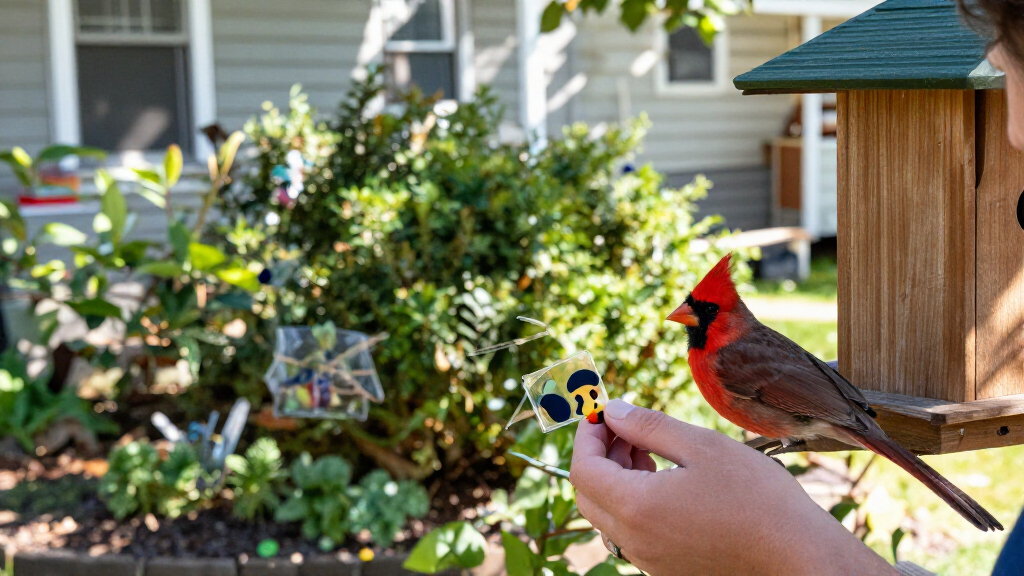
To limit the behavior, Kincaid and Mary Mack Gray, an ornithologist and wildlife biologist at Birdbuddy, recommend blocking or breaking up the window’s reflection. Options include decals on the exterior glass, exterior screens, or closing blinds and curtains. The experts also advise placing feeders either within three feet of a window or more than 10 feet away. The closer placement limits the distance a bird can build up speed before reaching the glass; farther placement gives birds more room to change course.
Why Northern Cardinals Peck at Windows And how to help prevent injuries
A cardinal may mistake its reflection for a rival and repeatedly strike the glass. Breaking up reflections and choosing safer feeder placement can reduce risks.
Why the window looks like a rival
The reflection appears not to retreat, so a territorial cardinal may keep confronting it.
Territory defense
Both male and female cardinals may defend territory, especially during breeding season.
Repeated visits
Fluttering against the glass or returning repeatedly can suggest reflection-driven behavior. One light tap alone does not confirm it.
Reduce the chance of a strike
Interrupt the reflection and limit the bird’s room to build up speed.
Use exterior decals or screens, or close blinds and curtains.
Keep them within three feet of the window or more than 10 feet away.
Offer suitable food and clean water, with dense shrubs or brush piles for shelter.
Keep perspective on the evidence
Repeated impacts can cause fatigue or injury, but not every bird near a window is reacting to a reflection.
- Window strikes kill an estimated 1 billion to 2 billion birds each year.
- This broad estimate is not specific to cardinals or reflection-driven pecking.
- The source does not compare deterrent effectiveness.
- It gives no timeline for when a cardinal may stop returning.
Reducing Window Strikes at Home
Window-pecking is not only a nuisance for people watching a bird repeatedly hit the glass: it can expose the cardinal to repeated stress and physical injury. Breaking up the reflection addresses the apparent trigger, while suitable feeder placement can reduce the force of a collision. These steps may also help birds that strike windows because they mistake a reflection or transparent glass for open flight space.
Kincaid cited an estimate of 1 billion to 2 billion birds killed in window strikes each year and said reducing window glare and reflectiveness matters year-round. That figure is an estimate presented in the source material; it is not a count specific to cardinals or to reflection-driven pecking.
Garden support can complement window measures, but it does not replace them. Gray recommends offering high-calorie foods such as black oil sunflower seed, suet or safflower seed on a platform feeder, along with clean water. Dense shrubs and brush piles can provide places for cardinals to rest or take shelter.
Products Worth Considering

Rachio 3 Smart Sprinkler Controller, 16-Zone

EGO Power+ 21-Inch Cordless Push Lawn Mower with 56V 4.0Ah Battery and Charger (LM2112)

Weber Q 1400 Portable Electric Grill, Gray
As an affiliate, we earn on qualifying purchases.
When Cardinals See a Rival
Northern cardinals are familiar backyard birds, often attracted to feeders and areas with shelter. Their window behavior is linked to territorial defense: a reflection can look like another cardinal, and the bird may respond as if it needs to drive a competitor away. Since the image remains visible, the apparent opponent does not leave, and the cardinal may return repeatedly.
The source describes breeding season as the period when this is most frequent, usually March through August, while noting that the behavior can occur in other seasons. It may be more visible in males, but Kincaid said females also defend territories. Repeated visits and aggressive postures are more informative signs than an isolated tap.
The recommendations are from two named bird experts: Kincaid of FeatherSnap and Gray of Birdbuddy. The source also mentions smart feeders as a way to monitor yard activity, but monitoring alone does not stop a bird from confronting a reflection.
“Apply decals to windows breaks up the clean reflective surface that confuses cardinals.”
— Mary Mack Gray, ornithologist and wildlife biologist at Birdbuddy
What Window Pecking Cannot Confirm
The source does not provide a study or data showing how often Northern cardinals are injured or killed specifically while attacking reflections. It also does not establish that every bird seen near a window is responding to its reflection; occasional contact may have another cause. Repeated visits and aggressive movements can suggest territorial behavior, but they are not a formal diagnosis.
The cited annual estimate of bird deaths from window strikes is broad and is not broken down by species, location, season, or cause. The source also does not compare the effectiveness of decals, screens and closed curtains, or specify a single design that works for every window. Results may depend on the window and its surroundings.
Steps to Take After a Visit
If a cardinal keeps returning, first try to interrupt the reflection with exterior decals or a screen, or close curtains or blinds. Check whether the bird is making repeated visits and whether there are signs of impacts. If a feeder is beside the glass, move it to within three feet or to a distance greater than 10 feet, following the expert guidance in the source.
To support birds through colder months, Gray recommends a platform feeder with suitable seed or suet and a source of clean water. She advises cleaning bird baths at least weekly in winter; a heated bath may help where water freezes. Kincaid recommends dense shrubs and brush piles for shelter. The source gives no set timeline for how quickly a cardinal will stop visiting after a window is altered, so homeowners should watch for continued activity and adjust measures if needed.
Key Questions
Why does a Northern cardinal peck at a window?
It may mistake its reflection for another bird and try to defend its territory. Ornithologist Maria Kincaid says this behavior is most common during breeding season but may continue in other seasons.
How can I stop a cardinal from attacking its reflection?
Break up or block the reflection with decals on the outside of the window, an exterior screen, or closed blinds or curtains. The experts quoted in the source recommend reducing reflective surfaces.
How far should a bird feeder be from a window?
Kincaid recommends placing it either within three feet of the window or more than 10 feet away. A nearby bird has less room to build up speed before reaching the glass.
Do only male cardinals peck at windows?
No. The behavior may be seen more often in males, but Kincaid says female cardinals also defend territories.
What can I provide for cardinals in winter?
Gray recommends high-calorie foods such as black oil sunflower seed, suet or safflower seed on a platform feeder, plus clean water. Dense shrubs or brush piles can provide shelter.
Source: homesandgardens.com