TL;DR
The source material presents a six-step seasonal guide to preparing raised beds for winter, not a newly announced study or policy. It recommends selective cleanup, soil care and winter protection, while noting that the right approach depends on climate, bed depth, materials and local conditions.
A seasonal gardening guide recommends six steps for preparing raised beds for winter, including removing diseased plants, replenishing soil and protecting the bed surface. The advice matters because raised-bed soil is more exposed to cold and rain than ground-level soil, but the appropriate timing and methods depend on local climate, bed construction and soil conditions.

Get garden gear delivered free with Prime
- Fast, free delivery on millions of items
- Prime Video, Amazon Music and more included
- Member-only deals all year
The gardening guide’s first step is to clean beds selectively, rather than stripping all plant matter and leaving soil bare. It advises removing spent annual vegetables, frost-damaged fruiting crops and persistent weeds. Healthy annual plants can be cut at soil level, leaving roots in place to decompose. The guide also recommends cleaning and storing stakes, cages and trellises, and says diseased plant material should go to municipal green waste rather than a home compost pile.
For soil care, the guide suggests gently loosening compacted areas with a fork and adding 2 to 3 inches of aged compost, leaf mold or well-rotted manure. It cautions against fresh, uncomposted manure, which it says can damage roots and contribute excess nitrates. The guide recommends using soil-test results to determine whether mineral amendments, such as lime or rock phosphate, are appropriate instead of applying them automatically.
To shield the surface, the guide proposes a 3 to 4-inch layer of organic mulch, such as shredded leaves, clean straw or pine needles. For suitable mild climates, it lists cover crops including winter rye, crimson clover, hairy vetch and tillage radish. The guide’s remaining steps are to check drainage and moisture, protect frames and plan spring planting. These are general recommendations, not guarantees of a particular harvest or planting date.
Prepare raised beds for winter Protect soil for next year
A six-step seasonal guide focuses on selective cleanup, soil care and winter protection. Adapt the timing and methods to your climate, bed depth and materials.
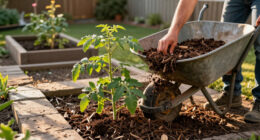
Clean up selectively
Remove diseased plants, spent crops and persistent weeds while keeping healthy roots in the soil.
- Diseased plant material; send it to municipal green waste.
- Spent annual vegetables, frost-damaged fruiting crops and persistent weeds.
- Cut healthy annuals at soil level and leave roots to decompose.
- Clean and store stakes, cages and trellises in a dry place.
Replenish soil carefully
Improve soil structure and use test results to guide any mineral amendments.
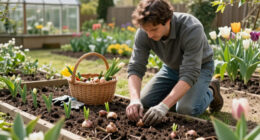
Gently loosen soil with a fork.
Use aged compost, leaf mold or well-rotted manure.
Apply lime or rock phosphate only when appropriate.
Choose a soil cover
Covering helps shield exposed raised-bed soil from winter rain and cold.
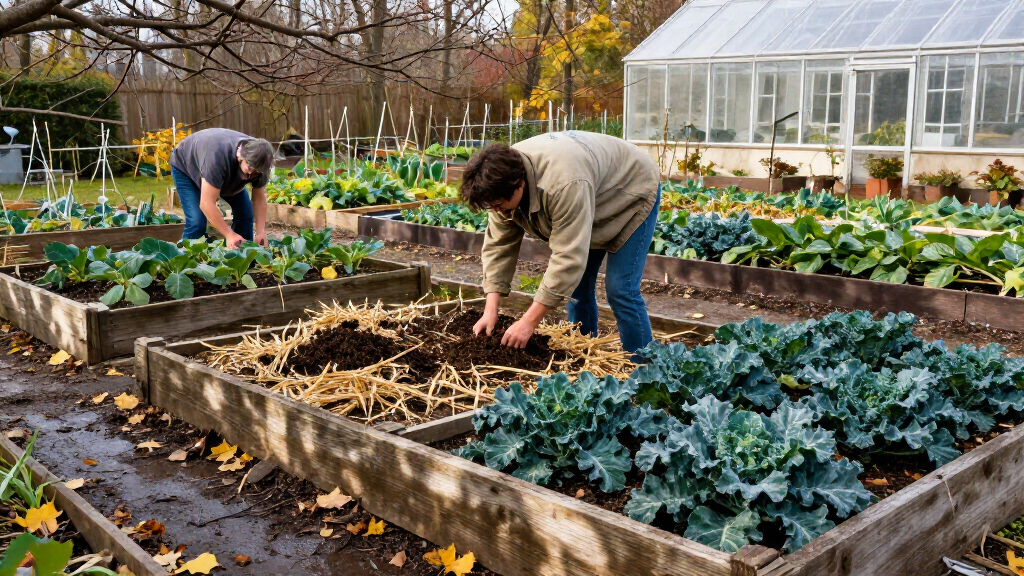
Cover the surface
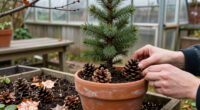
Use shredded leaves, clean straw or pine needles.
Consider cover crops
Options include winter rye, crimson clover, hairy vetch and tillage radish.
Adjust for local conditions
Regional pointers are broad guidance; inspect beds after rainfall and choose methods for your climate and design.
| Factor | Guide’s advice | What to consider |
|---|---|---|
| Colder regions | Prepare before the top few inches freeze | Zones 3 to 6; often by late November |
| Milder regions | Suppress weeds and limit heavy-rain exposure | Zones 7 to 10; protect cold-hardy crops |
| Bed depth | Shallow beds freeze more quickly | Under 10 inches versus around 18 to 24 inches |
| Frame material | Inspect and protect as needed | Wood may warp or rot; metal and stone conduct cold |
Protecting Soil Before Spring
The gardening guide says winter exposure can leave raised beds with eroded or nutrient-depleted soil by planting time. It explains that above-ground beds cool more quickly and are more exposed to wind and seasonal rain, which can wash nutrients away. The guide presents covering soil and replenishing organic matter as ways to reduce those risks and limit spring repair work.
The guide also notes that winter preparation can help preserve the bed itself. It says wood may absorb moisture and be more prone to swelling, warping or rot, while metal and stone do not rot but can cool soil near their edges quickly. Accordingly, the guide stresses that bed material, depth and regional weather affect what needs attention.
Products Worth Considering

Husqvarna Automower 550 Robotic Lawn Mower

Greenworks 60V 21-Inch Self-Propelled Lawn Mower with Two 4.0Ah Batteries

Orbit B-hyve XR 8-Zone Indoor/Outdoor Smart Sprinkler Controller
As an affiliate, we earn on qualifying purchases.
Climate and Bed Design Matter
The guide distinguishes between colder northern areas and milder southern or coastal locations. It identifies USDA hardiness zones 3 to 6 as areas where preparation should be completed before the top few inches of soil freeze, often by late November. For zones 7 to 10, it emphasizes weed suppression, protection from heavy rain and care for cold-hardy crops such as garlic and kale. The guide presents these as broad regional pointers, not fixed deadlines for every location.
Bed design also affects winter exposure, according to the guide. It says shallow beds under 10 inches deep can freeze more quickly than beds around 18 to 24 inches deep. The guide says wooden frames may benefit from a plant-safe sealant, while metal and stone frames conduct cold. It advises gardeners to inspect their beds after rainfall to check moisture and drainage before choosing a cover or amendment.
Local Conditions Set the Plan
The source is a general how-to guide and does not cite a named horticultural expert, controlled study or measured results. It does not establish that following the steps will produce an earlier planting window or a larger harvest. Those outcomes depend on weather, crop choice, soil quality and other local factors.
The source also does not provide a complete, detailed explanation of every one of its six steps: the supplied material covers cleanup, soil nourishment and surface protection, then begins discussing drainage and moisture checks before ending mid-section. Exact cover-crop sowing dates and rates, amendment quantities beyond compost, and frame-sealing instructions are not specified. Gardeners should follow product labels and local extension guidance where relevant.
Check Beds Before the Freeze
Following the guide’s recommendations, gardeners can inspect each bed after rain, note drainage and moisture, and identify diseased plants or damaged frames before winter conditions set in. They can then choose mulch or a locally suitable cover crop, use soil-test results to decide whether amendments are needed and store cleaned supports in a dry place.
As spring approaches, the guide recommends checking beds for waterlogging, winter damage and how well any cover has broken down. It gives no specific follow-up date or forecast; timing will depend on local freezing conditions and the crops planned for the next season.
Key Questions
Should I remove every plant from a raised bed before winter?
No. The guide recommends removing diseased or spent crops and persistent weeds, while cutting healthy annuals at soil level and leaving their roots to decompose. It cautions against leaving soil bare.
How much compost or mulch does the guide recommend?
The guide suggests spreading 2 to 3 inches of aged compost, leaf mold or well-rotted manure over the soil. For mulch, it recommends a 3 to 4-inch layer of suitable organic material.
Can I use fresh manure in a raised bed before winter?
The guide advises against hot, uncomposted manure because it can burn roots and leach excess nitrates. It recommends aged compost or well-rotted manure instead.
When should I prepare raised beds for winter?
Timing depends on location. The guide says gardeners in colder regions should finish before the top few inches of soil freeze, while those in milder areas should focus on weeds, heavy rain and protecting cold-hardy crops.
Should I use mulch or a cover crop?
The guide offers both as options. Mulch can cover fallow beds and beds with perennials or cold-hardy greens; cover crops are suggested for suitable mild regions. Local climate and planting plans should guide the choice.
Source: gardeningknowhow.com