
TL;DR
Archived advice from garden writer Larry Hodgson addresses browning calathea leaves, leaf drop on indoor lemon trees and yellowing pilea leaves. The symptoms can reflect changing light, dry indoor air, watering problems, pests or normal ageing, so checking the plant and its growing conditions is more useful than relying on a fixed watering schedule.
Archived advice from garden writer Larry Hodgson addresses three common houseplant problems: browning calathea leaves, leaf loss on an indoor lemon tree and yellowing pilea leaves. The answers point to changes in light, indoor humidity and watering as possible causes, while noting that some older leaves may be reaching the end of their natural life.

Get garden gear delivered free with Prime
- Fast, free delivery on millions of items
- Prime Video, Amazon Music and more included
- Member-only deals all year
For a calathea, also known as a peacock plant, browning and dry foliage may be linked to the dry air of heated homes in fall and winter. But humidity is only one possibility. Hodgson’s advice also lists irregular watering, potting mix that is too dry or too wet, strong sunlight and mineral-salt buildup. Misting may leave white marks and does not maintain higher humidity for long; a humidifier may help when indoor air is very dry.
The guidance is to keep the calathea in a bright spot away from harsh sunlight, drafts and radiator heat, and to keep its potting mix slightly moist without leaving it waterlogged. In winter, let the surface dry between waterings, but not the whole root ball. Drain water from the saucer. If tap water has a high mineral content, rainwater or demineralized water may help avoid mineral deposits.
An indoor lemon tree can drop leaves for several reasons, including insufficient light, a change in conditions, watering problems, dry air or pests. Small fruits do not by themselves show that the tree is healthy. The advice is to provide strong light, check the soil before watering, and inspect leaves and stems for spider mites or scale insects. Water thoroughly after the top few centimetres of mix have dried, then let excess water drain. Wait for new growth before fertilizing lightly, and prune only branches that are clearly dead.
What Do Changes in Houseplant Leaves Mean? Read the signs before reacting
Browning, yellowing and leaf drop can have several causes. Check each plant’s light, soil moisture and growing conditions before changing its care.
Three plants, different clues
One leaf symptom does not point to just one cause.
Brown, dry edges
Dry indoor air may contribute, but check watering, harsh sun and mineral buildup too.
Leaves dropping
Low light, changing conditions, watering problems, dry air or pests may be involved.
Yellowing near the base
A few older leaves may be renewing naturally. Rapid or widespread yellowing calls for a closer look.
Check the growing conditions
Start with what you can observe before adjusting care.
Feel the soil before watering, and make sure excess water can drain.
Consider whether light is suitable and whether heat, drafts or strong sun may be affecting the plant.
Inspect lemon tree leaves and stems for spider mites or scale insects.
Notice whether symptoms spread and whether new growth appears.
Winter care can pull in two directions
Dry household air and damp potting mix can happen at the same time.
- Heated homes can be dry for calatheas.
- A humidifier may help when air is very dry.
- Misting does not keep humidity high for long.
- Check moisture instead of following a fixed weekly schedule.
- Calatheas prefer mix that is slightly moist, not waterlogged.
- Let excess water drain from the pot or saucer.
Keep the response measured
The archived advice describes possible causes, not a diagnosis for an individual plant.
Read Leaf Changes Before Reacting
Leaf color and leaf loss can alert plant owners to a change in growing conditions, but one symptom does not identify one cause. A yellowing leaf might be an older leaf renewing naturally, while widespread or rapid yellowing merits a closer look at light and watering. Treating every brown edge as a humidity problem, or every yellow leaf as overwatering, can lead to changes that do not address the cause.
The advice also distinguishes two needs that can be confused in winter: dry household air and wet potting mix can occur at the same time. A plant may need more ambient humidity while using less water because growth has slowed. Checking the mix before watering, providing suitable light and watching for pests gives owners a more practical starting point than following a rigid weekly schedule.
Products Worth Considering

Husqvarna Automower 550 Commercial Robotic Lawn Mower

EGO Power+ 21-Inch Self-Propelled Cordless Lawn Mower, LM2134SP-2

Solo Stove Pi Prime Portable Propane Pizza Oven
As an affiliate, we earn on qualifying purchases.
Three Plants, Different Symptoms
The questions were selected from columns by Hodgson published over the years in the Quebec newspaper Le Soleil. Hodgson wrote thousands of articles and 65 books in French and English. His son, Mathieu Hodgson, has been working to make his father’s writings accessible to the public. The source material does not give a date for this selection.
The three plants have different growth habits, so their care should not be treated as interchangeable. Calatheas are grown for colorful foliage and appreciate humid conditions. Lemon trees need abundant light indoors, while Pilea peperomioides generally prefers bright, indirect light and well-drained mix. Its common name, peperomia-leaved pilea, does not mean it belongs to the peperomia genus; the source identifies it as a member of the nettle family.
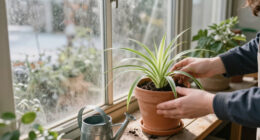
Some leaf changes are also ordinary. A few older pilea leaves turning yellow near the base may be part of normal renewal. Calathea leaves can rise in the evening and spread during the day, a movement called nyctinasty and the reason some are known as prayer plants. That daily movement is distinct from leaves that curl or dry out.
““Misting the leaves doesn’t maintain high humidity for any meaningful length of time.””
— Larry Hodgson, in archived plant-care advice published in Le Soleil
Symptoms Do Not Pinpoint One Cause
The archived answers describe possible causes, not diagnoses of individual plants. Without details such as the potting mix’s moisture, the amount of light, the watering history and evidence of pests, it is not possible to determine why a particular plant’s leaves are changing. The source also gives no information about how often these problems occur or whether any reported plant recovered.
Some signs need to be judged by their pattern and pace. A few older pilea leaves yellowing near the base may be normal, but rapid yellowing or changes affecting many leaves are reasons to review care. Likewise, a leafless lemon branch is not necessarily dead. The advice recommends pruning only branches that are clearly dead, rather than assuming leaf loss alone settles the question.
Check Conditions, Then Adjust
The practical next step is to inspect each plant’s specific conditions rather than making several abrupt changes at once. Check soil moisture before watering, confirm that excess water can drain, review how much light the plant receives, and look for pests on lemon tree leaves and stems. For calatheas, assess dry air and exposure to heat or drafts; for pileas, consider moving the plant gradually toward brighter indirect light.
Continue to watch for new growth and whether the leaf changes spread. If a lemon tree is moved outdoors in summer, Hodgson’s advice is to acclimatize it gradually to the sun. The source does not give a fixed recovery timeline or a single treatment that applies to every case; what happens next depends on the plant and the cause of its symptoms.
Key Questions
Do brown calathea leaves always mean the air is too dry?
No. Dry air is one possibility, particularly during fall and winter in heated homes, but irregular watering, overly wet or dry mix, strong sunlight and mineral buildup can also damage leaves.
Does misting fix low humidity for a calathea?
The archived advice says misting does not keep humidity high for a meaningful length of time and can leave white mineral marks. A humidifier may be more useful when the air is very dry.
Why might an indoor lemon tree lose leaves?
Possible causes include low light, a change in growing conditions, watering problems, dry air or pests such as spider mites and scale insects. Small fruit does not, by itself, show that the tree is healthy.
Should I water a pilea once a week?
Not necessarily. The advice recommends checking the top few centimetres of potting mix and watering when that layer begins to dry, then allowing excess water to drain. A fixed weekly schedule may not match the plant’s needs.
Is yellowing at the base of a pilea always a problem?
No. A few older leaves turning yellow near the base may be part of normal leaf renewal. Rapid yellowing or changes across many leaves are a reason to check light and watering conditions.
Source: laidbackgardener.blog