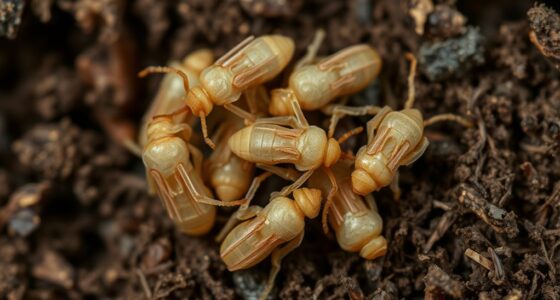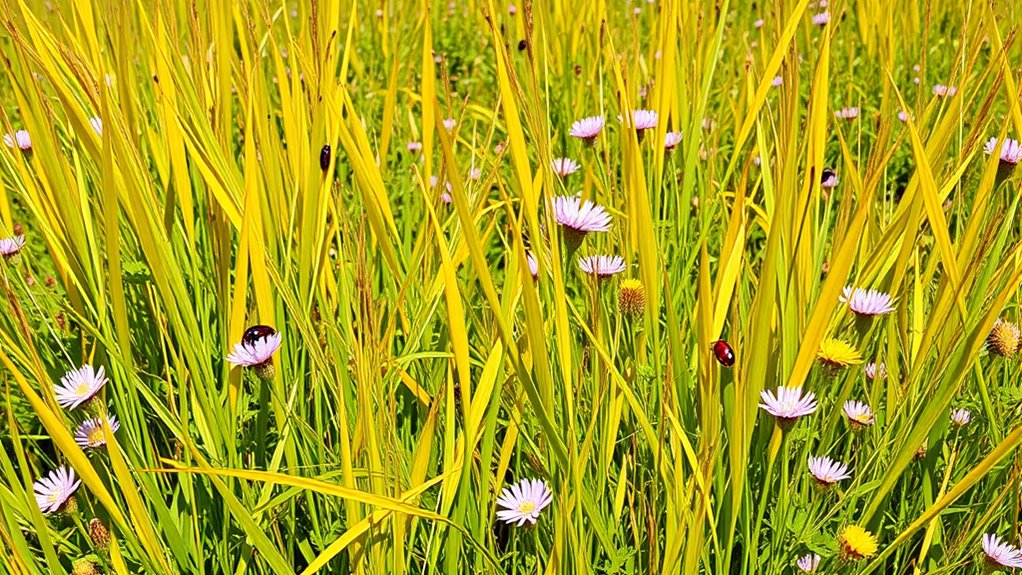

Beetle banks are strips of native vegetation placed strategically in your fields to attract beneficial insects like ladybugs and ground beetles. These insects help control pests naturally by preying on aphids, caterpillars, and beetles. By supporting local biodiversity and offering shelter, beetle banks reduce your reliance on chemical pesticides. Their design and placement are key to boosting pest control, and there’s more about how they work effectively if you continue exploring.
Key Takeaways
- Beetle banks are strips of native vegetation that attract beneficial insects like ladybugs and ground beetles.
- They provide refuge and overwintering sites for predatory insects involved in pest control.
- By supporting beneficial insects, beetle banks enhance natural pest predation in nearby crops.
- Strategic placement along field margins maximizes beneficial insect movement into crop areas.
- They reduce reliance on chemical pesticides, promoting sustainable and eco-friendly pest management.
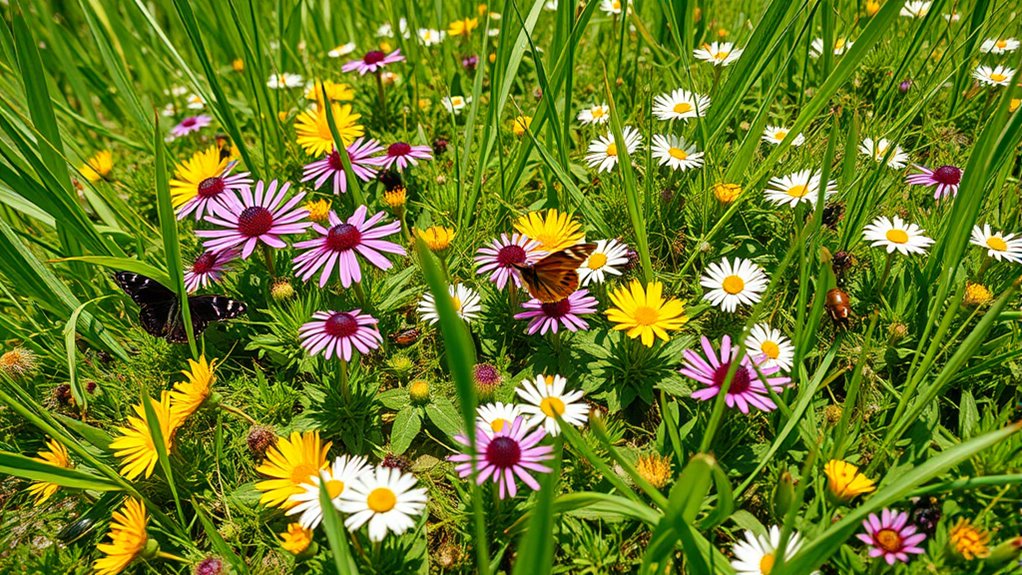
Beetle banks are strategic strips of vegetation placed in agricultural fields to attract and support beneficial insects. These strips serve as refuges for predatory insects like ladybugs, ground beetles, and parasitic wasps, which are natural allies in pest control strategies. By providing a habitat for native insects, beetle banks help reduce reliance on chemical pesticides, making your farm more sustainable and environmentally friendly. The key to their effectiveness lies in choosing native plant benefits; native plants are well-adapted to local climates and soil conditions, ensuring they thrive with minimal maintenance. They also tend to support a broader diversity of beneficial insects, which enhances the overall pest control system.
When implementing beetle banks, think of them as living pest management tools. The native plants you select should be resilient, nectar-rich, and provide shelter for insects throughout their life stages. These plants attract beneficial insects, enabling them to establish and multiply nearby, which means they’re always ready to hunt down pests like aphids, beetles, and caterpillars. This natural pest control strategy reduces the need for chemical interventions, which can harm non-target species and disrupt ecosystems. Over time, you’ll notice a more balanced pest population and healthier crops, thanks to the natural predation supported by your beetle banks.
You should position beetle banks strategically within your fields—preferably along field margins or in areas with less disturbance. These locations maximize insect movement into crop zones, ensuring that beneficial insects are close at hand when pests appear. Maintaining the native plant benefits involves selecting species that bloom at different times, providing continuous nectar and pollen sources. This diversity supports a wider range of beneficial insects, increasing the robustness of your pest control strategies. Regular management, like minimal mowing or weed control, encourages native plants to flourish and sustain beneficial insect populations. Additionally, understanding the importance of native plants in supporting local ecosystems can enhance the success of your beetle banks.
Frequently Asked Questions
Can Beetle Banks Be Used in Urban Gardens?
Yes, you can definitely use beetle banks in urban gardens. They fit well into urban planning by enhancing biodiversity and supporting sustainable pest management. By creating a beetle bank, you provide habitat for beneficial insects that naturally control pests, reducing the need for chemicals. Incorporating these structures into your urban garden promotes a healthier ecosystem and makes pest management more effective and eco-friendly.
What Are the Best Plants for Beetle Banks?
Imagine you’re a pioneer planting the best plants for beetle banks. You should choose native plants that support pollinator diversity, like wildflowers, grasses, and herbs such as coneflowers, black-eyed Susans, and milkweed. These plants provide shelter and food, boosting pollinator support. Selecting the right native plant species guarantees your beetle bank thrives, attracting beneficial insects and enriching your garden’s ecosystem. Trust me, it’s a game-changer!
How Do Beetle Banks Affect Surrounding Ecosystems?
Beetle banks boost surrounding ecosystems by supporting pollinators and regulating pests. When you establish beetle banks, you create habitats that attract beneficial insects, which help pollinate nearby plants and reduce pest populations naturally. This leads to healthier crops and diverse wildlife. Your efforts enhance ecosystem stability, promote biodiversity, and reduce reliance on chemical pesticides, resulting in a more sustainable and resilient environment around your farm or garden.
Are Beetle Banks Suitable for All Climate Zones?
Beetle banks aren’t suitable for all climate zones; their effectiveness depends on regional climate adaptability. In temperate areas, they thrive and help control pests naturally. However, in extreme climates like very hot or cold regions, beetle banks may require additional management or might be less effective. You should evaluate your area’s specific conditions to determine if beetle banks will work well and provide regional effectiveness in pest management.
What Maintenance Is Required for Beetle Banks?
Think of your beetle bank as a garden that needs regular care. You’ll want to check for weeds and remove them to keep the habitat healthy. Seasonal planting tips include adding native plants in spring and trimming back in fall. Beetle bank upkeep involves monitoring for pests and ensuring the structure remains stable, especially after storms. With a little effort, your beetle bank will thrive and support beneficial insects all year round.
Conclusion
Think of beetle banks as your farm’s secret superheroes, quietly working behind the scenes. By providing safe havens for beneficial insects, they help control pests naturally and boost your crops’ health. When you incorporate beetle banks, you’re planting the seeds for a balanced, thriving ecosystem—like a well-oiled machine. So, consider them your farm’s hidden armor, turning your fields into a fortress of natural pest control that works tirelessly for you.