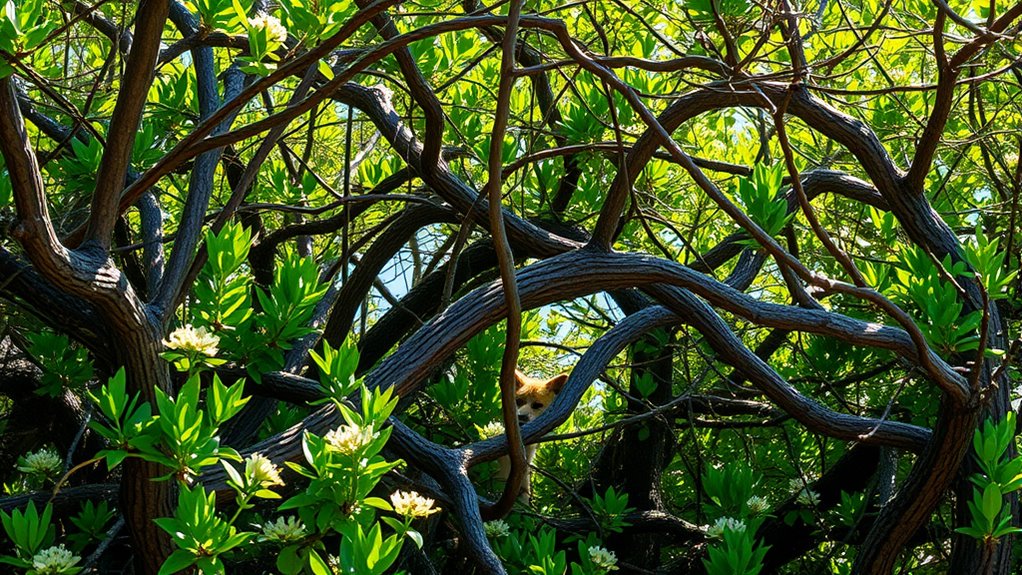
Hedgerows and native shrubs play a vital role in supporting predators that naturally control pests in your landscape. By providing habitat, shelter, and food sources, they attract beneficial insects, birds, and bats that prey on pests like aphids and caterpillars. These native plants are well-adapted to local conditions, requiring less maintenance and promoting biodiversity. To learn how to maximize these natural pest control benefits, keep exploring ways to incorporate hedgerows and native shrubs into your landscape.

Get garden gear delivered free with Prime
- Fast, free delivery on millions of items
- Prime Video, Amazon Music and more included
- Member-only deals all year
Key Takeaways
- Hedgerows and native shrubs provide habitat corridors that attract beneficial predators like birds, bats, and insects.
- They support predator diversity by offering shelter, nesting sites, and food sources.
- Native plants are adapted to local conditions, requiring less maintenance and supporting local predator species.
- Planting a mix of native shrubs enhances habitat complexity, boosting natural pest control.
- Hedgerows and native shrubs promote sustainable pest management by reducing reliance on chemicals.

Hedgerows and native shrubs play a crucial role in supporting local ecosystems and enhancing biodiversity. When you incorporate these natural features into your landscape, you’re creating vital corridors that connect different habitats, allowing wildlife to thrive. One of the most significant benefits is how they promote habitat diversity, which in turn attracts a variety of predators that naturally manage pest populations. By providing shelter, nesting sites, and food sources, hedgerows and native shrubs encourage predators like birds, bats, and beneficial insects to settle nearby. This natural pest control reduces the need for chemical interventions, making your landscape more environmentally friendly and sustainable.
Hedgerows and native shrubs support biodiversity and natural pest control by creating habitat corridors and attracting beneficial predators.
Imagine walking along a well-maintained hedgerow and noticing the bustling activity of insect-eating birds and predatory insects. These creatures rely on the dense foliage and varied plant structures to hunt, rest, and breed. As you plant and maintain native shrubs, you’re supporting a complex web of predator-prey relationships that keep pest numbers in check. This habitat diversity creates a balanced ecosystem where predators can find refuge and abundant food, helping to naturally control common garden pests such as aphids, caterpillars, and beetles. The more diverse the habitat, the more resilient your ecosystem becomes against pest outbreaks, reducing your dependence on pesticides.
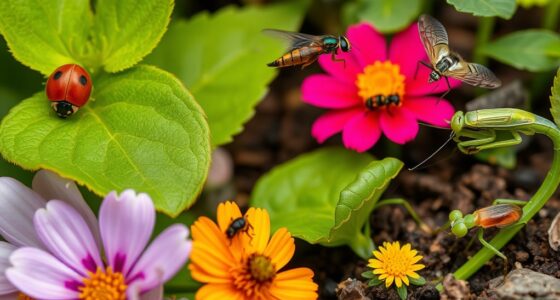
Native shrubs are particularly effective because they are adapted to your local environment, requiring less maintenance and providing the specific resources that local predators need. For example, native berries attract certain bird species that feed on pest insects, while native flowering plants support beneficial insects like ladybugs and parasitic wasps, which are key players in pest control. These predators help keep pest populations under control, benefiting your plants and reducing damage. Additionally, the structural complexity of native shrubs offers various microhabitats that support different predator species, further boosting pest management efforts naturally.
You can also enhance habitat diversity by planting a mix of native trees, shrubs, and ground cover, creating layered habitats that support a wider range of predators. Over time, this increases the resilience of your garden or farmland to pest problems. Maintaining these diverse habitats also encourages pollinator activity, which supports the health and productivity of your plants. By understanding the importance of habitat diversity and pest control, you realize your role in fostering a balanced ecosystem. Your efforts in maintaining hedgerows and native shrubs serve as a natural defense, reducing chemical use and encouraging a thriving community of predators that keep pests in check. In short, thoughtful planting and care of native shrubs can turn your landscape into a haven for beneficial predators, supporting sustainable pest control and enriching local biodiversity.
native shrub plants for wildlife habitat
As an affiliate, we earn on qualifying purchases.
As an affiliate, we earn on qualifying purchases.
Frequently Asked Questions
How Do Hedgerows Influence Predator-Prey Dynamics?
Hedgerows influence predator-prey dynamics by providing essential habitat corridors and shelter for predators, which enhances pest control. As you maintain these natural barriers, you create safe spaces that support predator populations, helping keep pest numbers in check. This natural balance benefits your ecosystem, reduces the need for chemical pest control, and promotes biodiversity. By fostering healthy predator-prey relationships, you contribute to a more sustainable and resilient environment.
What Native Shrubs Are Best for Attracting Specific Predator Species?
Choose native shrubs like hawthorn, blackthorn, and elderberry to attract specific predator species. These plants provide essential cover, food, and nesting sites, enhancing predator attraction. By selecting the right native shrub, you support local ecosystems, encourage natural pest control, and create a thriving habitat. Your actions foster balance, promote biodiversity, and protect native wildlife, making your landscape a crucial refuge for predators and a cornerstone of healthy ecosystems.
How Do Hedgerows Impact Local Biodiversity Beyond Predators?
Hedgerows boost local biodiversity by supporting pollinators like bees and butterflies, which thrive on native shrubs. They also aid soil conservation by reducing erosion and maintaining soil health. You’ll notice that these natural barriers create habitats for various insects, birds, and small mammals, increasing ecological diversity. By planting native shrubs and maintaining hedgerows, you promote a resilient ecosystem that benefits all species, not just predators.
Are There Seasonal Considerations for Planting Native Shrubs?
You can’t plant native shrubs any time of year and expect them to thrive; timing is everything. Seasonal planting guarantees your native shrub choices match their natural growth cycles, maximizing survival and growth. Typically, the best native shrub timing is during early spring or fall when conditions are perfect for roots to establish. Ignoring these seasonal considerations risks weak plants that struggle or fail, undermining your efforts to support local biodiversity.
What Maintenance Is Required to Sustain Effective Predator Habitats?
To maintain effective predator habitats, you should follow regular pruning schedules to keep shrubs healthy and dense, promoting cover and nesting sites. Additionally, controlling invasive species is vital; remove them promptly to prevent competition and guarantee native plants thrive. Monitor your hedgerows seasonally, adjusting maintenance as needed. Consistent care, including selective pruning and invasive species control, supports a sustainable habitat that attracts and sustains predators effectively.
As an affiliate, we earn on qualifying purchases.
Conclusion
By planting hedgerows and native shrubs, you create essential habitats that attract predators and support local ecosystems. Some believe these features naturally control pest populations, reducing the need for chemicals. While research shows benefits, it’s not a guaranteed solution for all pests. Still, by fostering native plants, you boost biodiversity and help sustain healthy environments. So, next time you plant a shrub, remember—you’re part of a bigger picture that balances nature’s web.
beneficial insect attractant plants
As an affiliate, we earn on qualifying purchases.
As an affiliate, we earn on qualifying purchases.
bird and bat friendly native shrubs
As an affiliate, we earn on qualifying purchases.
As an affiliate, we earn on qualifying purchases.
Halloween Picks
halloween
As an affiliate, we earn on qualifying purchases.