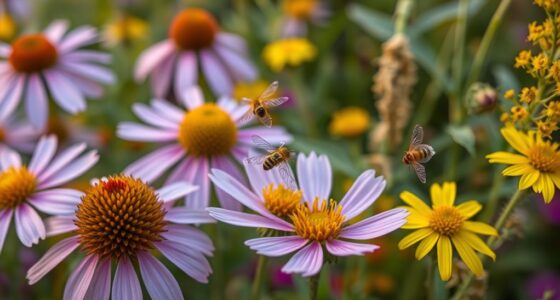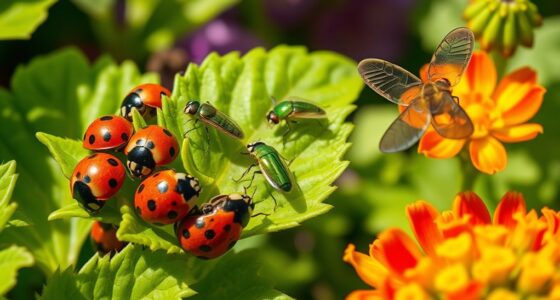
Creating a flowering calendar for beneficial insects involves staggering bloom times with early, mid, and late-season plants to guarantee they always have access to nectar and pollen. By selecting native plants that overlap in their flowering periods, you support continuous pollinator and predator activity, which boosts natural pest control. Planning your garden this way prevents gaps that could harm beneficial insect populations. Keep exploring for more tips to develop an effective flowering schedule that sustains your garden’s health.
Key Takeaways
- Develop a planting schedule that includes early, mid, and late bloomers to ensure continuous food for beneficial insects.
- Overlap bloom periods among different plant species to provide uninterrupted nectar and pollen sources.
- Incorporate native plants with known flowering times to align with local beneficial insect cycles.
- Use flowering calendars to identify and fill gaps in bloom times, maintaining a steady food supply.
- Plan for staggered flowering to support beneficial insects year-round, enhancing natural pest control and pollination.
Understanding when beneficial insects like pollinators and natural predators are active in your garden is key to supporting their populations. One of the most effective ways to do this is by paying close attention to the flowering sequence in your garden. The timing of blooms influences pollinator attraction and predator activity, so planning your planting schedule around these cycles can make a significant difference. When you select plants that bloom at different times, you create a continuous source of nectar and pollen, guaranteeing beneficial insects have food throughout their active periods. This sustained availability encourages pollinators to visit regularly, boosting pollination efficiency for your crops and flowers. Similarly, natural predators such as ladybugs and predatory beetles rely on specific flowering stages to find food and shelter, helping control pest populations naturally.
To optimize pollinator attraction, start by understanding the typical flowering sequence in your region. Early bloomers, like crocuses or snowdrops, attract bees and other pollinators as soon as the weather warms. By planting these alongside mid-season blossoms like lavender or coneflowers, you guarantee an early food source and maintain insect activity as other plants begin to fade. Late-season flowering plants, such as goldenrod or asters, extend the period of beneficial insect activity into fall, which is vital for preparing pollinators for winter and supporting their populations year-round. Planning your garden to have overlapping bloom times ensures that beneficial insects can move seamlessly from one food source to the next, maximizing pollinator attraction throughout the growing season. Recognizing the importance of flowering sequence helps you create a resilient and thriving garden ecosystem.
Additionally, understanding the flowering sequence helps you avoid gaps where beneficial insects might struggle to find nourishment. If your garden has a well-planned flowering schedule, it will naturally attract a diverse array of pollinators and predators at different times, creating a healthy, balanced ecosystem. This diversity not only supports beneficial insect populations but also enhances pollination and pest control. Keep track of your plants’ bloom times and adjust your planting choices accordingly to fill any gaps. Using native plants is especially effective since local pollinators and natural predators are adapted to their flowering patterns, guaranteeing better pollinator attraction and pest management.
Frequently Asked Questions
How Do Flowering Calendars Vary by Climate Zones?
You’ll find flowering calendars vary by climate zone because of climate zone adaptation. In warmer zones, you can start seasonal planting schedules earlier, encouraging beneficial insects to emerge sooner. In colder zones, planting schedules are delayed to match frost dates, ensuring flowers bloom when beneficials are active. Adjusting your calendar to your climate zone helps maximize beneficial insect support, boosting your garden’s health and productivity throughout the growing season.
Can Flowering Calendars Be Customized for Urban Gardens?
You can absolutely customize flowering calendars for your urban garden. By focusing on native plant selection and understanding your local climate, you can plan blooms that attract beneficial insects year-round. Urban farming benefits from tailored schedules, ensuring pollinators and predators are present when needed most. This personalized approach maximizes garden health, supports beneficials, and creates a vibrant, thriving space that adapts perfectly to your city environment.
Which Beneficial Insects Are Most Attracted to Specific Flowers?
You’ll find that beneficial insects like ladybugs are most attracted to dill and fennel, which support pest control by targeting aphids. Bees and butterflies are drawn to flowers such as lavender and coneflowers, essential for pollinator support. Planting a variety of these flowers in your garden attracts diverse beneficials, naturally controlling pests and enhancing pollination, making your garden healthier and more productive.
How Often Should Flowering Calendars Be Updated?
You should update your flowering calendar at least once a year, preferably in early spring, to stay ahead of pollination timing and flower succession. Keep an eye on seasonal changes, as nature doesn’t follow a strict timetable. By doing so, you guarantee beneficial insects are attracted when they’re most needed, maximizing their impact. Remember, a stitch in time saves nine, so stay proactive to support your garden’s health effectively.
Are There Digital Tools for Managing Flowering Calendars?
Yes, there are digital tools for managing flowering schedules. You can use apps like Trello, Google Calendar, or specialized garden planning software to keep track of flowering times and beneficials. These tools help you plan ahead, set reminders, and update schedules easily. By using digital tools, you guarantee your flowering calendars stay current and accurate, making it simpler to support beneficial insects and optimize your garden’s health year-round.
Conclusion
By following these flowering calendars, you become the gardener of an intricate symphony, inviting beneficials to dance in harmony with your crops. Each bloom acts as a guiding star, lighting the way for natural allies to thrive and protect your garden. With mindful timing, you craft a living tapestry where pollinators and predators weave together, turning your garden into a vibrant, pulsating heart of biodiversity. Your efforts nurture a flourishing oasis, alive with the silent song of beneficials.