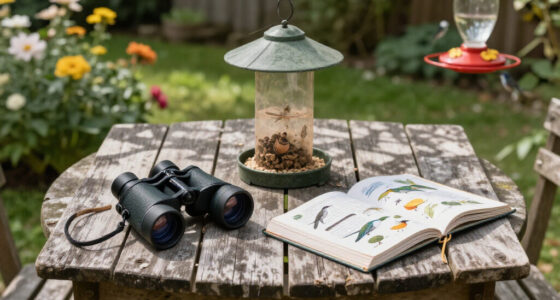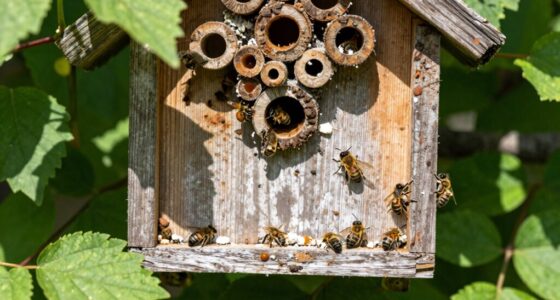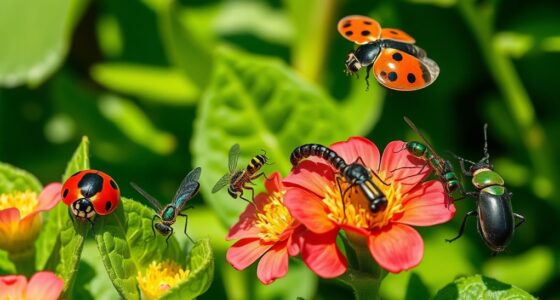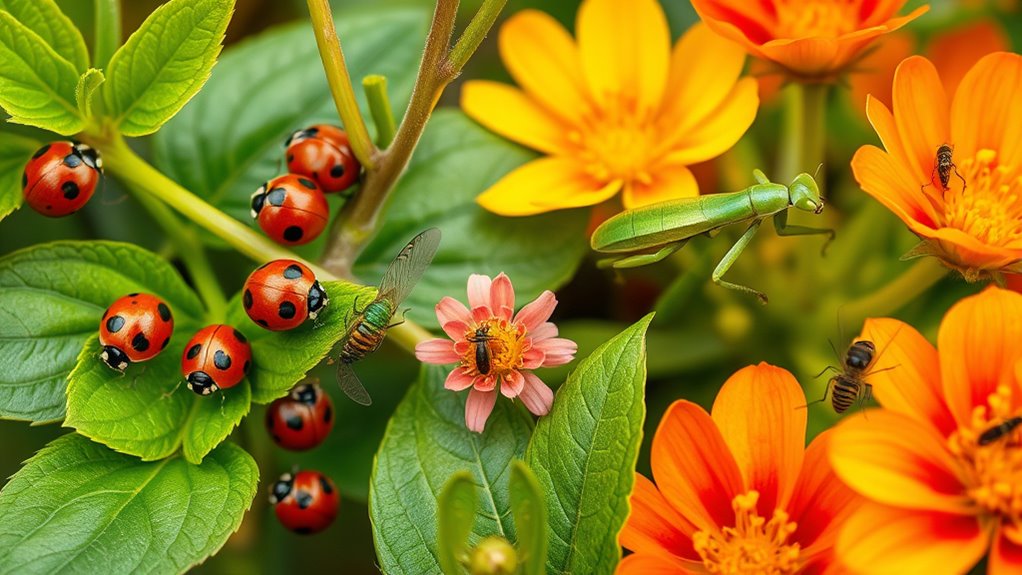

To support a healthy garden, you should know about ladybugs, lacewings, and parasitic wasps, which control pests like aphids and mites. Bees and butterflies help with pollination, boosting fruit and flower production. Adding insect hotels and native plants creates habitats that attract these beneficial insects. Using integrated pest management and avoiding harmful chemicals further encourages their presence. Keep exploring these helpful creatures to create a thriving, eco-friendly garden environment.

Get garden gear delivered free — and shop member deals
- Fast, free delivery on millions of items
- Access to Prime Big Deal Days deals on October 6–7
- Prime Video, Amazon Music and more included
Key Takeaways
- Ladybugs, lacewings, and parasitic wasps naturally control aphids, mites, and other pests.
- Bees and butterflies are vital pollinators that enhance fruit and seed production.
- Installing insect hotels and native plants provides shelter and breeding sites for beneficial insects.
- Supporting biological control reduces reliance on chemical pesticides and promotes eco-friendly pest management.
- Encouraging diverse beneficial insects creates a resilient, healthy, and productive garden ecosystem.

Beneficial insects play an essential role in maintaining healthy gardens by naturally controlling pests and promoting plant growth. When you encourage these helpful bugs, you reduce your reliance on chemical pesticides, creating a more sustainable and eco-friendly environment. One of the main ways beneficial insects assist your garden is through pest control methods. Instead of using harsh chemicals, you can attract natural predators like ladybugs, lacewings, and parasitic wasps that hunt down aphids, mites, and other pests. By providing the right habitat and food sources, such as flowering plants and undisturbed ground, you invite these helpful insects to establish themselves in your garden. As a result, pest populations stay in check, and plants remain healthy and vigorous.
In addition to pest control, beneficial insects profoundly contribute to pollination strategies. Bees, butterflies, and certain beetles are essential pollinators that transfer pollen from flower to flower, enabling plants to produce fruits and seeds. When you create a garden environment that attracts these insects, you’re ensuring better fruit and vegetable yields. Planting a diverse range of flowering plants with staggered blooming periods offers continuous nectar sources, encouraging pollinators to visit frequently. This natural pollination process not only improves your garden’s productivity but also supports local biodiversity. You play a key role by choosing the right plants and avoiding pesticides that can harm these valuable pollinators.
You might also consider installing insect hotels or leaving some bare soil and native plants to provide shelter and breeding sites for beneficial insects. These small efforts can make a big difference in encouraging a thriving population of natural pest controllers and pollinators. Additionally, understanding aura variations and how they influence energy flow can help in creating a balanced environment that supports these helpful insects. When planning pest control methods, opt for integrated pest management (IPM) techniques that prioritize biological control, including introducing or supporting beneficial insects. This approach keeps pest numbers manageable while safeguarding the health of your garden ecosystem.
Ultimately, successful gardening hinges on understanding and harnessing the power of beneficial insects. By fostering their presence through thoughtful plant choices and habitat creation, you create a balanced environment where pests are naturally kept in check and plants are effectively pollinated. This sustainable method enhances your garden’s productivity, reduces chemical use, and supports the broader ecological community. Embracing these natural allies ensures your garden remains vibrant, resilient, and environmentally friendly, allowing you to enjoy lush, thriving plants season after season.
beneficial insect hotel for garden
As an affiliate, we earn on qualifying purchases.
As an affiliate, we earn on qualifying purchases.
Frequently Asked Questions
How Can I Attract Beneficial Insects Naturally?
To attract beneficial insects naturally, you should create a diverse garden that supports their pest resistance and insect life cycles. Plant native flowers and herbs to provide nectar and pollen, offering food sources throughout their development stages. Avoid pesticides, which can harm these insects and disrupt their life cycles. Provide shelter like mulch or standing logs, and maintain a natural habitat to encourage beneficial insects to stay and help control pests effectively.
Are Beneficial Insects Safe for Pets and Children?
You wonder if beneficial insect safety is a concern for pets and children. Generally, beneficial insects are safe and considered pet-friendly pest control options because they target specific pests without harming humans or animals. However, it’s wise to avoid direct contact with any insects. Keep your pets and kids supervised around your garden, and wash hands after working outdoors to guarantee safe, effective pest management.
How Do I Identify Specific Beneficial Insects?
Pinpoint pests and pinpoint beneficials by practicing precise pest and beneficial identification. You can start by studying insects’ distinctive markings, size, and behaviors, and compare them to images in identification tools or guides. Visit native habitats where these insects naturally thrive, and observe their environments. With careful observation and reliable identification tools, you’ll confidently distinguish beneficial insects from pests, making your garden both healthier and happier.
When Is the Best Time to Introduce Beneficial Insects?
You should consider the timing for release of beneficial insects carefully, aligning it with seasonal considerations for maximum effectiveness. Typically, release beneficial insects when pest populations are low but beginning to increase, usually in early spring or late summer. Avoid releasing during extreme weather conditions, like heavy rain or drought, which can hinder their survival. Proper timing guarantees the insects establish well and control pests efficiently, giving your garden a natural boost.
Can Beneficial Insects Control All Garden Pests?
Did you know that over 80% of pests can be managed with beneficial insects? While they’re a great part of integrated pest management and pesticide alternatives, they don’t control all pests. Some pests are resistant or reproduce faster than beneficial insects can handle. So, you need a combination of methods, including cultural practices and targeted treatments, to effectively protect your garden without relying solely on beneficial insects.
organic pest control ladybugs lacewings parasitic wasps
As an affiliate, we earn on qualifying purchases.
As an affiliate, we earn on qualifying purchases.
Conclusion
Now that you know these beneficial insects, it’s no coincidence you’ll have a healthier, more vibrant garden. By welcoming ladybugs, bees, and others, you’re naturally fighting pests and boosting growth. It’s almost like nature’s own secret recipe working in your favor, turning your garden into a thriving oasis. So, keep an eye out for these helpful insects—they’re your garden’s best allies, making every season a little easier and a lot more rewarding.
pollinator garden plants for bees butterflies
As an affiliate, we earn on qualifying purchases.
As an affiliate, we earn on qualifying purchases.
native plants for beneficial insects
As an affiliate, we earn on qualifying purchases.
As an affiliate, we earn on qualifying purchases.
Halloween Picks
halloween
As an affiliate, we earn on qualifying purchases.