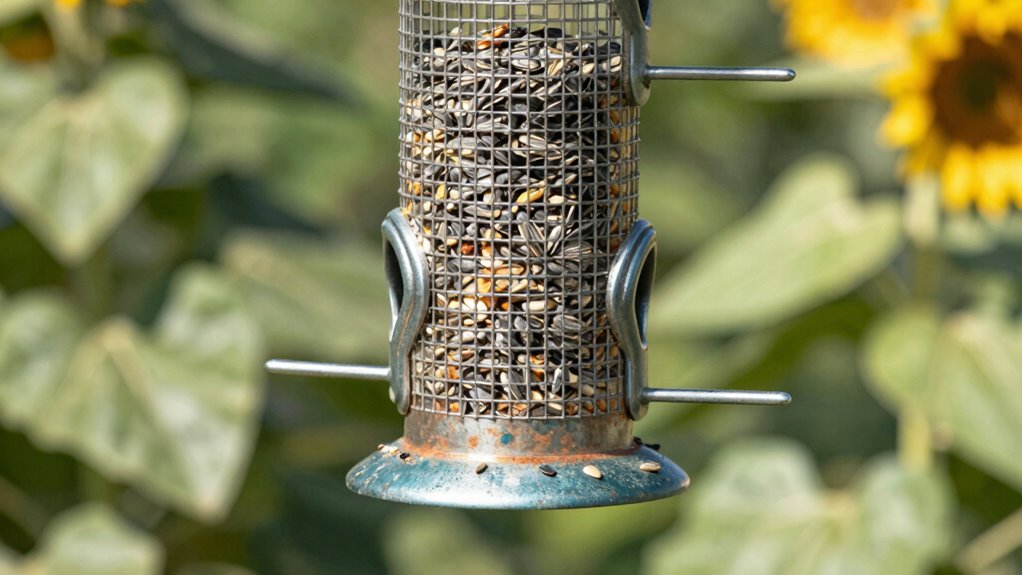

Squirrel-proof feeders use weight-activated mechanisms, metal baffles, and sturdy materials like steel or polycarbonate to stop chewing and spills. These features detect squirrel weight, causing doors or perches to collapse or shift, preventing access. Proper placement and seed choices, like safflower, also help keep squirrels away. While no setup is entirely squirrel-proof, combining these tactics increases success. Keep exploring to discover proven strategies for better squirrel deterrence.
Key Takeaways
- Heavy, weight-activated mechanisms collapse or shift when squirrels land, preventing access and reducing chewing opportunities.
- Durable, chew-resistant materials like powder-coated steel or polycarbonate deter gnawing and prolong feeder lifespan.
- Proper placement away from jumping points and the use of baffles limit squirrel access and jumping ability.
- Using less attractive seeds, such as safflower or nyjer, reduces squirrel interest and spill.
- Secure closures, regular maintenance, and spill-proof designs minimize seed spillage and discourage squirrel foraging.
Why Do Squirrels Chew Through Bird Feeders?
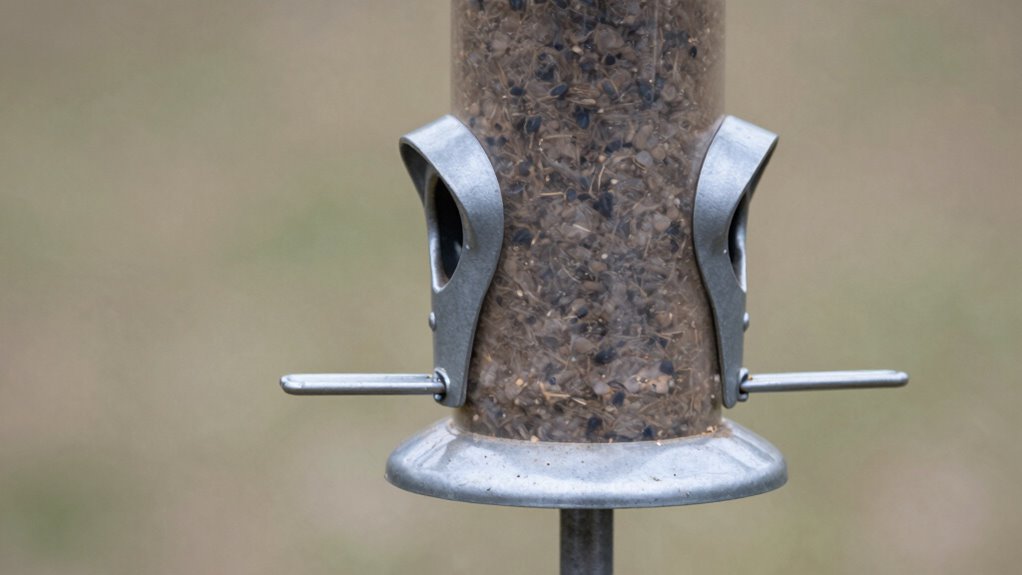
Squirrels chew through bird feeders because they’re determined to access the tasty seeds inside. Their persistence often stems from their natural squirrel diet, which includes nuts, seeds, and grains. They see a bird feeder as an easy, high-value food source. You might notice that some feeders have appealing bird feeder aesthetics, but that doesn’t deter these clever critters. Squirrels are motivated by hunger and curiosity, so they’ll gnaw through plastic or thin metal to reach the seeds. Their teeth grow continuously, so chewing helps keep them sharp and healthy. Understanding this drive helps explain why squirrels target feeders, regardless of how attractive they look or how well they’re designed. Their goal is simple: get to the seeds they crave. Additionally, their strong jaws and high bite force enable them to chew through tougher materials more effectively. This natural adaptation is why some feeders incorporate materials or designs that are more resistant to squirrel damage. In fact, squirrel behavior shows that they will relentlessly seek ways to overcome obstacles to access food sources. Moreover, certain squirrel-proof feeders utilize innovative mechanisms to prevent access, making it harder for these persistent animals to reach the food. Using squirrel deterrent strategies can further reduce their access and protect your bird feed.
What Features Make a Bird Feeder Squirrel-Proof?
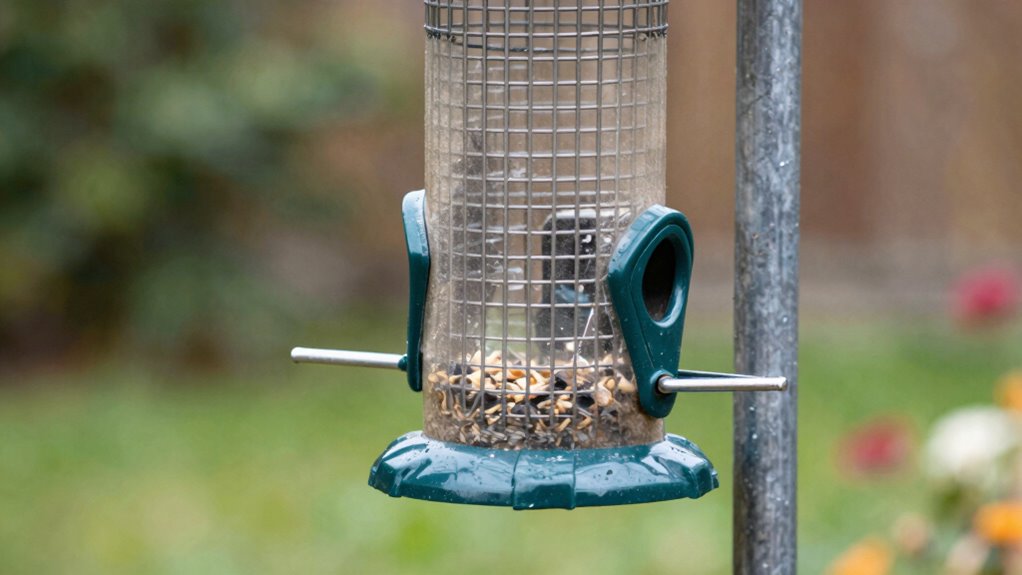
To keep squirrels from accessing your bird seeds, choosing feeders with specific features can make a big difference. Look for models that include weight-activated mechanisms or metal baffles to prevent chewing. Proper birdhouse placement also helps—set feeders away from trees and structures squirrels can jump from. Additionally, selecting seed types like safflower or safflower blends reduces squirrel attraction since they dislike these seeds. Using smart-home integration features can further enhance squirrel-proofing by allowing remote monitoring and control of your feeders. Incorporating safety features such as escape routes or squirrel-proof perches can also help deter persistent chewers. Moreover, understanding squirrel behavior can inform better placement and design choices to keep them at bay. Paying attention to zodiac traits such as their resourcefulness and persistence can also provide insights into effective squirrel deterrents. Proper maintenance and regular cleaning of feeders also help prevent squirrels from learning to access the seeds more easily.
How Do Weight-Activated Baffles and Perches Work?
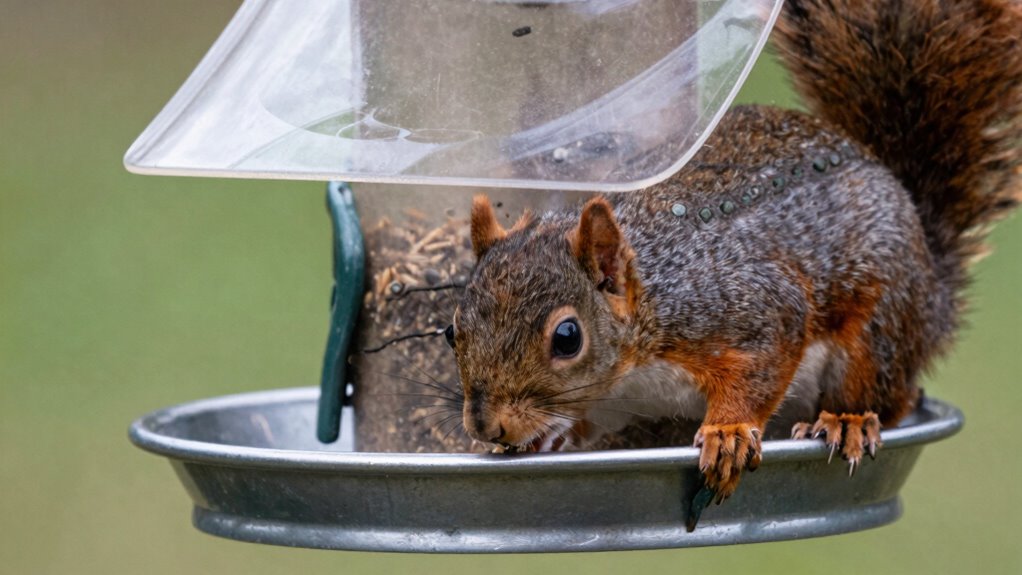
Weight-activated baffles and perches are designed to detect the added weight of a squirrel, causing them to move or collapse when pressure is applied. This shifts the baffle or makes the perch less accessible, deterring unwanted visitors. Additionally, their construction prevents squirrels from chewing through to reach the food, keeping your birds safe. Proper maintenance and choosing high-quality materials are essential to ensure continued effectiveness over time, especially considering squirrel-proof feeder features that are tested for durability. Regular inspection and seasonal safety checklists help maintain their protective functions. Investing in reliable materials ensures these features withstand the elements and squirrel attempts, maintaining their effectiveness. Incorporating smart home technology such as sensors and automated alerts can notify you of potential tampering or damage, helping you respond promptly. Continuous support throughout the project lifecycle ensures the solution remains effective over time.
How Weight Shifts Baffle
When a squirrel lands on a weight-activated perch or baffle, the device responds instantly by shifting or tipping. This quick response leverages the squirrel’s agility, causing the baffle to tilt and block access to the feeder. As a result, the squirrel can’t reach the seeds, preventing seed spillage and reducing mess. The shift is sensitive enough to detect even light touches, making it difficult for squirrels to cheat the system. This mechanism effectively discourages persistent squirrels while allowing birds to feed comfortably. The key to its success is that it relies on weight, not size, so lighter animals like birds can still access the seeds easily. Additionally, these feeders are designed to be weather-resistant, ensuring consistent performance in various outdoor conditions. This simple, smart design keeps the feeder cleaner and squirrel-free. Interestingly, some feeders incorporate net worth technology to monitor usage patterns, ensuring optimal performance and durability.
Perch Design Deterrence
Perch design plays a crucial role in preventing squirrels from accessing bird feeders. Squirrel behavior shows they prefer perches that are easy to grip and allow quick access to food. Weight-activated perches are effective because they react to a squirrel’s weight, causing the perch to collapse or shift, deterring entry. This makes it difficult for squirrels to stay balanced and reach the seeds. Additionally, perch designs can be sleek and minimal, maintaining the bird feeder’s aesthetics while discouraging larger animals. By focusing on lightweight, sensitive perches, you create a barrier that capitalizes on squirrel behavior, making it less tempting for them to try. Proper perch placement and squirrel deterrent features can further enhance protection. For example, selecting appropriate materials that are difficult for squirrels to grip can increase effectiveness. This way, you protect your feeder without sacrificing its visual appeal or attracting unwanted visitors. Spirituality Read
Preventing Chewing Access
By designing feeders with weight-activated baffles and perches, you can effectively prevent squirrels from chewing through them. When a squirrel tries to access the seed, the added weight triggers the baffle or causes the perch to collapse, blocking their reach. This mechanism works well regardless of bird migration patterns or seed types, as it targets the squirrel’s physical effort. To maximize effectiveness, consider these points:
- Heavier baffles stop squirrels before they reach the seed.
- Perches that collapse under weight prevent gnawing access.
- Different seed types attract various bird species, reducing squirrel interest.
- Adjustable weight settings can tailor protection based on squirrel size.
- Proper placement minimizes squirrel jumping and chewing from nearby branches.
- Understanding plant parts helps in designing durable and effective squirrel-proof feeders for long-lasting protection.
- Selecting squirrel-resistant materials can further enhance the durability of your feeder and reduce chewing attempts.
- Regularly inspecting and maintaining your feeder ensures the weight-activated mechanisms stay responsive and effective.
- Incorporating robust construction techniques can also improve the overall longevity of your squirrel-proof feeder.
- Using durable materials in construction is essential to withstand persistent squirrel attempts and environmental conditions.
This approach keeps your feeders intact and bird-friendly.
Which Materials Help Keep Squirrels Away?

Choosing the right materials for your squirrel-proof feeder can make a big difference in keeping these clever critters at bay. Squirrel behavior shows they’re attracted to shiny, smooth, or easily gnawed surfaces, so avoid materials like thin metal or plastic that they can chew through. Instead, opt for tough, durable options such as powder-coated steel or heavy-duty polycarbonate, which resist chewing and damage. These materials not only deter squirrels but also maintain bird feeder aesthetics, blending well with your outdoor décor. The sturdiness of the materials discourages climbing and gnawing, making it less tempting for squirrels to attempt entry. By selecting effective, squirrel-resistant materials, you help protect your bird feeders and ensure your feathered friends get the nourishment they need.
Do Squirrel-Proof Bird Feeders Really Prevent Chewing and Spills?
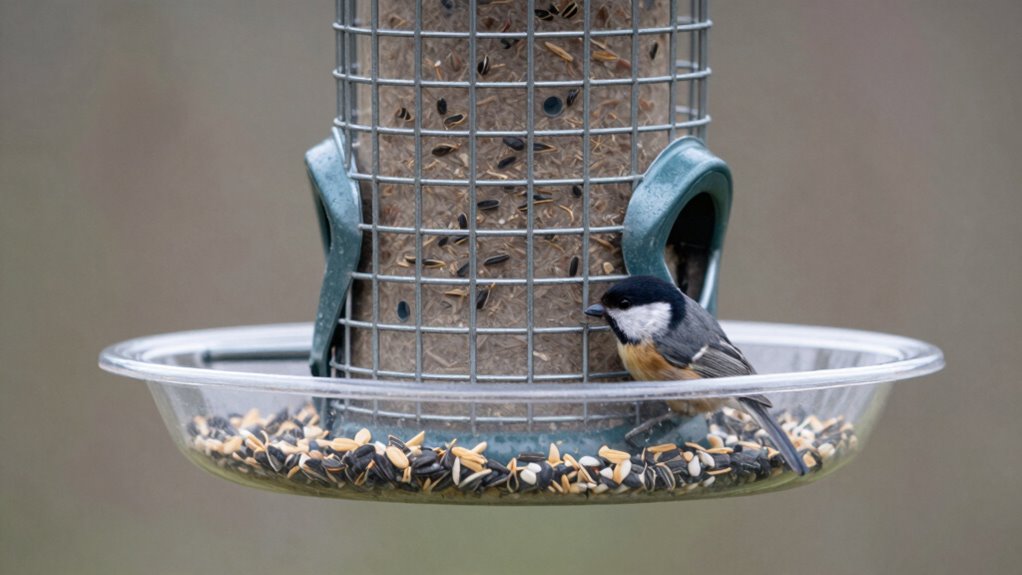
Do squirrel-proof bird feeders truly prevent chewing and spills? While they reduce messes, they don’t eliminate all issues. Many designs incorporate features inspired by birdhouse design to deter squirrels, but clever critters can still find ways around them. Spill prevention depends on seed storage options and how securely the feeder closes. Some models limit access or use weight-activated mechanisms to keep squirrels out, but gaps or weak spots may still exist. Keep in mind that no feeder is completely squirrel-proof, but improvements help.
- Well-constructed seed compartments minimize spillage
- Tight-fitting lids prevent squirrel access
- Durable materials deter chewing
- Secure mounting prevents tipping
- Proper seed storage reduces messes
Popular Squirrel-Resistant Feeder Designs and How They Function
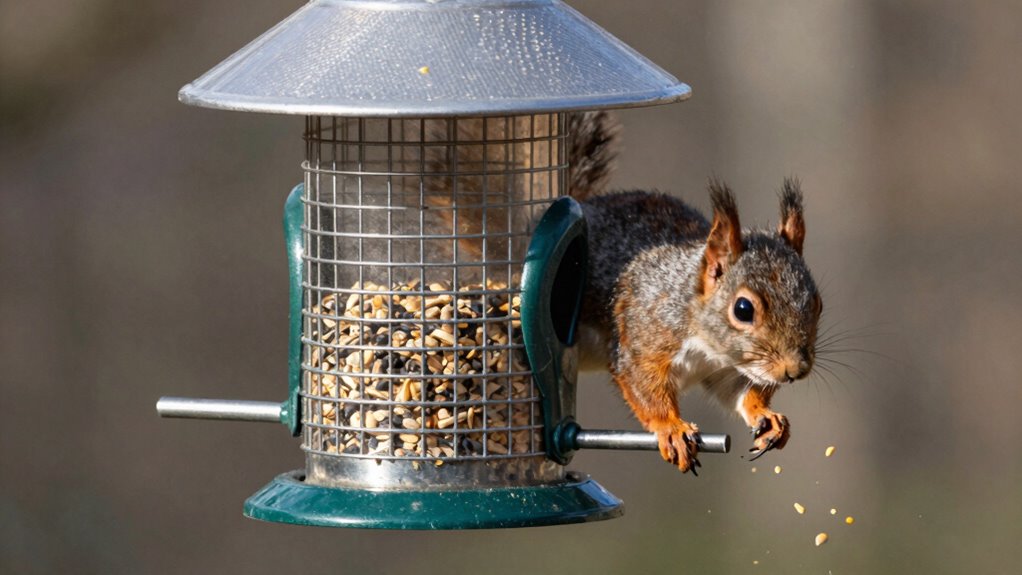
Popular squirrel-resistant feeders incorporate innovative designs that actively prevent critters from accessing the seeds. Many feature weight-activated mechanisms that close access when a squirrel’s weight is detected, allowing only smaller birds to feed. Others use cage or baffle designs that block large animals while still enabling seed dispersal for preferred bird species. These designs consider habitat preferences, ensuring that the feeder’s placement minimizes squirrel access and disturbance. Some models incorporate perches with restrictors or spinning parts that deter squirrels from hanging onto the feeder. By understanding how different designs work, you can select a feeder that aligns with your yard’s environment and the natural seed dispersal habits of local birds, reducing squirrel interference while supporting healthy bird populations.
Installing and Maintaining Your Squirrel-Proof Bird Feeder
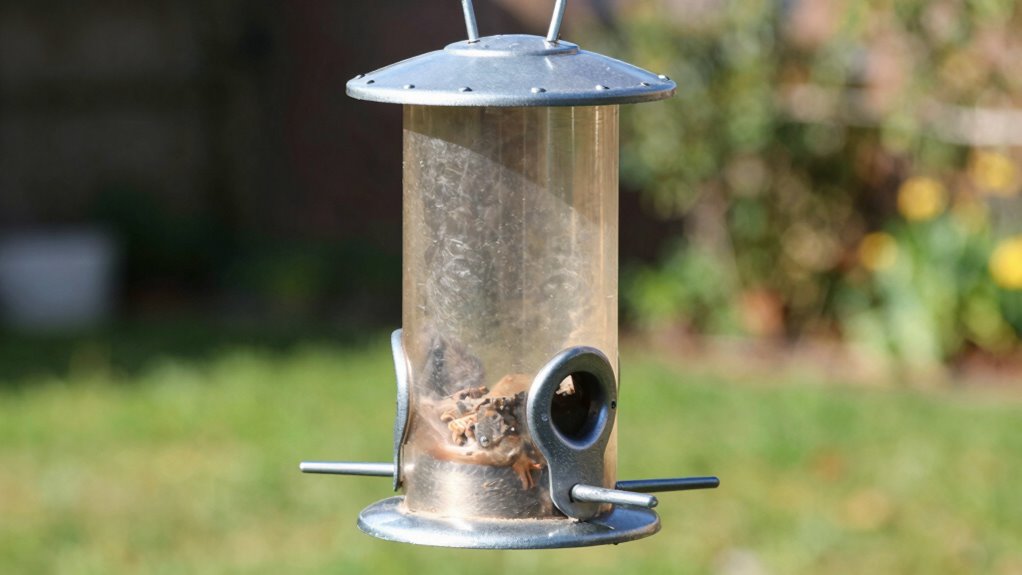
Proper installation and regular maintenance are essential to guarantee your squirrel-proof bird feeder functions effectively. Ensuring it’s securely mounted prevents squirrels from tipping or dislodging it. Check the feeder often for wear, especially around moving parts, to keep it working properly. When refilling, consider the bird seed composition; using seeds less attractive to squirrels, like safflower or nyjer, helps deter them. Keep the area around the feeder clean and free of spilled seed, which can attract squirrels and encourage them to establish a habitat nearby.
Secure and maintain your squirrel-proof bird feeder regularly for optimal performance.
- Securely mount the feeder at the recommended height
- Regularly inspect and clean moving parts
- Use bird seed that squirrels dislike
- Remove debris and spilled seed from the ground
- Limit nearby shrubbery to reduce squirrel habitat
What Are the Limitations of Squirrel-Proof Features?
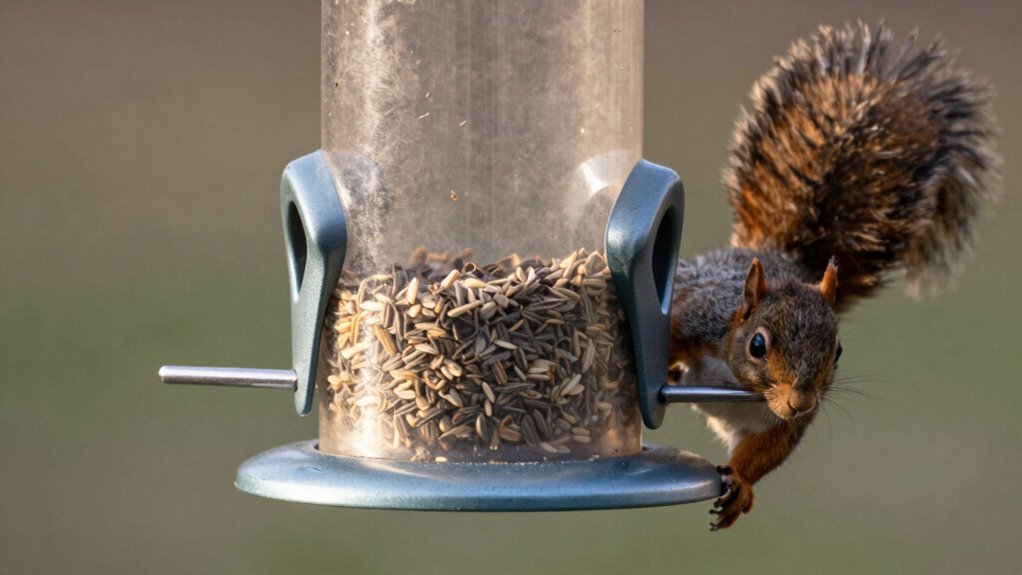
While squirrel-proof features can substantially reduce the chances of squirrels accessing birdseed, they are not foolproof. Squirrels are clever and persistent, often finding ways to bypass barriers or manipulate mechanisms. Over time, they may learn to open or disable certain features, diminishing their effectiveness. Additionally, some designs can compromise your garden aesthetics, making the bird feeder look less appealing or cluttered. You might also face challenges in balancing squirrel deterrence with maintaining an attractive bird feeder aesthetic. Moreover, weather conditions like rain or snow can interfere with mechanical parts, reducing their reliability. Ultimately, while these features help, they don’t guarantee squirrels won’t get to the seed, so you should consider them as part of a broader squirrel management strategy.
Additional Tips to Keep Squirrels Off Your Birdseed
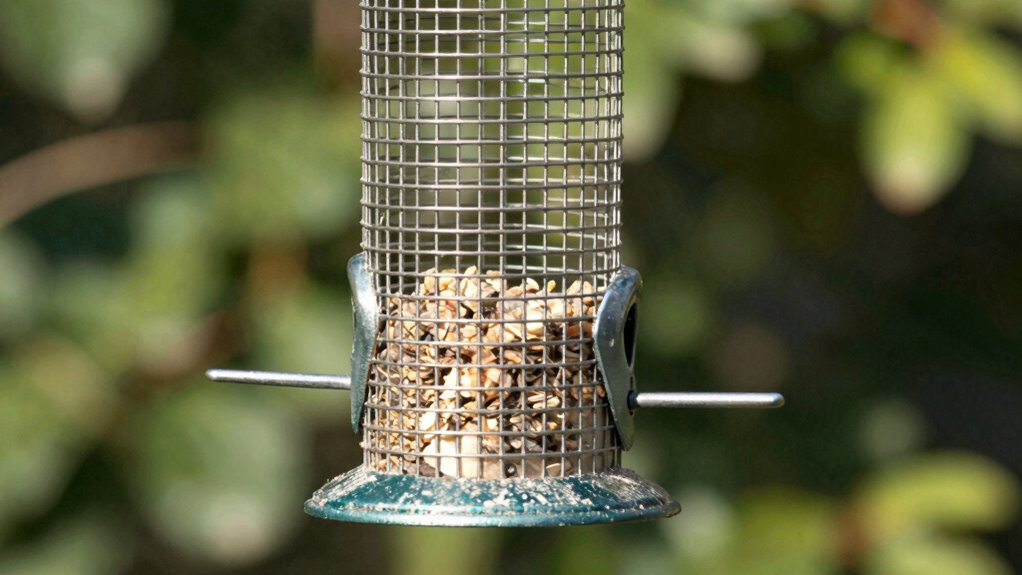
To effectively keep squirrels away from your birdseed, consider combining multiple strategies rather than relying on a single solution. Proper bird feeder placement is key—place feeders away from trees, fences, or dense shrubbery that serve as squirrel habitat. Elevate feeders on squirrel-proof poles or hang them with bungee cords to make access harder. Regularly clean up spilled seed to reduce attracting squirrels. Use feeders with weight-activated perches or baffle systems to prevent chewing. Additionally, consider offering squirrel-specific food sources away from your main feeding area to divert their attention.
- Place feeders at least 10 feet from jumping-off points
- Use baffles to block squirrel access
- Install feeders on sturdy, squirrel-proof poles
- Keep the area around feeders clear of debris
- Rotate feeder locations regularly
Choosing the Best Squirrel-Proof Bird Feeder for Your Backyard
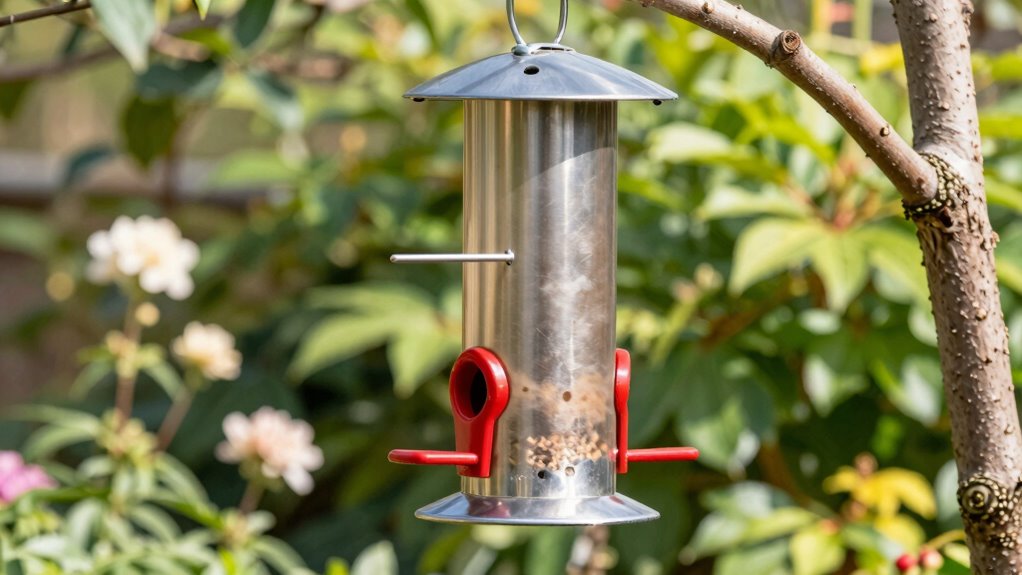
Choosing the right squirrel-proof bird feeder can make a significant difference in protecting your seed supply. To do this effectively, consider your birds’ nutritional needs and natural behaviors. Select a feeder that offers easy access for small songbirds but deters larger squirrels with features like weight-activated perches or bouncer mechanisms. Look for designs that minimize spillover, so your seed stays fresh longer. Guarantee the feeder encourages natural behaviors by providing perching options that suit different bird species. Durability is also key; sturdy materials prevent damage from persistent squirrels. Finally, choose a style that complements your backyard while prioritizing functionality. When you understand your birds’ needs and how squirrels operate, you can select a feeder that truly keeps pests out and supports healthy, natural feeding habits.
Frequently Asked Questions
Can Squirrels Adapt to Bypass Squirrel-Proof Feeders?
Yes, squirrels can adapt to bypass squirrel-proof feeders through their ingenuity, often discovering new tricks and weaknesses. To counter this, you need to regularly update your feeder’s design and choose models with high feeder adaptability. Keep an eye on any new tactics squirrels use and modify your setup accordingly. Staying vigilant and inventive helps you outsmart their cleverness, ensuring your feeders remain protected from persistent, adaptable squirrels.
Are There Specific Bird Seed Types That Deter Squirrels?
You can deter squirrels by choosing seed blends that cater to their seed preferences, like safflower or spicy blends. These options tend to be less appealing to squirrels, increasing the effectiveness of your squirrel deterrent efforts. By selecting the right seed blend, you make your feeder less attractive, helping to keep squirrels away and ensuring your preferred birds get the food they need. This simple switch can markedly improve your feeder’s squirrel-proofing.
How Long Do Squirrel-Proof Features Typically Last?
Squirrel-proof features usually last between one to five years, depending on durability concerns and how well you maintain your feeder. You’ll need to check for wear or damage regularly and clean it to prevent clogging or rust. Proper maintenance extends the lifespan of these features, ensuring they continue to effectively stop squirrels from chewing or spilling seed. Investing in high-quality materials can also improve durability and reduce replacement frequency.
Do Squirrel-Proof Feeders Affect Bird Variety or Behavior?
Squirrel-proof feeders generally don’t negatively affect bird variety or behavior if you consider outdoor wildlife considerations and bird feeding ethics. They attract different bird species without discouraging others or disrupting natural feeding habits. By providing a safe, ethical feeding environment, you support diverse bird populations, ensuring that your feeding practices respect wildlife and promote healthy, balanced ecosystems. This way, you enjoy varied bird visits while maintaining responsible outdoor wildlife interactions.
What Are Cost Differences Between Various Squirrel-Proof Options?
Did you know squirrel-proof feeders can cost anywhere from $20 to over $200? The cost comparison varies widely, with basic models around $20-$50 and advanced options exceeding $100. Affordability factors include durability, complexity of design, and brand reputation. If you want effective squirrel protection without overspending, consider balancing features and price to find a model that fits your budget and keeps squirrels at bay efficiently.
Conclusion
Think of a squirrel-proof feeder as your backyard’s fortress, designed to keep unwanted guests at bay. While no system is perfect, choosing the right features and staying vigilant can turn your feeding station into a sanctuary for your birds. With patience and the right setup, you’ll outsmart those clever squirrels and enjoy a clutter-free, bird-filled oasis. Remember, persistence is key—soon your feeder will be a safe haven where your feathered friends can feast undisturbed.