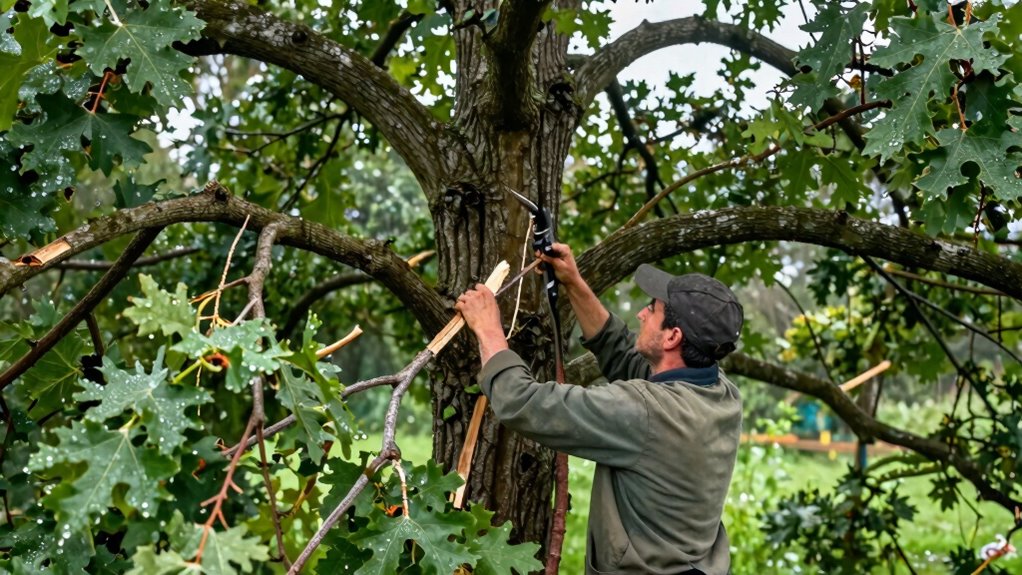

To clean up storm-bent plants, examine each one carefully and remove any damaged or broken parts to prevent disease spread. Support and stabilize leaning plants with stakes or cages, using soft ties to avoid damage. Loosen soil around the roots and add organic matter to promote recovery. Keep your garden tidy by clearing debris and shredded leaves, and mulch around plants to protect against future weather. For more tips on ensuring healthy plant recovery, continue to explore effective methods.

Get garden gear delivered free with Prime
- Fast, free delivery on millions of items
- Prime Video, Amazon Music and more included
- Member-only deals all year
Key Takeaways
- Carefully assess and remove damaged or broken plant parts to prevent disease spread.
- Support and stabilize bent plants with stakes or cages to encourage upright growth.
- Clear debris and shredded material around plants to reduce pest and disease habitats.
- Prune plants to improve airflow and health, sterilizing tools before and after use.
- Mulch around plants and monitor regularly for signs of recovery or further issues.

After a storm, it’s crucial to promptly clean up bent plants to prevent disease and encourage healthy growth. When you start, carefully examine each plant to determine the extent of the damage. Bent stems or broken branches can become breeding grounds for fungi or bacteria if left untreated. To minimize this risk, remove any visibly damaged or compromised plant parts. This step not only prevents disease spread but also helps your plants recover more quickly. As you work, keep in mind the importance of soil preparation; loosen and aerate the soil around the plants’ roots. Proper soil prep ensures good drainage and promotes root health, which is essential for your plants to bounce back after a storm. You might want to add compost or organic matter to improve soil fertility, making it easier for plants to regain strength. Incorporating proper soil preparation techniques can significantly enhance the resilience of your garden after storm damage. Supporting your plants is equally important when cleaning up after a storm. If a plant is bent but not broken, gently staking it can help it recover and grow upright again. Use sturdy plant supports like stakes or cages, placing them carefully to avoid damaging the roots or stems. Secure the plant using soft ties or plant clips that won’t cut into the stems. This support prevents further stress from wind or additional storms and encourages proper growth direction. For plants with significant damage, consider pruning back broken branches or stems to healthy tissue. Pruning not only aids recovery but also improves airflow, reducing the risk of disease. Be sure to sterilize your tools before and after pruning to prevent introducing pathogens. As you clean up, remove debris, fallen leaves, and shredded plant material from around the base of your plants. This debris can harbor pests or disease spores, so disposing of it properly is vital. Additionally, inspecting your plants regularly for early signs of plant disease can help you catch issues before they spread. Regular garden maintenance can also help you identify potential problems early, ensuring a healthier recovery. Once the area is cleared, mulch around the plants if possible. Mulching helps retain soil moisture, regulate temperature, and protect roots from future weather extremes. Remember, soil preparation isn’t just about fixing the soil, but also about creating a stable environment that supports your plants’ future growth. Healthy soil plays a key role in plants’ ability to withstand adverse weather conditions, making it an essential part of post-storm recovery. By providing plant support and maintaining clean, healthy soil, you set the stage for your garden to recover swiftly and thrive despite storm damage. Keep a close eye on the plants over the following weeks, adjusting supports as needed and checking for signs of disease, so they can continue to grow strong and healthy. Additionally, soil health plays a key role in plants’ ability to withstand adverse weather conditions, making it an essential part of post-storm recovery.
As an affiliate, we earn on qualifying purchases.
Frequently Asked Questions
How Do I Prevent Future Storm Damage to Plants?
To prevent future storm damage, you should use plant staking to support vulnerable plants and keep them upright during high winds. Consider planting wind resistant plants that naturally withstand storms better. Regularly prune and maintain your garden to reduce wind resistance and loose branches. Additionally, planting in strategic locations, like behind windbreaks or sheltered areas, can shield your plants from the full force of storms, minimizing damage.
When Is the Best Time to Prune Storm-Damaged Plants?
You should prune storm-damaged plants during late winter or early spring, when they’re dormant and less stressed. Timing considerations help guarantee healthy growth and minimize stress. Use proper pruning techniques, cutting just above healthy buds or branches to promote new growth. Avoid pruning immediately after a storm, as the plant needs time to recover. Regularly inspect your plants, and prune cautiously to maintain their shape and health.
Can I Save Severely Bent or Broken Plants?
Yes, you can save severely bent or broken plants if you promptly assess the damage and focus on plant recovery. Start by doing a damage assessment to determine if the plant’s structural integrity can be restored. Prune away broken or severely bent branches carefully, making clean cuts to encourage healing. Support leaning plants with stakes, and guarantee proper watering and nutrients to promote healthy growth and recovery.
What Tools Are Safest for Storm Plant Cleanup?
For storm plant cleanup, you want to prioritize safety. Use hand tools like pruning shears or loppers for delicate cuts, and power tools like chainsaws or reciprocating saws for larger branches. Always wear protective gear such as gloves, goggles, and ear protection when operating power tools. This guarantees you avoid injuries while efficiently removing storm-damaged plants. Stick to these tools and safety measures for a safe, effective cleanup.
How Do I Dispose of Storm-Damaged Plant Debris?
You need to act quickly on storm debris removal to prevent hazards and disease. Start by collecting storm-damaged plant debris with gloves and a rake, then decide on your plant disposal methods. Compost healthy plant material if possible, but discard any infected or diseased debris in yard waste containers or trash bins. Be cautious—storm-damaged plants can hide dangers, so stay alert as you clear the area.
As an affiliate, we earn on qualifying purchases.
Conclusion
By clearing away storm-bent plants promptly, you restore your garden’s energy and beauty. Think of your garden as a living poem—each plant a word, each branch a verse. When storms strike, don’t let the chaos diminish your harmony. Instead, embrace the chance to renew and nurture, turning destruction into growth. Remember, even the roughest storms can inspire new beginnings—sometimes, you must clear the debris to reveal the masterpiece beneath.
As an affiliate, we earn on qualifying purchases.
As an affiliate, we earn on qualifying purchases.
Fall Picks
fall essentials
As an affiliate, we earn on qualifying purchases.