
TL;DR
Two experts say properties can better support barn owls by preserving healthy habitat and, where conditions are suitable, installing a nest box in a quiet, dark location at least eight feet above ground. Open fields nearby matter, and boxes should not draw owls toward busy roads or places where people may disturb nesting birds.
After construction workers disturbed a Manhattan water tower used by a family of two adult barn owls and five fledglings, the birds moved on and appeared to be safe, according to the source report. Ornithologist Robert Mulvihill and Cornell Lab of Ornithology project assistant Holly Grant say property owners who want to support barn owls should focus on suitable prey habitat and, only in appropriate locations, a quiet, dark nest box near open hunting grounds.

Get garden gear delivered free with Prime
- Fast, free delivery on millions of items
- Prime Video, Amazon Music and more included
- Member-only deals all year
The Manhattan family’s reported departure has drawn attention to what barn owls need beyond a place to roost. Grant says a wildlife-friendly yard should support not just barn owls but the food web they depend on, including rodents and other prey and the resources those animals need. She describes diverse yards as potential oases for local wildlife, particularly in developed areas. The report does not identify the owls’ new location or say whether they later returned.
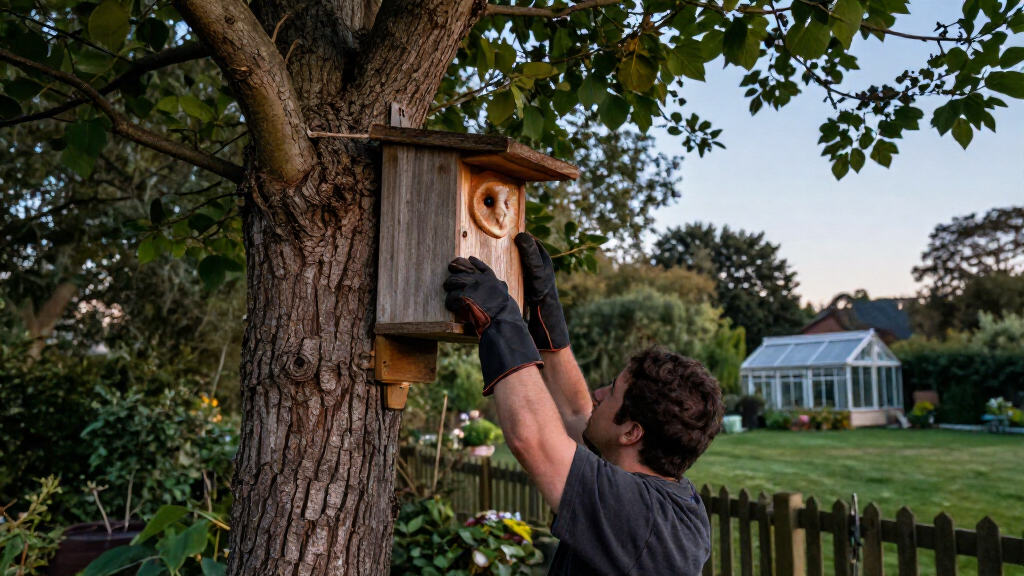
For people with appropriate rural properties, nest boxes may provide a nesting site where old barns or hollow trees are scarce. The experts say boxes are most likely to attract owls where open fields nearby offer hunting grounds. Owners can build a box from a suitable plan or buy one, but attracting birds is not automatically beneficial: Mulvihill warns against placing a box where owls would have to cross a busy highway to reach prey.
Choose a quiet location at least eight feet above the ground, away from light sources and regular human activity. The report says disturbance can lead barn owls to abandon a site, particularly early in the nesting season, identified there as April to May. Grant also warns that young owls can be noisy while begging for food. She recommends cleaning a box at least once a year, with fall cleaning helping prepare it for the following nesting season.
Make Room for Barn Owls Safely
Two experts say suitable habitat comes first. A nest box helps only when nearby hunting grounds and a safe, quiet location make it appropriate.
Start with the Habitat
A nest box cannot make an unsuitable landscape safe for owls.
Support the food web
Healthy habitat supports rodents and other prey barn owls depend on.
Keep fields nearby
Open fields offer hunting grounds. Check that owls can reach them safely.
Add a box if suitable
Boxes may help where old barns or hollow trees are scarce.
Choose a Safe Location
Place a box only where it will not draw owls into avoidable danger or disturbance.
Avoid locations where owls would have to cross a busy highway to reach prey.
Choose a dark location at least eight feet above ground, away from lights and regular activity.
Disturbance can lead owls to abandon a site, especially early in nesting season.
Plan for Ongoing Care
A box requires upkeep, and attracting owls is not a guaranteed result.
- Clean the box at least once a year.
- Use fall cleaning to prepare for the next nesting season.
- Young owls can be noisy while begging for food.
- Box occupancy and rodent control are not guaranteed.
Habitat Choices Affect Owl Safety
Well-placed nest boxes can add nesting opportunities, but a box cannot make an unsuitable landscape safe. Open hunting habitat, low disturbance and distance from traffic all matter to whether an installation supports the birds or creates added risks. The experts’ advice points property owners toward habitat planning rather than treating a nest box as a simple wildlife attraction.
Barn owls prey on small mammals, so their presence may also benefit farms and other properties dealing with rodents. Mulvihill says research at some California vineyards found that barn owls attracted to nest boxes cut rodent abundance in half. He also cites a study estimating that two dozen families in a 99-acre vineyard consumed more than 30,000 rodents over three seasons. Those findings describe particular vineyard studies, not a guaranteed result for every property or a promise that owls will replace other pest management.
Mulvihill says barn owl numbers are declining in about half of U.S. states, especially in the Upper Midwest and Northeast, as grasslands and small family farms disappear. The report links that habitat loss to fewer pastures and hayfields for hunting and fewer old barns and hollow trees for nesting. Supporting suitable habitat can matter beyond an individual yard, although the source does not quantify the effect of any one household’s actions.
Products Worth Considering

Orbit B-hyve XR 8-Zone Indoor/Outdoor Smart Sprinkler Controller

Husqvarna ST 124 212cc Two-Stage Snow Blower, 24-Inch

Husqvarna Automower 550 Robotic Lawn Mower
As an affiliate, we earn on qualifying purchases.
From Manhattan Roost to Rural Habitat
The Manhattan birds were described as an unusual presence: the report says barn owls had not previously been known to nest in the borough. Construction disturbed the water tower where they roosted, after which the family moved. The source says they appeared safe but provides no tracking information or confirmed destination.
Mulvihill identifies the continent’s species as the American barn owl, part of the Tytonidae family. He contrasts the 15 look-alike barn owl species worldwide with roughly 230 species in the Strigidae family, which includes familiar owls such as the great horned and snowy owls. Barn owls hunt at night, using exceptional hearing to locate prey; unlike many other owls, they screech and hiss rather than hoot.
The report says barn owls are not currently considered endangered, while noting declines across about half of U.S. states. Their ability to nest in barns, tree hollows and boxes does not remove their need for accessible prey and safe habitat. That distinction is relevant to the Manhattan story: a roost site alone cannot guarantee that a location remains suitable when construction or surrounding conditions change.
““Diverse, wildlife-friendly yards can help the local ecosystem thrive by providing an oasis of resources, especially in more urban or developed areas.””
— Holly Grant, project assistant for NestWatch at the Cornell Lab of Ornithology
The Owls’ Next Roost Is Unknown
The source report does not say where the Manhattan family went, whether the birds have found another roost or nesting site, or whether construction at the water tower is continuing. Its description that the family appeared safe is not accompanied by details about how the birds were monitored. The report also does not establish whether the family was nesting at the tower or using it primarily as a roost.
For property owners, the experts offer general siting advice rather than a guarantee that a box will be occupied. The likelihood of attracting owls depends on local habitat and prey, and the report gives no universal distance from roads, lighting or houses beyond the advice to choose a quiet, dark site at least eight feet high. The cited rodent-control research concerns specific California vineyards; results may differ elsewhere.
Plan for Safe Nesting Sites
Anyone considering a nest box should first check whether the property has nearby open fields and a safe route to hunting areas. If a busy road lies between a potential box and prey habitat, Mulvihill’s warning argues against attracting owls there. Where conditions are suitable, place a box away from lights and frequent activity, avoid disturbing it during nesting, and schedule annual cleaning in fall, as Grant recommends.
The source provides no announced follow-up on the Manhattan owls or a timeline for further reporting. Their next confirmed location, and any change in the construction site, remain unknown. More broadly, the advice points to protecting the open grasslands, farms and nesting structures that barn owls use, alongside careful monitoring of any box installed.
Key Questions
Where should a barn owl nest box go?
Experts recommend a quiet, dark location at least eight feet above the ground, away from lights and regular disturbance. Nearby open fields should provide hunting habitat.
Should I install a box if my property is near a busy highway?
Not necessarily. Mulvihill warns that barn owls are susceptible to vehicle collisions and says owners should avoid attracting them where they must cross busy highways to reach hunting grounds.
When should a barn owl box be cleaned?
Grant recommends cleaning it at least once a year. Fall cleaning can leave the box ready for the next nesting season.
Will a nest box guarantee barn owls or reduce rodents?
No. The experts say boxes are most likely to attract owls where open fields and suitable prey are available. Rodent-control findings cited in the report come from particular California vineyards and do not predict results at every property.
Where did the Manhattan barn owl family go?
The source report says the two adults and five fledglings moved on after construction disturbed their water-tower roost, but it does not identify their destination or confirm whether they found another site.
Source: countryliving.com