
Many lawn aeration myths waste your time by suggesting you should aerate regularly, even if your soil isn’t compacted or thatch isn’t a problem. If your lawn is healthy, with deep roots and no water pooling, aeration isn’t necessary. Over-aerating can do more harm than good. To avoid these mistakes, understand your lawn’s specific needs and only aerate when issues like soil compaction or thick thatch are present. Keep going to learn how to spot those signs.

Get garden gear delivered free with Prime
- Fast, free delivery on millions of items
- Prime Video, Amazon Music and more included
- Member-only deals all year
Key Takeaways
- Believing aeration fixes all lawn problems; it only targets soil compaction and thatch, not other issues.
- Aerating a healthy lawn with minimal thatch and good soil structure is unnecessary and a waste of effort.
- Using aeration as a universal solution ignores specific lawn conditions and needs.
- Over-aerating can harm the lawn by disrupting healthy root systems instead of improving them.
- Timing aeration without assessing soil health or underlying issues leads to ineffective and unnecessary treatments.
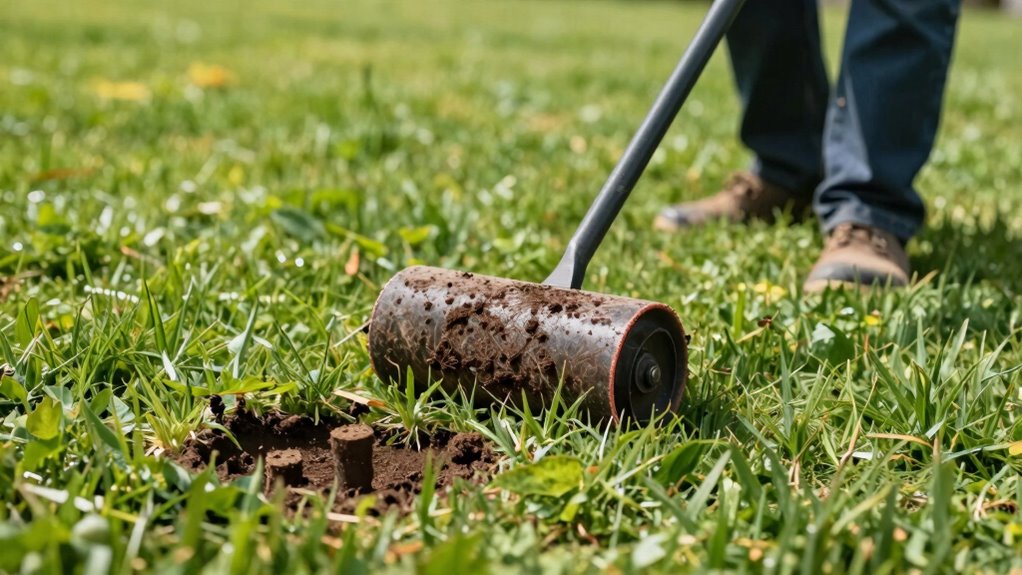
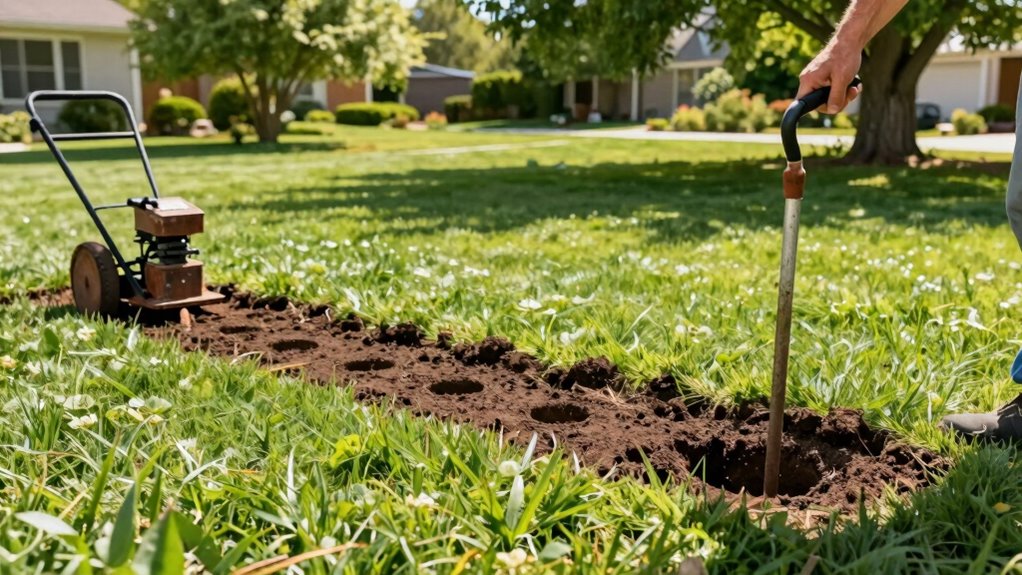
Have you ever wondered if lawn aeration is truly necessary or if it’s just another gardening myth? Many homeowners believe aeration is a quick fix for all lawn problems, but that’s not always the case. The truth is, aeration targets specific issues like soil compaction and thatch buildup, which can hinder your lawn’s health. Soil compaction occurs when the soil becomes densely packed, making it difficult for roots to grow deep and access water and nutrients. If your lawn feels hard underfoot or water tends to pool after rain, you might be dealing with compacted soil. Aeration creates small holes that loosen the soil, allowing roots to breathe and expand. However, if your soil isn’t compacted, aeration won’t deliver much benefit and could even be unnecessary.
Similarly, thatch buildup is often misunderstood. Thatch is a layer of dead grass, roots, and other organic matter that accumulates between the soil surface and your lawn’s green top. When thatch becomes thick—more than half an inch—it can prevent water, air, and nutrients from reaching the soil. Aerating can help break up this layer, encouraging decomposition and improving overall turf health. But if your thatch layer is minimal, aeration might not make any real difference. Over-aerating a lawn with little thatch can be a waste of time and effort. Additionally, understanding the soil health of your lawn can help you decide whether aeration is needed or if other lawn care practices would be more effective. Proper soil testing can provide detailed insights into your soil’s condition, guiding your maintenance decisions.
Recognizing the signs of poor soil can also guide your decision-making process, ensuring you target the right issues rather than relying solely on aeration. Many people fall into the trap of thinking aeration is a universal solution, but it’s not a one-size-fits-all fix. If your lawn is healthy, with deep roots, no water pooling, and minimal thatch, aeration may not be worth the effort. It’s best to assess your lawn’s specific issues first. Aeration is most beneficial when you notice persistent compaction or significant thatch buildup. Also, timing matters—spring or fall are usually the best times to aerate, especially before overseeding or fertilizing. Understanding the specific lawn issues can help you determine whether aeration is a worthwhile investment.
As an affiliate, we earn on qualifying purchases.
Frequently Asked Questions
How Often Should I Aerate My Lawn?
You should aerate your lawn once or twice a year to promote root health and reduce soil compaction. If your soil is heavily compacted or your lawn sees heavy foot traffic, consider aerating more often. Regular aeration helps improve water, nutrient, and air penetration, which keeps roots healthy and your lawn lush. Don’t fall for myths that suggest more frequent aeration is always better; stick to the recommended schedule.
Is Aeration Suitable for All Grass Types?
Aeration is suitable for most grass varieties, but the frequency and method depend on your lawn type. Warm-season grasses like Bermuda or Zoysia benefit from aeration to improve air and nutrient flow, while cool-season grasses such as Kentucky bluegrass also gain from it. The aeration benefits include better root development and reduced soil compaction, making your lawn healthier overall. Just make certain you choose the right timing and equipment for your specific grass type.
Can I Aerate During Winter?
You can aerate during winter, but it’s best to do so during winter dormancy when grass isn’t actively growing. Avoid aerating during frost impact periods, as frozen or icy soil can make aeration ineffective and damage your lawn. Wait until the ground thaws slightly and conditions are soft enough to guarantee compaction and root damage. This timing assures your lawn benefits without risking harm from harsh winter conditions.
Does Soil Type Affect Aeration Effectiveness?
Think of your soil as a garden maze—its composition determines how easily air and nutrients flow through. Soil type definitely affects aeration benefits; sandy soil welcomes aeration like a sponge soaking up water, while clay can resist it, like a stubborn gate. Understanding your soil’s makeup helps you target aeration efforts effectively, ensuring your lawn gets the invigorating gust it needs for lush, healthy growth.
Should I Fertilize Before or After Aeration?
You should fertilize after aeration to maximize nutrient absorption. Aeration creates holes that allow fertilizers to penetrate deeper into the soil, making nutrients more accessible to your grass roots. Timing fertilizer application post-aeration guarantees your lawn benefits fully from the nutrients, promoting healthier growth. Avoid fertilizing before aeration, as the nutrients may sit on the surface or be washed away, reducing effectiveness and wasting your effort.
As an affiliate, we earn on qualifying purchases.
Conclusion
Don’t let these myths be the siren song that leads you astray, wasting time and effort on unnecessary or harmful practices. Like Icarus flying too close to the sun, believing in false truths can cause your lawn’s health to falter. Instead, arm yourself with knowledge and approach aeration with confidence. With proper care, your lawn will flourish, standing tall and resilient—an enduring proof to wisdom over myth.
As an affiliate, we earn on qualifying purchases.
As an affiliate, we earn on qualifying purchases.
Halloween Picks
halloween
As an affiliate, we earn on qualifying purchases.