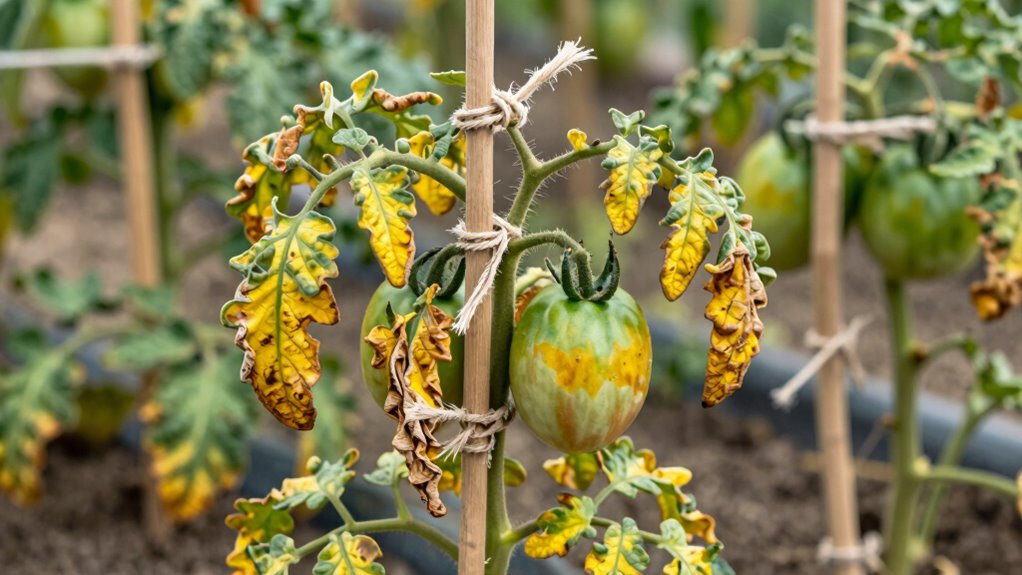
Staking a plant for too long can weaken its natural growth because it relies on support instead of developing strong roots. When plants are constantly tied, their root systems stay shallow and less stable, making them more vulnerable to pests and diseases. Over time, this dependence prevents proper root establishment, which weakens the plant’s overall resilience. If you want healthier, sturdier plants, understanding when to remove supports is key—there’s more to discover about the right timing.

Get garden gear delivered free with Prime
- Fast, free delivery on millions of items
- Prime Video, Amazon Music and more included
- Member-only deals all year
Key Takeaways
- Prolonged staking hampers natural root development, making plants shallow and less stable.
- Extended support causes plants to become reliant, weakening their ability to stand independently.
- Continuous tying restricts growth and can cause physical damage, increasing vulnerability to pests and diseases.
- Over-supported plants may develop weak structural integrity, leading to instability once stakes are removed.
- Long-term staking prevents plants from adapting to environmental stresses, reducing overall resilience.
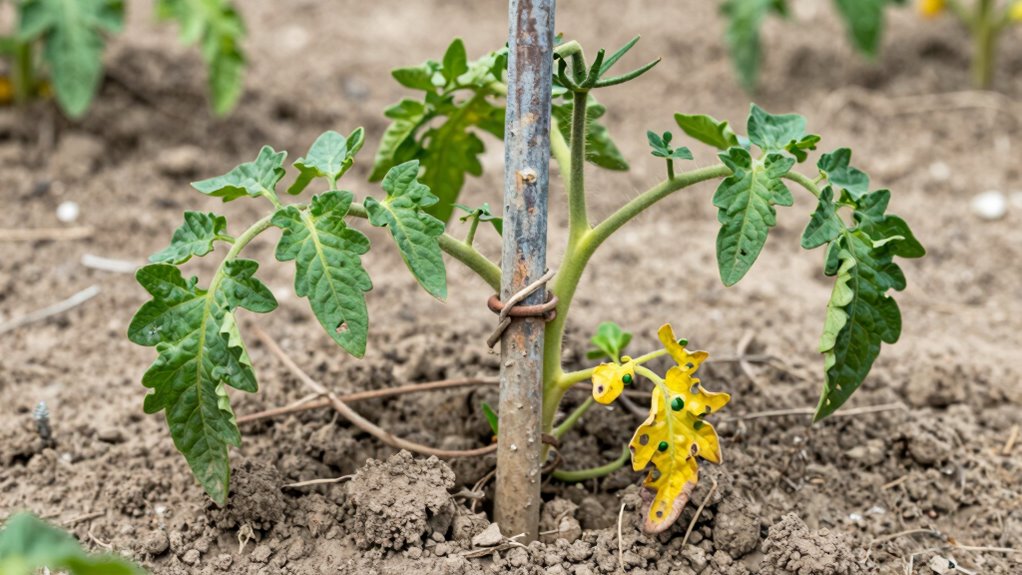
Have you ever wondered why staking a plant for too long can actually do more harm than good? It’s a common mistake many gardeners make, thinking that supporting a plant indefinitely ensures it stays upright and healthy. But in reality, leaving a stake in place for too long can interfere with the plant’s natural growth process. When a plant is constantly tied to a stake, its root development can suffer because it doesn’t need to dig deep or spread out to stabilize itself. Instead, the plant becomes reliant on external support, which weakens its overall structure and resilience. This shallow root system can make the plant less stable over time, especially if the support is removed suddenly or if the weather turns windy.
Furthermore, prolonged staking can increase the plant’s susceptibility to pests and diseases. When a plant is constrained and its growth is restricted, it often becomes stressed. Stress weakens the plant’s immune defenses, making it easier for pests to settle and for diseases to take hold. Additionally, the physical contact between the stake and the plant can create entry points for pests or pathogens, especially if the ties are tight or abrasive. These openings provide pests with easy access, and the stress signals from the plant can attract additional unwanted visitors. Over time, this situation can lead to a cycle of declining health, where pests and diseases further weaken the plant, making it more dependent on continued support.
It’s important to recognize that plants are designed to grow naturally without constant intervention. Supporting them temporarily during critical growth phases is beneficial, but leaving stakes in for too long can hinder their development. Supporting plants temporarily during critical growth phases and then removing supports encourages better root growth, which in turn provides the plant with a more robust foundation to withstand environmental stresses. The roots need the freedom to develop properly and establish a strong foundation. The key is to monitor your plants regularly and remove the support once they’re strong enough to stand on their own. Doing so encourages better root growth, which in turn provides the plant with a more robust foundation to withstand environmental stresses. When the roots develop properly, the plant becomes more resistant to pests and less prone to disease.
Additionally, understanding the natural growth habits of specific plants can help determine the appropriate timing for removing supports, ensuring they are not left in place longer than necessary. Proper timing for removal of stakes allows the plant to adapt and grow independently, leading to healthier development overall. Removing stakes at the right time also prevents the plant from becoming overly dependent on external structures, promoting a healthier, more resilient growth pattern.
As an affiliate, we earn on qualifying purchases.
Frequently Asked Questions
Can Staking Damage Roots Over Time?
Yes, staking too long can damage roots over time. When stakes are too tight or left in place for too long, they cause root stress by constraining root growth and movement. Additionally, improper staking can lead to stem damage, which weakens the plant’s overall health. To avoid these issues, you should check stakes regularly, loosen or remove them when the plant is strong enough, and guarantee they don’t pinch or harm the roots or stems.
What Are Signs of Over-Staking in Plants?
If you notice your plant leaning or the stake infrastructure pulling away from the stem, it’s a sign of over-staking. For example, a tomato plant that’s overly tied may develop weak, elongated stems. You’ll see the plant struggling to grow naturally, with possible leaf damage or root stress. These signs indicate the stake is restricting plant stability and could be harming growth over time. Adjust your staking to support, not hinder, your plant’s health.
Is There an Ideal Staking Duration for Most Plants?
The ideal staking duration varies, but generally, you should support your plants until they establish a strong, stable stem—usually a few weeks to a couple of months. Use proper staking techniques to avoid damage and guarantee proper support. Keep an eye on growth; once plants are sturdy enough to stand alone, remove the stakes to prevent weakening. Regularly check and adjust supports as needed to promote healthy growth.
How Does Staking Affect Plant Growth Hormones?
Did you know that staking can influence plant hormones, especially growth hormones? When you stake a plant too long, it can cause growth hormone disruption, which hampers natural growth processes. This stress response may lead to weakened stems or irregular development. By understanding this, you can prevent overstaking, allowing your plants to grow strong and healthy without unnecessary stress responses that impair their natural growth hormones.
Are There Alternative Support Methods to Staking?
Yes, there are support alternatives to staking. You can use support alternatives like plant cages, which encircle the plant and provide stability without tying, or espalier and trellising techniques that train plants along structures. When choosing staking materials, opt for soft, flexible options like horticultural twine or fabric strips to prevent damage. These methods and materials support your plants effectively while minimizing stress and potential weakening.
plant tie supports for gardening
As an affiliate, we earn on qualifying purchases.
As an affiliate, we earn on qualifying purchases.
Conclusion
If you keep your plants tethered for too long, you’re like a gardener holding a fragile sapling in a vice, stifling its natural strength. Over-staking can turn your vibrant, rising plant into a lanky, weak thing, unable to stand tall on its own. Let it sway freely in the breeze, and watch it develop a sturdy, resilient trunk—like a tree rooted deep in the earth, ready to face any storm. Give your plants room to grow strong and self-reliant.
plant root growth support products
As an affiliate, we earn on qualifying purchases.
As an affiliate, we earn on qualifying purchases.
garden plant staking removal tools
As an affiliate, we earn on qualifying purchases.
As an affiliate, we earn on qualifying purchases.
Fall yard work Picks
leaf blowers
As an affiliate, we earn on qualifying purchases.