TL;DR
A garden-care guide recommends November mulch for six groups: newly planted perennials, roses, young hydrangeas, spring bulbs, strawberries and perennial garden mums. It advises using loose, natural mulch as the ground begins to freeze, while noting that established hardy plants may not need extra cover.
A late-fall gardening guide recommends mulching six plant groups in November—including newly planted perennials, roses and strawberries—to help moderate soil-temperature swings as the ground begins to freeze. The advice matters because freeze-thaw cycles can damage shallow roots and push plants out of the soil, but the guide also says not every established plant needs a fresh layer.

Get garden gear delivered free with Prime
- Fast, free delivery on millions of items
- Prime Video, Amazon Music and more included
- Member-only deals all year
The six groups identified for extra protection are newly planted perennials, roses, young hydrangeas, spring-flowering bulbs, strawberries and perennial garden mums. The guide says plants that have not had time to establish roots, as well as varieties that are less hardy in a particular region, can be more vulnerable to winter cold and fluctuating soil temperatures.
Suggested depths vary by plant. The guide recommends 3 to 4 inches around newly planted perennials and strawberries, and 2 to 3 inches over spring bulbs as the soil starts to freeze. For hydrangeas, it gives a range of 2 to 6 inches, depending on winter severity. Roses may need a deeper mound, about 8 to 12 inches, while newly planted garden mums can receive a few inches of loose mulch. These are source recommendations, not one-size-fits-all instructions for every climate or cultivar.
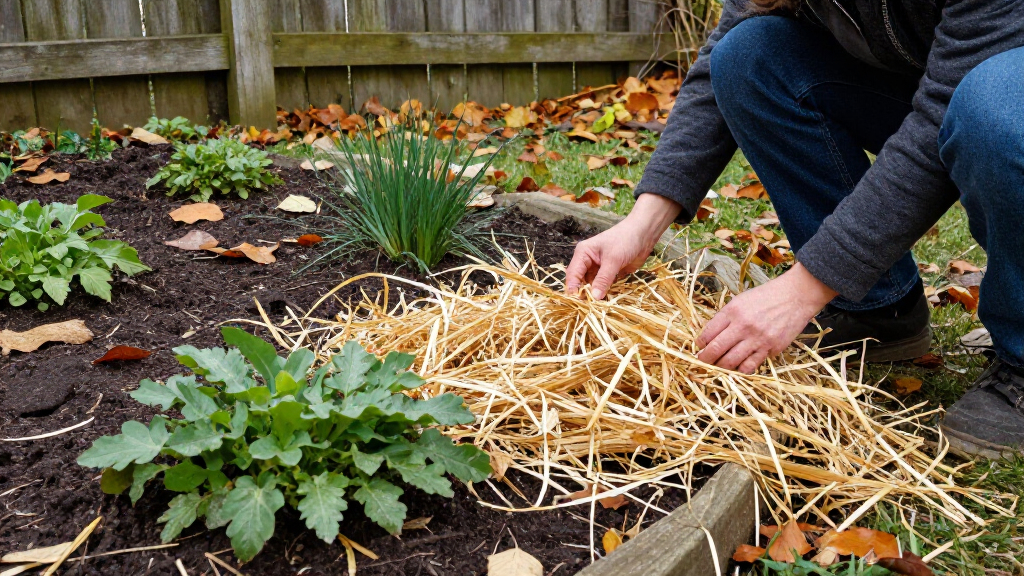
For most of these plants, the guidance favors natural, loose materials, such as compost, shredded leaves, bark or straw. It advises keeping mulch away from stems to reduce moisture buildup and the risk of rot. Strawberry straw should be pulled back from new growth in spring, though it can remain between rows. The guide also notes that mulch protects hydrangea roots, not buds on old wood; burlap may be needed to shield those buds during cold snaps.
November mulch: six groups to protect
Mulch young or vulnerable plants as the soil begins to freeze. Established, reliably hardy plants may not need extra cover.
Which plants may benefit?
Prioritize new plantings and varieties vulnerable to local winter conditions.
Newly planted perennials
Use 3 to 4 inches of loose mulch to help moderate soil-temperature swings.
Roses and young hydrangeas
Roses may need an 8 to 12 inch mound; hydrangeas may need 2 to 6 inches, depending on winter severity.
Spring-flowering bulbs
Cover with 2 to 3 inches as the soil starts to freeze, or after late-fall planting.
Strawberries
Apply 3 to 4 inches of straw; pull it back from new growth in spring.
Garden mums
Newly planted mums can receive a few inches of loose mulch. Leave foliage intact.
Choose loose, natural material
The guide favors undyed mulch and advises keeping it clear of plant stems.
Use the soil, not the calendar
Timing varies with local climate, soil conditions and plant hardiness.
Focus on young, newly planted or less hardy plants as freezing weather approaches.
Use a loose layer suited to each plant and keep it away from stems.
Pull straw back from strawberry growth; some can remain between rows.
Mulch Can Limit Winter Root Damage
The practical benefit is protection against freeze-thaw cycles and frost heaving. When soil repeatedly freezes and thaws, roots can be exposed or damaged; newly planted and shallow-rooted plants may be particularly vulnerable. A loose insulating layer can help keep soil temperatures steadier through winter, according to the gardening guide.
Mulching is not a guarantee that a plant will survive, and the source does not provide trial results or quantify how much protection a given depth offers. Its recommendations are most useful as a seasonal checklist: prioritize plants that are young, newly planted or known to be vulnerable, and tailor the amount of cover to local winter conditions. The guide says established, reliably hardy hydrangeas may not need mulching.
Material and placement also matter. Organic mulch can break down and add material to the soil, while keeping it clear of stems can help avoid persistent dampness around plant bases. The advice is to use undyed natural material and not to glue or bind it in place.
Products Worth Considering

Garvee 8 × 10 ft Walk-In Polycarbonate Greenhouse

Traeger Pro 22 Wood Pellet Grill & Smoker

EGO POWER+ 15-Inch Cordless String Trimmer with 2.5Ah Battery and Charger (ST1502SA)
As an affiliate, we earn on qualifying purchases.
Timing Depends on Soil Conditions
The recommendations are tied to the onset of freezing weather, rather than a fixed date that applies everywhere. The guide says to apply mulch as the soil begins to freeze; for bulbs newly planted in November, it recommends mulching immediately after planting. Local climate, soil conditions and plant hardiness affect when that point arrives.
The source describes November mulching as part of late-fall garden preparation, when many plants have died back and beds are easier to work in. It also says mulch can suppress weeds and keep beds tidy, but its central advice is to avoid automatically covering every border. Plant age and hardiness are key distinctions: a young or borderline-hardy plant may benefit more than a mature, established one.
““as the soil begins to freeze””
— The gardening guide
Local Conditions Shape the Advice
The source does not specify a growing zone, local forecast or soil temperature, so the right timing and depth will vary by garden. It also does not name the varieties of roses, hydrangeas or mums covered by its recommendations. Gardeners should account for each plant’s hardiness and local winter conditions rather than treating the listed depths as universal rules.
The headline refers to plants to cover and plants to leave, but the supplied material does not identify a definitive list of four plants that should not be mulched. It says only that some plants do not benefit from extra cover and that established, reliably hardy hydrangeas may not need it. The source also does not establish that mulch alone prevents winter injury or guarantees spring growth.
Check Beds Before Frost Sets In
Gardeners can use the approach of freezing soil as a cue to check newly planted and vulnerable plants, then apply a loose layer suited to each one. Keep mulch off stems, leave foliage intact on garden mums as the guide advises, and monitor the local forecast for cold snaps that could affect hydrangea buds.
In spring, pull straw back from strawberry plants as new growth appears, while leaving some between rows if desired to keep developing berries off the ground. The source does not give a single follow-up date or a regional planting calendar; local weather and plant response will determine when to adjust the winter cover.
Key Questions
Which plants does the guide recommend mulching in November?
It lists newly planted perennials, roses, young hydrangeas, spring-flowering bulbs, strawberries and perennial garden mums as groups that may benefit from winter mulch.
When should November mulch be applied?
The guide generally recommends applying it as the soil begins to freeze. Bulbs planted late in fall should be mulched after planting, according to the source.
What mulch should gardeners use?
The guide favors loose, natural materials, including compost, shredded leaves, bark and straw. It recommends undyed material and says to keep mulch away from plant stems.
Do all established plants need winter mulch?
No. The source says reliably hardy, established hydrangeas may not need extra cover and cautions that some plants do not appreciate a late-fall mulch. It does not provide a complete list of plants to leave uncovered.
Does mulch protect hydrangea buds from cold?
Not by itself. The guide says mulch protects hydrangea roots; buds on old wood may need a burlap wrap during cold snaps.
Source: gardeningknowhow.com