
To design a deer-resistant front yard, choose native plants like coneflowers and black-eyed Susans, which deer naturally avoid. Install sturdy fencing at least 8 feet high, or add dense, thorny shrubs like hawthorn along your perimeter for a natural barrier. Use repellents as an additional layer of protection, and consider combining these strategies for the best results. If you’re interested, you’ll discover more strategies to keep deer at bay effectively.
Key Takeaways
- Incorporate native, deer-resistant plants like coneflowers and black-eyed Susans for natural deterrence.
- Install an 8-foot-high fence combined with native plant buffers to prevent deer entry.
- Use dense, thorny shrubs such as hawthorn to create physical barriers along yard edges.
- Apply repellents around plants and fencing to enhance deer deterrence.
- Implement a layered strategy combining native plants, fencing, physical barriers, and repellents for maximum protection.
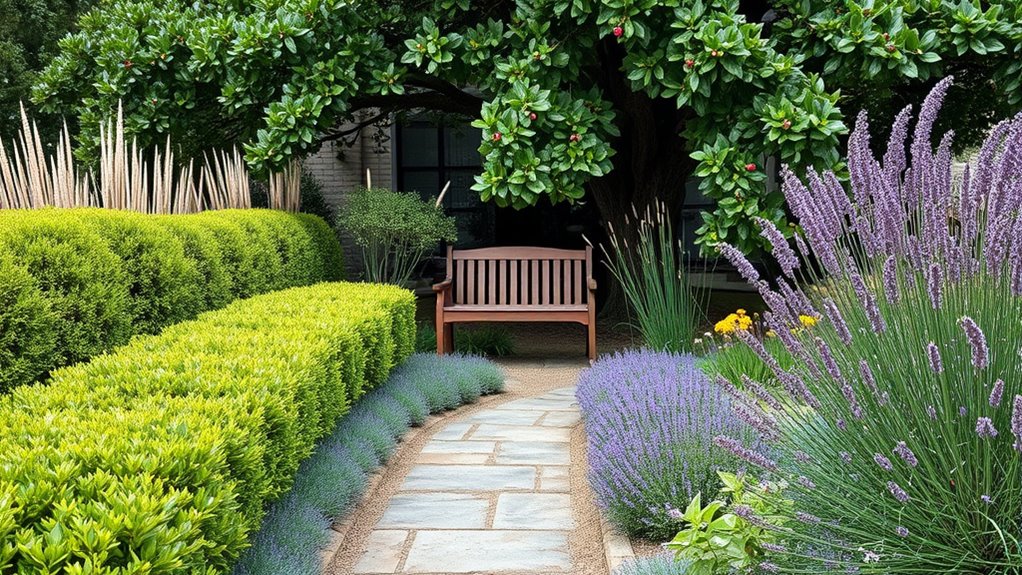
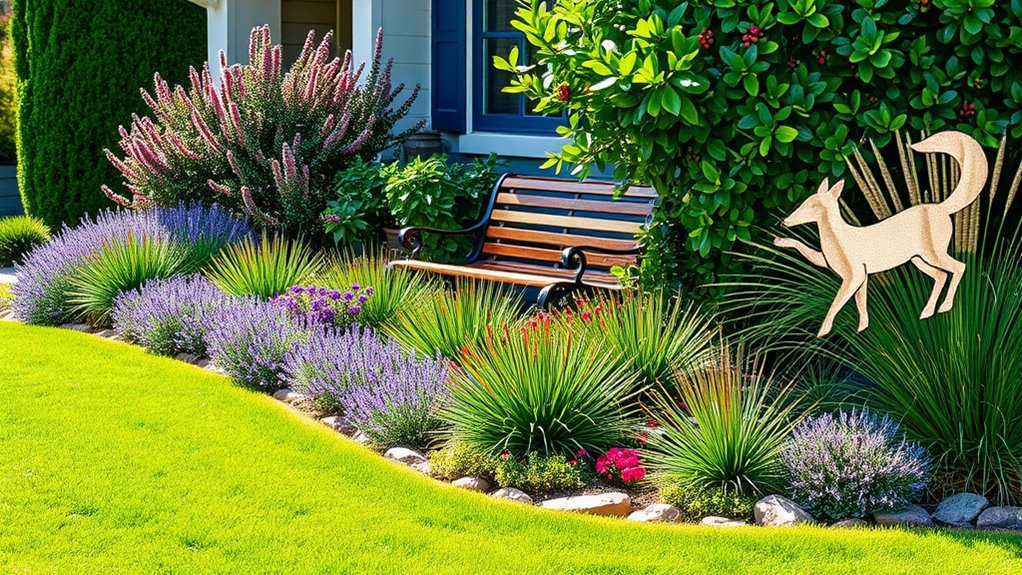
Creating a deer-resistant front yard begins with understanding which plants they dislike and choosing the right combination to deter them. Deer tend to avoid certain native plants because they’ve evolved alongside local wildlife, making these plants less appealing or even downright unappealing to them. Incorporating native plants into your landscape not only supports local ecosystems but also naturally discourages deer from munching on your garden. For example, plants like coneflowers, black-eyed Susans, and penstemon are often less attractive to deer, making them ideal choices for your front yard. Selecting a diverse mix of these native species can create a layered barrier that deer find unappetizing, especially when combined with other deterrents.
Fencing options are a reliable method to keep deer out of your yard altogether. A sturdy fence that’s at least 8 feet tall can prevent even the most persistent deer from jumping in. If you prefer a less invasive or more aesthetic approach, consider using fencing made from materials like wire mesh, which can be concealed with native plants or climbing vines. Electric fencing is another effective option, especially if you want a temporary or movable solution; just ensure it’s installed correctly and at the right height for deer to encounter it. Combining fencing with native plants creates a layered defense, making your yard less inviting and more challenging for deer to access. Keep in mind, fencing should be continuous and properly maintained to prevent gaps that deer might exploit.
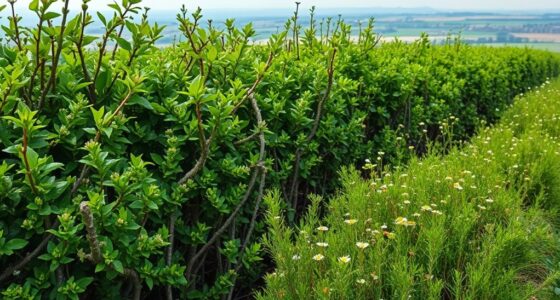
Beyond fencing and native plants, think about creating physical barriers like dense shrub borders or thorny plants such as barberry or hawthorn along your yard’s perimeter. These plants act as natural fences that deer find difficult to traverse. Another tip is to use repellents, which can be applied to native plants or around fencing borders to further discourage deer. These repellents often have scents or tastes deer avoid, adding an extra layer of protection. Remember, the key to a deer-resistant front yard is consistency; combining multiple strategies—native plants, fencing, physical barriers, and repellents—will give you the best chance of keeping deer at bay.
Frequently Asked Questions
What Are the Best Native Plants for Deer Resistance?
You should choose native plant selection strategies that include deer resistant shrub varieties like junipers, boxwoods, and holly. These plants tend to repel deer because of their tough foliage or unpleasant taste. Focus on native plants that are less appealing to deer, and mix in diverse shrub varieties to create a resilient, deer-resistant front yard. Regularly monitor and adjust your plant choices to maintain an effective deer-resistant landscape.
How Can I Deter Deer Without Harming Other Wildlife?
To deter deer without harming other wildlife, observe their behavior and adapt your landscaping strategies accordingly. Use fencing or repellents, but choose non-toxic options that won’t affect local animals. Plant deer-resistant native species and incorporate natural barriers like thorny bushes or aromatic herbs. By understanding deer behavior, you can create a balanced yard that keeps them away while supporting the health of other wildlife.
Are There Effective Natural Repellents for Deer?
Yes, natural repellents work well for deterring deer. You can create homemade repellents by combining ingredients like garlic, chili pepper, and soap in a natural spray. Apply this homemade spray regularly to your plants, especially after rain. The strong smell and spicy taste discourage deer from munching on your yard’s plants. Using these natural repellents helps protect your garden without harming other wildlife.
How Often Should I Update My Deer-Resistant Plant List?
You should update your deer-resistant plant list every season to stay ahead, as deer preferences change with seasons. Notably, seasonal planting and plant diversity can reduce deer visits by 30%, so regularly reviewing your list helps maintain a resilient landscape. Keep an eye on emerging deer-resistant varieties and local plant trends, adjusting your selections accordingly to keep your yard safe and thriving year-round.
Can Deer-Resistant Plants Thrive in Shaded Front Yards?
Yes, deer-resistant plants can thrive in shaded front yards. You should look for shade-tolerant shrubs and deer-resistant groundcovers that flourish with limited sunlight. These plants adapt well to low-light conditions, providing a lush, deer-resistant landscape. Make sure to select varieties suited for shade to guarantee healthy growth. Regular watering and proper soil preparation will help your shade-loving, deer-resistant plants thrive and keep deer away effectively.
Conclusion
Creating a deer-resistant front yard might seem tricky at first, but with the right plants and strategies, you’ll enjoy a lush, peaceful space. Some worry it’ll look less inviting, but a well-designed yard can be both beautiful and deer-proof. Just remember, no garden is 100% deer-proof—they’re clever creatures. Stay patient, be adaptable, and your yard will become a safe haven for your plants and a welcoming spot for you to enjoy.