TL;DR
The arrangement guidance recommends using a sound, stable pumpkin as a decorative surround for a separate, removable vase, rather than putting water or soil directly in the pumpkin. It also outlines checks for deterioration, safer setup, and a no-carve option; the source is how-to guidance, not a newly announced event.
Thanksgiving centerpiece guidance recommends placing flowers in a clean, watertight, removable vase and using a sound pumpkin only as a decorative shell. The method gives hosts a way to remove the flowers for care and discard a pumpkin if it begins to deteriorate, while a no-carve version pairs an uncut pumpkin with a separate vase.

Get garden gear delivered free with Prime
- Fast, free delivery on millions of items
- Prime Video, Amazon Music and more included
- Member-only deals all year
Texas A&M AgriLife’s pumpkin-decorating guidance recommends inspecting the pumpkin and using one that is sound. Check the underside and sides for visible mold, soft or collapsing patches, leaking liquid or an unpleasant smell; do not use one with those signs or one that cannot sit steadily. These visible checks are only a screening step and cannot establish the pumpkin’s condition inside, so inspect it again during preparation and while it is on display.
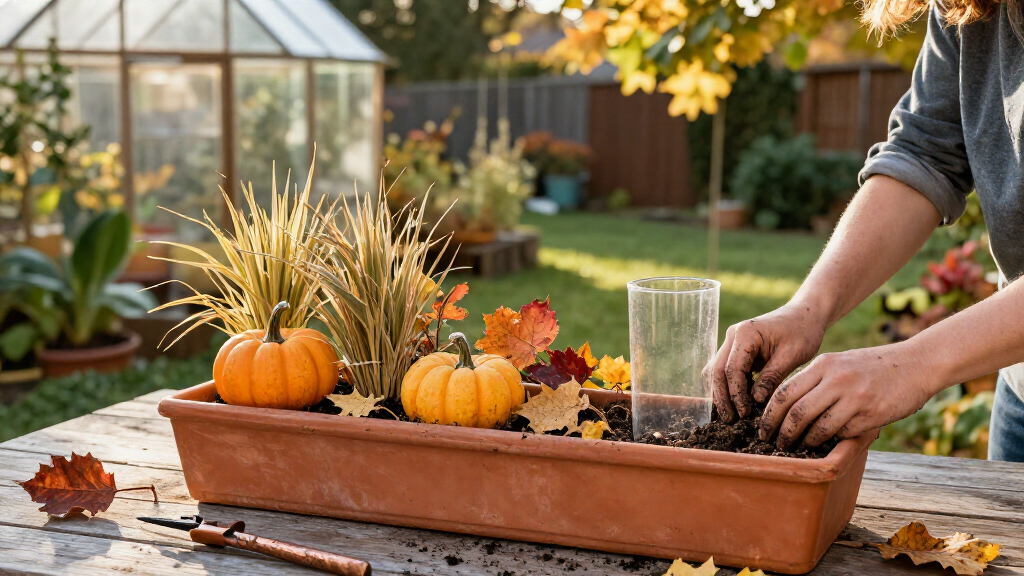
Choose a modest pumpkin and test the setup on the intended tray before cutting. Following the Texas A&M AgriLife approach, make an opening only large enough for the vase to pass through comfortably. The vase must stand upright on its own, remain accessible and lift out without catching. If it rocks, tips, or needs improvised wedges or tightly packed stems for support, skip the fitted arrangement: put an uncut pumpkin beside a separate vase instead.
Arrange fresh flowers in the vase away from the pumpkin, adding water and following any care instructions supplied with the flowers. For dried material, use a dry vessel and no water. Keep the arrangement small enough to leave a clear removal path, then place the pumpkin and vase on a stable, water-resistant tray. The tray protects the surface but does not replace checking for leaks or deterioration beneath the pumpkin.
A pumpkin centerpiece with an exit plan
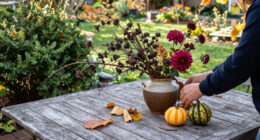
Keep flowers and water in a removable vase; let the pumpkin serve as a decorative shell. This makes flower care easier and lets you remove a pumpkin if it begins to deteriorate.
Check the pumpkin
Inspect it before setup and while it is on display.
- Skip pumpkins with visible mold, soft or collapsing patches, leaks, an unpleasant smell, or an unstable base.
- These visible checks cannot confirm the pumpkin’s condition inside.
- Test the pumpkin, vase, and tray together on the intended surface.
Choose a stable setup
The vase must stand securely and lift out easily.
If carving, make an opening just large enough for the vase to pass through comfortably.
Make sure the vase stays upright and lifts out without catching. Do not rely on wedges or stems for support.
If the fit is unstable, place an uncut pumpkin beside a separate vase.
Care for flowers and pumpkin
Keep water in the vase, away from the pumpkin.
- Arrange flowers in a clean, watertight vase.
- Add water and follow any care instructions supplied with the flowers.
- Use a dry vessel with no water.
- Gather only material you can identify and have permission to take.
Set it out safely
Leave room for the table and an easy removal path.
- Place the pumpkin and vase on a stable, water-resistant tray.
- Check beneath the pumpkin for leaks or deterioration; the tray does not replace this check.
- Keep the arrangement away from candles, open flames, and other heat sources.
A Centerpiece That Can Be Removed
The design separates the jobs of the two objects: the vase holds water and supports the flowers, while the pumpkin provides a temporary display. Texas A&M AgriLife’s pumpkin-decorating guidance recommends arranging flowers in a vase rather than directly in the pumpkin. That separation lets hosts lift out the flowers for watering or replacement without forcing the arrangement apart, and makes it easier to remove the pumpkin if its condition changes.
The guidance favors a display that fits the table and remains stable over a more elaborate centerpiece. Before assembling it, check that there is room for plates and conversation, and that the arrangement can be moved without catching the stems. Keep it away from open flames and other heat sources, including candles; the source cites holiday fire-safety advice to separate decorations from flames and heat.
Products Worth Considering

Greenworks 24V Cordless Brushless Leaf Blower, 515 CFM, 130 MPH, with 5.0Ah Battery and Charger

Greenworks 40V Cordless Chainsaw Kit with 12-Inch Bar, 2Ah Battery and Charger

Orbit B-hyve XR 16-Zone Indoor/Outdoor Smart Sprinkler Controller
As an affiliate, we earn on qualifying purchases.
The Pumpkin Is Not the Vase
The method draws on Texas A&M AgriLife pumpkin-decorating guidance, which recommends carving space for a vase and arranging flowers in that vessel rather than directly in the pumpkin. The seasonal instructions add that the vase should be removable and able to stand securely without relying on the cut rim or the flower stems.
For flower choices, the source points to Illinois Extension guidance that includes purchased flowers, garden-cut flowers and dried material. Those are options, not a promise that particular garden flowers will be available in late November. The advice is to use suitable material actually on hand, buy a small bunch if needed, or choose dried material. If gathering material to dry, select it when dry and free from insect and disease damage, and collect only plants you can identify and have permission to take.
Condition Changes Need Watching
The guidance provides no single safe display duration for a carved or uncut pumpkin, and exterior signs cannot confirm its condition within. It advises checking the pumpkin again during preparation and separately from the flowers while the centerpiece is displayed. Flower water does not prevent pumpkin deterioration; if the shell becomes soft, moldy, leaky, unstable or unpleasant-smelling, remove the flowers and discard the pumpkin.
The guidance also does not prescribe a particular pumpkin variety, vase size, flower combination or cutting pattern. Those choices depend on the available materials and whether the vase fits and remains stable. If a reliable fit is not possible, Texas A&M AgriLife’s vase-based approach can be adapted to the simpler no-carve alternative: display an uncut pumpkin beside a separate vase.
Check Before and During Dinner
Before setting the table, test the pumpkin, tray and vase together, then arrange the flowers outside the shell and confirm that the vase can be lifted out easily. The seasonal guidance recommends checking the pumpkin during preparation and while it is displayed; also check the surface beneath it. If its condition changes, remove it rather than relying on the tray or flowers to conceal the problem.
Hosts who cannot find a stable fit can use the uncut-pumpkin option: place the pumpkin and a separate vase on the same protective tray, leaving the vase accessible for flower care. Keep either version clear of candles and other heat sources, consistent with the cited holiday fire-safety advice. The source provides no reported event or scheduled follow-up; it offers seasonal preparation advice rather than a new development.
Key Questions
Can I put water directly inside the pumpkin?
No. Texas A&M AgriLife’s pumpkin-decorating guidance treats the pumpkin as a decorative shell and recommends keeping flower water in a separate vase.
What should I do if the vase does not fit securely?
Do not wedge it in or rely on stems to hold it upright. Use an uncut pumpkin beside a separate vase instead.
Which warning signs mean I should not use a pumpkin?
The seasonal guidance advises against using a pumpkin with visible mold, soft or collapsing areas, leaking liquid, an unpleasant smell, or an unstable base. Check it again during preparation and while displayed.
Can I use dried flowers or foliage?
Yes. Illinois Extension’s flower guidance includes dried material as an option; use a dry vessel without water. If collecting material to dry, choose it when dry and free from insect and disease damage, and gather only material you can identify and are permitted to collect.
Can I place candles beside the arrangement?
The cited holiday fire-safety advice says to keep decorations away from open flames and other heat sources, including candles.
Source: planetnatural.com