
Narrower beds save you more work than you expect because they improve soil health, making roots grow deeper and access nutrients more easily. They also make crop rotation simpler, reducing soil degradation and pest buildup. With less area to maintain, you’ll spend less time watering, weeding, and fertilizing. Plus, easier access means faster pest control and harvesting. Keep exploring to discover more ways that narrower beds can make your gardening easier and more efficient.

Get garden gear delivered free with Prime
- Fast, free delivery on millions of items
- Prime Video, Amazon Music and more included
- Member-only deals all year
Key Takeaways
- Narrower beds reduce soil compaction by minimizing foot traffic, promoting healthier root growth and easier soil management.
- Precise crop rotation in narrow beds improves soil fertility and decreases long-term soil maintenance needs.
- Smaller areas demand less watering, fertilizing, and weeding, saving time and resources.
- Easier access for maintenance and pest control allows quicker identification and resolution of issues.
- Streamlined layout minimizes unnecessary movement, simplifying crop management and reducing overall labor.

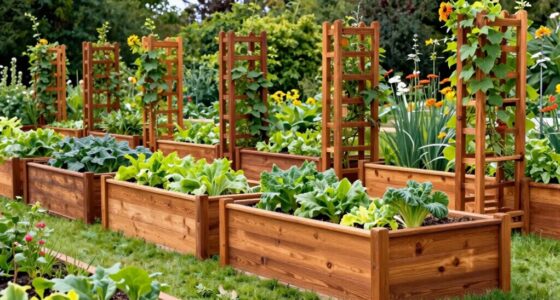
Narrower beds might seem like a small change, but they can substantially reduce the amount of work needed for gardening or farming. When you design your garden or farm with narrower beds, you’re creating a more efficient layout that minimizes unnecessary movements and effort. One of the biggest benefits of these narrower beds is how they impact soil health, especially regarding soil compaction. When beds are wider, you often find yourself walking through the middle, compacting the soil with each step. This compaction makes it harder for roots to grow deep and access nutrients and water. Narrower beds keep your pathways smaller, so you walk less on the soil itself, reducing soil compaction and helping maintain healthy, loose soil that’s easier for plants to thrive in.
Narrower beds reduce soil compaction, promoting healthier roots and easier plant growth.
In addition, narrower beds make crop rotation simpler and more effective. Crop rotation is crucial for maintaining soil fertility and preventing pests and diseases. With narrower beds, you can organize your planting areas more precisely, dedicating specific beds to particular crops and rotating them easily each season. This targeted approach minimizes the risk of soil degradation and pest buildup, saving you time and effort in managing crop health. Instead of dealing with sprawling, wide beds that complicate rotation plans, narrower beds give you the ability to plan more meticulously, ensuring each crop gets the right nutrients without overtaxing the soil. Incorporating a soil management strategy can further enhance the benefits of narrow beds by maintaining optimal soil conditions. Proper soil management also helps reduce the need for frequent soil amendments**, saving time and resources over the long term. Additionally, soil compaction** can be more easily managed with narrower beds, helping to preserve soil structure.
Another way narrower beds save work is by reducing the amount of soil you need to amend and maintain. Since the beds are narrower, the total area you tend to is smaller, meaning less time spent on weeding, watering, and fertilizing. You can focus your resources more effectively, applying amendments where they’re needed most, rather than spreading them thinly over a larger, less manageable area. Plus, when it comes to watering, narrower beds dry out less quickly at the edges, so you conserve water and cut down on watering time. Additionally, designing with soil health in mind can further enhance plant growth and reduce maintenance needs over time. Regularly monitoring soil quality can help catch problems early and keep your garden thriving with less effort.
Furthermore, narrower beds make it easier to access plants for maintenance, harvesting, or pest control. With less ground to cover, you can move more quickly and efficiently, reducing the physical effort required. This improved accessibility also means you’re more likely to inspect plants regularly, catching problems early and avoiding larger, more time-consuming issues down the line. All these factors combine to make narrower beds a surprisingly effective way to cut down on labor, improve soil health, and simplify crop management—saving you more work than you might initially expect.
As an affiliate, we earn on qualifying purchases.
Frequently Asked Questions
Do Narrower Beds Affect Sleep Quality?
Narrower beds can actually improve your sleep quality by enhancing sleep comfort and noise reduction. With less space to move, you stay more settled, which helps you sleep more soundly. Additionally, the narrower frame reduces the chance of disturbance from outside noise or movement, making your sleep environment calmer. So, if you’re seeking better sleep, a narrower bed might be a surprisingly effective choice for comfort and peace.
Are Narrower Beds Suitable for All Room Sizes?
Narrower beds are like puzzle pieces; they fit more easily into various room sizes. They’re suitable for most spaces, offering better room layout options and increased design flexibility. If your room feels tight, a narrower bed can free up space for other furniture or a more open feel. Just consider your room’s dimensions and your comfort preferences to guarantee the bed fits seamlessly into your design.
How Do Narrower Beds Impact Storage Options?
Narrower beds improve your storage options by enhancing space efficiency and allowing for more flexible furniture arrangements. With a smaller footprint, you can add storage units or drawers underneath, making the most of available space. This setup helps keep your room organized and clutter-free, while still offering enough room for other furniture. Overall, narrower beds maximize your storage potential without sacrificing comfort or style in your space.
Can Narrower Beds Accommodate Taller Individuals Comfortably?
Narrower beds can accommodate taller individuals comfortably by maximizing space efficiency and offering design flexibility. You can choose taller mattresses or add extensions to support longer frames without overcrowding your room. This setup allows you to customize your space while maintaining comfort. With thoughtful design choices, narrower beds actually enhance your room’s layout, making it easier to fit taller individuals comfortably while optimizing overall space.
Are There Specific Mattress Types Better for Narrower Beds?
Certain mattress materials, like memory foam or latex, work better for narrower beds because they adapt well to limited space and provide comfort. Also, choose bed frame styles that support these materials and keep the overall bed stable. Avoid bulky frames or those with excessive padding, as they can make the bed feel cramped. By selecting the right mattress materials and bed frame styles, you’ll enjoy a comfortable, space-efficient sleeping setup.
As an affiliate, we earn on qualifying purchases.
Conclusion
So, next time you consider the size of your bed, think twice. Narrower beds might just hold more surprises than you expect—saving you effort in ways you never saw coming. The secret lies in what you haven’t yet realized about space and efficiency. Could it be that the smallest change makes the biggest difference? Stay tuned, because once you discover the full potential of narrower beds, you’ll never look at your sleep setup the same way again.
As an affiliate, we earn on qualifying purchases.
As an affiliate, we earn on qualifying purchases.
Halloween Picks
halloween
As an affiliate, we earn on qualifying purchases.